

Ancient India: Belief Systems and Social Structure
The Dive
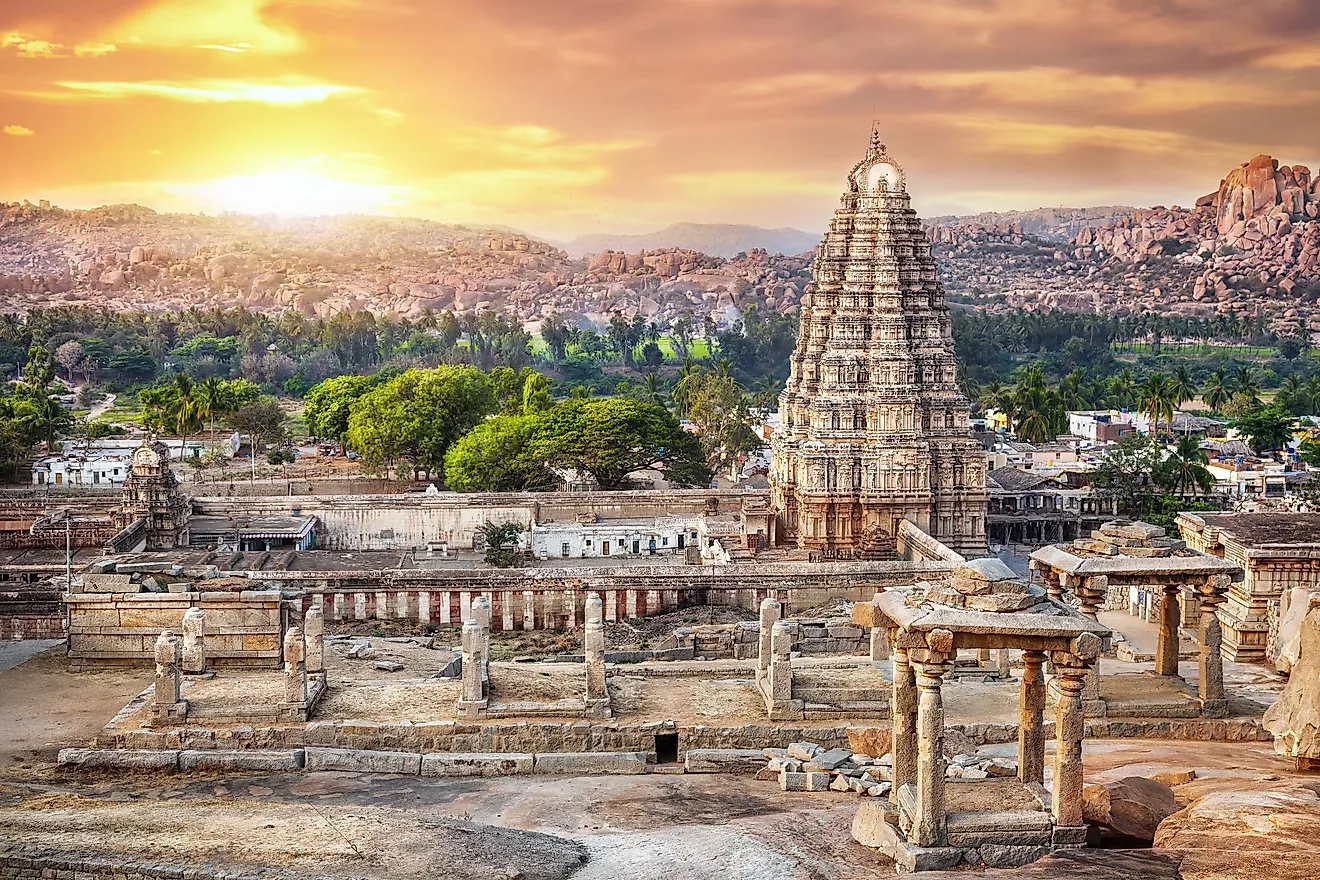
Ancient India developed across the Indian subcontinent, a large region of South Asia that extends beyond the borders of today's country of India. Important early cities stood in what are now Pakistan and northwestern India. Rivers, farmland, and trade routes supported communities with different languages, traditions, and governments. Over thousands of years, those communities created cities, kingdoms, empires, and influential ways of thinking. Ancient India was not one unchanging society or a single united country. Understanding its history means tracing changes over time, especially in the relationship between belief, social position, and political power.
By about 2600 BCE, the Indus Valley civilization had developed large, organized cities, including Harappa and Mohenjo-daro. Planned streets, drainage systems, brick buildings, metalworking, and standardized weights reveal communities capable of coordinating complex activities. Farmers grew crops such as wheat and barley, while craftspeople and merchants helped connect cities through trade. Indus communities exchanged goods with distant regions, including Mesopotamia. They also used a script that has not yet been deciphered. This creates an important limit on our knowledge: buildings, seals, and tools provide evidence of urban life, but historians cannot confidently reconstruct every detail of Indus government or religion.
Around 1900 BCE, major Indus cities began to decline. Changes in climate, river systems, and farming conditions may have contributed to people leaving urban centers and settling elsewhere. The decline of cities did not mean that everyone disappeared or that all earlier traditions ended. During the Vedic Age, roughly 1500–500 BCE, Indo-Aryan-speaking communities and existing populations contributed to changing cultures across northern South Asia. Religious traditions associated with the Vedas developed and were transmitted orally over generations. These sacred texts became important foundations for traditions later grouped under the name Hinduism. Over time, growing towns and kingdoms also became settings for debate and new religious movements.
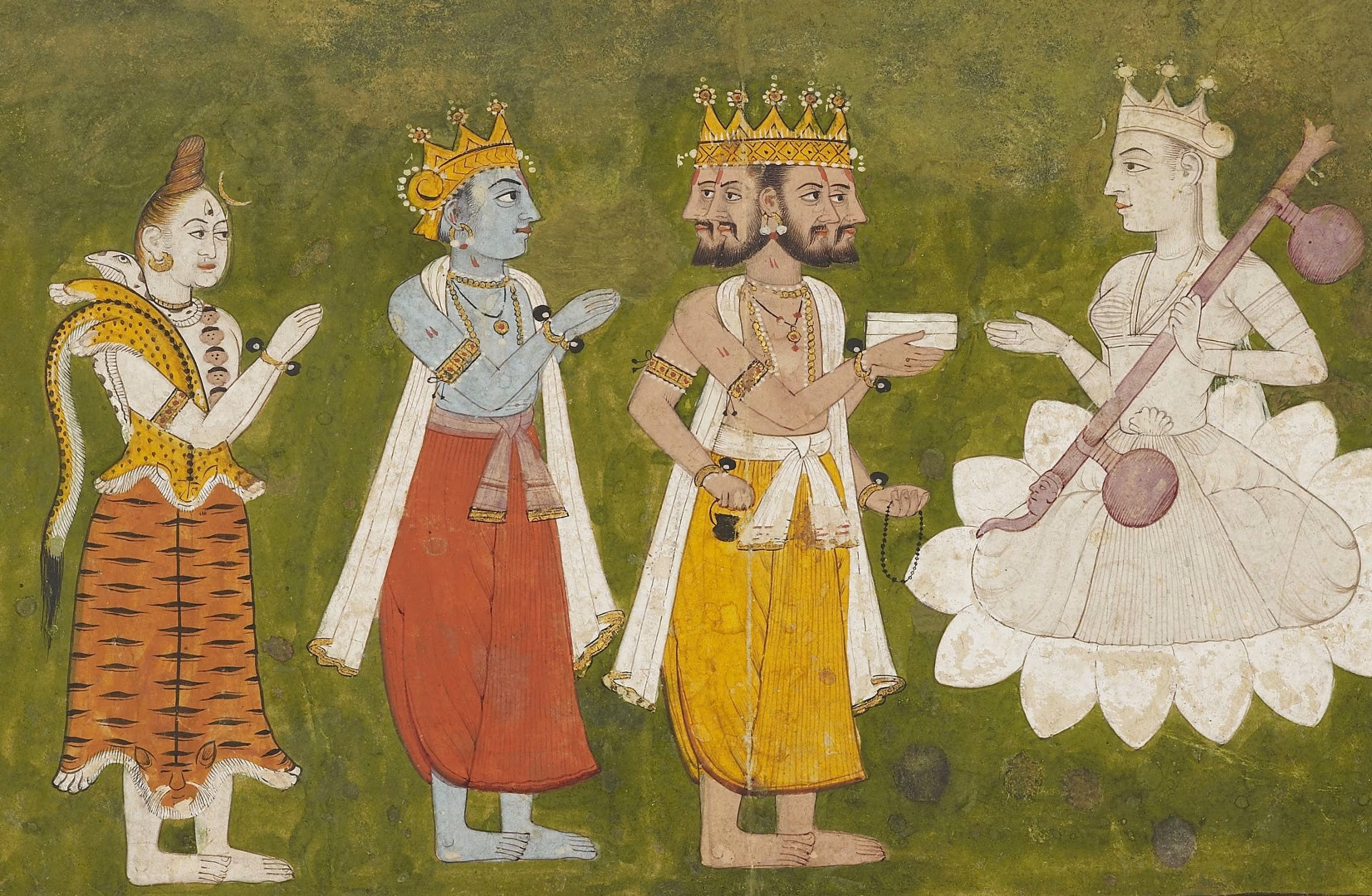
Hinduism developed over many centuries from diverse rituals, teachings, stories, and practices. It has no single founder, and Hindu communities have interpreted its ideas in different ways. The Vedas contain hymns and ritual teachings, while later texts, including the Upanishads and the Bhagavad Gita, explore questions about the self, responsibility, and spiritual freedom. Many Hindu traditions connect life with a larger spiritual order. Four important concepts are dharma, karma, reincarnation, and moksha. Together, they help explain how people should live, why actions matter, and how liberation may be possible. These ideas influenced everyday choices as well as discussions about society and leadership.
Dharma includes duty, moral responsibility, and right conduct. Some traditions connected particular duties with a person's age, stage of life, or social role. Karma concerns actions and their consequences, which many Hindus understand as extending across lives. Reincarnation means rebirth after death; the continuing cycle of birth, death, and rebirth is called samsara. Moksha is liberation from that cycle. Different Hindu traditions describe paths toward liberation through devotion, knowledge, right action, and other practices. These concepts gave moral choices a larger meaning. At the same time, some interpretations connected social position with religious duty, helping present unequal roles as part of an enduring order.
During the Vedic period, texts described society through four broad categories called varnas. Brahmins were associated with priesthood, scholarship, and religious teaching. Kshatriyas were associated with ruling and warfare. Vaishyas were associated with farming, commerce, and producing or trading goods. Shudras were associated with labor and service. Actual society was more complicated than this four-part model. Communities also included many birth-based groups called jatis, with expectations about marriage, occupation, and belonging. These arrangements varied across regions and changed over centuries. Some communities were treated as outside the four-varna order and faced severe exclusion. Dalit is a modern identity used by many people from communities historically subjected to such discrimination, not the name of a fifth varna.
Caste could make social roles seem predictable by linking family background, work, marriage, and religious expectations. But order did not mean fairness. Inherited status could limit a person's access to education, influence, or a different occupation, regardless of ability. Social mobility—the ability to move between social positions—could therefore be restricted. Ideas about ritual purity helped justify unequal treatment, but those ideas did not measure anyone's actual worth. A historian can explain how a hierarchy worked without accepting its claims. Asking 'Order for whom?' helps us investigate who benefited from established rules and whose choices those rules limited.
Near the end of the Vedic Age, new religious movements questioned aspects of established authority. Siddhartha Gautama, known as the Buddha, taught a path toward awakening through ethical conduct, meditation, and wisdom. Buddhism shared concerns about karma and rebirth with other Indian traditions, but challenged the claim that birth in a privileged group made someone spiritually superior. Jain traditions also emphasized spiritual discipline and nonviolence, with Mahavira remembered as a major teacher. These movements developed within a wider world of growing towns, trade, and political change. Religious life involved disagreement and experimentation as well as inherited customs.
The Buddha's Four Noble Truths explain that life includes suffering and dissatisfaction; that craving and clinging help produce suffering; that liberation is possible; and that a path leads toward it. The Noble Eightfold Path includes right view, intention, speech, action, livelihood, effort, mindfulness, and concentration. These practices develop understanding, ethical behavior, and mental discipline. For example, refusing to deceive customers can connect with right speech, right action, and right livelihood. The goal of nirvana involves freedom from craving and suffering. Spiritual progress depended on practice rather than privileged birth, offering an alternative to inherited spiritual rank. That message could appeal to people disadvantaged by caste, although Buddhism attracted followers from many social backgrounds and did not instantly remove social inequality.
Belief also influenced the way rulers presented their responsibilities. The Mauryan Empire, founded by Chandragupta Maurya around 322 BCE, eventually governed much of the subcontinent. His grandson Ashoka expanded imperial power, including through the bloody conquest of Kalinga. Ashoka's inscriptions express remorse over the suffering caused by that war and promote a different ideal of rule. A Buddhist ruler, he supported Buddhist institutions and encouraged moral conduct through dhamma, a public ethical message that also called for respect among religious traditions. His rock and pillar edicts—public statements carved in stone—show how a ruler could use belief to encourage restraint, compassion, and cooperation across a large empire.
Ashoka's edicts are especially useful because they preserve royal messages from his own time. An edict encouraging respect for different religions tells us what the ruler wanted to promote. It cannot prove that every official or subject behaved accordingly. Supporting moral principles also did not mean that Ashoka stopped governing an empire or eliminated every form of coercion. This distinction matters when studying authority: a ruler's stated ideals and everyday conditions are related, but they are not identical. Belief could encourage more responsible leadership while also helping the emperor present himself as a legitimate moral guide.
Centuries later, the Gupta Empire rose around 320 CE and lasted until about 550 CE. Gupta rulers governed some territories directly, while other local kings acknowledged their authority and paid taxes. Royal support helped religious institutions, literature, and art flourish. Hindu temple sculpture and Buddhist images expressed devotion and spiritual ideals. Kalidasa became known for Sanskrit poetry and drama, while Aryabhata advanced mathematics and astronomy, including calculations involving pi and the solar year. The period is often called a Golden Age, but achievements did not bring equal opportunity to everyone. The workbook highlights increasingly restrictive caste boundaries, reminding us to ask whose experiences a label such as 'Golden Age' includes.
Ancient India shows that belief systems can both unite people and support boundaries between them. Shared ideas about duty and moral behavior can encourage responsibility and belonging. Religious arguments can also make unequal arrangements seem natural, while alternative teachings can challenge those same arrangements. Neither Hinduism nor Buddhism should be reduced to a single social function: both contain diverse traditions with long histories of interpretation. A strong historical claim recognizes this complexity. Beliefs helped shape government and opportunity, but people also debated, adapted, and challenged them. Studying those choices helps us examine how societies organize power—and whether their ideas of order leave room for dignity and equal opportunity.
Why It Matters
Ancient India helps us examine how beliefs shape responsibilities, belonging, and access to opportunity. Religious ideas could support inherited social roles, while Buddhist teachings challenged the claim that birth determined spiritual worth. Ashoka's edicts show how beliefs could guide a ruler's public message, and Gupta achievements remind us that cultural success can exist alongside inequality. These examples help us ask better questions about social systems: Who makes the rules? Who benefits? Can people change their position? Understanding a historical hierarchy does not require accepting it. Studying its justifications and challenges helps us think carefully about justice, authority, and the relationship between social order and equality.
?
What can streets, drains, and standardized weights tell us about the Indus Valley civilization? What can they not tell us?
How did the decline of Indus cities differ from the disappearance of their people and traditions?
How do dharma, karma, reincarnation, and moksha connect moral behavior with spiritual goals?
What is the difference between the four-varna model and the many communities called jatis?
Why might a society connect inherited social roles with religious duty?
How might caste create predictable expectations while also restricting opportunity and social mobility?
Why might Buddhist teachings appeal to people disadvantaged by inherited status?
How do the Four Noble Truths and the Eightfold Path connect with choices in everyday life?
How did Ashoka use public edicts to express an ideal of moral leadership and religious respect?
Why can't Ashoka's edicts prove that everyone followed his instructions?
What does the Gupta period reveal about the relationship between cultural achievement and equal opportunity?
Can belief systems both unify and divide a society? Support your answer with examples from Ancient India.
How do wealth, education, occupation, or family background affect opportunity today? Explain one important difference from inherited caste.
Is social order more important than social equality, or can a society protect both?
Should religion influence government? Use Ashoka or the Gupta rulers to consider moral leadership and respect for different beliefs.
Construct a claim answering 'How do belief systems shape society?' Support it with two historical examples and explain one complication.
Dig Deeper
Explore the cities, infrastructure, trade, and archaeological mysteries of the Indus Valley civilization.
Examine the development of Buddhism and the relationship between Buddhist ideas, Ashoka, and political leadership.
Related
Developments in East Asia, 1200–1450
From Confucian bureaucracies to booming cities, East Asia between 1200–1450 reshaped global politics, culture, and technology.
Ancient Egypt: Religion, Authority, and the Afterlife
Pharaohs, pyramids, and power: explore how Egyptian beliefs shaped government, daily life, art, and hopes for the afterlife.

Wealth Inequality: Power, Opportunity, and the Dividing Line
Wealth inequality shapes who has power, opportunity, and security—and who doesn’t.
Further Reading
Stay curious!