

North Carolina & the New Nation (1783–1790s)

From a bold 1776 state constitution to a hard debate over the U.S. Constitution, NC helped shape American liberty.
The Dive
When the war ended in 1783, Americans faced a new challenge: how do you turn victory into a working government? The Articles of Confederation (America’s first national rules) kept the national government weak—no power to tax, no strong executive, and little ability to solve problems between states. Farmers, merchants, and veterans soon felt the strain: debts piled up, trade stumbled, and unrest (like Shays’ Rebellion in 1786–87) scared leaders into asking for a stronger national plan.
In 1787, delegates met in Philadelphia and drafted the U.S. Constitution. Its big ideas—separation of powers, checks and balances, federalism, and a stronger Congress and executive—were designed to protect liberty by dividing power. But many Americans worried that a powerful national government could become a new king in disguise. These debates produced two loud camps: Federalists (for the new Constitution) and Anti-Federalists (worried about rights and local control).
North Carolina entered the post-war era with a head start: its own Constitution and Declaration of Rights adopted in December 1776. While fighting the British, NC adopted a state constitution with a strong Declaration of Rights. It established three branches and guaranteed core freedoms like trial by jury, freedom of the press, and protections against excessive bail and cruel punishments. But it also revealed limits in the era’s democracy: the legislature (General Assembly) was dominant, the governor was very weak, and voting or office-holding often required property or religious tests.
When the new U.S. Constitution went out to the states in 1787–88, North Carolinians studied it through the lens of their 1776 principles. At the Hillsborough Convention in 1788, NC delegates refused to ratify without a clear promise of a federal bill of rights. Their message was simple yet powerful: national strength is fine, but personal liberties must be written down and protected.
As other states ratified and Congress proposed amendments to secure individual rights, North Carolina reconsidered. At the Fayetteville Convention in November 1789, with the promise of amendments on the table, NC ratified the U.S. Constitution. Soon after, the federal Bill of Rights (the first ten amendments) was adopted by the states in 1791, locking in protections for speech, religion, due process, and more—just the guarantees North Carolinians had insisted upon.
Comparing documents shows both harmony and tension. The U.S. Constitution spreads power across branches and levels (national and state), while NC’s 1776 Constitution did the same but tilted power toward the legislature to avoid another royal-style executive. Both embraced rights, yet NC’s property requirements for voting and office-holding, and religious tests for office, clashed with the ideal that “all men are created equal.” These contradictions reveal how ideals and institutions evolve over time.
Separation of powers and checks and balances moved from theory to daily practice. In the federal system, Congress makes laws, the President enforces them, and the courts interpret them—all tied together with vetoes, confirmations, and judicial review. In NC, the legislature’s dominance was gradually trimmed by later reforms (notably in 1835), showing that designing fair government is an ongoing civic craft, not a one-time event.
Individual rights were the beating heart of these debates. North Carolina’s Declaration of Rights protected juries, press freedom, and bans on general warrants—ideas that echo loudly in the U.S. Bill of Rights. By insisting on explicit protections before joining the Union, NC helped push the nation to codify liberties that protect every American today.
The 1790s tested this new framework. The young federal government set up courts, taxed to pay debts, argued over banks and treaties, and learned how elections, parties, and peaceful transfers of power would actually work. North Carolina, now fully in the Union, shaped and was shaped by these experiments, proving that building a democracy requires both bold ideals and patient institution-building.
Why It Matters
Winning independence was the beginning, not the finish line. The post-war years show how Americans turned slogans about liberty into laws, offices, and daily civic habits. North Carolina’s demand for a Bill of Rights helped secure freedoms for the entire nation, and its own constitution reminds us that democratic design can include blind spots—like property requirements—that later generations must correct. Studying these choices teaches citizens how to protect rights, balance power, and keep improving the systems we inherit.
?
Why did North Carolina want a federal bill of rights if it already had a state Declaration of Rights?
How did NC’s strong-legislature/weak-governor design reflect colonial experiences with royal governors?
Which early voting or officeholding limits in NC clash most with today’s idea of political equality, and why?
Where do you see NC’s insistence on written rights echoed in modern debates about civil liberties?
If you could revise one feature of NC’s 1776 Constitution to better match its ideals, what would you change?
Dig Deeper
Adopted on consecutive days, December 17th & 18th 1776. North Carolina's Declaration of Rights and constitution are foundational in our State's history.
Related
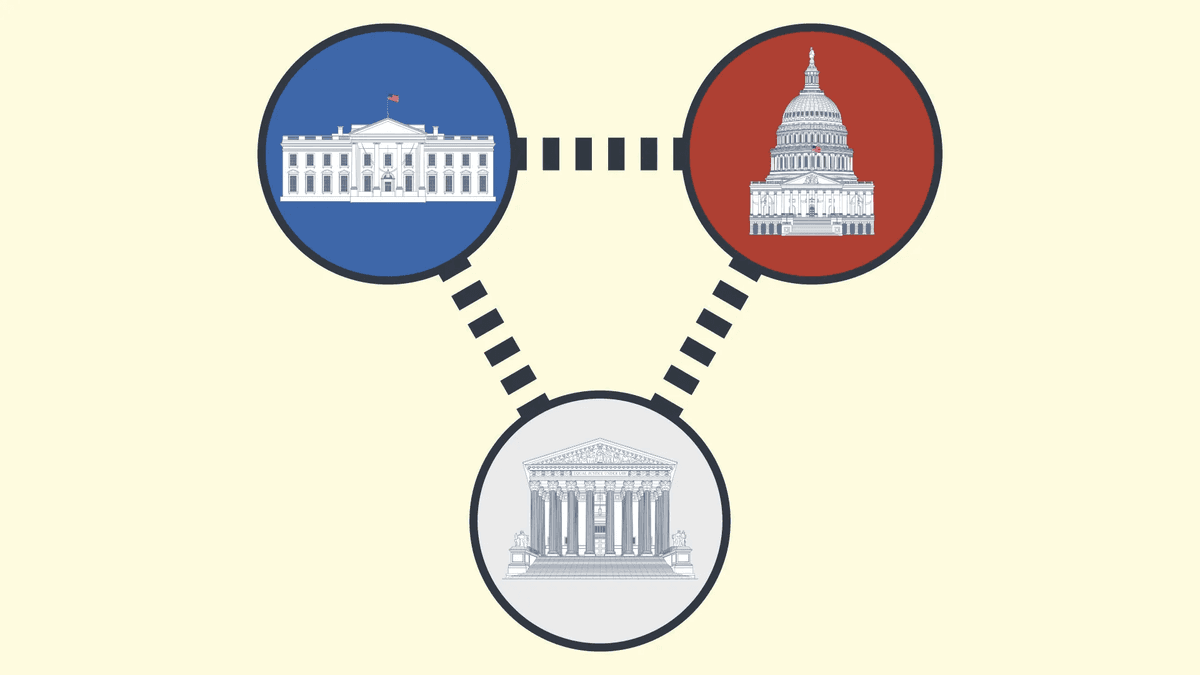
Separation of Powers
The U.S. Constitution divides power among three branches—legislative, executive, and judicial—to prevent tyranny and keep government balanced.

How a Bill Becomes a Law
From idea to law, every bill takes a long journey through Congress—full of debate, revision, and compromise—before landing on the president’s desk.
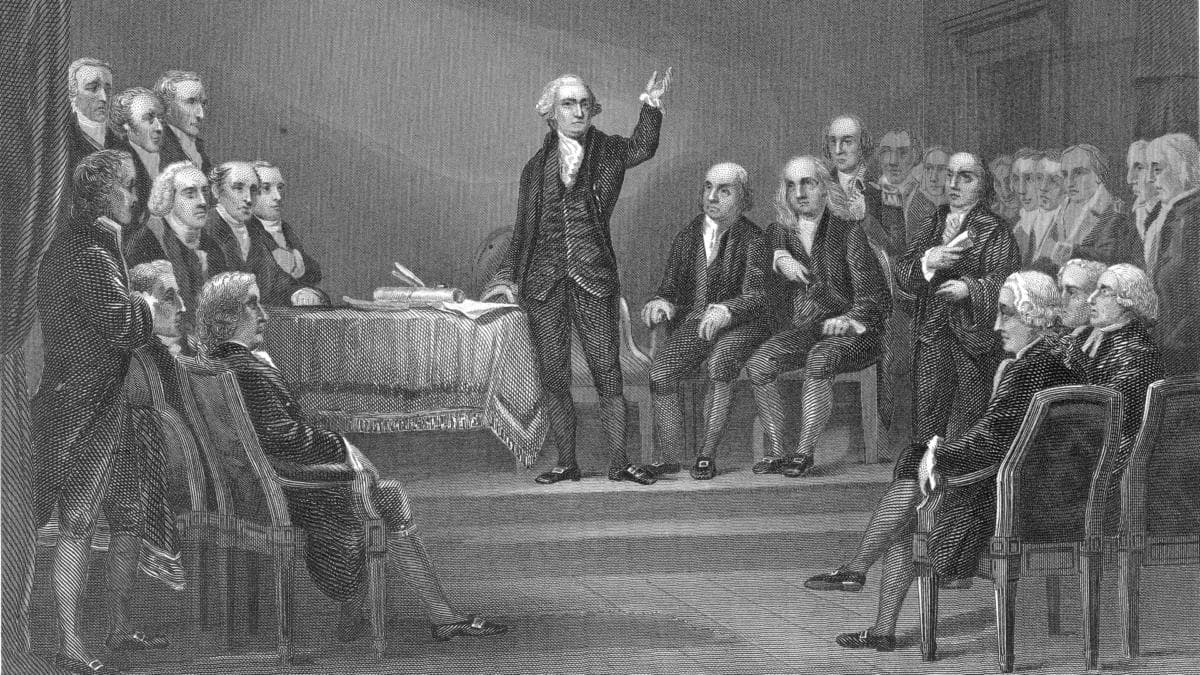
The Constitutional Convention: Building a More Perfect Mess
In the summer of 1787, 55 men locked themselves in a room to fix the government—and ended up rewriting it from scratch. What came out wasn’t perfect, but it changed everything.
Further Reading

Stay curious!