

The Monroe Doctrine
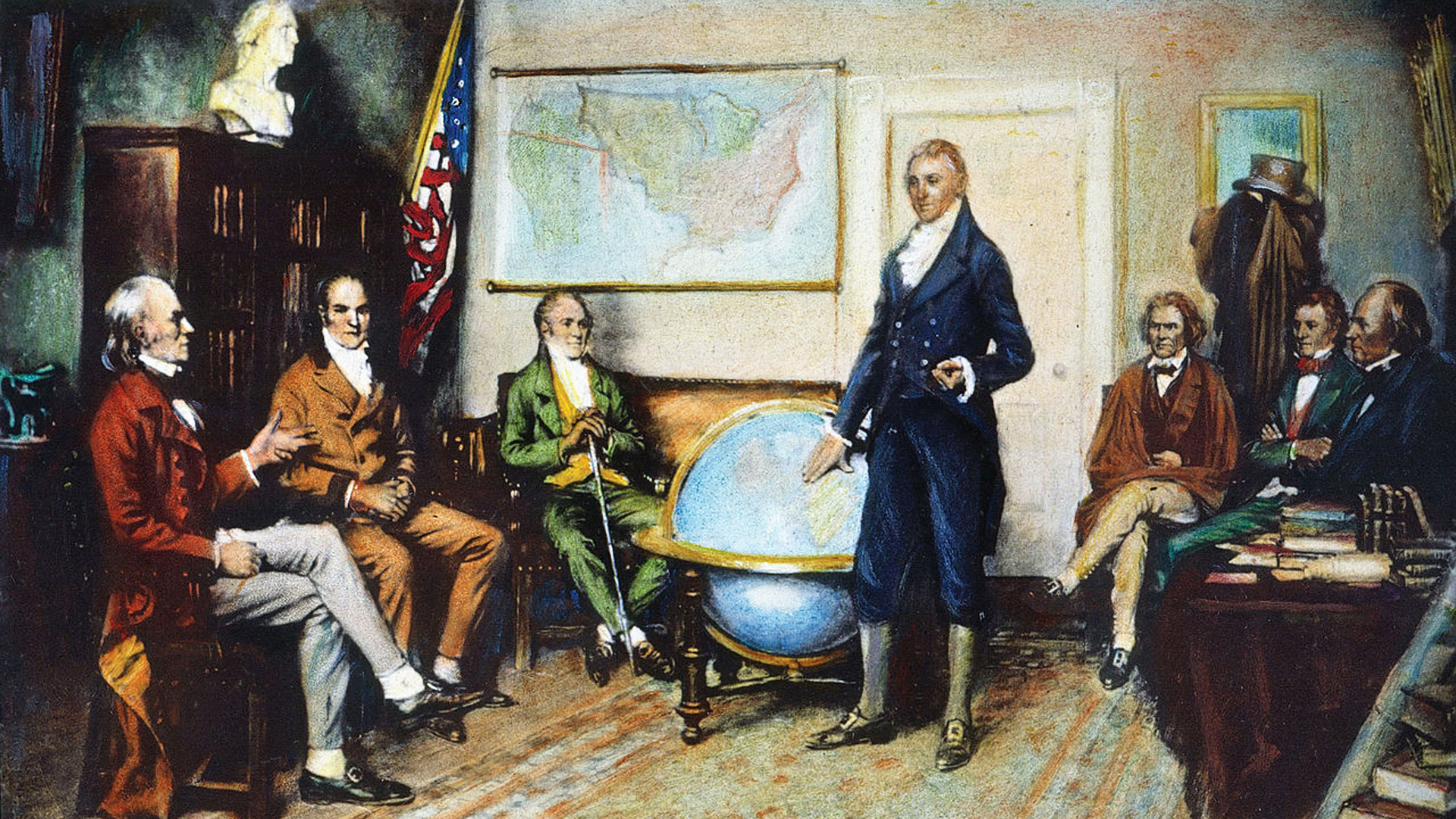
The Monroe Doctrine was a bold foreign policy statement issued by President James Monroe in 1823.
The Dive
In 1823, the United States was still a young nation, barely finding its footing in a world controlled by powerful European empires. Many Latin American countries had just fought for and won their independence from Spain and Portugal. As these new nations tried to build stable governments, European powers—the same ones that had once ruled them—considered returning to reclaim lost colonies or expand their influence. American leaders feared that if Europe marched back into the Western Hemisphere, the fragile freedom of these new republics would crumble.
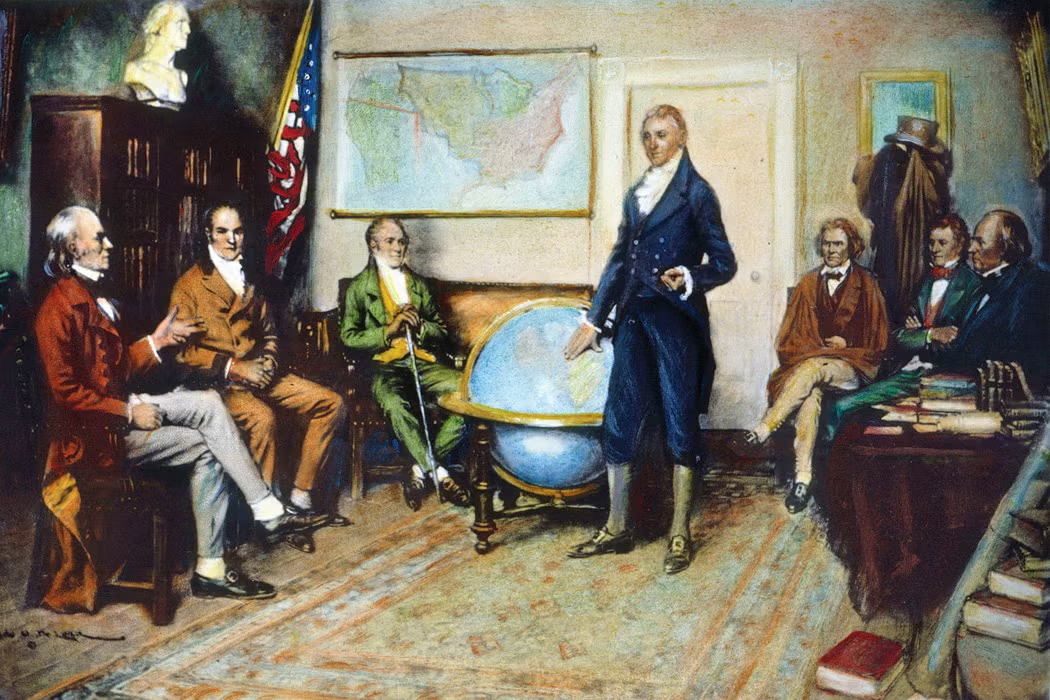
President James Monroe delivered his annual message to Congress that December, but hidden inside the usual updates was a revolutionary idea: the Western Hemisphere was no longer open to European colonization. This bold statement would become known as the Monroe Doctrine. It warned European nations that any attempt to control or interfere in the Americas would be viewed as a hostile act. At the same time, Monroe promised that the United States would stay out of European affairs—a balance meant to keep peace while defending the hemisphere’s independence.
Although Monroe delivered the message, its mastermind was Secretary of State John Quincy Adams. Adams worried that partnering with Britain, though tempting, could put the United States in a weaker position. Britain’s help might protect Latin America, but it could also limit U.S. influence in the future. Instead, Adams pushed for a strong, unilateral message: the United States would speak for itself, protect the new American republics, and set its own course in international affairs.
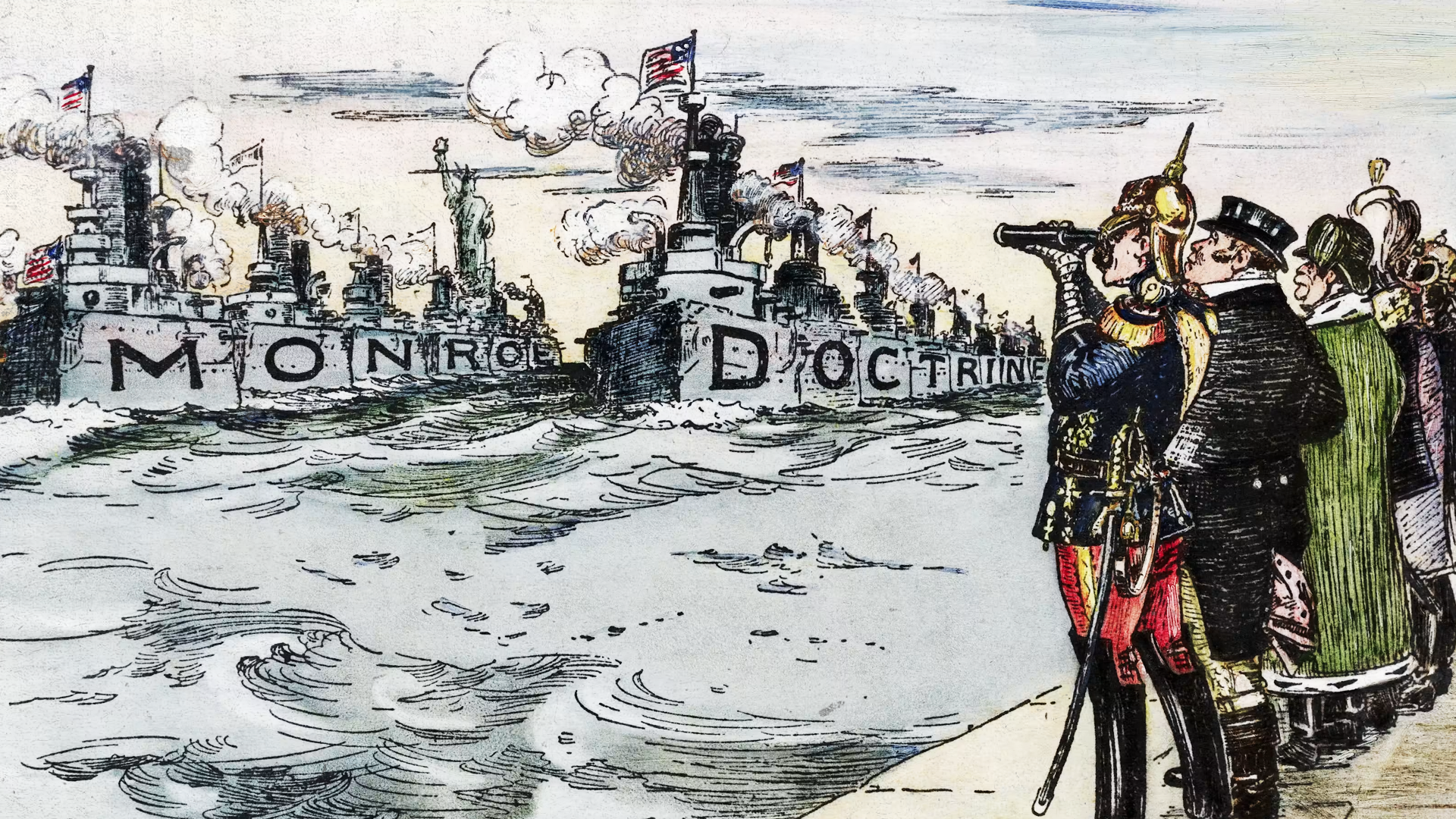
The truth is, when Monroe made this declaration, the United States did not yet have the military or naval strength to enforce it. Outside the country, European governments largely ignored the speech. But as the nation grew stronger over the following decades, the Monroe Doctrine gained power. By the mid-1800s, the U.S. began using the doctrine to justify its own expanding influence in the Americas, including supporting Mexican leader Benito Juárez in 1867 as he resisted a French-backed emperor.
The interpretation of the Monroe Doctrine shifted dramatically in 1904 under President Theodore Roosevelt. He added the Roosevelt Corollary, arguing that the United States had the right to act as an 'international police power' in Latin America. Suddenly, a policy once meant to keep Europeans out was used to send U.S. Marines into countries like Nicaragua, Haiti, and the Dominican Republic. This more aggressive version became known as the 'Big Stick' policy—one that many Latin American nations viewed with fear and frustration.
Throughout the 20th century, the Monroe Doctrine remained influential. During the 1962 Cuban Missile Crisis, President John F. Kennedy cited it as he confronted the Soviet Union’s missile bases in Cuba. Later, during the Cold War, U.S. leaders invoked the doctrine to justify involvement in El Salvador, Nicaragua, and Panama. Even when later presidents tried to soften its tone—like Franklin D. Roosevelt’s 'Good Neighbor' policy—the doctrine still shaped U.S. actions and relationships across the hemisphere.
Today, the Monroe Doctrine carries a complicated legacy. For some, it represents a promise to protect the Americas from outside control. For others, especially in Latin America, it symbolizes a long history of U.S. interference and unequal power. What began as a message of independence has grown into a lesson about how foreign policy can evolve, gain power, and impact generations far beyond its original moment.
Why It Matters
The Monroe Doctrine shows how a single idea can shape the destiny of an entire region for generations. What began as a warning to European powers became a guiding force behind U.S. actions in the Western Hemisphere—sometimes protective, sometimes harmful, always influential. Understanding this doctrine helps us ask deeper questions about power, responsibility, and how nations choose to interact with one another. It reminds us that foreign policy isn’t just lines on a map, it’s a series of choices rooted in values, priorities, and consequences that ripple across borders and time.
?
Why did the United States feel threatened by European involvement in the Americas in the early 1820s?
How did the Monroe Doctrine change as the U.S. became more powerful?
Do you think the Roosevelt Corollary was a fair interpretation of the original doctrine? Why or why not?
How might Latin American nations have viewed the Monroe Doctrine differently than U.S. leaders?
Can you think of modern examples where one country tries to influence another? How should nations respond?
Dig Deeper
This video explains the origins and meaning of the Monroe Doctrine and why it became a cornerstone of early American foreign policy.
A visual look at how the United States grew from a minor nation to a global superpower, showing how foreign policy shaped its rise.
Related
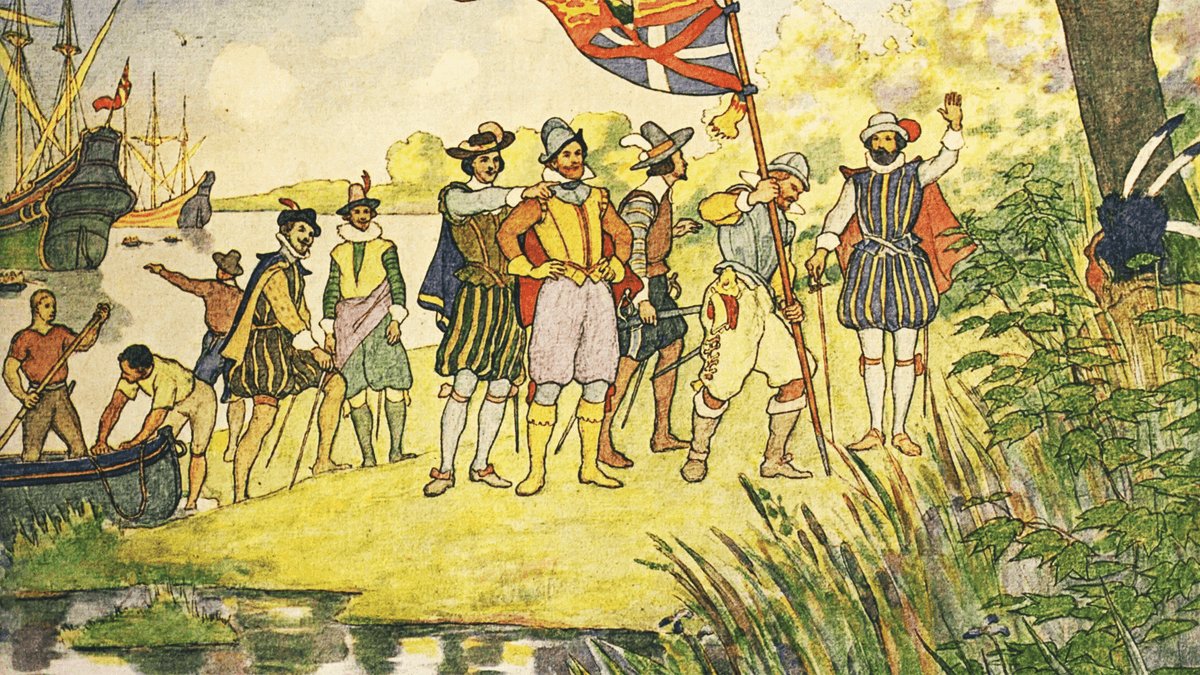
Joint-Stock Companies: Capitalism, Colonization, and Risk
Without joint-stock companies, there might be no Jamestown, no thirteen colonies—and no United States. These early capitalist ventures let investors fund risky New World settlements without bankrupting the Crown.
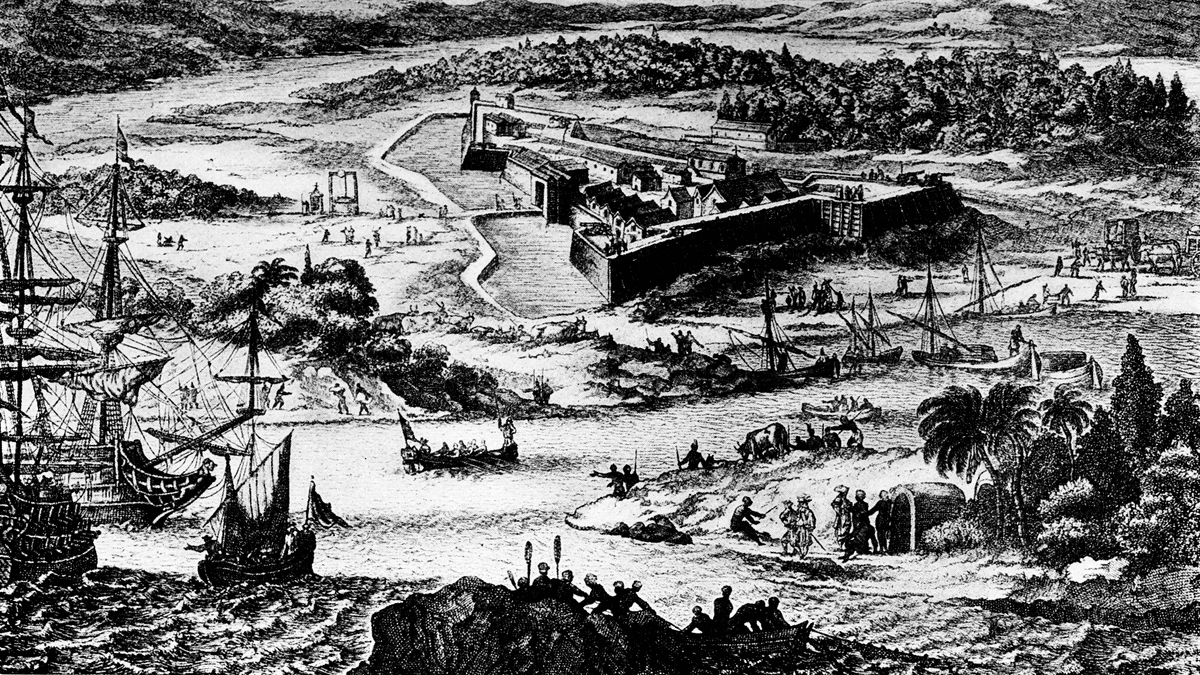
U.S. Geography: How the Land Shaped a Nation
Before the United States was born, geography shaped how people lived, worked, and fought over this land. From the Appalachian Mountains to the Great Plains, the natural landscape influenced settlement, culture, and history.
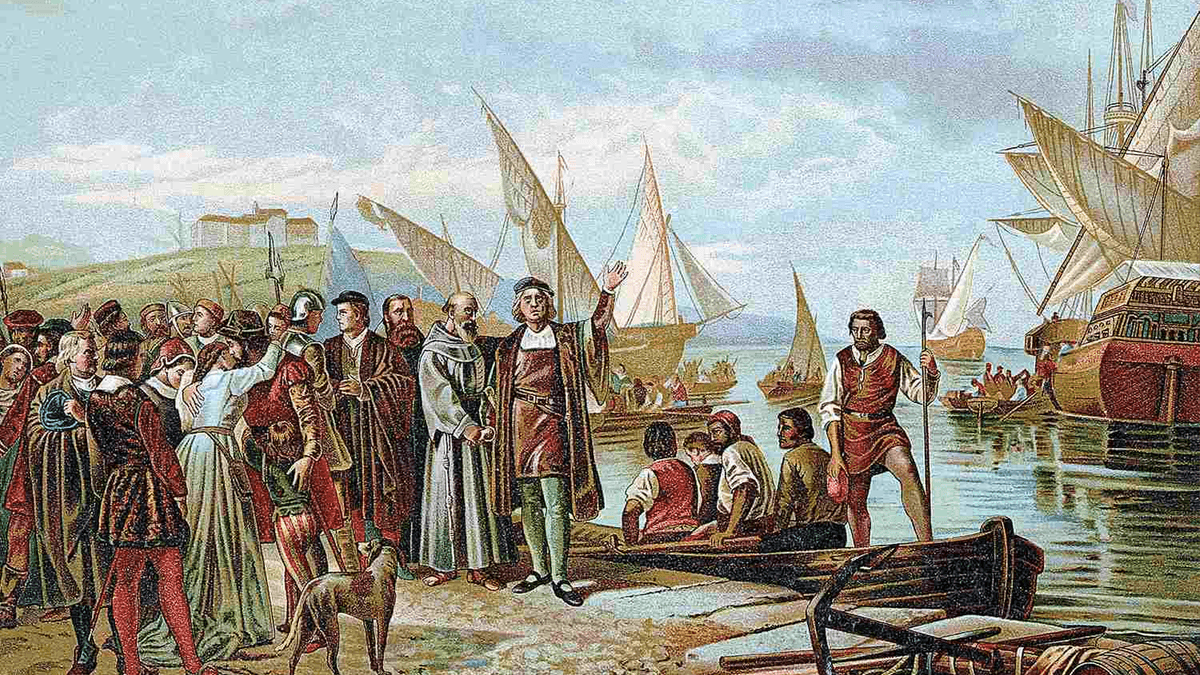
European Exploration of the Americas
When European explorers set sail across the Atlantic, they weren’t just chasing trade routes—they were rewriting the world’s future. But discovery for some meant devastation for others.
Further Reading
Stay curious!