

What Is Binary? The Language Beneath Every Screen
The Dive
Have you ever wondered how a computer understands what you type? Every time you send a text, play a game, or watch a video, your device is using a simple system made of just two symbols: 0 and 1. This system is called binary. It's the reason websites load, messages send, and even rockets launch. It may look small and simple, but it is the powerful foundation of all modern technology. Let’s explore what binary is, how it works, and why it matters.
Binary is a number system that uses only two digits, 0 and 1. Because it uses two digits, it is called a base-2 system. This is different from the decimal system we use every day, which is base-10 and uses ten digits from 0 to 9. In binary, each 0 or 1 is called a bit, which means “binary digit.” Eight bits together are called a byte. Bytes are used to store letters, numbers, pictures, sounds, and instructions inside a computer.
Computers use binary because they are built with tiny electronic switches called transistors. Each switch can be either on or off. When the switch is on and electricity is flowing, it represents 1. When the switch is off and electricity is not flowing, it represents 0. Computers do not understand English, emojis, or pictures the way humans do. They understand electrical signals. Binary is simply the written form of those on-and-off signals.
Binary works by placing 0s and 1s in specific positions. In our normal number system, each place increases by ten as we move to the left. In binary, each place increases by two. By combining different patterns of 0s and 1s, computers can represent many different numbers. For example, the binary number 1101011 equals 107 in our decimal system. Computers perform these conversions and calculations extremely fast—millions or even billions of times per second.
Binary can represent much more than numbers. Special coding systems, such as ASCII, assign numbers to letters. Those numbers are then written in binary. That means every text message, email, and website you see is really made of long patterns of 0s and 1s behind the scenes. Images, music, and videos are also stored as binary data. Even the programs that run your apps are written in binary instructions.
Some binary files contain instructions that tell the computer exactly what to do. These are called executable files. They are not written in a language humans can read. Instead, they are written in machine-readable binary code. When you open a program, the computer’s processor reads those binary instructions and carries them out step by step. Without binary, software could not run.
Binary is also used to search and organize information quickly. A method called binary search helps computers find words or numbers in large lists by repeatedly dividing the list in half. Binary is used in encryption to protect passwords and private messages. It is used in digital communication systems like fiber optics and wireless networks. Artificial intelligence systems also depend on binary data to process information.
The idea of binary is older than computers. In the 1600s, a German mathematician named Gottfried Wilhelm Leibniz studied and explained how all numbers could be written using only 0 and 1. Long before modern electronics existed, people were exploring the power of a two-symbol system. When engineers later built electronic computers, binary turned out to be the perfect match for switches that are either on or off.
Binary is important because it allows computers to store, process, and share information efficiently. It creates a universal language that all digital devices can understand. It also helps detect errors in communication and keeps data secure. Without binary, there would be no internet, no video games, no streaming services, and no smartphones.
At its core, binary is elegantly simple: two states, endless possibilities. From the smallest bit inside a processor to the largest global data network, binary makes it possible for machines to interpret instructions and deliver meaningful output. Understanding binary is not just a technical skill—it is a way of understanding the invisible language that powers the digital world.
Why It Matters
Binary is the foundation of all digital technology. It allows computers to process instructions, store information, and communicate across networks. By understanding binary, students gain insight into how modern devices function at their most fundamental level. This knowledge forms the groundwork for programming, cybersecurity, artificial intelligence, and nearly every field in modern technology.
?
Dig Deeper
A fast-paced introduction to how binary numbers work.
An engaging explanation of binary and bits from Harvard's CS50 course.
Related

Build the Future: Exploring Robotics Engineering
Robots aren’t just science fiction—they’re science in action. Robotics engineering combines creativity, coding, mechanics, and problem-solving to build machines that help us explore, create, and care.
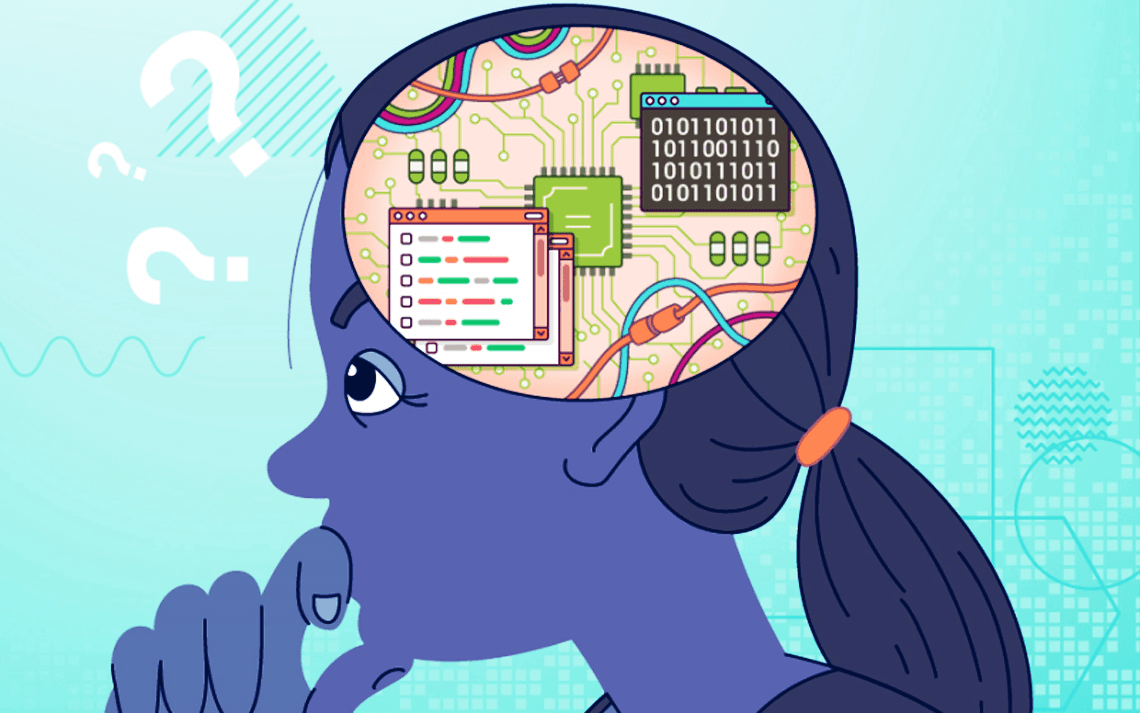
Think Like a Computer: Cracking the Code of Algorithms & Computational Thinking
An algorithm is just a fancy word for a list of directions. But when used with computational thinking, it becomes a superpower for solving big, messy problems—just like a coder, scientist, or game designer.

Privacy in the Digital Age: Protecting Your Information
As we share more of our lives online, protecting personal information has become a critical challenge. How can we safeguard our privacy in an age of data breaches and surveillance?
Further Reading
Stay curious!