
DNA: The Letters That Define Life
The Dive
Inside every living thing—plants, animals, and people—there is a tiny molecule that carries the instructions for life. That molecule is called DNA, short for deoxyribonucleic (dee-oxy-ri-bo-new-klee-ik) acid. It tells cells how to grow, how to repair themselves, how to work together, and how to keep an organism alive. Without DNA, cells would have no guidance, no plan, no code, no direction.
Inside your body are trillions of tiny cells. In the center of most of those cells is a place called the nucleus, and inside the nucleus are tightly packed bundles called chromosomes. Chromosomes are made of DNA. You get one set of chromosomes from your mom and one set from your dad, which is why you might have your dad’s smile or your mom’s eyes yet still be totally unique.
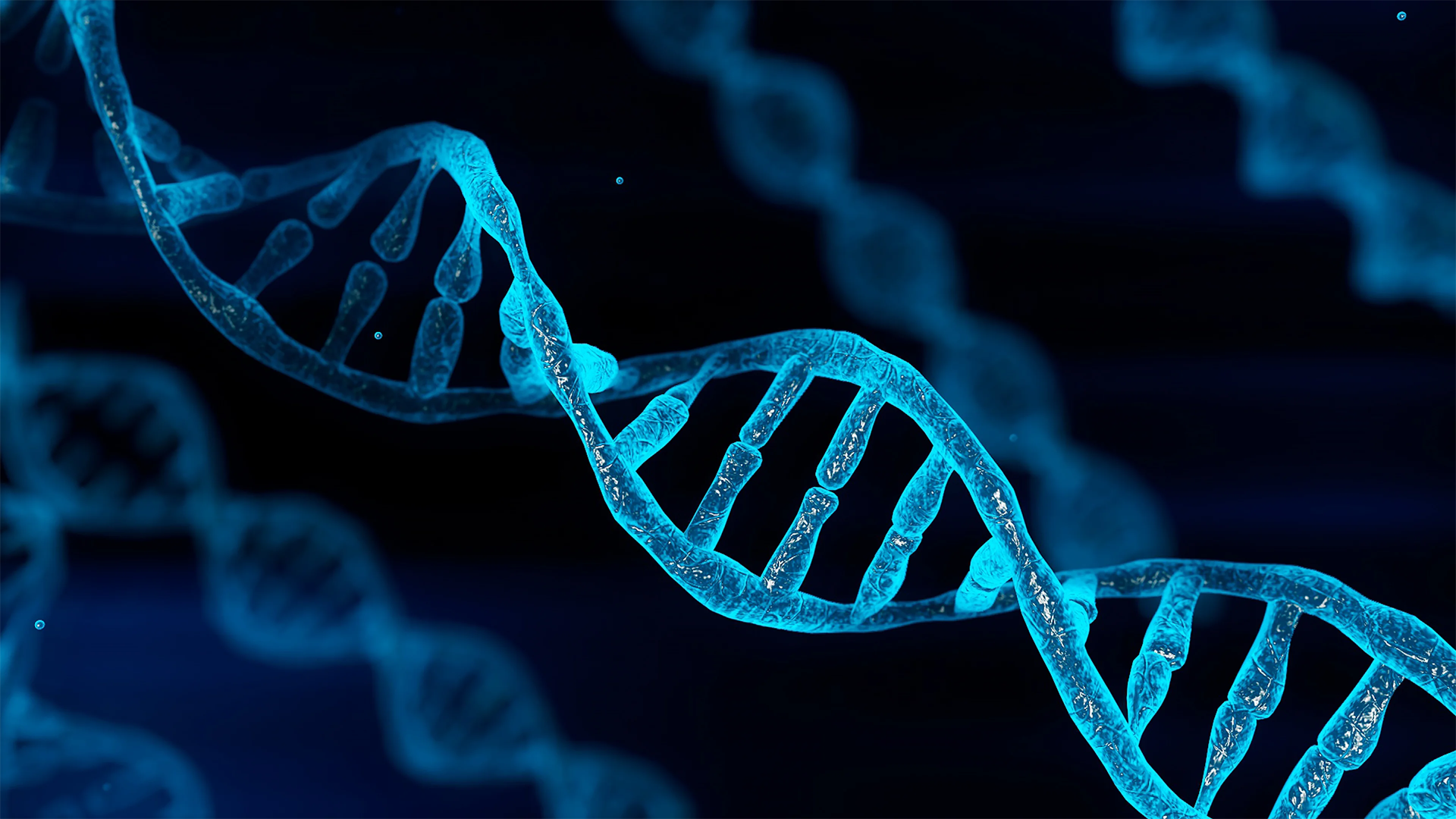
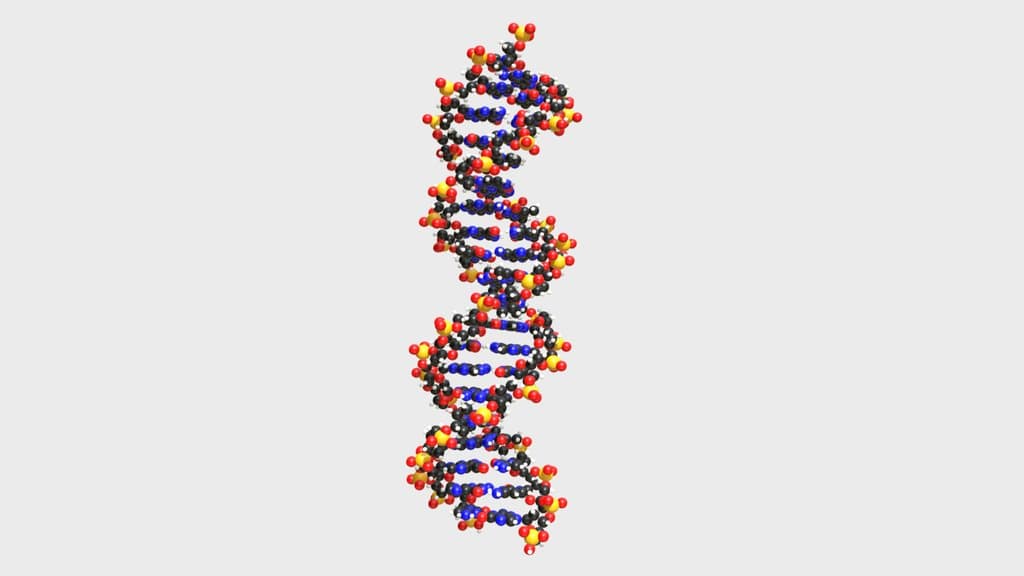
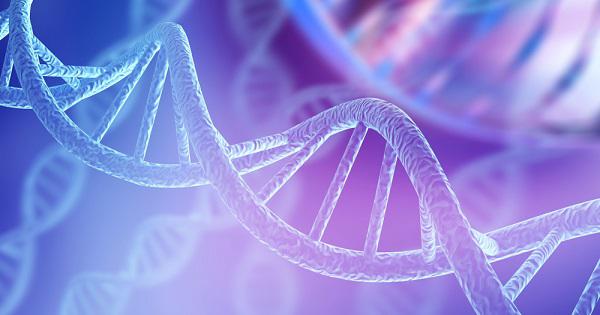
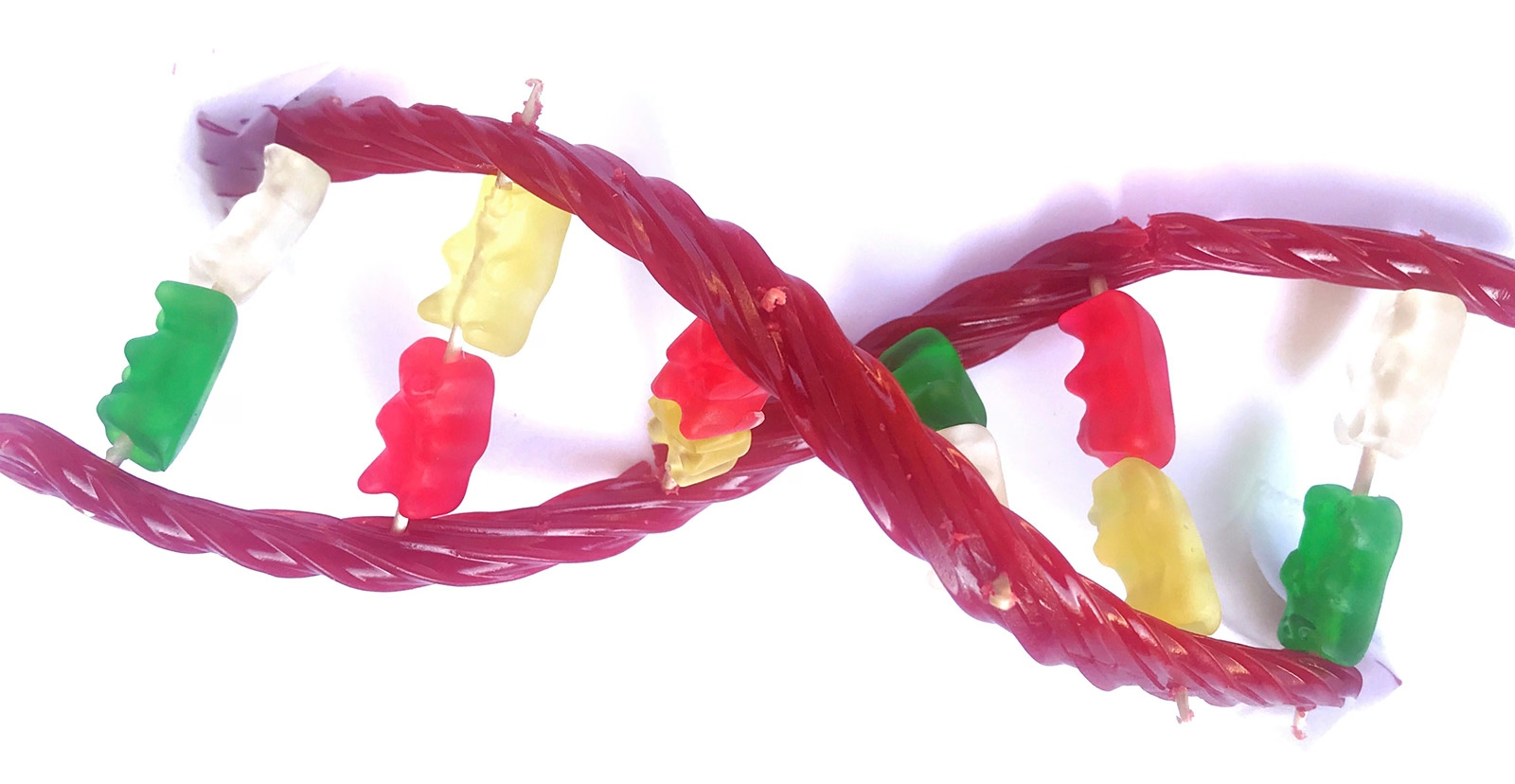
If you could zoom in with a super-powerful microscope, DNA would look like a twisted ladder. We call this shape a double helix. The sides of the ladder are made of sugar and phosphate molecules, and the rungs are made of pairs of chemicals called bases. There are only four bases in DNA: adenine (A), thymine (T), cytosine (C), and guanine (G). These bases always pair in the same way—A with T, and C with G—like puzzle pieces that only fit together one way.
The sequence of these bases forms a code that cells read to make proteins. Proteins do most of the work in the body. They build muscles, carry oxygen in your blood, fight infections, help your brain think, and control chemical reactions that keep you alive. A gene is a specific section of DNA that gives instructions for making one particular protein. Together, genes help decide things like eye color, height, and how different parts of the body work.
Even though we may look very different on the outside, we are incredibly similar on the inside. Any two people on Earth share about 99.9 percent of the same DNA. The tiny differences in the remaining 0.1 percent help explain why people vary in traits like height, eye color, health risks, and certain abilities. Those genetic differences interact with environment and experience, shaping who we become.
Sometimes, however, mistakes happen. These changes are called mutations. Mutations can be harmless, harmful, or even helpful. Some cause diseases, while others increase genetic diversity and help species adapt over time. Without mutations, evolution would not be possible.
What makes DNA especially powerful is that it connects all living things. Plants, animals, and humans may seem completely different, but they all use the same DNA language. The instructions are written differently, but the code itself—the four letters and the rules that govern them—is the same across all life on Earth.
Why It Matters
DNA doesn’t just explain who we are, it shows how deeply connected all living things truly are. By understanding DNA, we learn how traits are passed on, how bodies stay healthy or get sick, and how life changes over time through evolution. Most importantly, DNA reminds us that despite our visible differences, humans share the same basic biological blueprint, proving that we are far more alike than we are different.
?
Dig Deeper
An accessible explanation of DNA, its structure, and its role in living organisms.
A clear breakdown of DNA’s structure and how it copies itself.
Related
Macromolecules & The Chemistry of Life
Life is built on legos—but not the kind you step on barefoot. We're talking molecular legos: the macromolecules that fuel your body, build your cells, and store your DNA’s secrets.

Mariana Trench: Into Earth’s Deepest Classroom
Seven miles down, where sunlight never reaches and pressure can crush steel, life still finds a way. Meet the Mariana Trench—the deepest place on Earth—and the creatures, science, and protections that make it extraordinary.
Classification: How We Make Sense of a Wild and Wonderful World
Before we can protect nature—or understand it—we have to organize it. Classification is the science of finding patterns, drawing lines, and asking: What belongs where, and why?
Further Reading
Stay curious!