

What Is Buoyancy?
The Dive
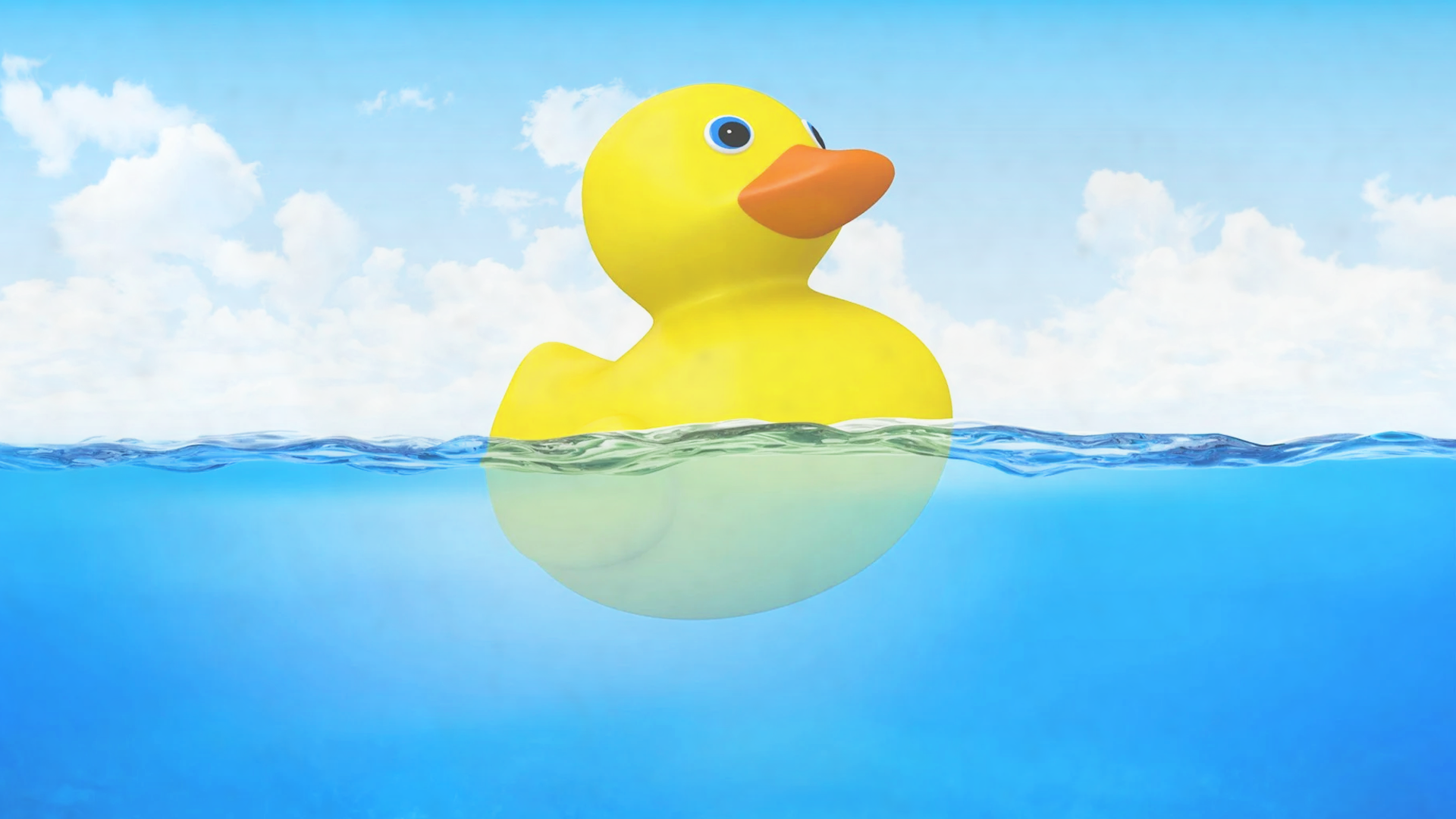
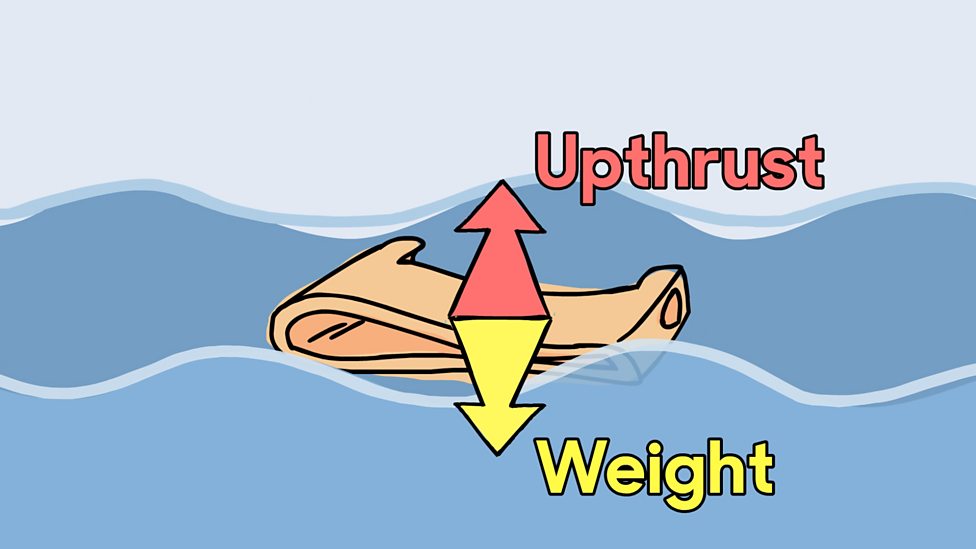
Buoyancy is the upward force that allows objects to float in water or rise through air. Whenever something is placed in a fluid—which includes liquids like water and gases like air—it experiences two forces at the same time: gravity pulling it down and a buoyant force pushing it upward. Whether something floats or sinks depends on which of these forces is stronger.
Scientists have been thinking about buoyancy for thousands of years. A famous story tells us that the Greek mathematician Archimedes first understood it while taking a bath. As he lowered himself into the water, he noticed the water level rise and realized that a submerged object pushes water out of the way. He concluded that an object will float if the weight of the water it pushes aside is greater than its own weight. This idea became known as Archimedes’ principle.
Understanding buoyancy also means understanding density. Density tells us how tightly packed the matter inside something is. If an object has a lot of mass squeezed into a small space, like a stone, it has high density and sinks. If it has less mass for its size, like a football, it has low density and floats. Comparing an object’s density to the density of the fluid around it helps us understand whether it will rise, sink, or hover somewhere in between.
The shape of an object plays an important role in buoyancy. Heavy ships made of steel float because their hulls are shaped to displace a large amount of water. As long as the water they push aside weighs more than the ship itself, even enormous cruise liners can stay afloat. Shipbuilders calculate the ship’s total weight, cargo load, and hull volume to ensure that it will sit safely above the waterline and remain stable at sea.
Buoyancy is not just important for human-made machines. Many animals use it to survive. Fish have a special organ called a swim bladder that works like a tiny balloon inside their bodies. When the bladder fills with gas, the fish becomes less dense and rises. When the bladder shrinks, the fish becomes denser and sinks. This allows fish to move through water without using much energy.
Submarines use a similar idea on a much larger scale. They have ballast tanks that fill with water to increase their density and help them dive. To rise again, compressed air blows the water out of the tanks, lowering their overall density and allowing the submarine to float back up. By adjusting these tanks, submarines can control their depth with precision.
Buoyancy even works in the air. Hot-air balloons rise because heated air inside the balloon becomes less dense than the cooler air around it. This difference in density creates an upward buoyant force. As the air inside cools or vents are opened to let hot air escape, the balloon becomes denser and gently returns to the ground.
The relationship between density and buoyancy can be understood with everyday examples. A cup of jelly beans weighs more than a cup of marshmallows because the molecules in jelly beans are packed more tightly. This difference in mass explains why certain materials sink while others float. When we compare how much water an object displaces to how dense it is, we can predict its behavior in a fluid.
Learning about buoyancy helps us understand how engineers design ships, how animals move in their environments, and why it takes only a life jacket to help a person float. It also teaches a powerful scientific lesson: forces are always interacting, even in places as ordinary as a bathtub or swimming pool. The more we understand these forces, the better we can explore, design, and discover our world.
Why It Matters
Understanding buoyancy shows us how science shapes the real world, from engineering ships and submarines to observing how animals move in their habitats. It builds foundational knowledge of forces, density, and motion—concepts essential for later physics learning and hands-on problem solving. Recognizing how objects interact with different fluids also deepens curiosity about the natural and engineered environments around us.
?
Why do some heavy objects float while lighter objects sink?
How does a fish use its swim bladder to move up and down?
What would happen to a submarine if its ballast tanks stopped working?
How does heating the air inside a hot-air balloon affect its buoyancy?
What everyday objects in your home rely on buoyancy to work properly?
Dig Deeper
Join Jessi and friends as they explore why some objects float and others sink.
Learn how displacement helps even massive ships stay afloat on the ocean.
Related
Push, Pull, Fall, Fly: Understanding Forces and Motion
From falling apples to orbiting moons, the universe runs on motion. Forces push, pull, and resist—shaping everything from your morning jog to the motion of planets.

Build the Future: Exploring Robotics Engineering
Robots aren’t just science fiction—they’re science in action. Robotics engineering combines creativity, coding, mechanics, and problem-solving to build machines that help us explore, create, and care.

Design Like an Engineer: Building Bridges and Towers That Last
Engineers are creative problem-solvers who use science and math to build our world. From bridges that hold trains to towers that scrape the sky, their designs balance strength, stability, and style—all under tight constraints.
Further Reading

Stay curious!