

1887: The Dawes Act and the Dismantling of Indigenous Lands
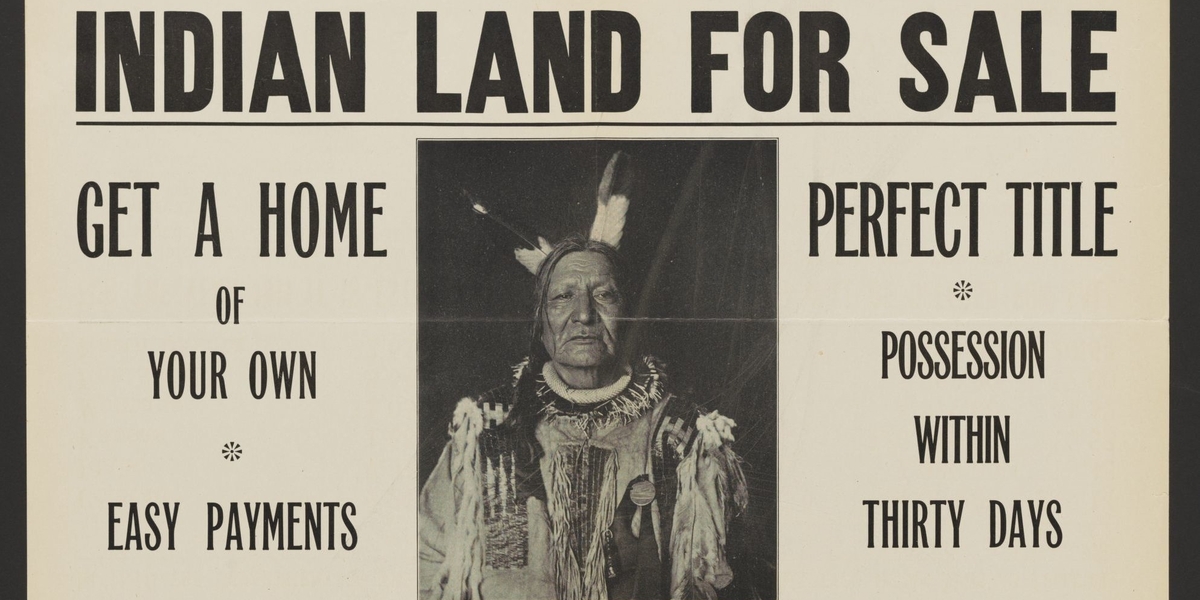
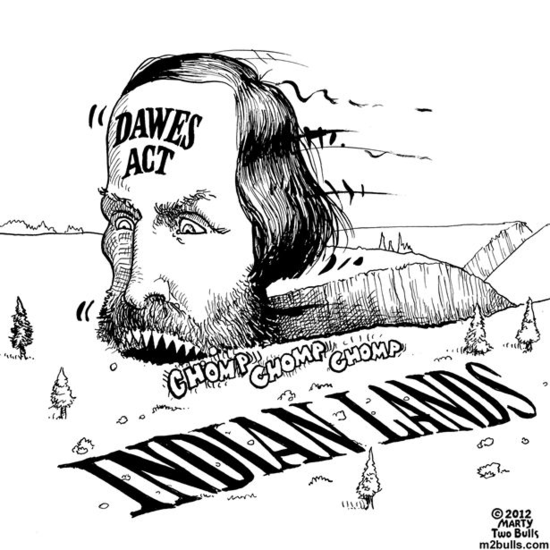
The Dawes Act, passed on February 8, 1887, was designed to force Indigenous peoples into the mold of individual landowners and farmers, stripping them of communal land ownership and traditional ways of life.
What Happened?
By the late 19th century, U.S. government policies towards Indigenous nations had shifted. Instead of outright warfare, federal officials sought to assimilate Native people into White American society. The Dawes Act, introduced by Senator Henry Dawes of Massachusetts, was designed to end communal land ownership and divide reservations into individual allotments.
Under the law, Native American families were each assigned a small plot of land—usually between 40 and 160 acres—while the remaining 'surplus' land was opened to White settlers. At the time, many U.S. officials saw this as a step toward ‘civilizing’ Indigenous people, forcing them into farming and abandoning traditional ways of life.
In reality, the Dawes Act was devastating. Many Indigenous families lost their land due to manipulation, fraud, and economic hardship. Farming was not always viable on the land they were given, and many lacked the resources to sustain themselves. Others were forced to sell their allotments just to survive, leaving them landless.
Over time, the impact of the Act became clear: by 1934, Native American landholdings had shrunk from 138 million acres to just 48 million acres. The Act’s policies fractured tribal unity, weakened Indigenous governance, and left generations struggling to reclaim their ancestral lands.
Recognizing the failure of this policy, the U.S. government eventually reversed course with the Indian Reorganization Act of 1934, which ended the practice of allotment. However, the damage had already been done. The Dawes Act remains one of the most devastating federal policies ever enacted against Indigenous nations, with consequences that continue to be felt today.
Why It Matters
The Dawes Act was not just about land—it was about power, control, and the forced erasure of Indigenous identity. It turned Native American sovereignty into a legal loophole, allowing the federal government to justify land theft on a massive scale. This history forces us to ask hard questions: Who benefits from policies of forced assimilation? How do past injustices shape the present? And what obligations do we have today to honor Indigenous rights and support tribal sovereignty?
?
How do you think losing their land affected Native American communities—not just economically, but culturally and spiritually?
Do you think governments today have a responsibility to make up for past injustices like the Dawes Act? Why or why not?
What can we learn from the history of Indigenous land dispossession that might help us make more just policies in the future?
Dig Deeper
A historical breakdown of the Dawes Act, its consequences, and the lasting impact on Indigenous communities.
Related
U.S. Geography: How the Land Shaped a Nation
Before the United States was born, geography shaped how people lived, worked, and fought over this land. From the Appalachian Mountains to the Great Plains, the natural landscape influenced settlement, culture, and history.
The American Civil War – A Nation Torn Apart
From Fort Sumter to Appomattox, the Civil War was the deadliest conflict in U.S. history, fought over the nation's most profound moral and political divisions.
The Voting Rights Act of 1965: Enforcing the 15th Amendment
How a landmark law transformed voting access in the South and gave real force to the promises of the 15th Amendment.
Further Reading
Stay curious!