

When Nazis Rallied in Madison Square Garden
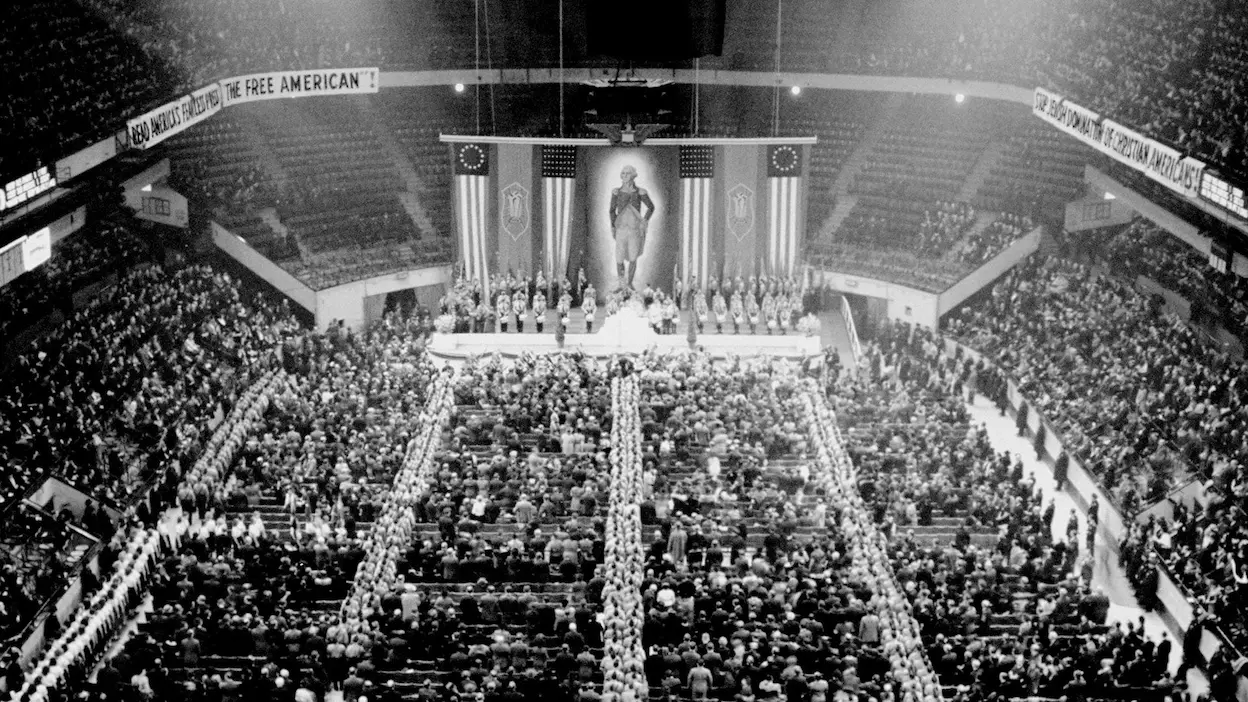
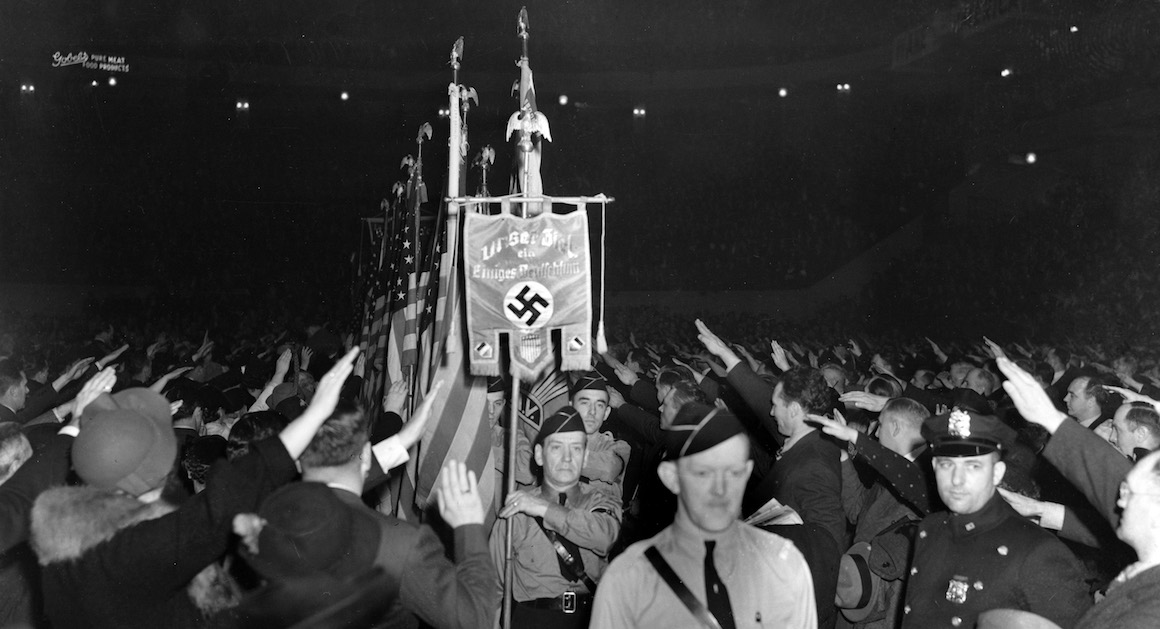
Inside Madison Square Garden, more than 20,000 Americans saluted a 30-foot portrait of George Washington flanked by swastikas. Outside, 100,000 protesters filled the streets, warning that fascism was not just a European problem.
What Happened?
As fascism swept through Europe, it found sympathizers in the United States. The German American Bund, an openly pro-Nazi organization, had chapters across the country, summer camps for youth, and a vision for an ‘Aryan America.’ The February 20, 1939 rally in Madison Square Garden was their largest display of power.
Inside the Garden, attendees pledged allegiance to both America and Nazi ideology, while banners read ‘Stop Jewish Domination of Christian America.’ Speeches celebrated white supremacy, attacked Jewish Americans, and claimed that the Founding Fathers would have supported their cause.
Outside, the resistance was just as fierce. Some 100,000 people—ranging from Jewish activists to veterans to working-class New Yorkers—filled the streets, carrying signs that warned of growing fascism. Some called out what too many ignored: ‘Don’t wait for the concentration camps—Act now!’
One man refused to sit quietly. Isadore Greenbaum, a Jewish-American plumber, pushed through the crowd, made his way to the stage, and shouted ‘Down with Hitler!’ before being beaten and thrown off stage. Police arrested *him*—not the Nazis—for disorderly conduct.
The Bund’s leader, Fritz Kuhn, saw the rally as a moment of triumph, but his movement would not last. Later that year, he was convicted of embezzlement, denaturalized, and deported. With the outbreak of World War II, America’s tolerance for open fascism faded—at least for a time.
The footage of the 1939 rally lay largely forgotten for decades, but resurfaced in 2017, reminding the world of a chilling truth: fascism was not just a foreign problem. It found a home in America, and it met resistance in the streets. The lesson is as urgent today as it was then: complacency is complicity.
Why It Matters
History is not a distant past—it echoes into the present. In 1939, American Nazis filled an arena, confident in their growing influence. In 2025, hate groups still attempt to manipulate patriotism as a cover for bigotry. The Madison Square Garden rally reminds us that the fight against extremism is never just ‘someone else’s problem.’ It is always closer than we think. The protesters in the streets that night understood that silence enables hate. Today, we must ask ourselves: When bigotry rises, will we stand against it? Or will we wait until it’s too late?
?
How do extremist groups use patriotism to justify their beliefs? How can we challenge that?
Why is it important to learn about moments in history when people fought against hate? How can those lessons help us today?
What would have happened if no one had protested the rally? What role does public resistance play in stopping hate movements?
How can learning history help us be better citizens today? What lessons from the past can help us make good choices for the future?
Dig Deeper
A chilling short film showcasing real footage of the 1939 Nazi rally in Madison Square Garden, revealing a dark chapter of American history.
Related
Building a New Nation: Foundations of State and National Government
From the shaky Articles of Confederation to the Constitution and Bill of Rights, discover how America’s founders navigated the turbulent waters of self-government—and why North Carolina took its time joining the party.
What Is Civics?
Civics is the study of how citizens participate in democracy—and why their participation matters.
European Exploration of the Americas
When European explorers set sail across the Atlantic, they weren’t just chasing trade routes—they were rewriting the world’s future. But discovery for some meant devastation for others.
Further Reading
Stay curious!