

Privateers, Profit, and Patriotism: Congress Authorizes Raids on the High Seas
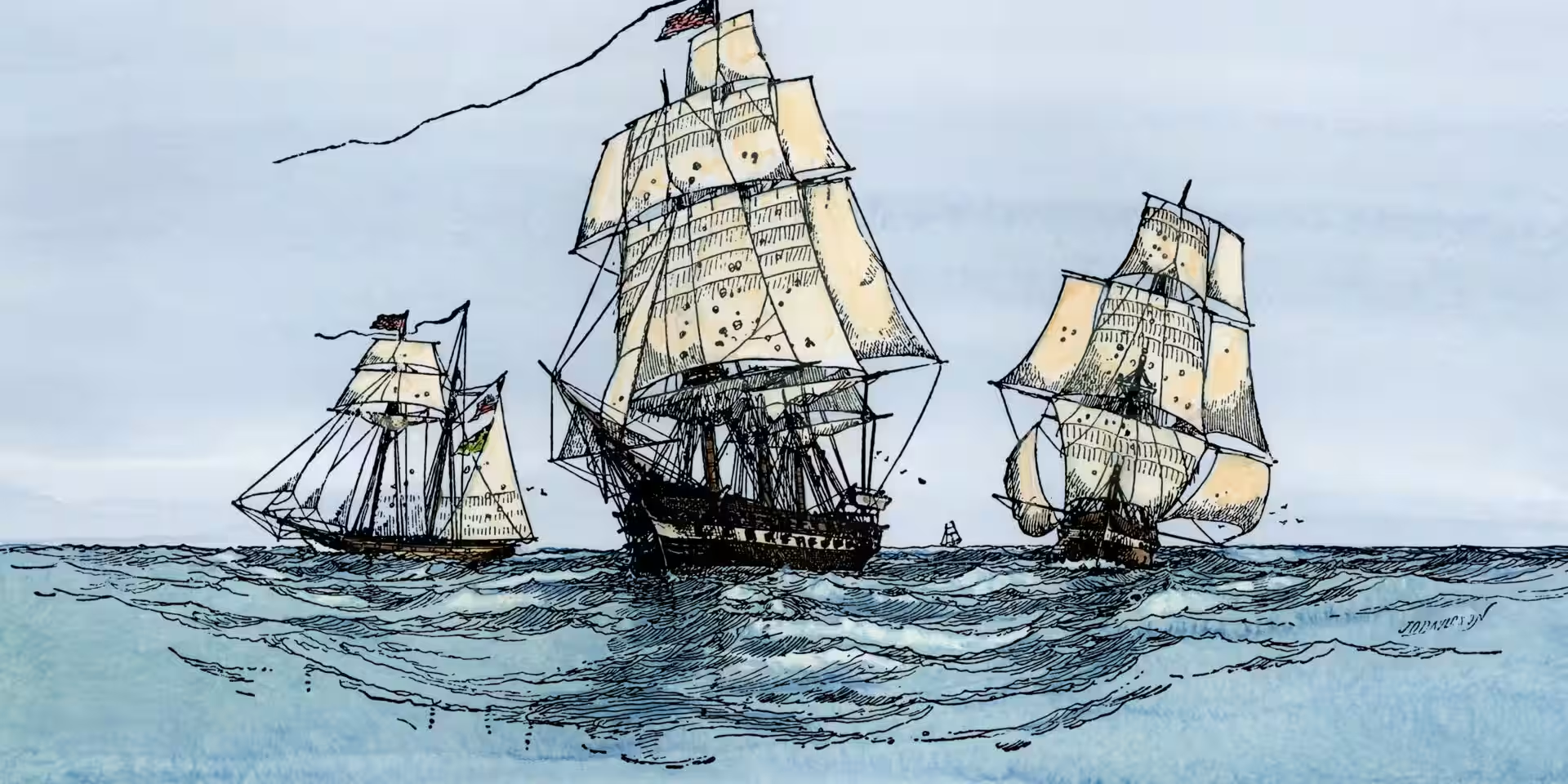
An 18th-century painting of a privateer vessel chasing a British merchant ship against a stormy backdrop.
What Happened?
Early in the Revolution, Great Britain’s navy dwarfed the fledgling Continental fleet, threatening the colonies’ crucial trade routes. Congress recognized it couldn’t rapidly outbuild the world’s most formidable navy, so it tapped the independent spirit of colonial merchants, whalers, and fishermen. By granting them Letters of Marque and Reprisal, Congress allowed private vessels to attack any British ship outside designated exceptions—turning profitable raids into patriotic acts.
Under these commissions, privateers could seize enemy cargo and split the bounty with the government. But the real winner was the American cause. Each captured British merchant ship hammered the British economy and jacked up insurance rates—making everyday life in Britain more expensive and war weariness more likely.
While privateers were legally sanctioned, the distinction from piracy was thin. British merchants despised them; the Royal Navy hunted them. Some British lawmakers insisted these 'marauders' be treated like criminals. Yet, from an American viewpoint, they were crucial disruptors, waging a guerrilla war at sea. John Paul Jones and other Continental Navy officers sometimes fumed that privateers undercut official naval enlistments, but their achievements in capturing thousands of British vessels can’t be ignored.
Privateering’s success came largely from the promise of serious profits. Wealthy backers invested in these ventures hoping that one good haul would offset any number of losses. According to Founding Father Robert Morris, 'One arrival will pay for two, three or four losses,' embodying the high-risk, high-reward mindset that fueled the maritime chaos. Even Benjamin Franklin hopped on board, granting Letters of Marque from his post in Paris to encourage transatlantic raids and further strain the British Empire.
Why It Matters
Authorizing privateers showed how American ingenuity, fueled by financial incentive and patriotic fervor, could level the playing field against an otherwise unbeatable opponent. Privateering didn’t just harass British shipping—it helped unify the colonies under a shared cause of independence, reminding us that when traditional methods fall short, creative (and controversial) solutions can forge new paths to victory.
?
What difference did privateers make compared to the small official Continental Navy?
How might this early use of 'guerrilla warfare at sea' have reshaped ideas about fair play in conflict?
Could you compare privateers in the American Revolution to modern-day forms of unconventional warfare?
What risks did Congress face by turning everyday citizens into legally sanctioned sea raiders?
Dig Deeper
At the time of the Revolutionary War, naval warfare wasn’t just the preserve of governments. Private businesses could also send armed vessels out to sea. It was a risky business, but American privateers inflicted millions of dollars of loss on British supply lines – making some very rich in the process.
Related

The Haudenosaunee Confederacy: Indigenous Roots of American Democracy
Long before the Founding Fathers gathered in Philadelphia, a league of Native Nations had already established one of the world’s oldest participatory democracies—an Indigenous blueprint for unity, peace, and governance.
Joint-Stock Companies: Capitalism, Colonization, and Risk
Without joint-stock companies, there might be no Jamestown, no thirteen colonies—and no United States. These early capitalist ventures let investors fund risky New World settlements without bankrupting the Crown.
The Cape Fear & Waccamaw Siouan: Indigenous History of Southeast North Carolina
Long before the first European ships arrived at the Carolina coast, the Cape Fear River and Lake Waccamaw were home to thriving Indigenous communities.
Further Reading
Stay curious!