

The Civil War Erupts: Confederate Forces Fire on Fort Sumter
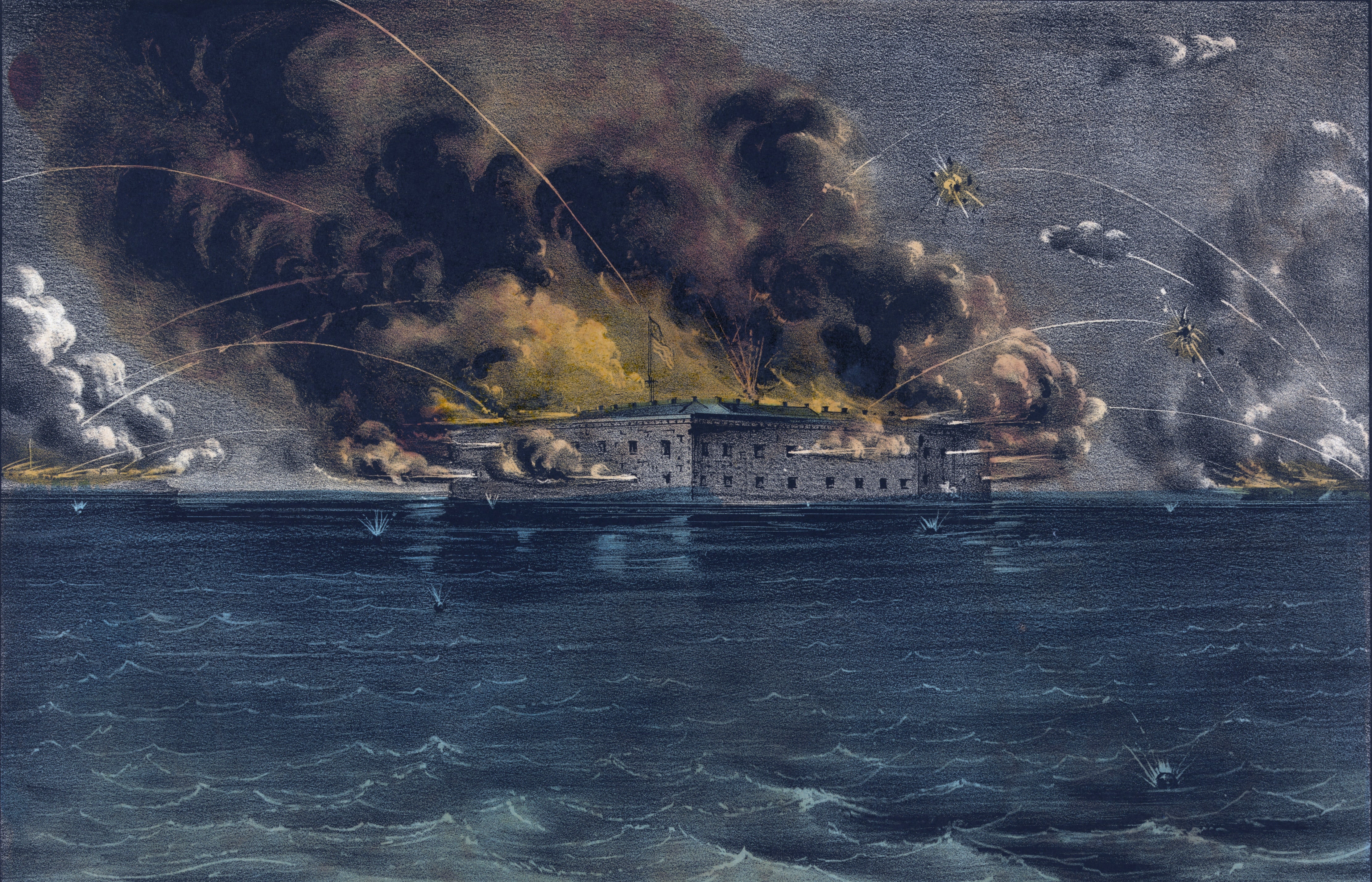
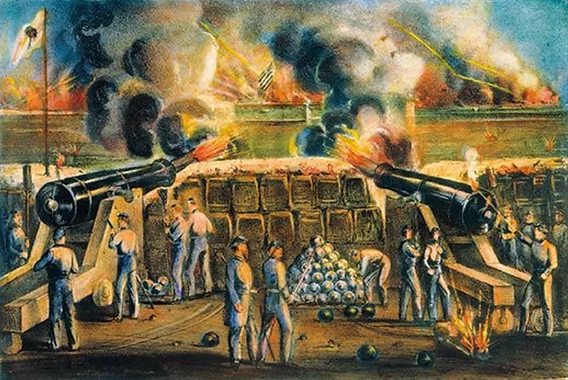
Cannons firing on Fort Sumter as smoke rises from its walls in the Charleston Harbor
What Happened?
By 1861, the nation had been boiling over with tension for decades. The North and South clashed over slavery, economics, and federal power. When Abraham Lincoln was elected in 1860 on a platform opposing the expansion of slavery, seven Southern states seceded from the Union. They formed the Confederate States of America, dedicated to preserving slavery as their economic and social foundation.
South Carolina was the first to secede and quickly demanded control of all federal property in its borders—including Fort Sumter. When Union troops refused to surrender the fort, Confederate General Beauregard gave the order to fire. Major Robert Anderson’s garrison was badly outgunned and surrendered the next day.
Lincoln's call for troops in response prompted four more slave states to join the Confederacy. What followed was the deadliest conflict in U.S. history. While the North fought to preserve the Union, the South fought to preserve slavery. Confederate leaders openly declared white supremacy and built a government based on the belief that Black people were inferior.
Today, some still try to say the war was about 'states’ rights.' But the truth is clear: the main 'right' Southern leaders were fighting for was the right to enslave people. The Civil War wasn’t a misunderstanding—it was a rebellion to protect a violent, racist system. And it began, loud and clear, at Fort Sumter.
Why It Matters
Understanding how and why the Civil War started helps us face the truth about our country’s past—and shape a more honest future. The Confederacy wasn’t about freedom. It was about white supremacy. Knowing that helps us stop repeating myths like the 'Lost Cause' and recognize how deeply slavery shaped America. The cannon blasts at Fort Sumter didn’t just launch a war—they exposed the explosive consequences of a nation divided over human dignity.
?
What role did slavery—not just states' rights—actually play in causing the Civil War?
Why do you think some Americans still try to rewrite the causes of the Civil War today?
How did Lincoln’s election trigger such a dramatic response from the Southern states?
What does the story of Fort Sumter teach us about the dangers of avoiding hard truths?
In what ways is the legacy of the Civil War—and the fight over its meaning—still with us?
Dig Deeper
John Green ACTUALLY teaches about the Civil War. In part one of this two-part look at the US Civil War, John looks into the causes of the war, and the motivations of the individuals who went to war.
In which John Green teaches you how the Civil War played a large part in making the United States the country that it is today. He covers some of the key ways in which Abraham Lincoln influenced the outcome of the war, and how the lack of foreign intervention also helped the Union win the war.
Related
The Role of Ideas in Revolutionary Change
The Role of Ideas in Revolutionary Change: How can ideas and writings change the course of history?
Joint-Stock Companies: Capitalism, Colonization, and Risk
Without joint-stock companies, there might be no Jamestown, no thirteen colonies—and no United States. These early capitalist ventures let investors fund risky New World settlements without bankrupting the Crown.
The Second Amendment: Rights, Regulation, and Modern Debate
The Second Amendment has sparked centuries of debate: Is it about militias, individual rights, or both? From its 18th-century origins to modern Supreme Court rulings, this question remains central to America’s most heated constitutional argument.
Further Reading
Stay curious!