

Tiny Particles, Massive Change: J.J. Thomson Discovers the Electron
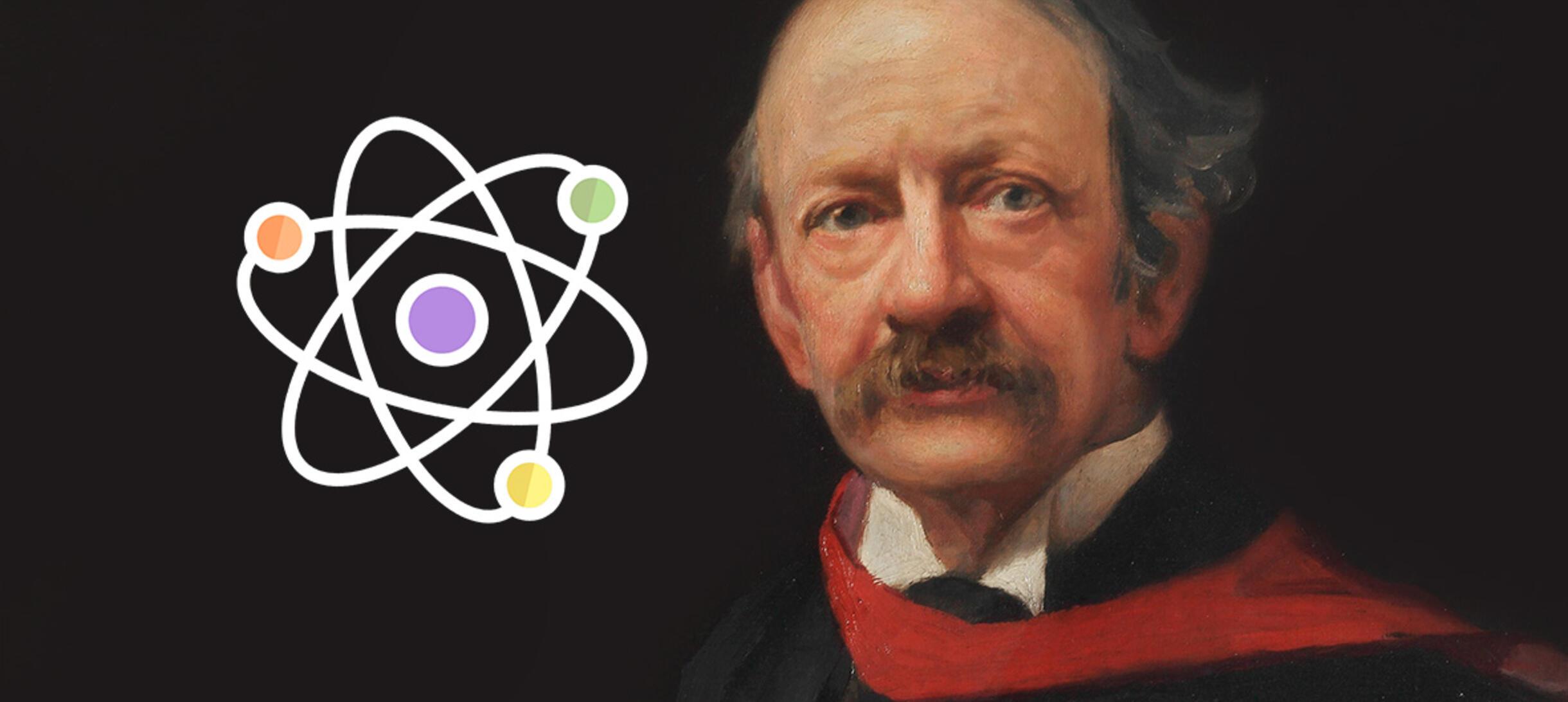
J.J. Thomson, a Cambridge physicist with a knack for tubes, wires, and world-shaking ideas.
What Happened?
J.J. Thomson’s experiments with cathode ray tubes showed that all atoms contain tiny, negatively charged subatomic particles. These mysterious rays were always the same, no matter which material he used—a clue that he had discovered a universal feature of all atoms.
He concluded that these particles were over 1,000 times lighter than a hydrogen atom, meaning the atom was not the solid, indivisible sphere imagined by Dalton. It was divisible. It was electrical. It was complicated.
To explain his findings, Thomson proposed the 'plum pudding model'—a theory that electrons were sprinkled inside a positively charged 'soup' like raisins in dessert. That analogy wouldn’t last, but it was a first step toward atomic truth.
One of Thomson’s own students, Ernest Rutherford, disproved the plum pudding model in 1911 with his gold foil experiment, leading to the discovery of the atomic nucleus. And the journey didn’t stop there—Rutherford’s own student, Niels Bohr, would later refine the atomic model into the orbiting electrons of early quantum physics.
Thomson’s discovery earned him the Nobel Prize in 1906 and opened the door to an entirely new science of the subatomic. His lab would become the intellectual launching pad for multiple future Nobel laureates—including his own son. The discovery of the electron wasn’t just a scientific milestone. It was the moment the modern world cracked open the atom—and found a cosmos inside.
Why It Matters
The discovery of the electron dismantled the idea that atoms were indivisible and kickstarted modern physics. It reshaped everything from chemistry and electronics to nuclear energy and quantum mechanics. In short: without J.J. Thomson’s bold experiments, your entire digital life—this text included—would be impossible.
?
Why was the discovery of the electron such a radical change to the atomic theory of the time?
How did Thomson’s cathode ray experiments lead to the conclusion that electrons exist in all atoms?
What flaws existed in the 'plum pudding model' of the atom, and how were they revealed?
How did J.J. Thomson’s discovery lay the groundwork for the development of quantum mechanics?
In what ways has our understanding of the electron shaped modern technology?
Dig Deeper
J.J. Thomson was an experimental physicist credited with discovering the electron. This video briefly covers his life leading up to the discovery, along with the experiments he did and how his discovery impacted the scientific community.
Related

U.S. Imperialism: The Spanish-American War and Its Aftermath
In 1898, the United States fought Spain in a short war that reshaped its identity—from a republic born in anti-colonial revolution to a global imperial power with overseas territories.

The Roaring Twenties: Prosperity, Culture, and Conflict
The 1920s were a decade of booming technology, jazz, and consumer culture—but beneath the excitement were deep social tensions and cultural conflicts.
From Articles to the Constitution
The Articles of Confederation got us through a revolution—but not much more. Weak laws, no executive, and constant in-fighting forced the Founders back to the drawing board. What came next? The Constitution.
Further Reading

Stay curious!