

Torpedoed Truth: The Lusitania and the Slow March to War
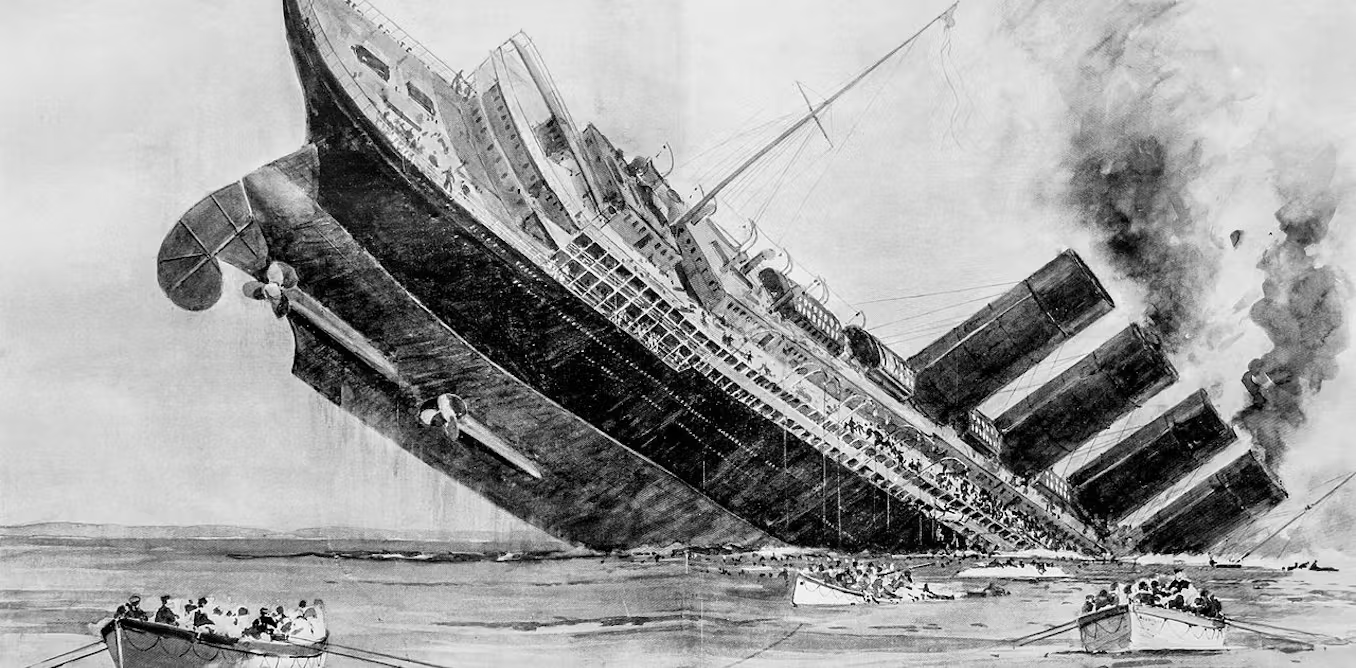
The sinking Lusitania, tilted and taking on water, surrounded by chaos in the open sea.
What Happened?
In the spring of 1915, while President Woodrow Wilson pledged American neutrality, the world was already burning. Germany, frustrated with British naval blockades and secret arms shipments, declared the waters around the British Isles a war zone. Submarines were now open-season hunters, and the rules of war were changing.
On May 1, 1915, the British ocean liner Lusitania set sail from New York toward Liverpool—glamorous, fast, and carrying nearly 2,000 souls. Also aboard: nearly 173 tons of ammunition and military supplies, quietly nestled below deck. A few newspapers even ran a notice from the German embassy warning travelers of the danger. Few took it seriously.
Six days later, a German U-boat struck. One torpedo, then a second explosion (possibly from the ship’s boilers or munitions), tore through the Lusitania. Within 20 minutes, she was gone—1,198 people drowned, including 128 Americans. Children, journalists, businesspeople—gone in minutes.
The world reacted with horror. British propaganda roared. Teddy Roosevelt called for war. Germany claimed the ship was carrying weapons (true), that passengers had been warned (also true), and that British commanders ignored their own defensive protocols, like zigzagging (also true). But none of it mattered. The narrative had already written itself: civilians slaughtered by stealth.
President Wilson stayed cautious. No war—not yet. But the tide was turning. Diplomatic notes were exchanged. Apologies were offered. Germany promised to back off. But then came more attacks. The Arabic. The Sussex. And finally, in 1917, the Zimmerman Telegram and a return to unrestricted submarine warfare. Wilson had no choice but to step into the ring.
The Lusitania was not the first ship to fall, nor the last. But it was the one that made the world understand: modern war doesn’t knock. It sinks. Fast.
Why It Matters
The Lusitania marked the moment modern warfare arrived at the doorstep of civilians. It challenged the old playbook, shattered illusions of neutrality, and pushed America onto a path it had tried desperately to avoid. This wasn’t just about ships and torpedoes—it was about how wars are fought, who they target, and the stories we tell when the sea swallows the truth.
?
Why did Germany target the Lusitania, and was the attack legal under international law?
What role did the sinking play in shifting American public opinion about entering World War I?
How did media coverage influence the narrative around the Lusitania tragedy?
What does the story of the Lusitania reveal about the blurred line between civilian and military targets in modern warfare?
Could the attack on the Lusitania have been avoided, or was it inevitable given the circumstances?
Dig Deeper
On May 7, 1915 the luxury ocean liner Lusitania was torpedoed by a German U-boat. It took only 18 minutes for the ship to sink beneath the waves, leaving 1,198 dead -- including 128 Americans.
When German U-boat Commander Walther Schwieger ordered a torpedo strike on the Lusitania, he didn't know it would be the shot that eventually led the U.S. into WWI. But it wasn't a mistake, either.
Related

Trickle-Down Economics
For decades, politicians have promised that cutting taxes for the rich would benefit everyone. But does the wealth really 'trickle down'—or does it just stay at the top? A deep dive into the history, evidence, and impact of trickle-down economics.
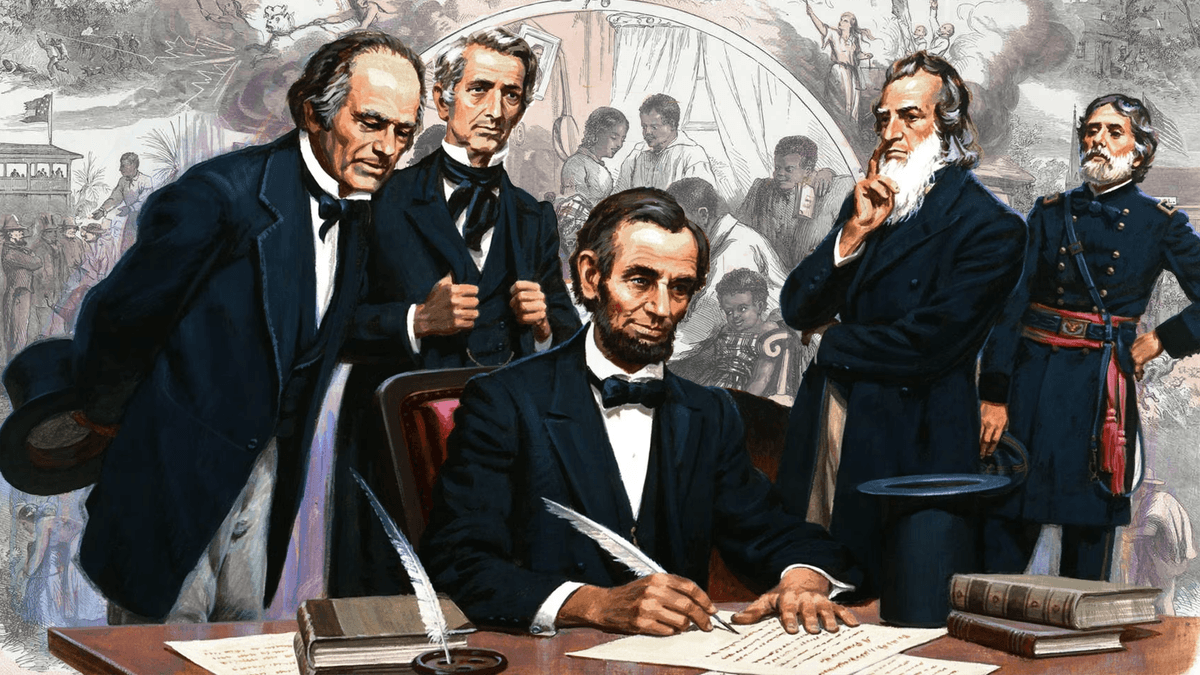
The Emancipation Proclamation & The 13th Amendment
Freedom on paper is one thing; freedom in practice is another. The Emancipation Proclamation and the 13th Amendment were giant leaps toward liberty—yet the road ahead for formerly enslaved people was long and uneven.
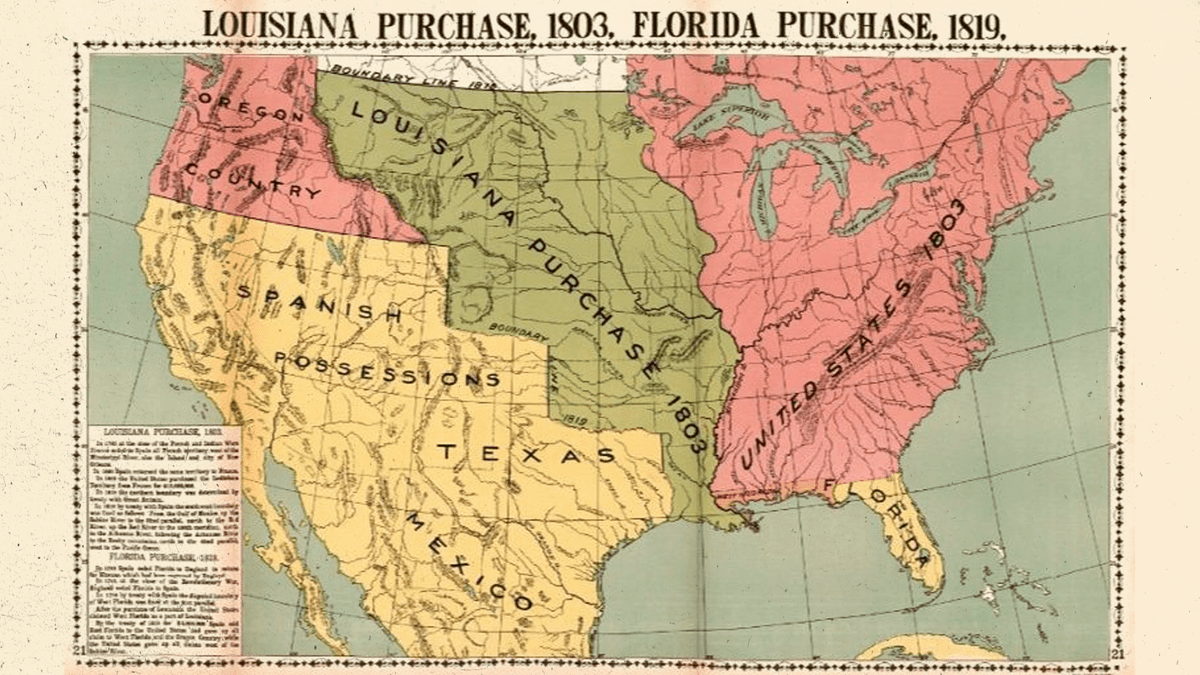
The Louisiana Purchase: A River, A Bargain, and a Bigger United States
In 1803 the United States bought the vast Louisiana Territory from France, doubling the nation’s size, securing the Mississippi River, and setting the stage for westward expansion and hard questions about slavery and Native sovereignty.
Further Reading
Stay curious!