

Barons vs. the Crown: The Ultimatum That Birthed the Magna Carta
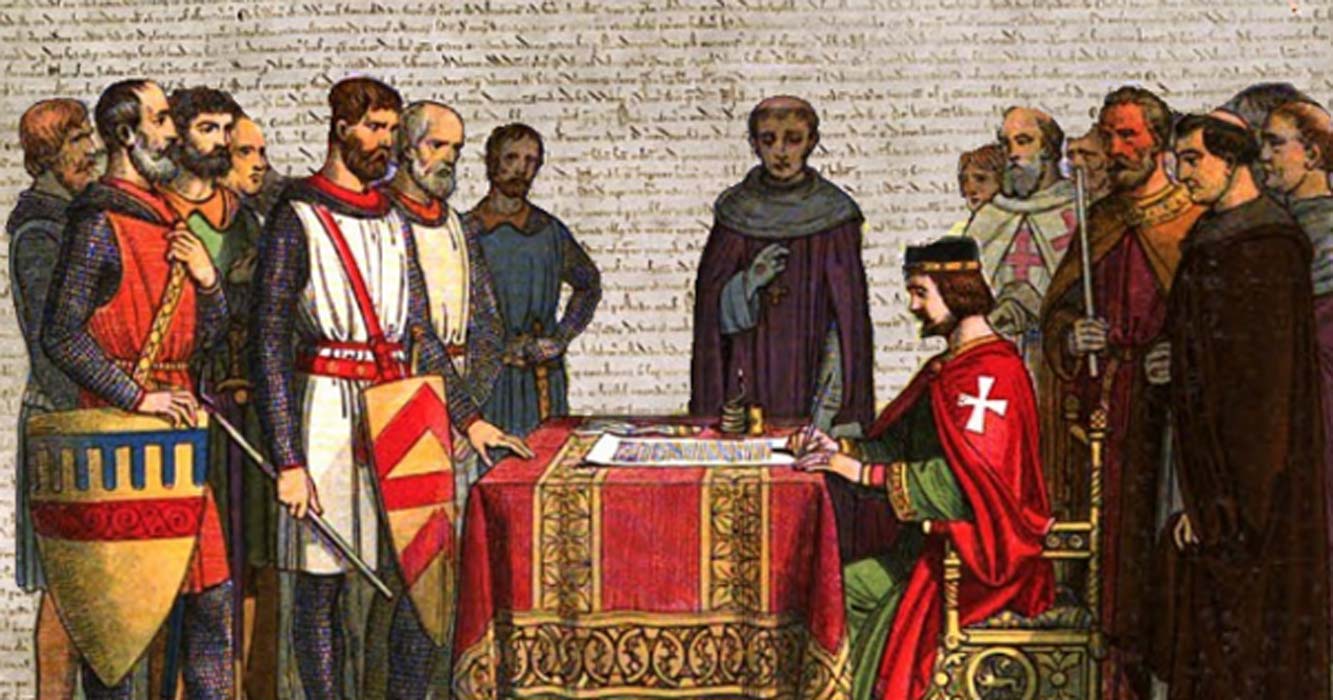
Illustration of King John meeting the barons at Runnymede in 1215, surrounded by knights and nobles under a tented canopy.
What Happened?
King John wasn’t the charming rogue portrayed in legend. He was deeply unpopular, ruthlessly taxed the nobility, extorted the church, and lost huge swaths of French territory to Philip II. By 1214, after a humiliating defeat at the Battle of Bouvines, the barons had had enough.
On May 12, 1215, in a move equal parts political theater and military warning, a coalition of barons formally presented King John with an ultimatum: recognize their rights or prepare for rebellion. This was no idle threat—many had already taken up arms. The ultimatum led to a meeting at a water meadow along the Thames called Runnymede, and what followed would alter the trajectory of English—and eventually global—governance.
By June 15, King John sealed the Magna Carta (Latin for 'Great Charter'), a document that limited the divine powers of monarchy and asserted that even a king must bow to the rule of law. Though its protections were originally meant for feudal barons—not everyday citizens—it introduced radical concepts that would later echo in the U.S. Bill of Rights and global declarations of liberty.
Clause 39 became its most quoted legacy: 'No free man shall be seized or imprisoned...except by the lawful judgment of his equals or by the law of the land.' Sound familiar? That’s the great-great-grandfather of habeas corpus and the right to trial by jury.
Of course, John didn’t actually mean to keep those promises. Within weeks, the charter was annulled by Pope Innocent III. War broke out. But the seed had been planted. Reissued and reinterpreted over generations, Magna Carta became a symbol of liberty and restraint on tyrannical rule. It’s been invoked by rebels, revolutionaries, and constitutional scholars ever since.
So was May 12, 1215 the day democracy was born? Not quite. But it was the day power blinked. The day when noblemen with swords forced a king with a crown to acknowledge something deeper than might: the idea that justice cannot be sold, delayed, or denied. And in that, the Magna Carta became something far greater than the sum of its clauses—it became the idea that power, unchecked, is no power at all.
Why It Matters
Magna Carta didn’t invent human rights. But it cracked open the myth of absolute monarchy and set a precedent for limiting power with law. It helped birth parliaments, inspire revolutions, and plant the notion that a ruler is not a god—but a servant of justice. From English meadows to American courtrooms, its ghost still lingers wherever freedom and fairness are at stake.
?
How did Magna Carta influence the U.S. Constitution and Bill of Rights?
What were the specific grievances the barons had against King John?
How many times has Magna Carta been reissued or modified since 1215?
Why did Pope Innocent III annul the Magna Carta so quickly after it was signed?
Which of Magna Carta’s original 63 clauses still exist in British law today?
Dig Deeper
Why is this old piece of parchment considered to be such a powerful symbol of our rights and freedoms? Narrated by Monty Python’s Terry Jones, this animation takes you back to medieval times, when England under the reign of Bad King John. It asks why Magna Carta was originally created and what it meant to those living in the 13th century.
Related
U.S. Imperialism: The Spanish-American War and Its Aftermath
In 1898, the United States fought Spain in a short war that reshaped its identity—from a republic born in anti-colonial revolution to a global imperial power with overseas territories.
The Voting Rights Act of 1965: Enforcing the 15th Amendment
How a landmark law transformed voting access in the South and gave real force to the promises of the 15th Amendment.
The French and Indian War: The Battle for North America
Before the American Revolution, another great war reshaped North America—the French and Indian War. It began as a fight over land and power, but ended up changing the map of the world and planting the seeds of independence.
Further Reading
Stay curious!