

The 19th Amendment Passes Congress
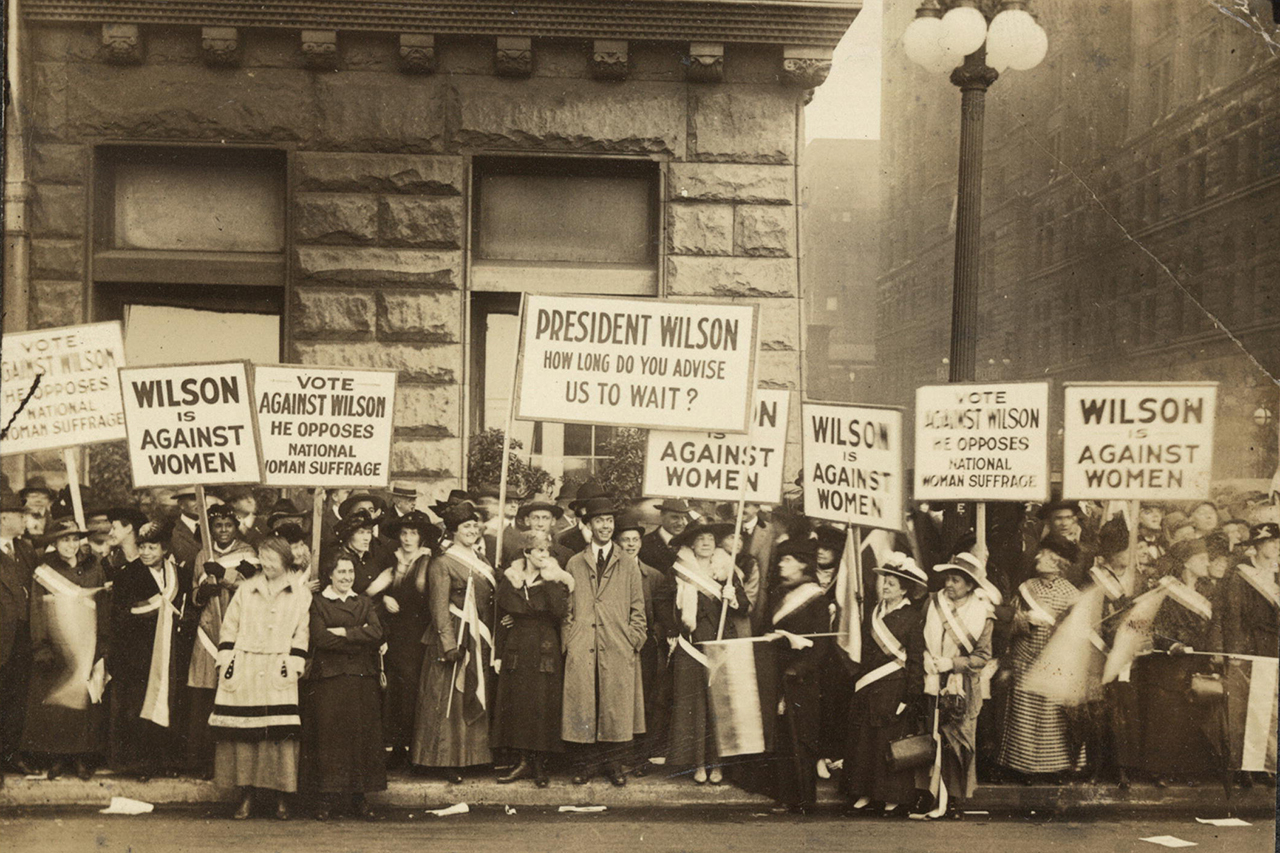
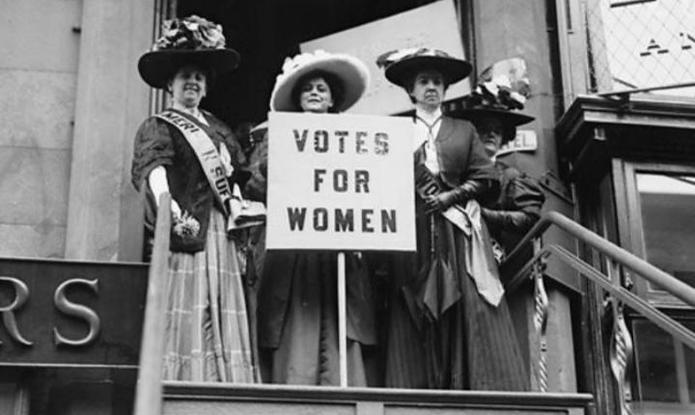
A group of suffragists holding banners and marching in 1919.
What Happened?
In the heat of a Washington summer, after more than 70 years of organizing, Congress finally said 'yes.' The 19th Amendment passed the House in 1918 but had stalled in the Senate. On June 4, 1919, it cleared that final hurdle—by just two votes.
The amendment didn’t come easy. Behind it were generations of women who had marched, picketed, gone to jail, and starved themselves in protest. Some, like Elizabeth Cady Stanton and Sojourner Truth, never lived to see the victory they sparked.
Women’s suffrage was born from abolitionist and temperance movements, where women realized they needed political power to create real change. From Seneca Falls to suffrage parades in D.C., they were called radicals, traitors, even immoral.
And yet, they persisted. Figures like Susan B. Anthony and Ida B. Wells demanded the vote, even when allies tried to exclude Black women from the movement. The suffrage story was never simple—it was layered, intersectional, and often exclusionary.
When Congress passed the amendment, the celebration was cautious. The real challenge lay ahead: getting three-fourths of the states to ratify it. The road to Tennessee—the final deciding state—would be as tense and dramatic as any political thriller.
But on this day in 1919, the needle moved. Women were no longer politely asking. They had become an unstoppable political force—and Congress finally had to listen.
A year later, the 19th Amendment was ratified. But the fight for true voting rights—especially for women of color—was far from over.
Why It Matters
This moment wasn’t the end of the story—it was a new chapter in the long, unfinished book of American democracy. When Congress passed the 19th Amendment, it didn’t just give women the vote—it challenged the very foundation of who was seen as a full participant in civic life. It expanded the meaning of 'we the people' to include millions who had long been silenced. But it also exposed the limits of progress when it leaves some behind. While white women gained legal access to the ballot, many Black, Native, Asian American, and Latina women continued to face voter suppression, intimidation, and systemic exclusion. The 19th Amendment reminds us that rights are not handed over—they are fought for by communities who organize, agitate, march, speak out, and refuse to be erased. This moment is a lesson in movement-building: real change comes from the ground up. And if we want a democracy that lives up to its promises, we have to keep showing up—for ourselves and for each other.
?
Why do you think it took so long for women to gain the right to vote, even after the Civil War?
Who was left out of the 19th Amendment’s protections—and why does that matter today?
What tactics did suffragists use that we still see in modern activism?
How did race and class shape who was included in the women’s suffrage movement?
What rights are people still fighting for today—and how does this history inspire that work?
Dig Deeper
In 1920, women in the U.S. gained the right to vote - but only after a struggle that lasted more than 70 years! Learn how suffragists fought for the 19th amendment.
PBS looks back on the long road to ratification for the 19th Amendment. This video explains how the Seneca Falls Convention wasn't seen as important at the time and how some of the most famous suffragists of the time (Susan B. Anthony, Lucretia Mott, and Elizabeth Cady Stanton) wrote a whole history book to ensure they were remembered.
Related
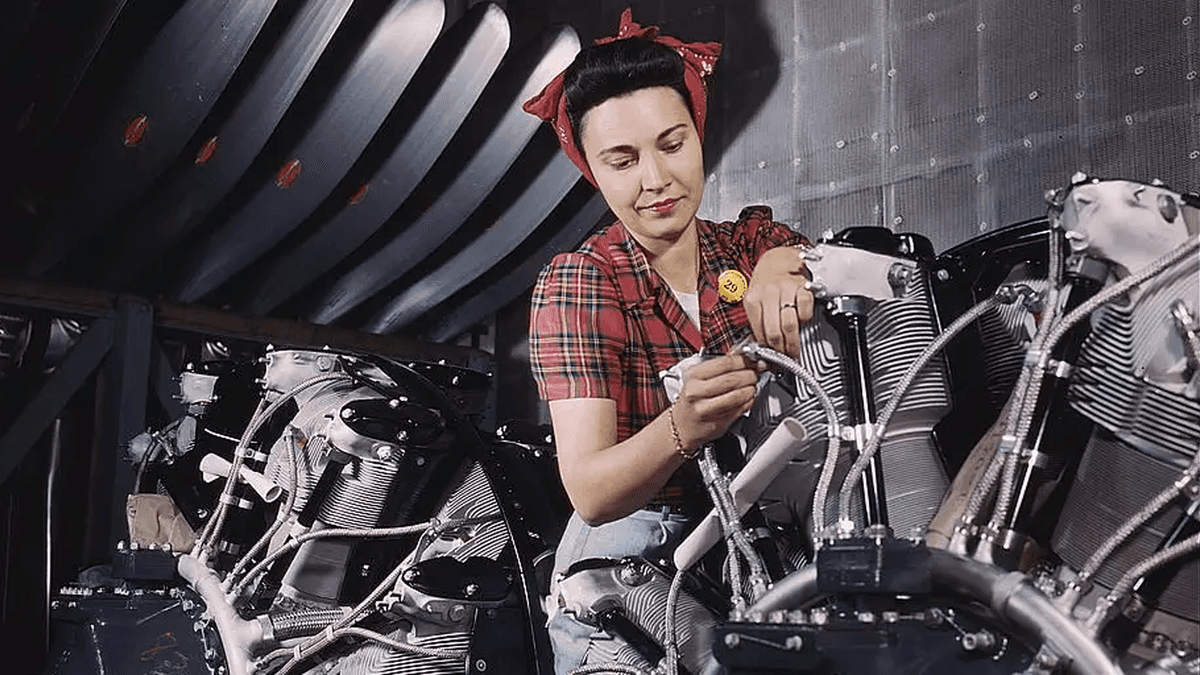
World War II & the Home Front (1941–1945)
A global war that reshaped American society—expanding opportunity, exposing injustice, and redefining the meaning of freedom at home.
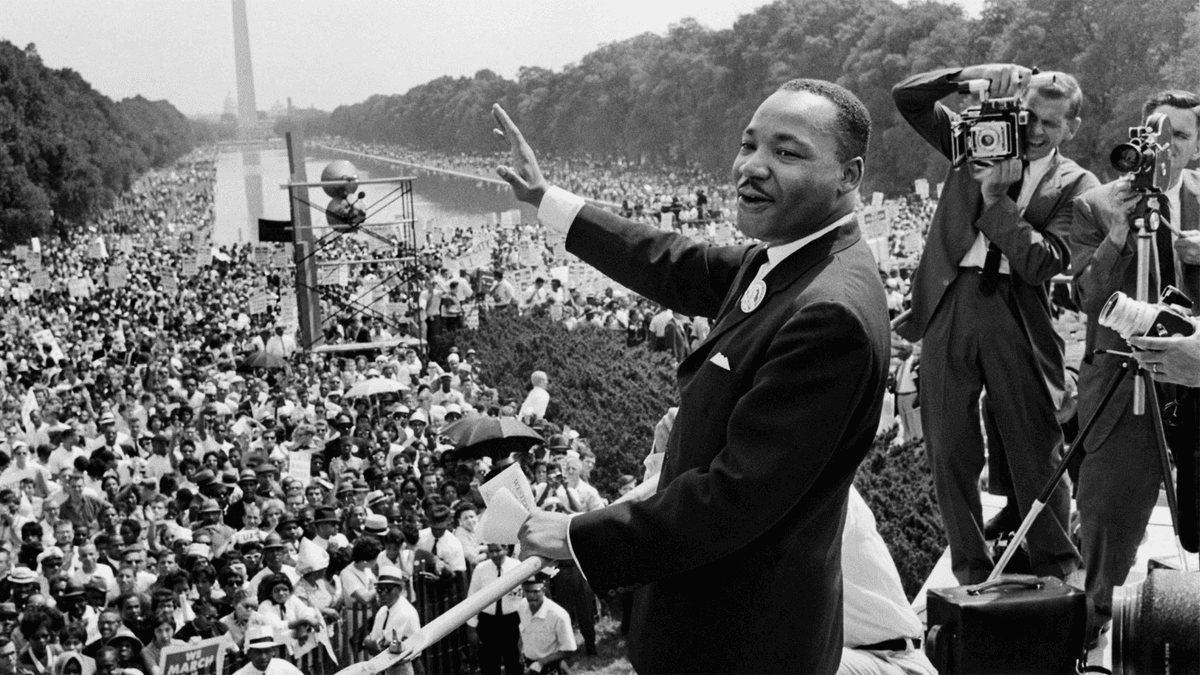
The Civil Rights Movement: Struggle, Solidarity, and Social Change
From classrooms to courthouses, buses to bridges, the Civil Rights Movement reshaped America’s laws — and its conscience.
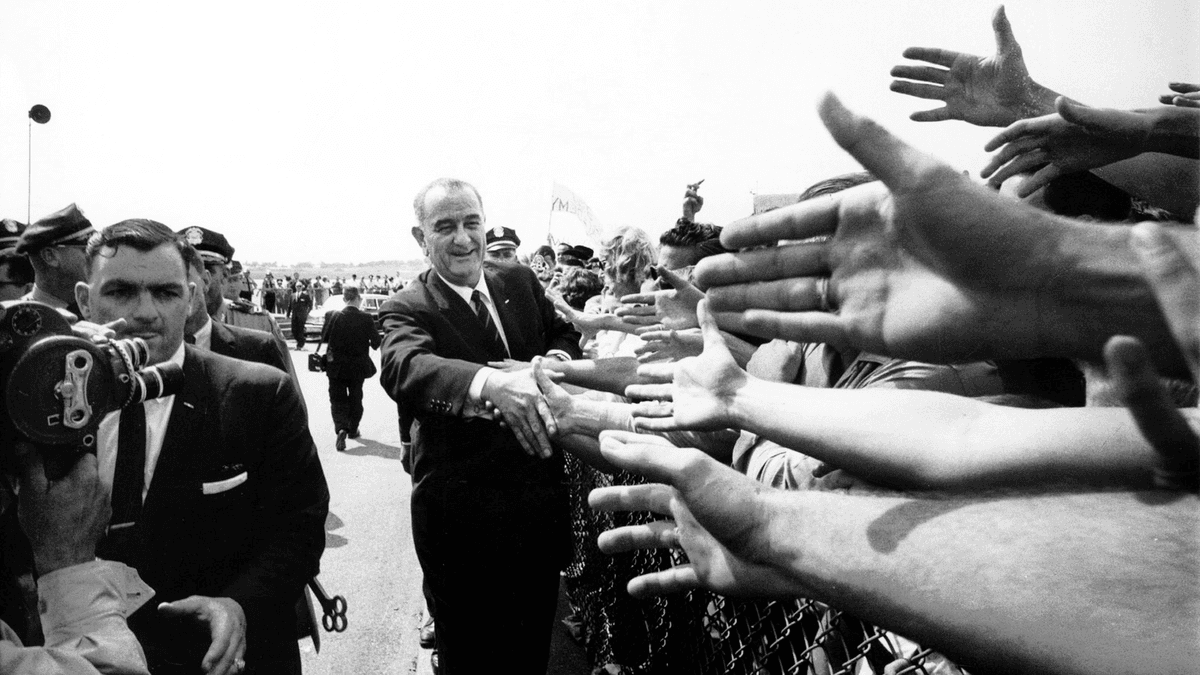
The Great Society: Government as a Force for Good
The Great Society wasn’t just a policy agenda, it was a radical vision of what America could be. With sweeping reforms in health care, education, civil rights, immigration, and the environment, President Johnson’s plan aimed to eliminate poverty and racial injustice once and for all.
Further Reading
Stay curious!