

The Battle That Changed the War—and the Nation
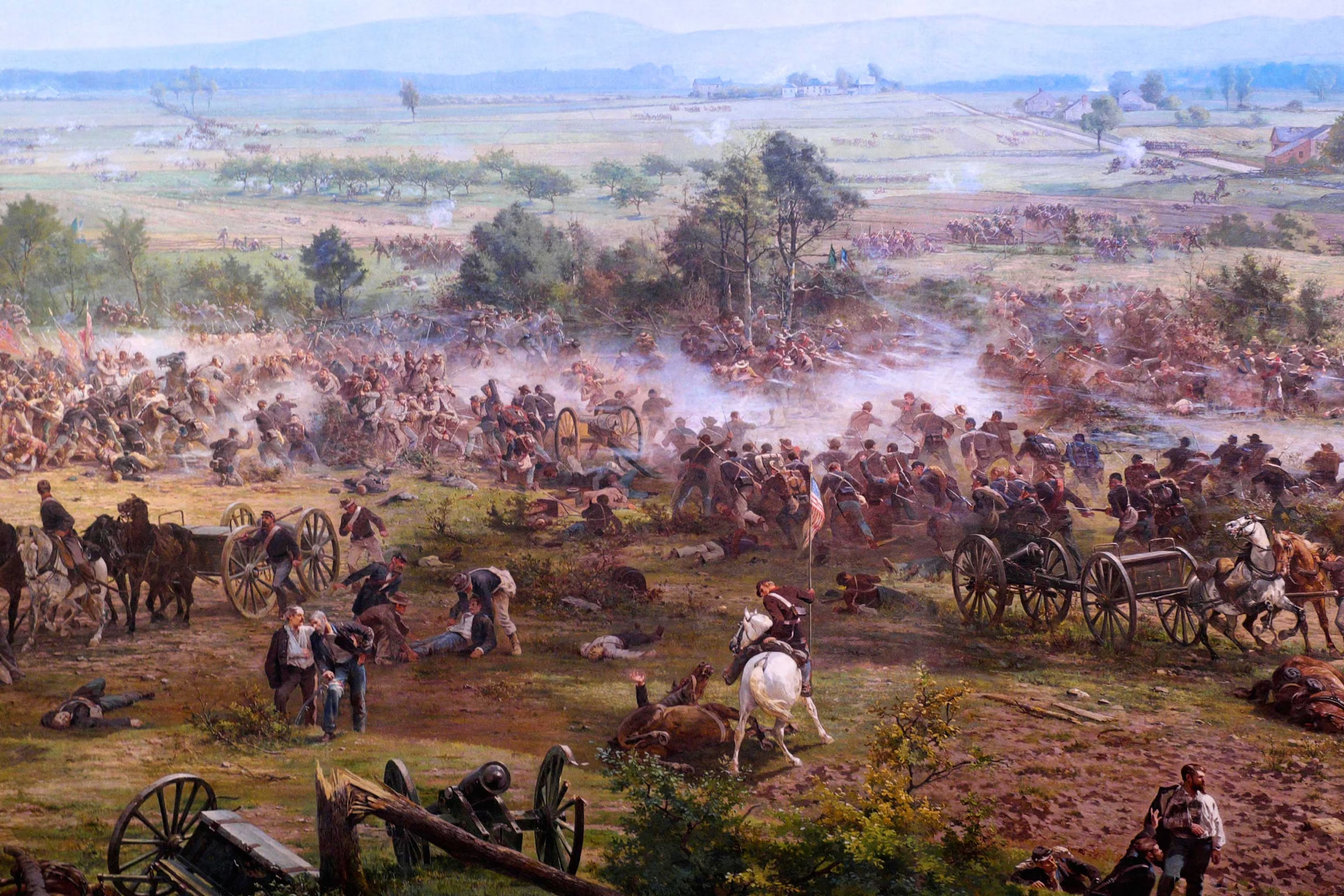
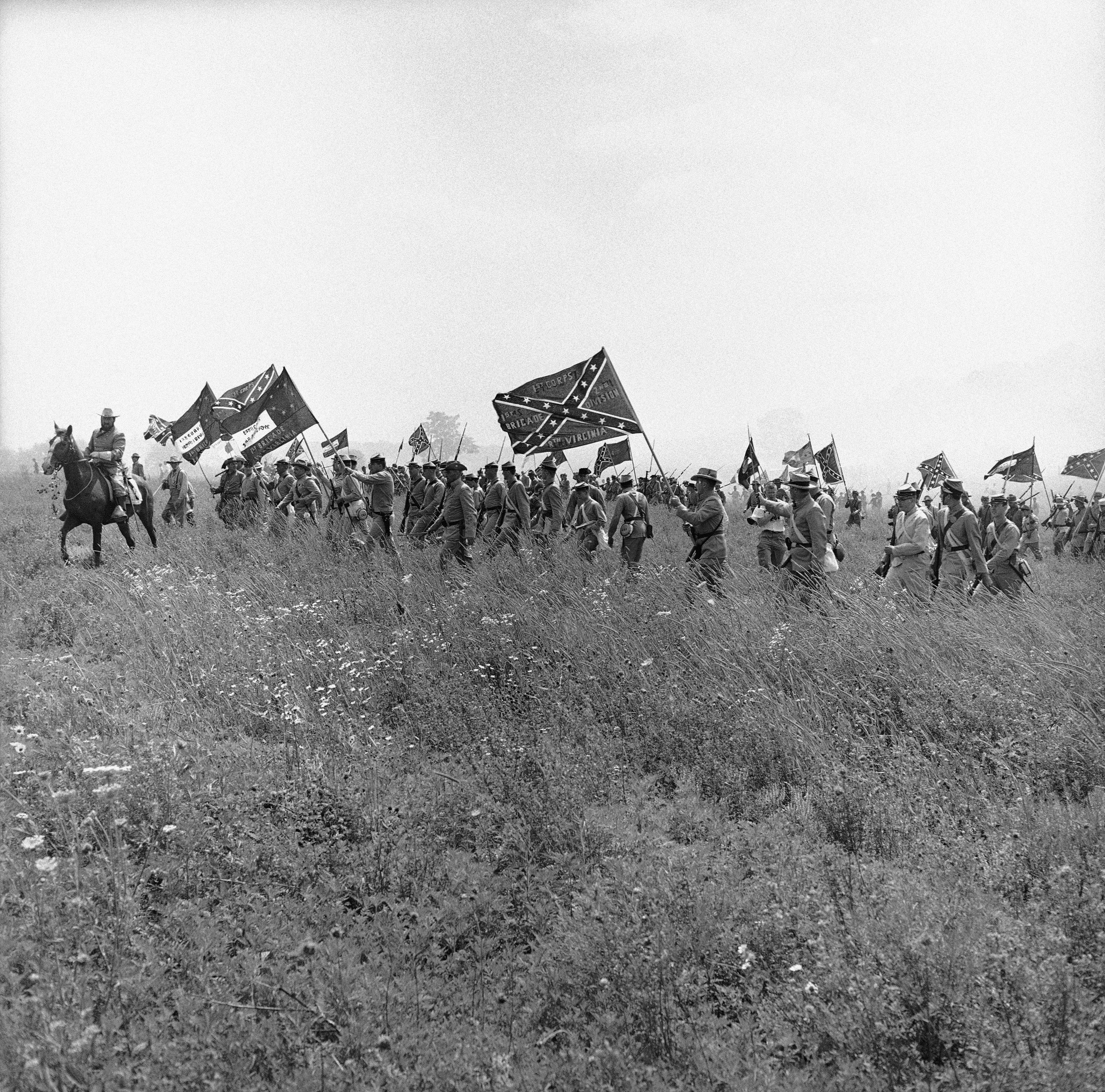
Union and Confederate troops clashing during the Battle of Gettysburg.
What Happened?
July 1, 1863. Gettysburg, Pennsylvania. A town of just 2,400 people—quiet, rural, and completely unprepared to become the epicenter of America’s bloodiest battle. Ten roads converged there, like a cosmic bullseye. The armies didn’t plan to meet at Gettysburg. The roads just led them there.
Fresh off a major victory at Chancellorsville, Confederate General Robert E. Lee was emboldened. He saw a chance to break the North’s will, strike into Pennsylvania, and maybe even tip international recognition toward the Confederacy. But the Union’s new commander, George Meade, had other plans—and he was closing in fast.
As Confederate soldiers marched into town searching for shoes, they found Union cavalry. What started as a scuffle escalated into chaos as reinforcements poured in from all directions.
By the end of day one, Union forces had been pushed through the town’s narrow streets. But they rallied and fell back to high ground—Cemetery Hill and Cemetery Ridge—key terrain they’d fight tooth and nail to defend. Meade’s army took a strong defensive position that formed a hook-shaped line nearly three miles long. Lee’s troops encircled them in a six-mile arc, poised for a brutal standoff.
Day two brought some of the fiercest combat of the entire war. The names of these places now etched in memory: Devil’s Den, the Wheatfield, the Peach Orchard, Little Round Top. On that rocky hill, Union Colonel Joshua Chamberlain and the 20th Maine held the left flank with a desperate bayonet charge that turned the tide. If they had fallen, the whole Union line might have crumbled.
Day three, Lee went all in. Believing the Union line at the center was vulnerable, he ordered what would become known as Pickett’s Charge. Over 12,000 Confederate soldiers marched three-quarters of a mile across open farmland under relentless artillery and rifle fire. It was a slaughter. Entire divisions were decimated. The assault failed spectacularly, and with it, Lee’s hopes of victory were shattered.
On July 4, Lee’s shattered army began its retreat back to Virginia. Gettysburg was over. It marked the beginning of their long, slow defeat.
In just three days, the fields around Gettysburg claimed over 50,000 casualties. It remains the largest and deadliest battle ever fought on American soil. The scale of the loss stunned the nation and hardened its resolve. The war wasn’t just about states’ rights—it was a battle over the soul of the nation and the fate of slavery.
Four months later, President Abraham Lincoln arrived to dedicate a cemetery for the Union dead. In a speech that lasted just two minutes and 272 words, he transformed the purpose of the war. The Union was no longer simply trying to reunite the states—it was fighting for a 'new birth of freedom.' He redefined democracy itself as a fragile, shared commitment that must be constantly renewed.
Gettysburg wasn’t just a turning point in a war, it was a moral inflection point. Out of its ruins emerged a sharper vision of what America could be. Forged in blood. Redeemed through sacrifice. And still echoing today in every fight for justice, equality, and a more perfect union.
Why It Matters
The Battle of Gettysburg was more than a military clash. It was the moment the Civil War—and the American experiment—tipped. A Confederate victory could have split the nation in two, preserving slavery and rewriting world history. Instead, the Union held the line. And out of that devastation came a redefinition of freedom and democracy that still shapes who we are.
?
Why did General Lee choose to invade the North in the summer of 1863?
What strategic advantages did the Union have by holding the high ground?
How did Pickett’s Charge become a symbol of both bravery and tragedy?
What made the Gettysburg Address so powerful despite its brevity?
How did the outcome at Gettysburg shift the momentum of the Civil War?
Dig Deeper
Take a whirlwind tour through the major battles of the Civil War, including Gettysburg, and how they shaped the nation.
Related
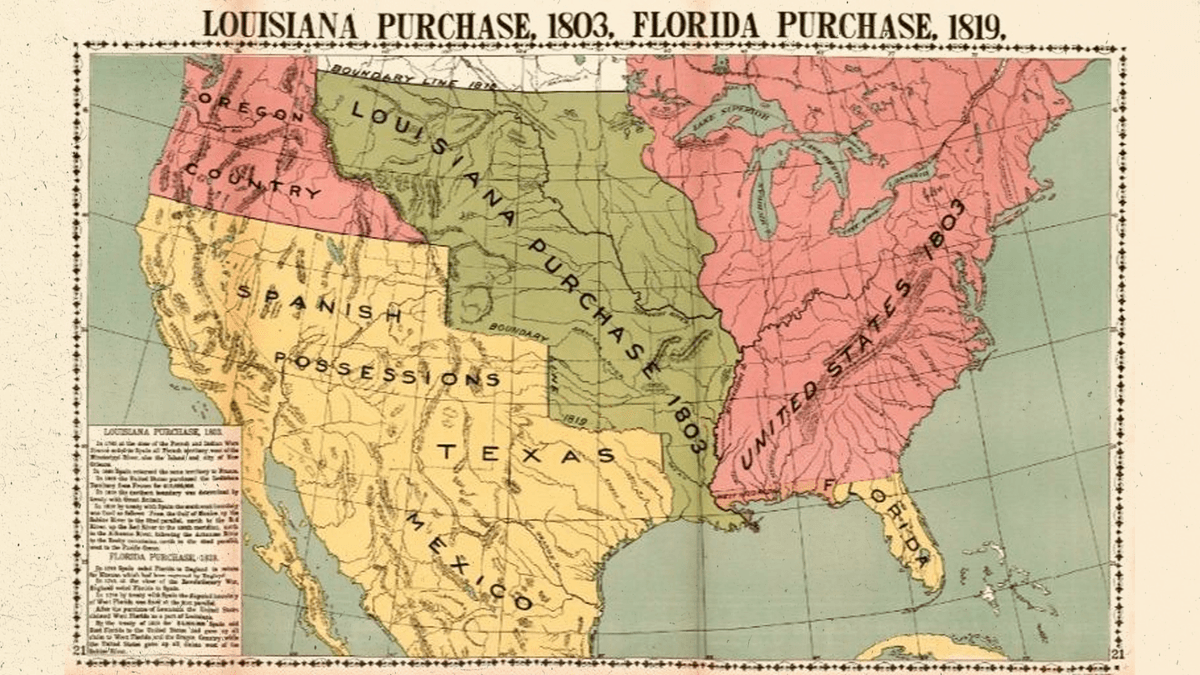
The Louisiana Purchase: A River, A Bargain, and a Bigger United States
In 1803 the United States bought the vast Louisiana Territory from France, doubling the nation’s size, securing the Mississippi River, and setting the stage for westward expansion and hard questions about slavery and Native sovereignty.
Developments in East Asia, 1200–1450
From Confucian bureaucracies to booming cities, East Asia between 1200–1450 reshaped global politics, culture, and technology.
Why the United States Entered World War I
In 1917, after years of neutrality, the United States entered World War I—reshaping global politics and transforming life at home.
Further Reading
Stay curious!