

#BlackLivesMatter Begins
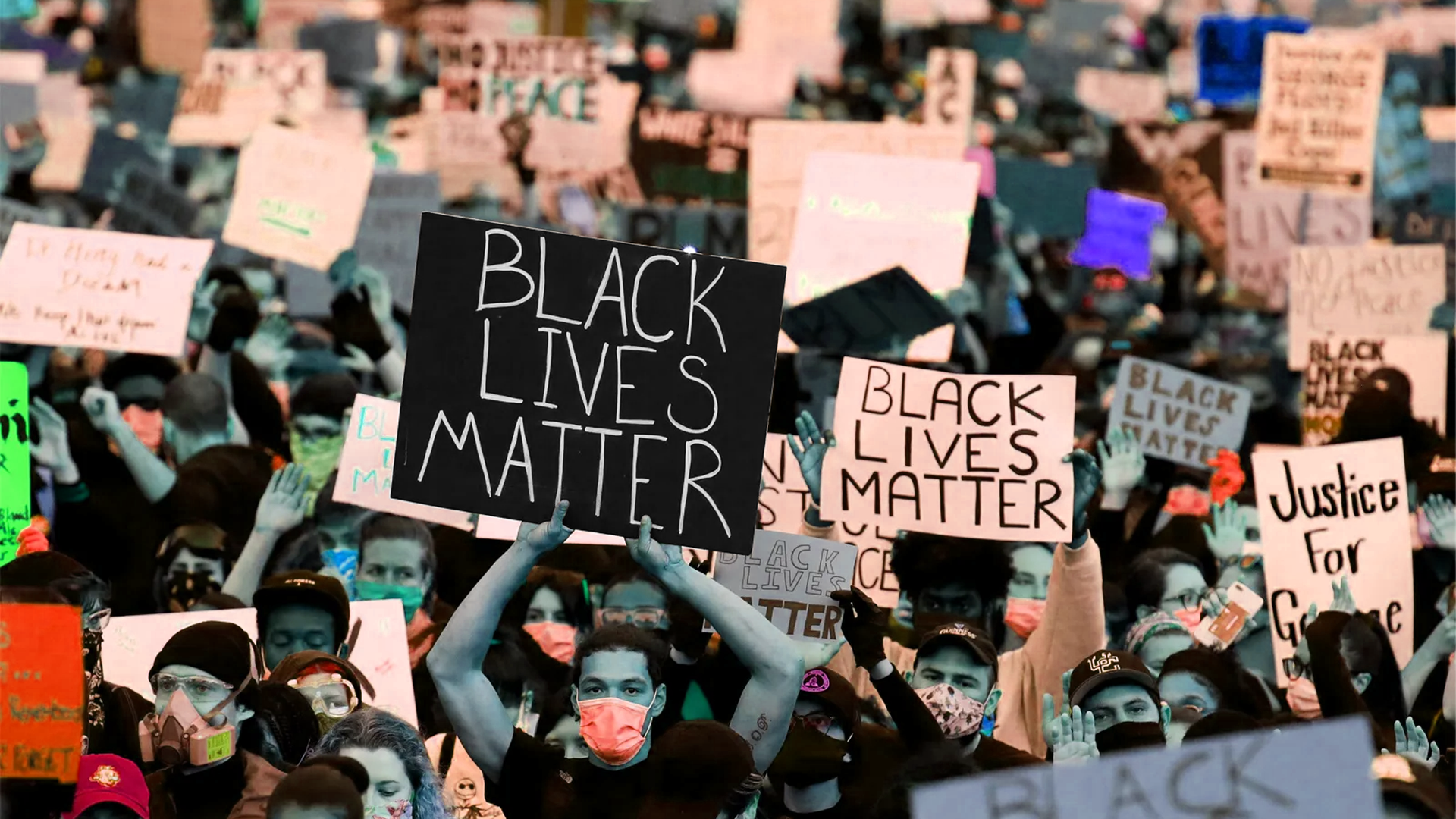
A crowd of protestors holding signs reading 'Black Lives Matter' during a demonstration.
What Happened?
The night George Zimmerman was acquitted for killing unarmed Black teenager Trayvon Martin, Alicia Garza wrote a post on Facebook: a love letter to Black people. In it, she reminded the world that Black lives matter. Her friend and fellow activist Patrisse Cullors replied with a hashtag—#BlackLivesMatter—that would ignite a movement.
Together with Opal Tometi, they built a decentralized network rooted in grassroots organizing and the belief that Black people deserve dignity, justice, and life. The phrase quickly spread from social media to the streets, capturing a collective demand to stop state-sanctioned violence against Black bodies.
The killings of Michael Brown, Eric Garner, Tamir Rice, Sandra Bland, and so many others added fuel to the fire. In cities across the U.S., protests erupted. People marched not only against police brutality, but against a long history of systemic racism, economic inequality, and silence.
By 2020, after the murder of George Floyd, #BlackLivesMatter had become the largest protest movement in U.S. history. More than a hashtag, it became a framework, demanding abolition, repair, investment, and liberation. BLM reshaped conversations about race, power, and justice on a global scale.
Why It Matters
Born from the grief of one family, Black Lives Matter became a global call for justice, accountability, and love. It challenges the foundations of racism while reimagining a world rooted in dignity, equity, and community power.
?
What events led to the formation of the #BlackLivesMatter movement?
Why was the Zimmerman acquittal such a pivotal moment for racial justice activism?
How has the #BlackLivesMatter movement evolved since its creation?
What does it mean to center the leadership of queer, trans, and disabled Black people in a social movement?
How has Black Lives Matter changed public opinion, policy, or political discourse?
Dig Deeper
This video traces the history and impact of the Black Lives Matter movement and how it fits into the long arc of Black resistance in the United States.
Related
The Enlightenment: Revolution of the Mind
The Enlightenment wasn’t just an era of smart people in powdered wigs—it was a radical shift in how humans understood power, truth, and their place in the world. Its ideas fueled revolutions, rewrote constitutions, and laid the intellectual bricks of modern democracy.
The First Amendment: America’s Blueprint for Freedom
The First Amendment protects freedoms of speech, religion, press, assembly, and petition. It’s the foundation of American democracy—but also a source of constant debate and interpretation.
European Exploration of the Americas
When European explorers set sail across the Atlantic, they weren’t just chasing trade routes—they were rewriting the world’s future. But discovery for some meant devastation for others.
Further Reading
Stay curious!