

Our Time Has Come: Jesse Jackson and the Rainbow Coalition
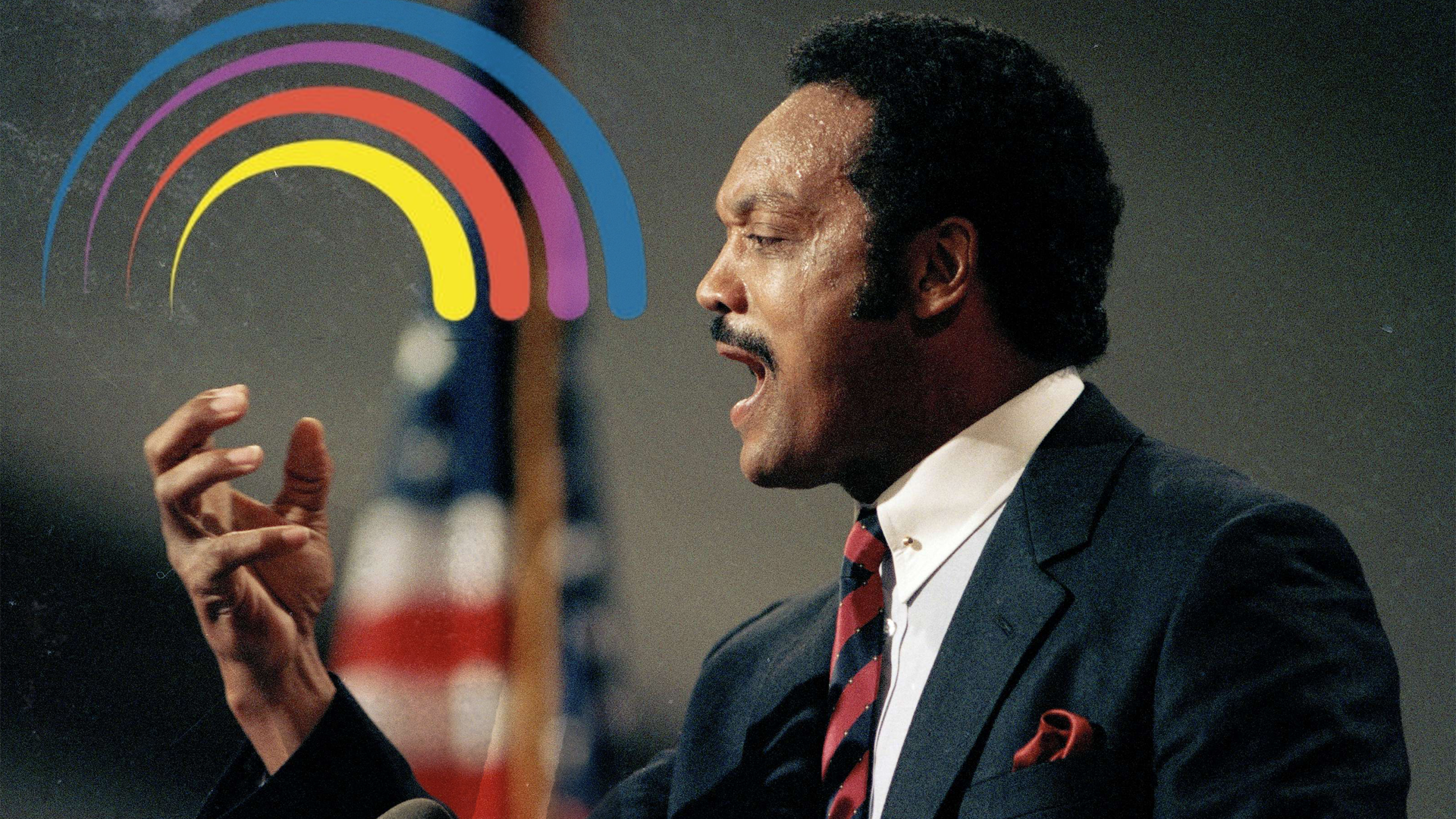
Rev. Jesse Jackson at the podium during the 1984 Democratic National Convention, gesturing with passion before a cheering crowd.
What Happened?
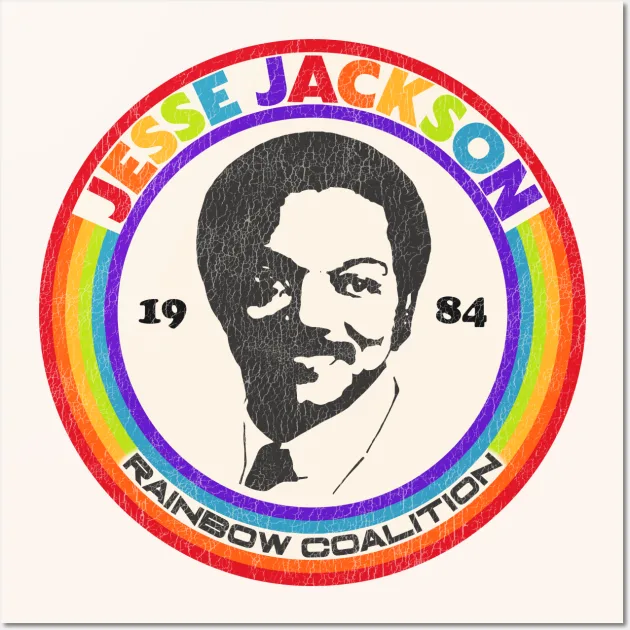
By the time Jesse Jackson stepped onto the stage in San Francisco, he had already made history. As the first Black candidate to be taken seriously in a major party’s presidential primary since Shirley Chisholm in 1972, Jackson brought with him not just a campaign, but a movement. His 'Rainbow Coalition' was a call to the hungry, the homeless, the jobless, the young, the old, and all those cast to the margins of American power.
Jackson’s speech wove together policy demands and moral appeals. He called out the deepening divide between rich and poor, the militarization of U.S. policy, and the moral bankruptcy of Reagan-era economics. But it wasn’t just critique—it was construction. He spoke of America as a quilt, not a blanket: stitched together from many colors, textures, and lives, all held by common thread. He pledged solidarity with Native Americans, LGBTQ Americans, Asian Americans, farm workers, the disabled, and more. His coalition made room where history had shut doors.
The speech echoed the legacy of Dr. Martin Luther King Jr., whose vision Jackson carried forward. But it also stood as its own milestone in the evolution of progressive politics. Despite backlash—including from within his own party—Jackson remained steadfast in calling for not just representation, but transformation.
He didn’t win the nomination. Walter Mondale did—and lost to Ronald Reagan in a landslide. But Jackson’s message outlasted the moment. His 1984 campaign laid groundwork for a broader, bolder Democratic Party. His 1988 run drew nearly 7 million votes. And the coalitional politics he modeled—intersectional, grassroots, unapologetically moral—would ripple through the generations to come.
Why It Matters
Jackson’s 1984 speech wasn’t just a milestone—it was a mirror. It reflected the America that had long been excluded from power and demanded they be seen. It laid the groundwork for coalitional politics that centered not just identity, but justice. And it dared a country to believe that leadership could look—and sound—like everyone. Our time has come, he said. For many, that moment is still unfolding.
?
What did Jesse Jackson mean by a 'Rainbow Coalition,' and how did it expand traditional ideas of political organizing?
How did Jackson’s speech challenge the Democratic Party to address racial, economic, and social inequalities?
In what ways did the Rainbow Coalition reflect the legacy of the civil rights movement?
What were the obstacles Jackson faced within the Democratic Party and broader American society?
How has Jackson’s vision influenced today’s political coalitions and movements?
Dig Deeper
Watch Jesse Jackson deliver one of the most powerful speeches in American political history, as he calls for unity, justice, and a coalition of the marginalized at the 1984 DNC.
Related
U.S. Imperialism: The Spanish-American War and Its Aftermath
In 1898, the United States fought Spain in a short war that reshaped its identity—from a republic born in anti-colonial revolution to a global imperial power with overseas territories.
The Role of Ideas in Revolutionary Change
The Role of Ideas in Revolutionary Change: How can ideas and writings change the course of history?
The Emancipation Proclamation & The 13th Amendment
Freedom on paper is one thing; freedom in practice is another. The Emancipation Proclamation and the 13th Amendment were giant leaps toward liberty—yet the road ahead for formerly enslaved people was long and uneven.
Further Reading
Stay curious!