

The First Battle of Bull Run
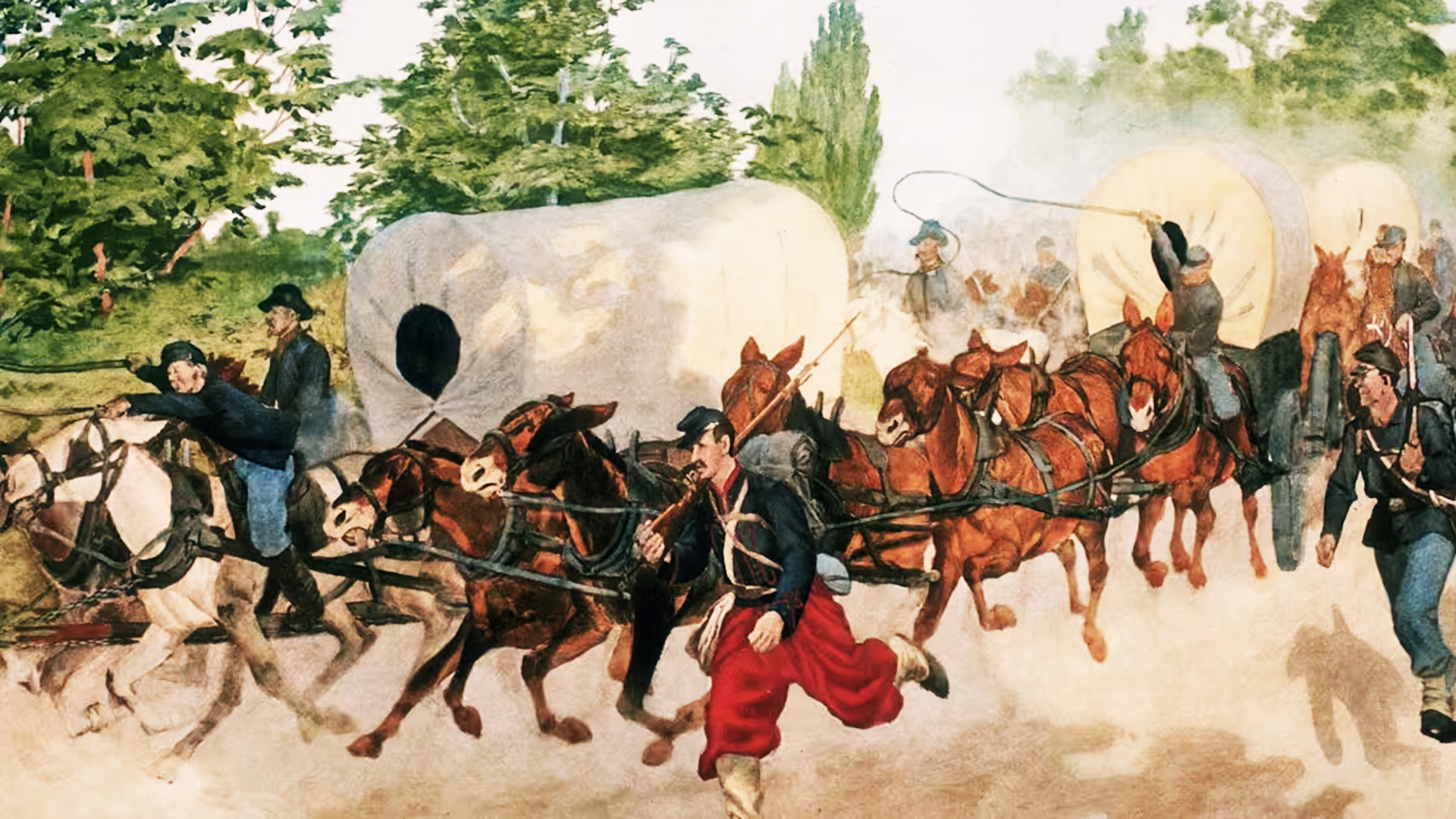
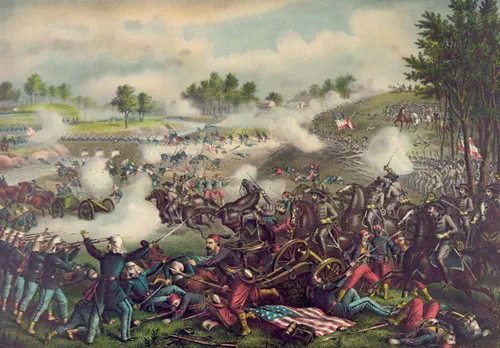
Illustration of Union troops fleeing the battlefield at Bull Run as Confederate forces counterattack.
What Happened?
Three months after the Civil War began at Fort Sumter, Union leaders hoped to end it just as quickly. General Irvin McDowell led 35,000 green troops—many still untrained volunteers—toward Manassas, Virginia, aiming to strike before Confederate reinforcements could arrive.
Confederate Generals Beauregard and Johnston had other plans. Johnston’s troops arrived by rail just in time, giving the Confederates an edge in manpower. On the morning of July 21, 1861, both sides clashed near Bull Run Creek while civilians from Washington watched from nearby hillsides, expecting a spectacle, not a slaughter.
At first, Union troops pushed the Confederates back from Matthews Hill, but the momentum stalled near the Henry House. It was here that General Thomas J. Jackson earned his legendary nickname—'Stonewall'—for holding the line with brutal determination. Judith Henry, the 85-year-old widow living on the hill, was killed as artillery fire turned her home into a battlefield.
McDowell made a tactical error, placing Union cannons within range of Jackson’s concealed troops. Confederate reinforcements, including cavalry under J.E.B. Stuart and infantry led by Jubal Early, exploited the Union’s disarray. What began as a retreat became a full-blown rout as Union soldiers and stunned spectators fled in chaos back to Washington.
The battle left nearly 5,000 casualties and a capital city shaken to its core. The North had expected a parade; what it got was a bloodbath. The Confederate victory gave the South a morale boost, but their forces were too disorganized to pursue. The Union's dreams of a quick war dissolved in the mud and blood of Bull Run.
General McDowell was relieved of command, replaced by George B. McClellan. The war was no longer theoretical. It was real, and it was going to be long.
Why It Matters
Bull Run was the Civil War’s rude awakening. It ended the fantasy of a short, clean conflict and replaced it with the brutal truth of national fracture. It also introduced key figures—like 'Stonewall' Jackson—who would come to define the war’s next brutal chapters. From this point on, no one could pretend the country would heal without immense cost.
?
Why did civilians come to watch the Battle of Bull Run, and how did their presence shape the narrative?
What impact did Bull Run have on Union military strategy going forward?
How did 'Stonewall' Jackson’s role in the battle influence Confederate morale?
Why did both sides underestimate how long and bloody the war would be?
What does Bull Run reveal about the role of public pressure and politics in wartime decisions?
Dig Deeper
This episode of Crash Course US History explores key Civil War battles, including Bull Run, and how they shaped the conflict’s long and bloody course.
Related
The Enlightenment: Revolution of the Mind
The Enlightenment wasn’t just an era of smart people in powdered wigs—it was a radical shift in how humans understood power, truth, and their place in the world. Its ideas fueled revolutions, rewrote constitutions, and laid the intellectual bricks of modern democracy.
The American Revolution: Liberty, Loyalty, and North Carolina’s Role
The fight for independence wasn’t just fought in Boston and Philadelphia—it reached the farms, rivers, and hearts of North Carolina. Learn how the war unfolded, who fought, and why freedom remained a promise still waiting to be fulfilled for many.
Prelude to War – Sectional Tensions and Failed Compromises
The uneasy balance between free and slave states collapsed in the 1850s, as 'compromises' like the Compromise of 1850 and Kansas-Nebraska Act inflamed tensions instead of easing them.
Further Reading
Stay curious!