

A Giant Meteorite Rocks Early Earth—and May Have Helped Life
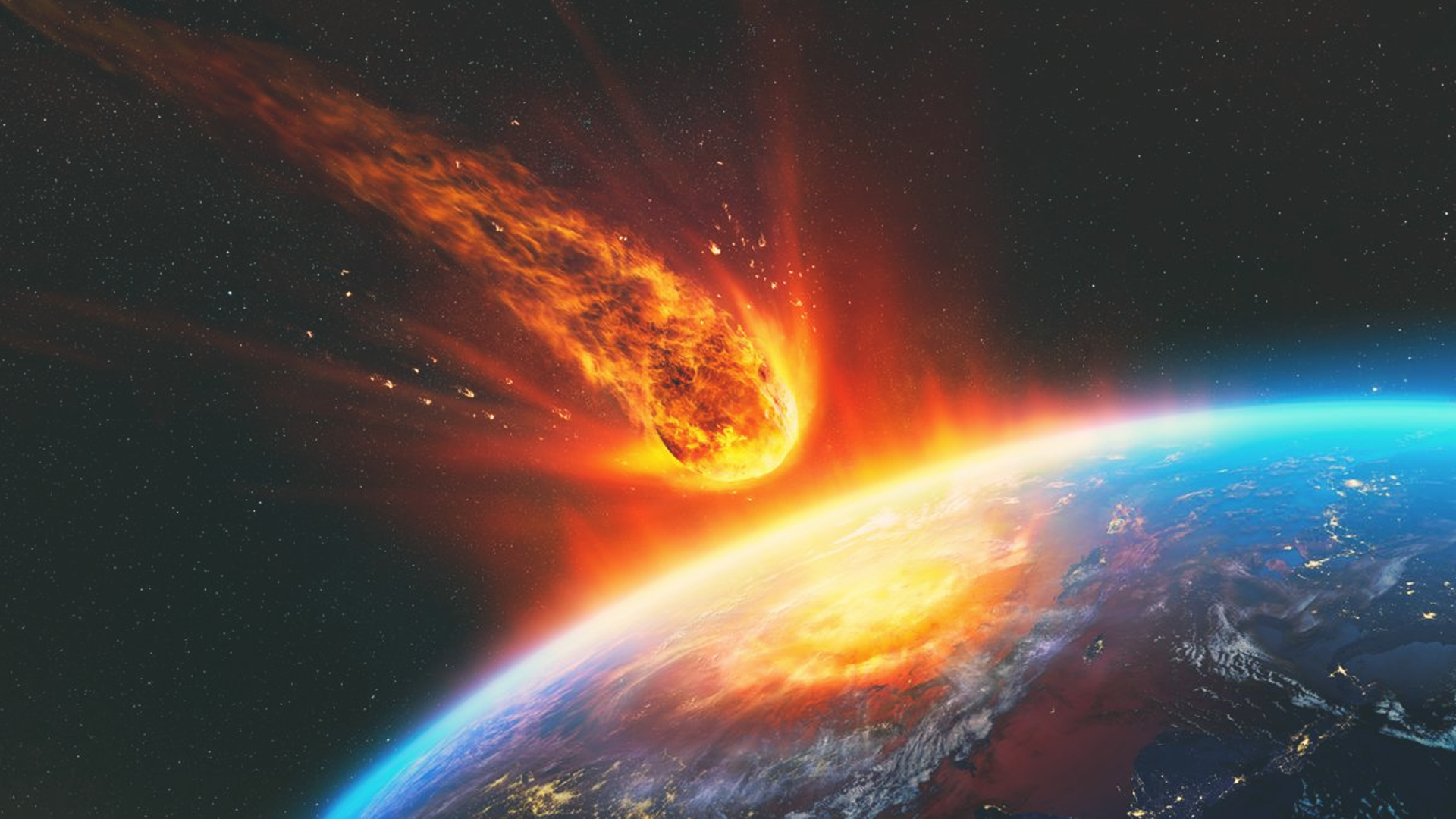
New research on the 3.26-billion-year-old “S2” impact suggests the strike boiled parts of the ocean, stirred up nutrients like iron and phosphorus, and sparked a short-lived burst of microbial life.
What Happened?
Picture Earth as a mostly ocean world with only small bits of land. Into that watery planet crashed a meteorite so large that scientists compare it to being four Mount Everests tall, an analogy to help us grasp its scale. This early Archean impact, known as “S2,” hit about 3.26 billion years ago and was likely 50–200 times more massive than the later asteroid that wiped out the dinosaurs.
Geologists studied ancient rocks in South Africa’s Barberton Greenstone Belt and found a thin layer of tiny glassy spheres called spherules—melted droplets that rained down after the strike. These layers act like time capsules, letting scientists reconstruct what the impact did to oceans, air, and life.
Right after impact, a planet-wide tsunami raced across the seas. The blast heat partially evaporated the ocean’s surface and sent dust and steam into the atmosphere, throwing the upper ocean into darkness. That was bad news for shallow-water microbes that needed sunlight for photosynthesis.
But deeper down, life found a way. The tsunamis and mixing dragged iron-rich deep waters up toward the surface and released extra phosphorus, two key nutrients living things need. With the lights dimmed above, microbes that ‘breathe’ iron rather than sunlight temporarily took over, creating a short but powerful bloom.
Scientists can see signs of this in the rocks just above the spherule bed: unusual carbon-isotope fingerprints and minerals like siderite that point to microbes using iron as an energy source. In other words, the impact briefly reshaped who the winners and losers were in Earth’s earliest ecosystems.
The harmful effects of a scalded sea surface, smoky skies, and shock waves likely lasted years to decades, not millions of years. Once conditions settled, photosynthetic life rebounded, but the pulse of new nutrients may have helped the whole biosphere come back stronger.
This impact wasn’t a one-off. Archean rocks record at least 16 major hits by space rocks bigger than 10 km. Each one probably rattled the climate and oceans, yet also may have delivered ingredients (like iron, sulfur, and phosphorus) or created new habitats that life could explore.
The big takeaway: in deep time, change, sometimes sudden and violent, has been a driver of innovation. Giant impacts could both hurt and help life, reminding us that Earth’s history is a story of resilience, adaptation, and surprise.
Understanding these ancient events isn’t just ‘cool science’; it helps us learn where and how life might arise on other worlds. If impacts can stir up nutrients and create temporary hot spots for microbes here, they might do the same on ocean worlds like Europa or Enceladus.
By reading the rock record and tracking spherules, chemical clues, and sediment layers scientists can turn a single cataclysm into a lesson about how planets evolve and how life gets the resources it needs to survive.
Why It Matters
The S2 impact shows that disasters can also be opportunities in Earth science. Tsunamis mixed deep, iron-rich waters upward, and vaporized material injected phosphorus, together fueling microbial blooms. This helps explain how early life survived and adapted on a young, unstable planet and guides today’s search for life on other worlds with oceans and frequent impacts.
?
How do spherule beds help scientists pinpoint ancient meteor impacts in the rock record?
Why would iron and phosphorus suddenly becoming available lead to a burst of microbial life?
What kinds of organisms are most likely to survive short-term darkness and high temperatures after an impact?
How might a similar impact affect today’s oceans and climate compared to 3.26 billion years ago?
What can this event teach us about where to look for life on icy moons or exoplanets?
Dig Deeper
How giant impacts can mix oceans, add nutrients, and create short-lived habitats for early life.
A fast tour through deep time, showing when and how life diversified on a changing planet.
Related

The Properties of Water
Water isn’t just wet. It’s weird—and wonderful. From defying gravity in trees to sticking to itself in your bloodstream, water’s molecular magic is what makes life on Earth possible.
Climate Science: How Our Planet Keeps Its Cool… and Why It’s Getting Hotter
Climate science helps us understand how the planet stays warm, why it's getting warmer, and what we can do about it.

Aerodynamics and the Forces of Flight
Weight, lift, thrust, and drag—these are the invisible forces every pilot and engineer must master to conquer the sky. From paper airplanes to rocket launches, aerodynamics is the science behind every flight.
Further Reading
Stay curious!