

The Statue of Liberty Is Dedicated
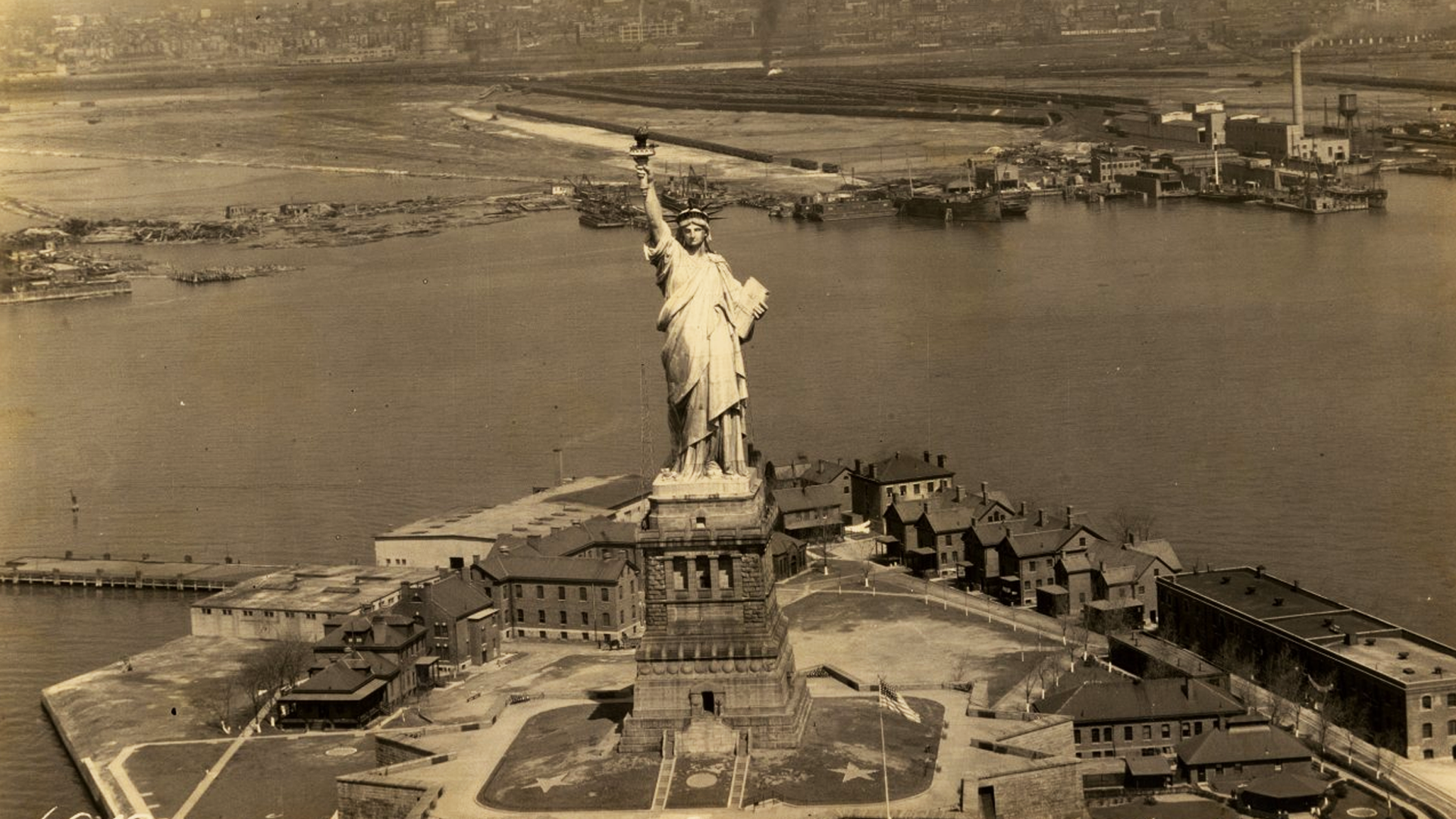
Through the years, Lady Liberty has come to represent both the nation’s ideals and its unfinished work toward equality and inclusion.
What Happened?
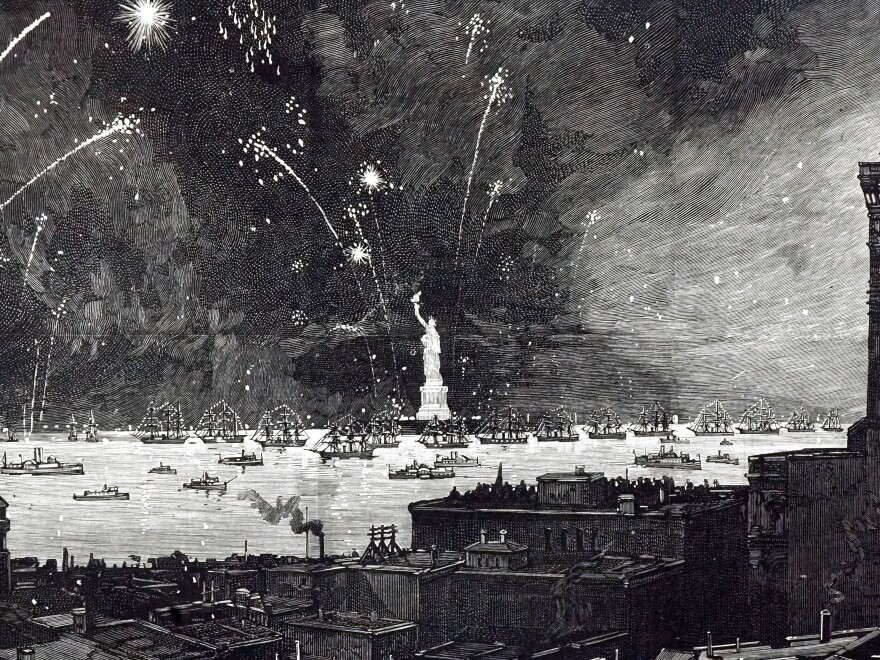
On a rainy October morning in 1886, hundreds of ships filled New York Harbor, their decks crowded with people waving flags and cheering as the Statue of Liberty was unveiled. President Grover Cleveland stood before thousands of spectators to dedicate the towering figure that would come to symbolize freedom and democracy around the world.
The idea for the statue began two decades earlier with French abolitionist Édouard de Laboulaye, who wanted to celebrate both the end of slavery in the United States and the shared democratic ideals of France and America. Sculptor Frédéric-Auguste Bartholdi designed the figure of a woman holding a torch high above her head, ‘Liberty Enlightening the World.’ The statue’s iron framework was built by engineer Gustave Eiffel, who later became famous for the Eiffel Tower.
After being completed in France, the Statue of Liberty was carefully taken apart and shipped across the Atlantic in more than 200 crates. American workers then reassembled the massive copper sheets atop a pedestal on Bedloe’s Island, now called Liberty Island. When the French flag covering her face was dropped too early during the dedication ceremony, the crowd erupted into cheers and cannon fire, drowning out the final speech, but the moment’s meaning was clear: Lady Liberty had arrived.
For many Americans, the Statue was a proud symbol of freedom and friendship. But for others, it was also a reminder of freedoms still denied. Suffragists protested that day, pointing out the irony of a female figure representing liberty when American women could not yet vote. Black journalists questioned how a nation that had ended slavery still tolerated discrimination and violence against African Americans.
At her feet lies a broken chain and shackle, details meant to represent the end of slavery in the United States. Though often overlooked today, those symbols show that the Statue’s original message wasn't only about welcoming immigrants, but also about freedom from oppression and inequality.
In 1903, a new layer of meaning was added when Emma Lazarus’s poem, 'The New Colossus', was inscribed on a bronze plaque inside the pedestal. Her words “Give me your tired, your poor, your huddled masses yearning to breathe free” reimagined Lady Liberty as a ‘Mother of Exiles,’ a beacon of hope for millions of immigrants who would soon pass through nearby Ellis Island seeking a better life.
Between 1892 and 1924, more than 12 million immigrants entered the United States through Ellis Island. For many, the first sight of Lady Liberty’s torch rising from the mist was the moment they knew they had reached the ‘golden door’ to opportunity and freedom.
Over time, the Statue of Liberty became more than a monument, it became a promise. A promise that America could live up to its ideals of equality, justice, and welcome. She reminds us that liberty isn’t something we inherit; it’s something we must protect and extend to others.
Today, Lady Liberty still stands tall over New York Harbor, her torch glowing as a light for those seeking hope. Her story is a lesson in how symbols can evolve and how freedom, though never perfect, continues to grow when we include more people in its promise.
Why It Matters
The dedication of the Statue of Liberty in 1886 marked more than the unveiling of a monument, it was the birth of a global symbol of freedom, equality, and opportunity. Originally tied to the end of slavery and the friendship between France and the U.S., the statue evolved into a beacon of hope for immigrants and a reminder of the ongoing fight for justice within America itself. Studying this event helps us understand that liberty isn’t static, it expands through struggle, activism, and compassion. Lady Liberty’s torch is more than a light over the harbor; it’s a call to every generation to keep freedom alive for all people, not just a few.
?
Why did France choose to give the United States the Statue of Liberty?
What do the broken chains at the Statue of Liberty’s feet represent?
How did Emma Lazarus’s poem change the meaning of the Statue of Liberty?
Why did some Americans protest during the Statue’s dedication ceremony?
What does the Statue of Liberty symbolize to people today?
Dig Deeper
A look at how the Statue of Liberty and Ellis Island continue to inspire visitors and symbolize freedom.
How the Statue of Liberty transformed from a symbol of abolition to a welcoming figure for immigrants.
Related
Basic Rights and Personal Responsibilities
Rights give us freedom. Responsibilities protect those freedoms—for ourselves and for each other.
Fair and Unfair Laws: Justice, Equality, and the Power of Rules
Laws shape how societies function, but not all laws are fair. Understanding the difference between fair and unfair laws helps citizens protect justice and equality.
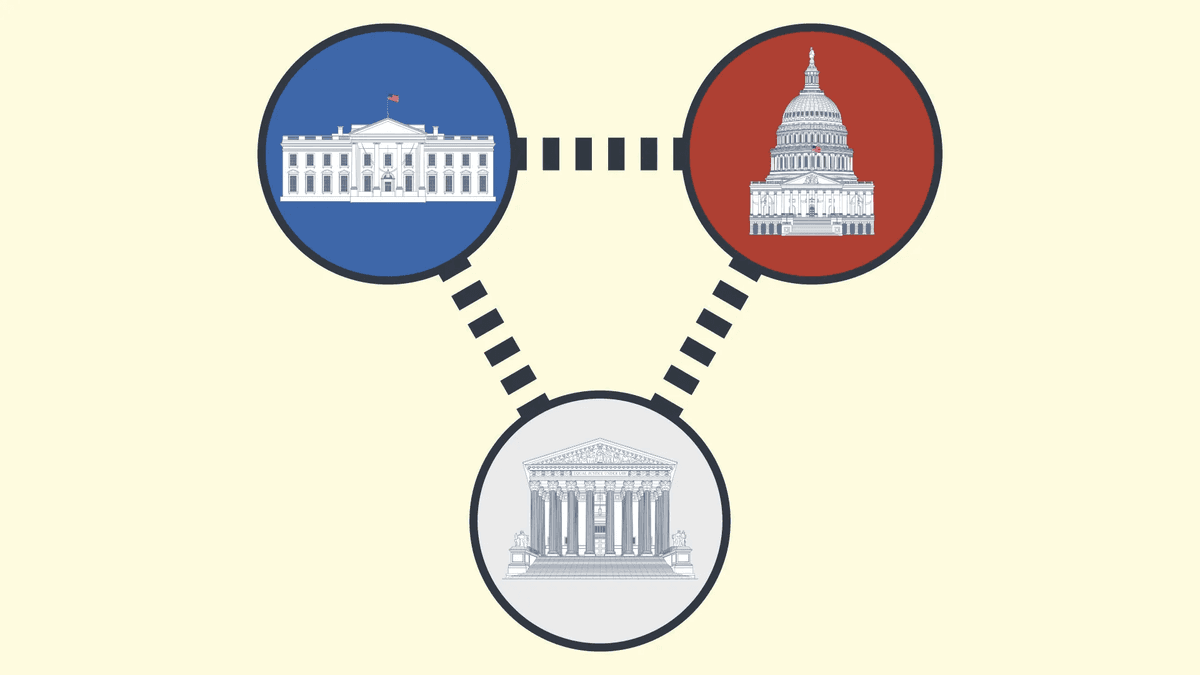
Separation of Powers
The U.S. Constitution divides power among three branches—legislative, executive, and judicial—to prevent tyranny and keep government balanced.
Further Reading
Stay curious!