

President John F. Kennedy Is Assassinated
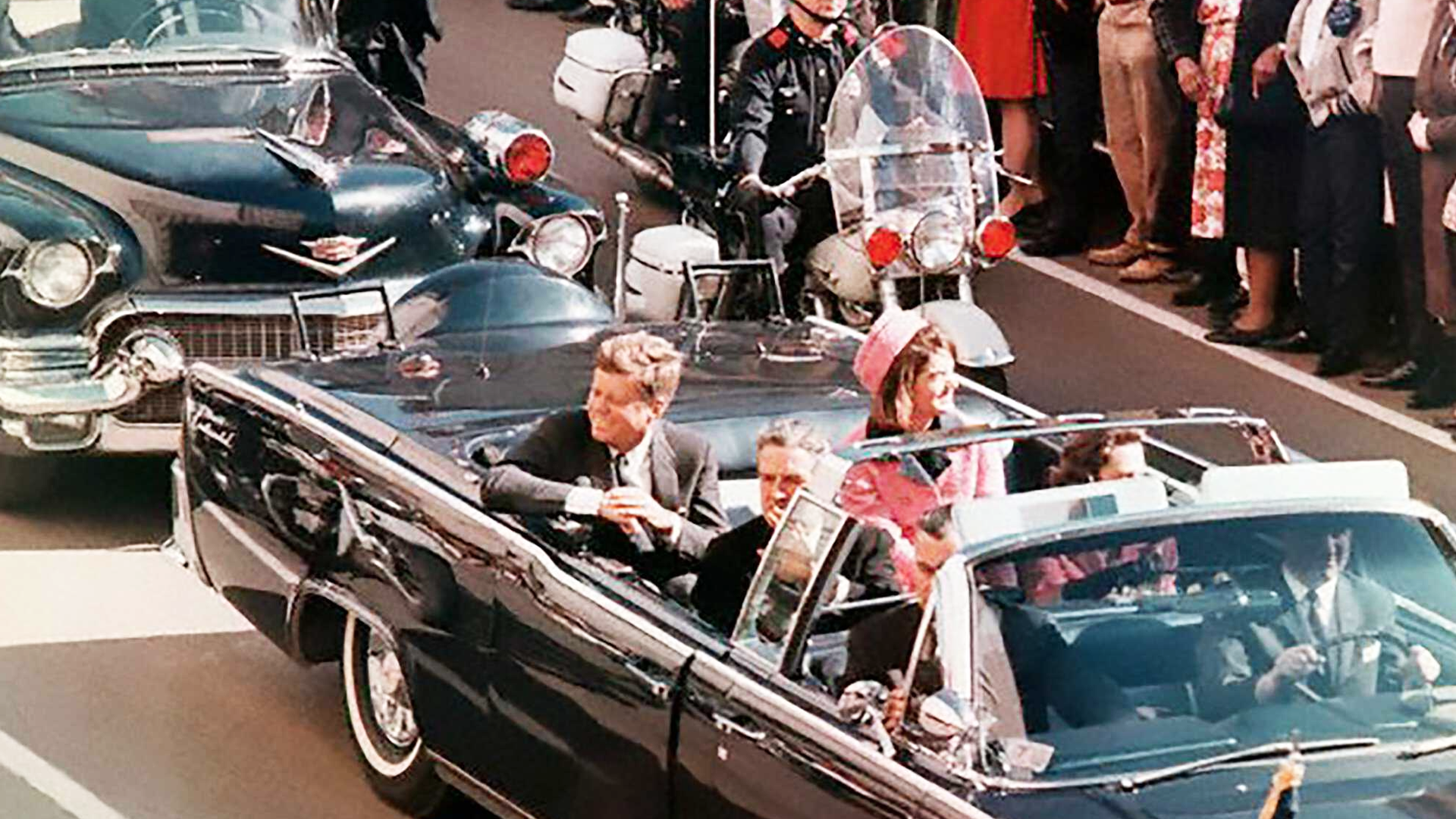
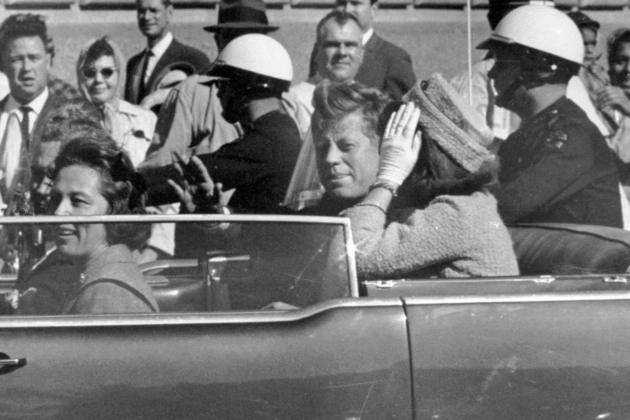
President John F. Kennedy and First Lady Jacqueline Kennedy riding in an open car in Dallas shortly before the assassination.
What Happened?
John F. Kennedy, the 35th president of the United States, traveled to Texas in November 1963 to rally support for his reelection campaign and to calm tensions inside the state’s divided Democratic Party. On November 22, he and First Lady Jacqueline Kennedy rode through Dallas in an open-top limousine, along with Texas Governor John Connally and his wife. Crowds lined the streets, cheering and waving as the motorcade passed.
At 12:30 p.m., as the president’s car drove past the Texas School Book Depository, gunshots rang out. Bullets struck President Kennedy and seriously wounded Governor Connally. The car sped to Parkland Memorial Hospital, but doctors could not save the president. At just 46 years old, John F. Kennedy was pronounced dead, and word of his death spread across the country within minutes through radio and television broadcasts.
Police quickly focused on a suspect: Lee Harvey Oswald, an employee at the Texas School Book Depository. Oswald had a complicated past. He’d served in the Marines, lived in the Soviet Union for a time, supported pro-Castro politics, and owned a rifle purchased by mail. Less than an hour after the shooting, Oswald killed Dallas police officer J. D. Tippit and was later arrested in a movie theater. He was charged with murdering both the officer and the president.
While the country was still reeling, the government had to show that power could transfer peacefully. Just hours after Kennedy’s death, Vice President Lyndon B. Johnson took the oath of office aboard Air Force One as it sat on the runway in Dallas. Jacqueline Kennedy stood beside him in her bloodstained suit, a powerful symbol of both personal and national grief. The plane then returned to Washington, D.C., carrying Kennedy’s body home.
Two days later, as Oswald was being moved from the city jail to a more secure county facility, he himself was shot on live television by Jack Ruby, a Dallas nightclub owner. Millions of Americans watched the shocking scene unfold in real time. With Oswald dead, many people felt they would never hear a full explanation of what had happened or why, and this helped fuel decades of rumors and conspiracy theories.
President Johnson declared November 25 a national day of mourning. Kennedy’s coffin lay in state in the Capitol Rotunda, where thousands of people waited in long lines to pay their respects. A horse-drawn caisson carried his body through the streets of Washington to a funeral Mass and then to Arlington National Cemetery. There, Jacqueline Kennedy lit an eternal flame at his gravesite so that his memory would continue to burn in the minds of Americans.
To answer questions about the assassination, the government created the Warren Commission, which concluded in 1964 that Lee Harvey Oswald acted alone and that there was no larger conspiracy. However, many people remained unconvinced. Later investigations raised new doubts, and some suggested there might have been more than one shooter or possible connections to organized crime. The conflicting reports left the public with lingering uncertainty and a sense that the full truth might never be completely known.
Kennedy’s assassination changed how Americans thought about safety, leadership, and trust in government. Secret Service protection became more strict, motorcades were redesigned for security, and presidents were less exposed in public spaces. The tragedy also arrived on the edge of major changes in American life like the civil rights movement, the Vietnam War, and a wave of social activism, making the moment feel like the end of one era and the uneasy beginning of another.
Why It Matters
For many Americans, November 22, 1963, felt like the day the country lost far more than a president—it lost a certain sense of innocence. One moment, crowds were cheering, and the next, the nation was thrown into shock and confusion. Kennedy’s assassination showed just how quickly everything can change, and how fragile democracy can feel when a crisis hits. It forced people to think about why clear information, honest investigation, and strong systems of leadership and security matter so much. This wasn’t just a terrible crime—it was a turning point. It reshaped the way Americans viewed their government, and it challenged the country to think more carefully about trust, safety, and what it means to stay resilient together.
?
How did live television change the way Americans experienced Kennedy’s assassination and its aftermath?
Why did Kennedy’s death lead to such a strong feeling that the country had lost its “innocence”?
What do the different investigations into the assassination tell us about government transparency and public trust?
How did the assassination influence future rules about presidential security and motorcades?
Why do you think conspiracy theories about the assassination have remained popular for so many years?
Dig Deeper
A short documentary explaining the events of November 22, 1963, and how the assassination of John F. Kennedy changed the United States.
Related
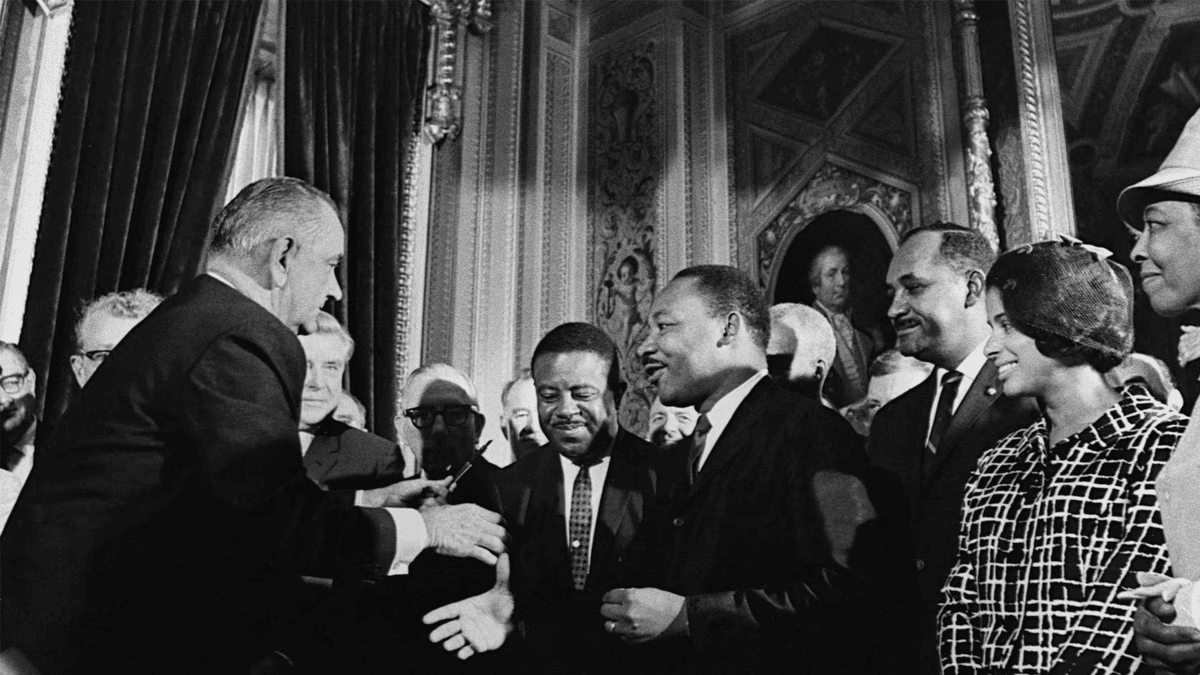
The Voting Rights Act of 1965: Enforcing the 15th Amendment
How a landmark law transformed voting access in the South and gave real force to the promises of the 15th Amendment.
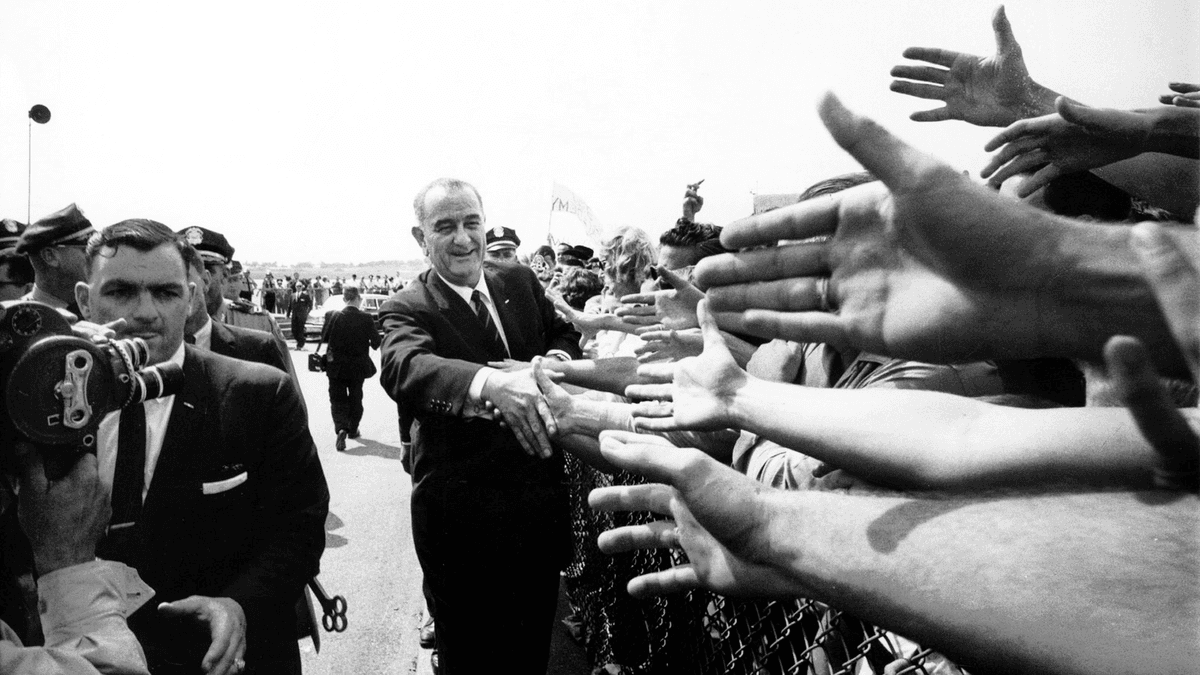
The Great Society: Government as a Force for Good
The Great Society wasn’t just a policy agenda, it was a radical vision of what America could be. With sweeping reforms in health care, education, civil rights, immigration, and the environment, President Johnson’s plan aimed to eliminate poverty and racial injustice once and for all.
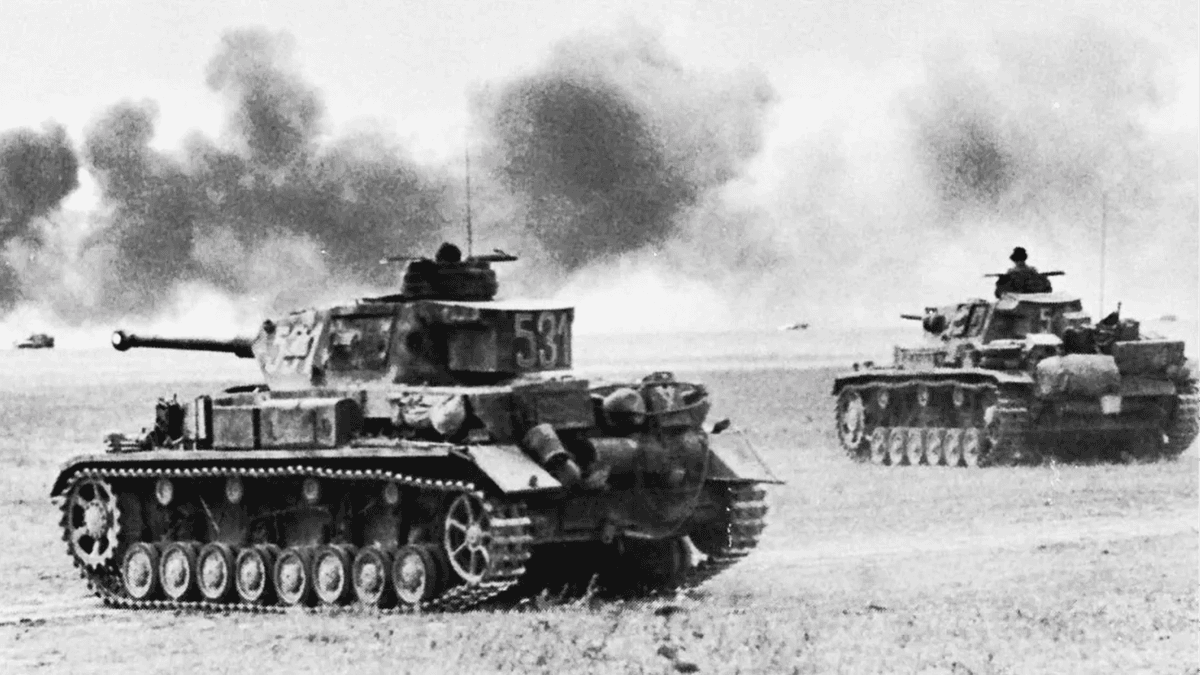
World War II: Causes, Conflict, and Consequences
A global war shaped by unresolved tensions, devastating conflict, and consequences that still define our world today.
Further Reading
Stay curious!