

1788: British Settlement Begins in Australia
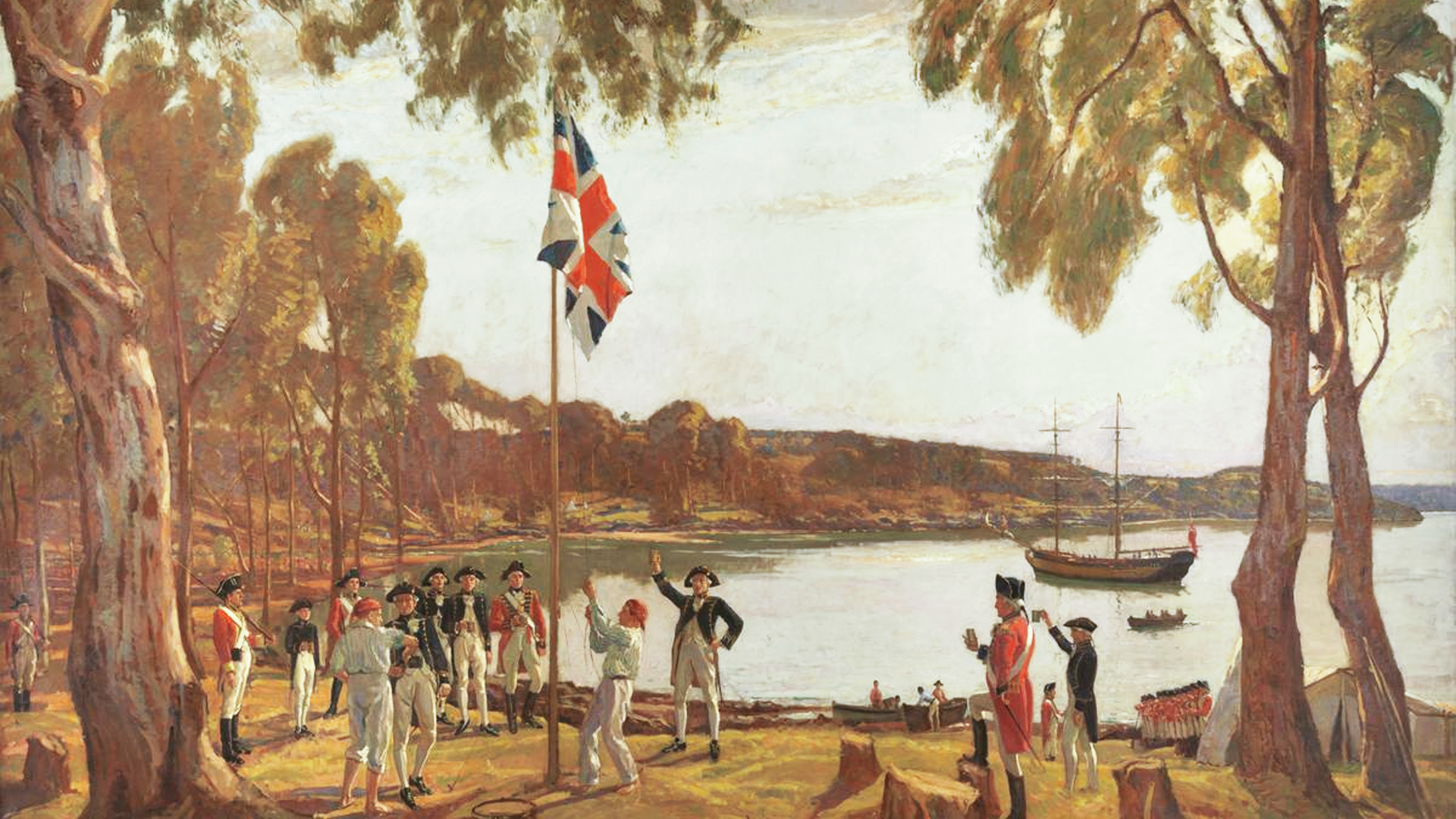
An artist’s depiction of British ships arriving on the shores of Australia in 1788.
What Happened?
On January 26, 1788, Captain Arthur Phillip and a fleet of 11 British ships carrying over 1,000 people—including more than 700 convicts—arrived at New South Wales. The colony was originally intended as a penal settlement for Britain’s overflowing prisons, with Phillip charged to establish an agricultural work camp in this uncharted land. Overcoming immense hardships, including poor soil, an unfamiliar climate, and severe food shortages, the colony barely survived its first years. Yet, under Phillip’s determined leadership, it gradually stabilized and laid the groundwork for what would become the modern nation of Australia.
For Aboriginal Australians, this date carries a far darker significance. British colonization marked the beginning of widespread dispossession, violence, and the erasure of Indigenous cultures. As white settlement expanded, Aboriginal communities were forced off their ancestral lands, subjected to devastating diseases, and displaced from their traditional ways of life. Many Indigenous Australians now refer to January 26 as 'Invasion Day,' a poignant reminder of the enduring consequences of colonization.
Today, January 26 is celebrated as Australia Day, a national holiday marked by festivities and reflection. However, the growing debate around its significance urges Australians to confront their complex history. The date serves as a reminder of resilience and transformation, but it also calls for a deeper understanding of the impact of colonization and the need for reconciliation with Indigenous communities. How we acknowledge this day shapes not only our view of history but also our commitment to equity and justice moving forward.
Why It Matters
The founding of British settlement in Australia in 1788 represents both the beginning of a nation and the start of profound upheaval for its Indigenous people. It reminds us that history is not a singular narrative but a tapestry of experiences that include both progress and pain. For many, January 26 symbolizes resilience, growth, and transformation; for others, it marks loss, displacement, and the enduring effects of colonization. Recognizing these dual realities challenges us to reflect on how we honor our shared history and what steps we take toward reconciliation. By understanding the full scope of this event, we can learn to embrace a more inclusive and truthful narrative of Australia’s past, present, and future.
?
Dig Deeper
On 26 January 1788, the first fleet arrived and British naval officer Arthur Phillip raised the union jack at Sydney Cove, establishing the first prison colony and essentially marking the beginning of European invasion of the continent.
Related

Civics vs. Ethics
Civics explains the rules of society. Ethics asks whether those rules are right.

The Civil Rights Movement: Struggle, Solidarity, and Social Change
From classrooms to courthouses, buses to bridges, the Civil Rights Movement reshaped America’s laws — and its conscience.

Push, Pull, Fall, Fly: Understanding Forces and Motion
From falling apples to orbiting moons, the universe runs on motion. Forces push, pull, and resist—shaping everything from your morning jog to the motion of planets.
Further Reading
Stay curious!