

Gold Discovered at Sutter’s Creek
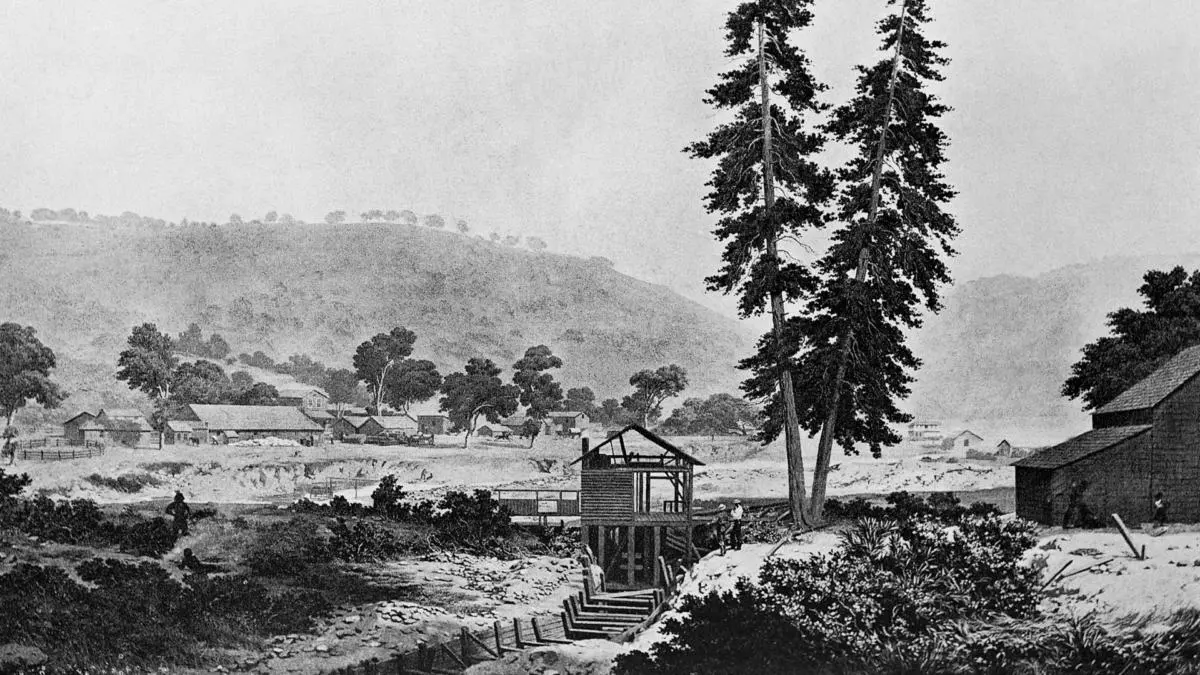
A historic depiction of gold miners at Sutter’s Creek, California
What Happened?
On January 24, 1848, a millworker named James Marshall noticed shiny flakes in the dirt while helping build a sawmill along Sutter’s Creek in California. Those flakes turned out to be gold, and although the discovery seemed small at first, it would soon reshape the entire nation.
Word of gold spread quickly, drawing people from across the United States and around the world. These fortune-seekers, later called the ’49ers, traveled by wagon, ship, and foot in hopes of striking it rich. Within just a few years, California’s population exploded, transforming it from a quiet territory into a booming economic center.
The Gold Rush dramatically sped up California’s path to statehood. In 1848, only a small number of non-Native settlers lived in the region, but by 1850, California became the 31st state in the Union. New towns, roads, ports, and businesses sprang up almost overnight to serve the growing population.
Despite popular stories of instant riches, most miners did not become wealthy. In fact, many fortunes were made by merchants who sold supplies, tools, and services to miners. Businesses like Levi Strauss, Wells Fargo, and Studebaker all trace their origins to the Gold Rush economy.
While the Gold Rush is often celebrated for the opportunities it created, it also came at a terrible cost. Native American communities were forced off their land, exposed to disease, and targeted by violence. Within two decades, California’s Native population was reduced by more than half, revealing the devastating consequences of unchecked expansion.
The Gold Rush also brought people from many different countries, including China, Latin America, and Europe. While this made California more diverse, it also fueled discrimination. Laws like the Foreign Miners’ Tax unfairly targeted non-citizens, especially Chinese miners, showing how fear and prejudice often grow alongside competition for resources.
The discovery at Sutter’s Creek reminds us that moments of opportunity can bring both progress and harm. The Gold Rush illuminates the intricate balance between progress and justice. It serves as a powerful reminder of how innovation and economic opportunity can drive transformative change while raising critical questions about equity and inclusion. It challenges us to examine the costs and consequences of growth and to consider how future progress can be guided by principles of fairness, sustainability, and respect for all communities.
Why It Matters
The discovery at Sutter’s Creek is a profound example of the dual nature of progress. On one hand, it fueled dreams of prosperity and sparked innovation, laying the groundwork for California to become a symbol of opportunity and growth. For many, the Gold Rush was a chance to build wealth, establish businesses, and participate in an emerging economy that would leave a lasting legacy, from Levi Strauss's denim empire to Wells Fargo’s financial institution. On the other hand, this progress came at great human and environmental costs. Indigenous communities were displaced and decimated by disease, violence, and the upheaval of their ancestral lands. Immigrants, particularly those from China, faced discrimination and exploitation, with laws and violence targeting their contributions and presence. The Gold Rush also raises questions about sustainability, as the frenzy to extract gold led to severe environmental degradation, including deforestation and water pollution. By examining the Gold Rush through a balanced lens, we see a narrative of innovation and opportunity intertwined with the need for ethical considerations. This challenges us to reflect on how we approach progress today, ensuring that opportunities don't come at the expense of marginalized communities or irreparable harm to the environment.
?
Dig Deeper
Explore the story of the California Gold Rush and its lasting impact on the West.
Related
Iron, Industry, and Injustice: The Race to Build America's First Transcontinental Railroad
On May 10, 1869, two railroads met in the middle of nowhere—and changed the nation forever. The golden spike didn’t just finish a track. It launched a new era of expansion, innovation, and exploitation.

The Cold War & Fear at Home: Ideology, Power, and Public Anxiety
A global rivalry shaped by fear, ideology, and the constant tension between freedom and security.
The Louisiana Purchase: A River, A Bargain, and a Bigger United States
In 1803 the United States bought the vast Louisiana Territory from France, doubling the nation’s size, securing the Mississippi River, and setting the stage for westward expansion and hard questions about slavery and Native sovereignty.
Further Reading
Stay curious!