

1991: The Birmingham Six Are Released
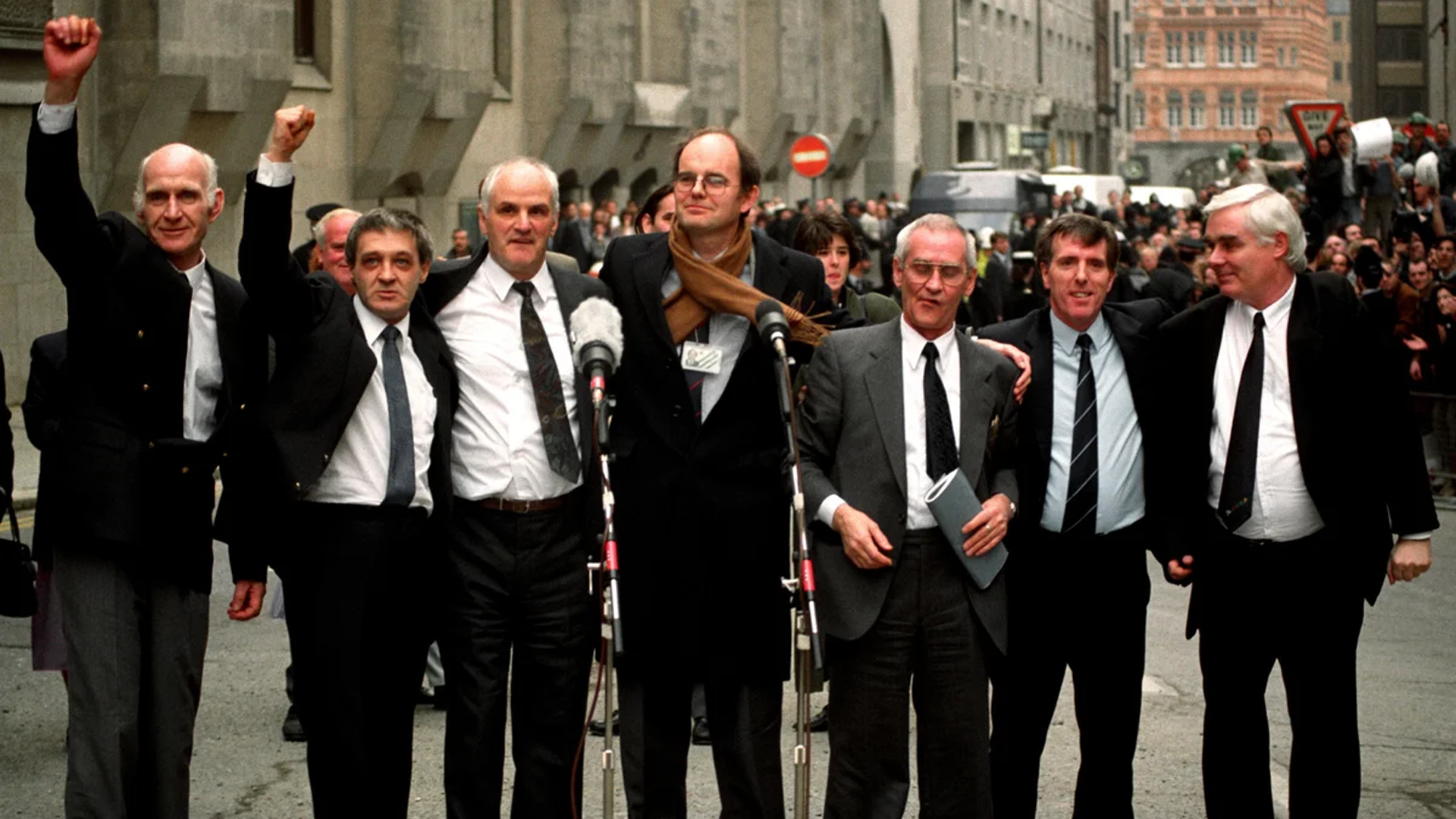
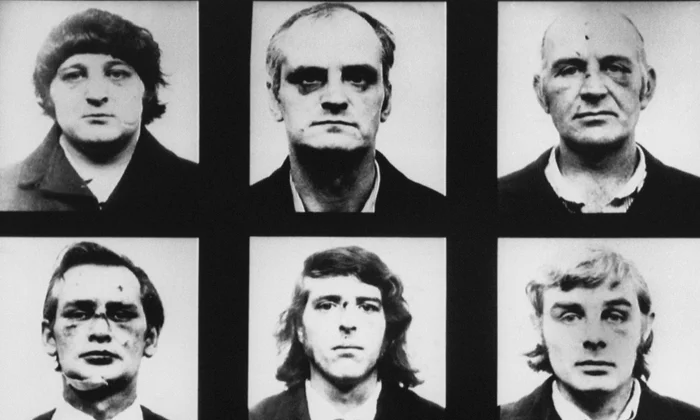
The Birmingham Six raising their hands after being released from prison in 1991.
What Happened?
On November 21, 1974, two bombs exploded in crowded pubs in Birmingham, England, killing 21 people and injuring more than 180 others. The attacks were linked to the Irish Republican Army (IRA), a group involved in a violent conflict known as 'The Troubles.' This long-running struggle centered on the political future of Northern Ireland and tensions between Irish nationalists and the British government.
In the days after the bombing, British authorities rushed to find those responsible. Six Irish men—Hugh Callaghan, Patrick Hill, Gerard Hunter, Richard McIlkenny, Billy Power, and Johnny Walker—were arrested. During intense interrogations, several of the men signed confessions. However, they later said the confessions had been forced through beatings, threats, and extreme pressure by police officers.
At their trial in 1975, prosecutors presented the confessions along with forensic evidence that supposedly showed the men had handled explosives. The defendants insisted they were innocent and that the evidence had been obtained unfairly. Despite their protests, the jury found them guilty, and the six men were sentenced to life in prison.
Over the years, serious doubts about the case began to emerge. Independent scientists discovered that the forensic tests used to convict the men were unreliable. The chemical test could produce positive results from ordinary substances such as cigarette paper or playing cards. Meanwhile, journalists and activists uncovered growing evidence of police misconduct during the investigation.
Public concern continued to grow across Britain and Ireland. Campaigners, lawyers, and journalists argued that the men had been wrongfully convicted. One journalist, Chris Mullin, played a key role by investigating the case and revealing serious problems with the original evidence and testimony.
Finally, after years of appeals and public pressure, the case returned to court. On March 14, 1991, the Court of Appeal ruled that the convictions were unsafe and overturned them. After 16 years behind bars, the Birmingham Six walked free. The judges concluded that police misconduct and unreliable evidence had led to a grave injustice.
The case shocked many people in the United Kingdom and around the world. It forced the public to confront the possibility that even well-established legal systems can make serious mistakes. The Birmingham Six case led to reforms in police interrogation methods, forensic science standards, and appeals processes, helping strengthen protections for people accused of crimes.
Why It Matters
The story of the Birmingham Six reminds us that justice systems must always be questioned, examined, and improved. Even democratic societies can make serious mistakes when fear, political pressure, or flawed evidence influence decisions. Learning about this case helps us understand why fair trials, reliable evidence, and strong legal protections are essential to protecting individual rights and maintaining public trust in the rule of law.
?
Why were the Birmingham Six originally arrested so quickly after the bombing?
How did unreliable forensic evidence affect the outcome of the trial?
Why is it important that journalists and investigators can question government actions?
What protections should exist to prevent innocent people from being wrongfully convicted?
Dig Deeper
A BBC News report explaining the 1974 Birmingham pub bombings and the wrongful convictions of the Birmingham Six.
Related
Birthright Citizenship: The Right of the Soil and the Right of the Blood
From English common law to the Fourteenth Amendment, birthright citizenship has shaped who belongs in America — and who is excluded.
The Constitutional Convention: Building a More Perfect Mess
In the summer of 1787, 55 men locked themselves in a room to fix the government—and ended up rewriting it from scratch. What came out wasn’t perfect, but it changed everything.
Deinstitutionalization
Deinstitutionalization was a movement that closed psychiatric hospitals in favor of community care. But without enough resources, it led to homelessness, incarceration, and untreated illness.
Further Reading
Stay curious!