

First Radio Transmission Sent Across the Atlantic Ocean
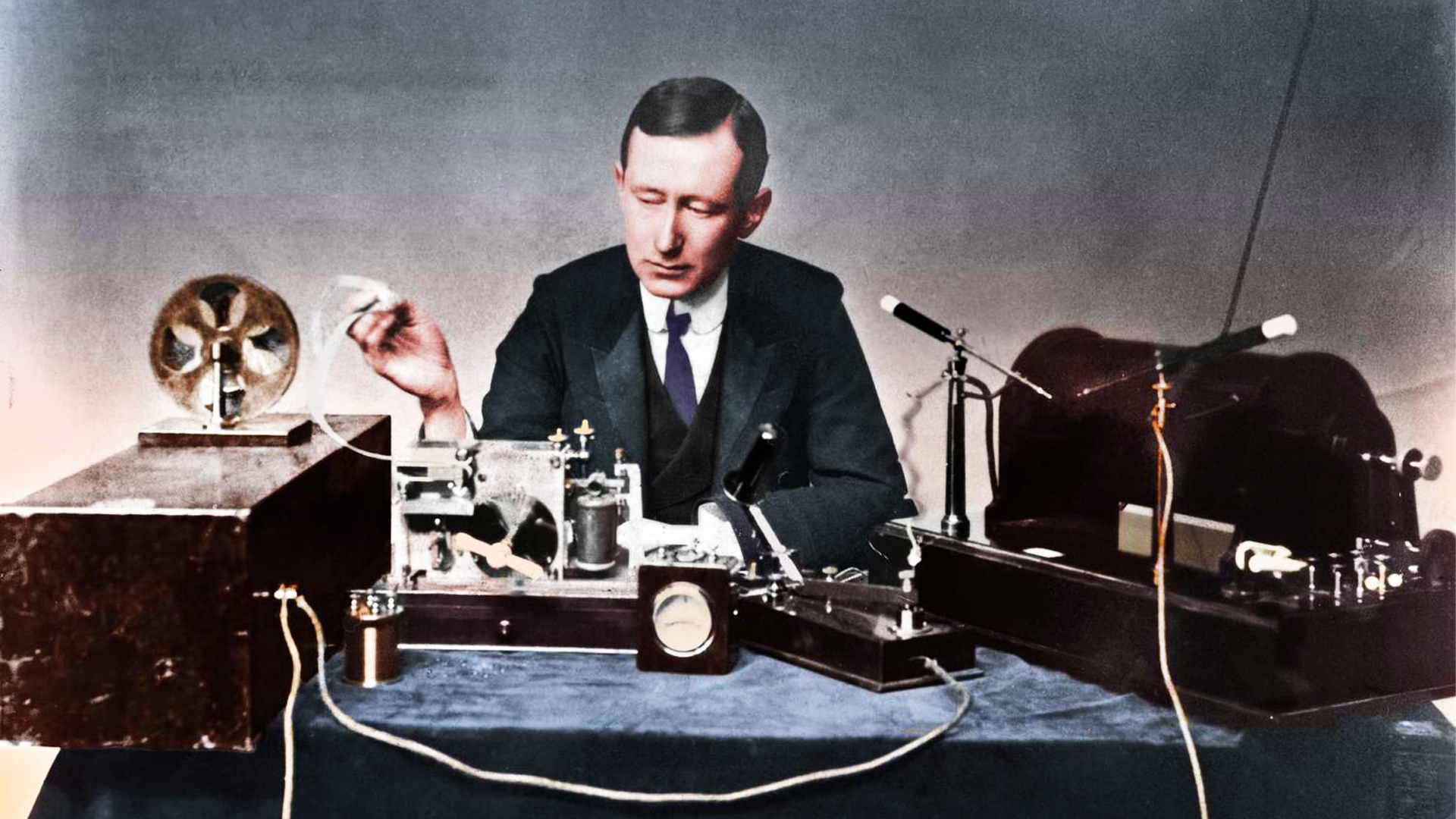
Guglielmo Marconi’s experiment changed global communication forever by showing that wireless messages could travel far beyond what scientists believed was possible.
What Happened?
When Guglielmo Marconi climbed Signal Hill in Newfoundland on December 12, 1901, he was chasing a dream that many experts thought was impossible. Most scientists believed radio waves could not bend around the Earth’s curved surface, which meant signals should stop after a few hundred miles. But Marconi wanted to prove that wireless messages could reach across oceans and connect people across great distances.
By the time Marconi traveled to Canada, he had already made impressive progress. He had sent signals across short distances in Italy, then across the English Channel, and even helped newspapers follow yacht races by sending updates from ships at sea. Each time he succeeded, he pushed the boundaries of what radio technology could do, convincing more people that wireless communication might shape the future.
To test whether a signal could cross the Atlantic, Marconi built a powerful transmitter in Poldhu, England, and planned to receive the message in Newfoundland. Storms destroyed several antennas on both sides of the ocean, forcing him to improvise. In Newfoundland, he used a kite to lift a long wire antenna into the air, hoping it would be high enough to catch the faint signal from across the sea.
At exactly 12:30 p.m., Marconi and his assistant George Kemp pressed their ears to a receiver and heard three faint clicks: dot dot dot. It was the Morse code letter “S,” sent from more than 2,000 miles away. The sound may have been quiet, but its impact was enormous. It proved that radio waves could travel far beyond what anyone expected, likely because they bounced off a layer of charged particles high in the atmosphere called the ionosphere.
Marconi’s success inspired huge excitement around the world. Suddenly, people realized that ships could stay in contact far from shore and that information could move more quickly than ever before. This breakthrough helped make wireless technology an essential tool for safety, business, and global communication throughout the 20th century.
Although scientists later learned more about how radio waves interact with the atmosphere, Marconi’s experiment marked the moment the world understood that wireless communication had no practical limits. His achievement laid the foundation for radio, radar, satellites, and even parts of the technology that make Wi-Fi and cell phones possible today.
Marconi continued improving radio technology for decades and earned the Nobel Prize in Physics in 1909. When he died in 1937, radio stations around the world went silent for two minutes in his honor, a quiet tribute to the man who helped the world learn to communicate across continents.
Why It Matters
Marconi’s transatlantic transmission showed humanity that communication did not have to be slowed down by distance or geography, which helped create the global systems we rely on today for safety, information sharing, and connection. It opened the door to modern wireless technology and demonstrated the power of scientific curiosity.
?
Why do you think people at the time were shocked that a radio message could cross an entire ocean?
How might life at sea have changed once ships could send and receive wireless messages?
What modern technologies depend on the same basic ideas that Marconi used in his experiments?
Why is it important for scientists to challenge ideas that others think are impossible?
How might global communication be different today if Marconi had not succeeded?
Dig Deeper
A look into the competition between inventors as they pushed the limits of early wireless technology and shaped the future of communication.
A student-friendly exploration of the inventors and ideas behind the creation of radio and how each contributed to modern wireless technology.
Related

Developing and Refining Business Ideas
Having a great idea is exciting, but turning it into a successful business requires refining, testing, and planning.
Nat Turner’s Rebellion and Resistance to Slavery
In 1831, Nat Turner led the most deadly slave rebellion in U.S. history, shaking the South and triggering harsher laws that deepened oppression.

Harnessing the Power of Offshore Wind
Offshore wind energy is one of the fastest-growing renewable energy sources, capable of delivering massive amounts of clean electricity right where people live: along coastlines.
Further Reading
Stay curious!