

Prelude to War – Sectional Tensions and Failed Compromises

The 1850s were a decade of attempted political compromises that only deepened America's divide over slavery.
The Dive
In the 1850s the United States was expanding westward, but every new territory raised the same explosive question: would it allow slavery or not? Leaders tried to hold the country together with the Compromise of 1850, a set of laws that admitted California as a free state, opened Utah and New Mexico to a vote on slavery, settled Texas’s borders, banned the slave trade (but not slavery) in Washington, D.C., and passed a strict Fugitive Slave Act. Instead of calming tensions, this compromise left both sides angry and suspicious.
The Fugitive Slave Act became one of the most feared and hated laws in the nation. It required ordinary citizens in free states to help capture enslaved people who escaped north, denied the accused a jury trial, and paid federal commissioners more money if they ruled for slaveholders. Many Northerners saw it as a law that turned their communities into hunting grounds, and resistance grew through court battles, individual acts of bravery, and the expanding Underground Railroad.
As Americans pushed west, Illinois senator Stephen Douglas proposed a new solution for the territories: popular sovereignty, the idea that the people living in a place should vote on whether to allow slavery. His 1854 Kansas–Nebraska Act created two new territories and repealed the long-standing Missouri Compromise line that had kept slavery out of the northern plains. Douglas hoped this would settle things peacefully, but it instead opened the door to fierce competition, fraud, and violence.
Once the law passed, both proslavery and antislavery groups rushed into Kansas, hoping to control the vote. Armed “border ruffians” crossed over from Missouri to intimidate voters, while antislavery settlers, known as free-staters, built their own towns and governments. Clashes exploded into raids, burnings, and battles that newspapers dubbed “Bleeding Kansas,” turning the territory into a grim preview of the Civil War.
These events reshaped national politics. The old Whig Party collapsed, and a new political force, the Republican Party, rose quickly by uniting people who opposed the expansion of slavery. Instead of cooling tempers, the Kansas–Nebraska Act pushed North and South further apart, convincing many Americans that compromise was becoming impossible.
Tensions grew so fierce that violence even reached Congress. In 1856 Senator Charles Sumner was brutally beaten on the Senate floor by Representative Preston Brooks after a speech criticizing slavery. This attack shocked the country and revealed just how deeply divided Americans had become over the future of slavery and democracy.
The courts soon added fuel to the fire. In the 1857 Dred Scott decision, the Supreme Court ruled that Black Americans, free or enslaved, could not be U.S. citizens and that Congress had no power to limit slavery in the territories. This ruling stunned the nation, outraged abolitionists, delighted proslavery leaders, and erased earlier compromises. It also signaled that the highest court in the land was willing to protect slavery above all else.
By the late 1850s the nation was unraveling. Kansas continued to bleed, political parties were realigning, and more Americans began to believe that the country could not survive half-slave and half-free. When Kansas finally entered the Union as a free state in 1861 and Abraham Lincoln, a Republican, won the presidency in 1860, Southern leaders decided to secede. The compromises and court rulings of the previous decade hadn't saved the Union, instead they helped drive it into Civil War.
Why It Matters
The fierce debates and violent clashes of the 1850s show how a nation can begin to fracture when its core values come into conflict and when leaders avoid solving problems with honesty and courage. The Compromise of 1850, the Kansas–Nebraska Act, Bleeding Kansas, and the Dred Scott decision revealed that the question of slavery wasn't just political disagreement but a fundamental struggle over human rights and the meaning of freedom in America. Each attempt to “compromise” without addressing the injustice of slavery only deepened mistrust, strengthened extreme voices, and pushed the country closer to war. Understanding this period helps us see how dangerous it is when laws deny people their humanity, when prejudice shapes our government, and when violence replaces debate. It reminds us that democracy depends on fairness, empathy, and moral clarity, and that real peace comes not from avoiding hard truths but from confronting them with integrity so that liberty and equality can truly belong to everyone.
?
Why did the Fugitive Slave Act of 1850 create so much outrage in the North?
How did the idea of popular sovereignty contribute to violence in Kansas?
In what ways did the Kansas-Nebraska Act reshape the political party system?
Could any compromise have realistically prevented the Civil War by the late 1850s?
How did events in 'Bleeding Kansas' influence national politics and public opinion?
Dig Deeper
Matthew Pinsker gives a crash course on the Compromise of 1850, the resolution to a dispute over slavery in territory gained after the Mexican-American War.
You may think that things are heated in Washington today, but the Kansas-Nebraska Act of 1854 had members of Congress so angry they pulled out their weapons -- and formed the Republican Party.
Related
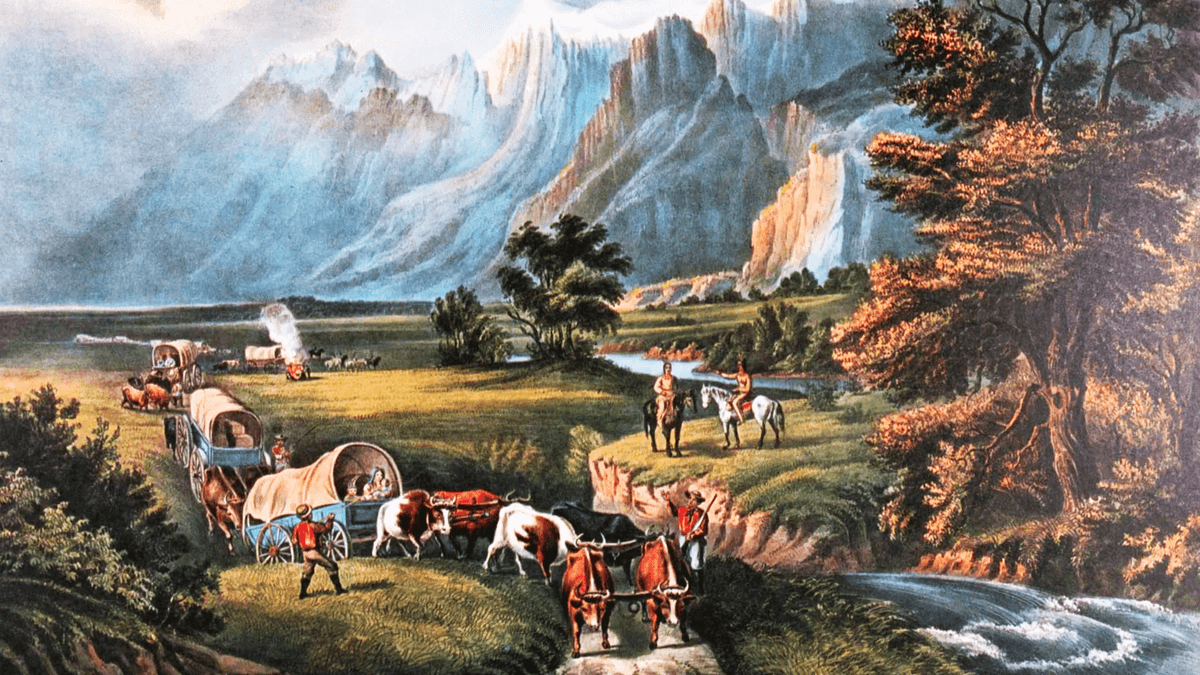
Westward Expansion, Sectionalism, and the Road to Civil War
Manifest Destiny fueled territorial growth, but it also deepened sectional divides—turning political disagreements over slavery and states’ rights into irreconcilable conflicts that led to civil war.
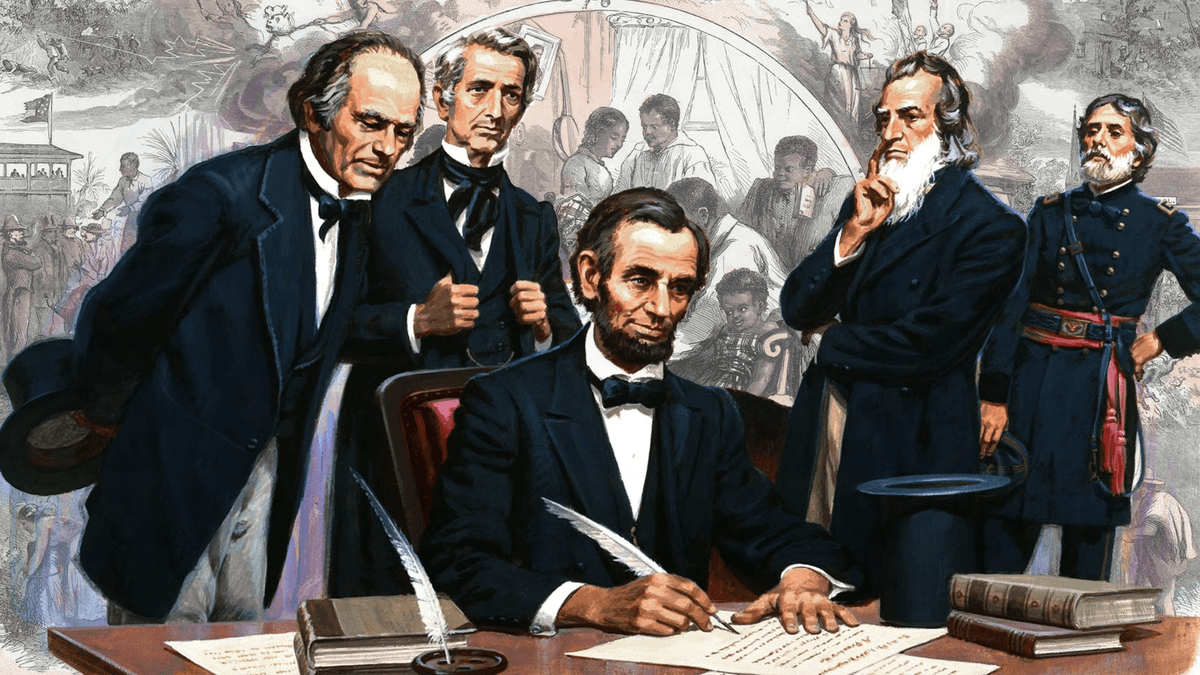
The Emancipation Proclamation & The 13th Amendment
Freedom on paper is one thing; freedom in practice is another. The Emancipation Proclamation and the 13th Amendment were giant leaps toward liberty—yet the road ahead for formerly enslaved people was long and uneven.
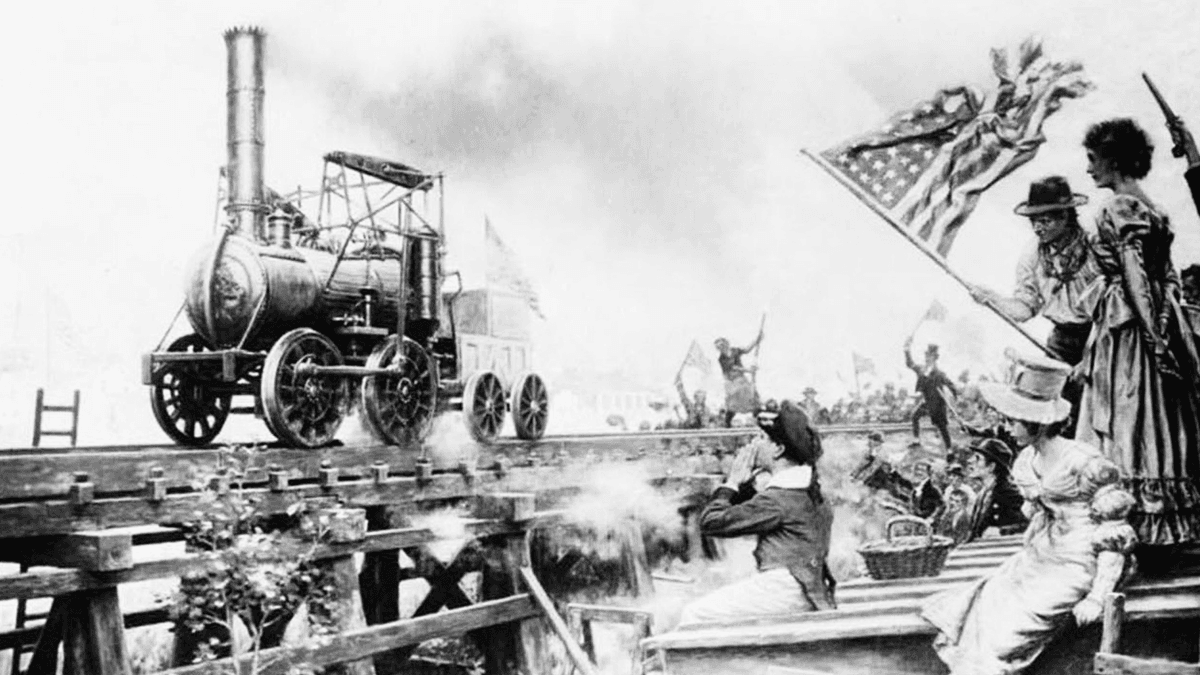
The Market Revolution: How Innovation Transformed America
In the early 1800s, America changed from a land of small farms to a booming nation of factories, railroads, and markets. The Market Revolution connected people, goods, and ideas—while also revealing deep inequalities in who benefited from progress.
Further Reading


Stay curious!