

1840: The Treaty of Waitangi Shapes New Zealand’s Future—But at What Cost?
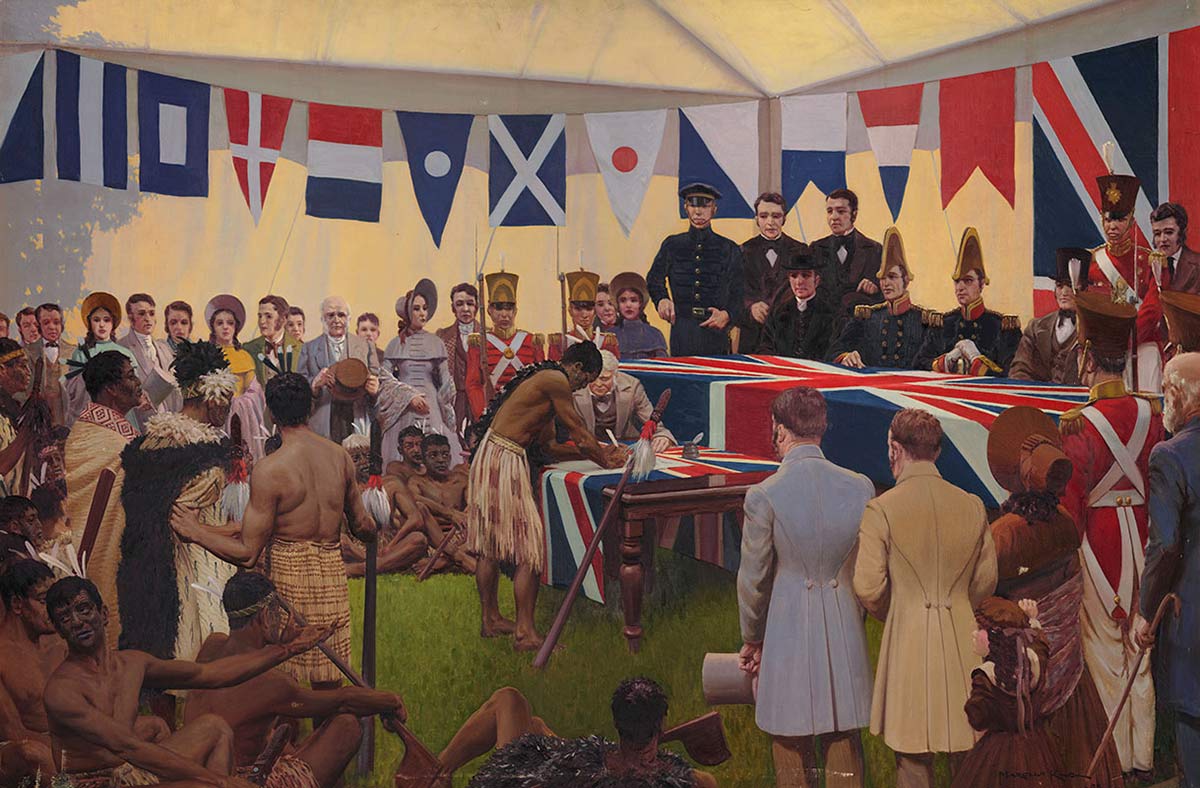
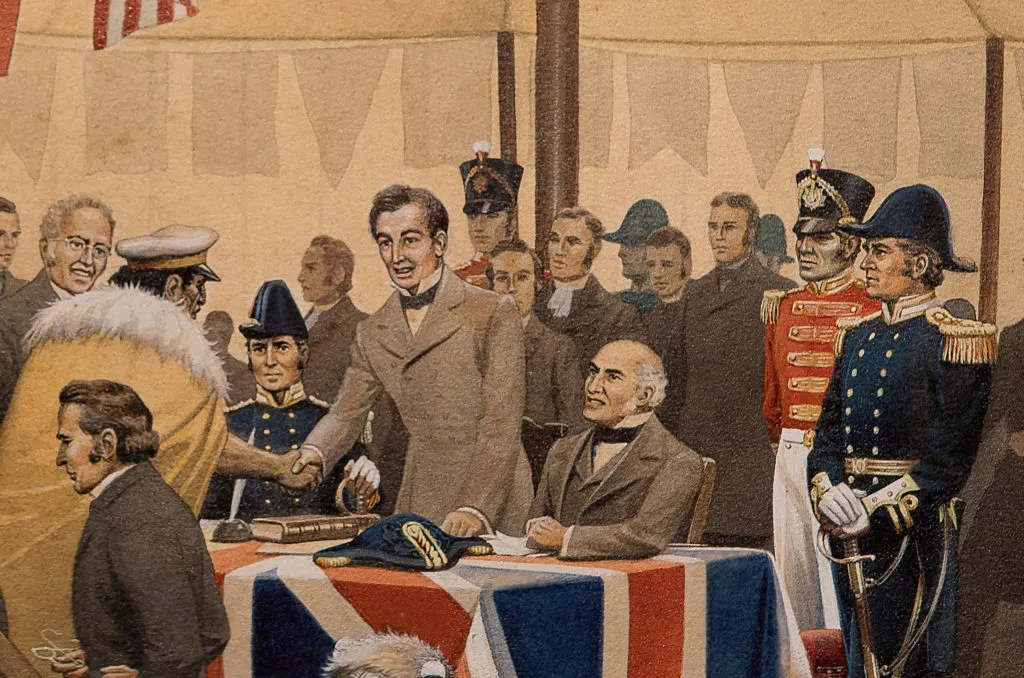
Māori chiefs and British officials gathered at Waitangi to sign the treaty, marking a turning point in New Zealand’s history.
What Happened?
By the late 1830s, British settlers were flooding into New Zealand, tensions were rising, and the British Crown saw an opportunity. On February 6, 1840, representatives of the Crown and around 540 Māori rangatira (chiefs) signed the Treaty of Waitangi.
In theory, the Treaty promised mutual respect: Māori would gain the rights of British subjects, Britain would govern fairly, and Māori land ownership would be protected. But there was a catch—actually, several. The Treaty existed in two languages, and the translations weren’t quite the same. In the English version, Māori ceded ‘sovereignty.’ In the Māori version, they agreed to ‘kawanatanga’—a word closer to governance than full surrender of power.
For the British, the Treaty justified their annexation of New Zealand. For many Māori, it was an agreement that allowed shared authority while maintaining their own leadership. These differences weren’t just technical—they fueled long-standing grievances, land seizures, and resistance.
After the Treaty was signed, British sovereignty was quickly proclaimed over all of New Zealand, including Māori tribes whose leaders had never signed. Land was taken, often unfairly. Māori communities resisted, sometimes through diplomacy, sometimes through armed conflict. The New Zealand Wars of the mid-19th century were in part a direct response to the Crown’s interpretation of the Treaty.
By the 20th century, Māori leaders fought for recognition of Treaty breaches. The 1975 establishment of the Waitangi Tribunal allowed grievances to be formally investigated, leading to major settlements, land returns, and financial compensation.
Yet, the Treaty remains a living debate. It is not legally binding unless referenced in specific laws, leaving room for disputes over how its principles should be honored. Today, the Treaty of Waitangi is central to discussions about indigenous rights, government responsibility, and what justice looks like in a world shaped by colonialism.
The Treaty of Waitangi is more than a historical document—it is a lens through which we see how power, language, and law can shape a nation’s past, present, and future.
Why It Matters
The Treaty of Waitangi is a story of trust, betrayal, resilience, and the long fight for justice. For Māori, the Treaty was meant to be a foundation of partnership, but instead, it often became a tool for control. As we look at treaties and agreements in history, we must ask: Who benefits from them? Who is left behind? And what responsibilities do we have today to correct the injustices of the past?
?
Why do you think some Māori leaders signed the Treaty of Waitangi while others refused? What would you have done in their place?
If two people understand the same agreement differently, who should decide what it really means? How can we make sure agreements are fair for everyone?
What are some ways governments today can honor promises made in the past, even if those promises were broken long ago?
Why do you think the British government wanted control over New Zealand? What were they hoping to gain?
How do you think it felt for Māori to see their land taken away after signing a treaty that was supposed to protect it? How would you feel if that happened to you?
Do you think treaties between nations and indigenous people should be rewritten if they were unfair? Why or why not?
How can we learn from history to make sure that agreements between different groups are more just in the future?
Dig Deeper
Te Tiriti o Waitangi is one of the most misunderstood documents in Aotearoa. We explain why it's still a controversial document to this day.
It might seem odd to ask why New Zealand is an independent nation but in the late nineteenth century, its inclusion in Australia was seen as a certainty. Yet, as you'll know, it never joined the Commonwealth of Australia. But why?
Related
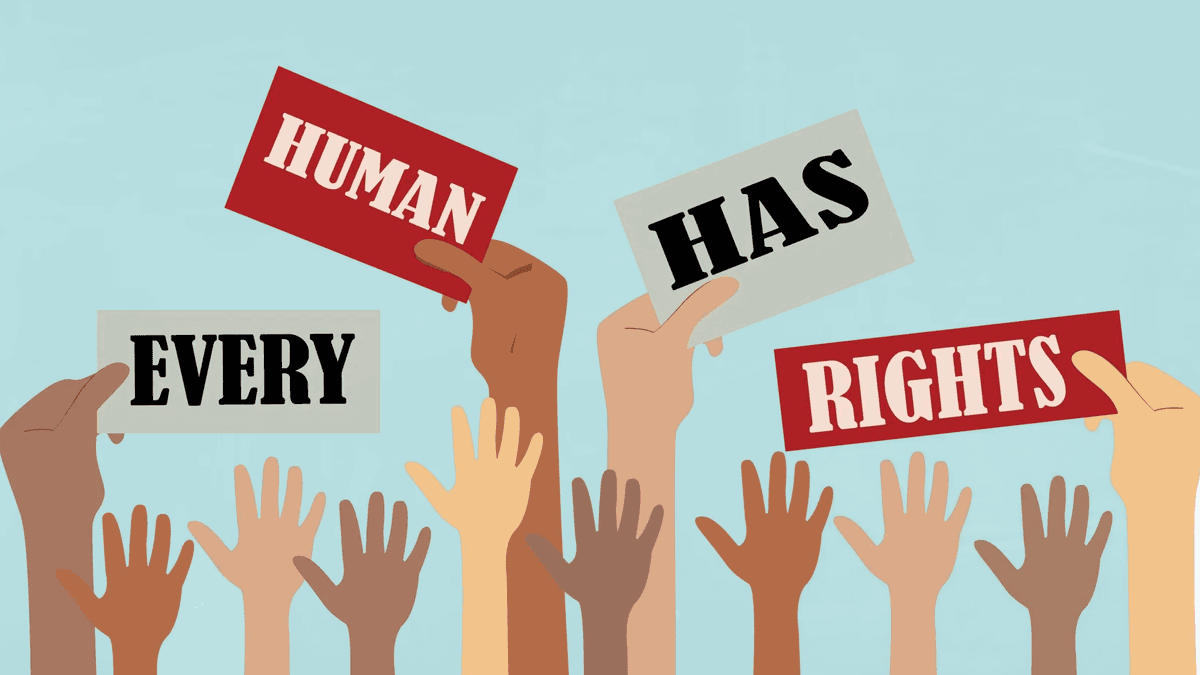
Human Rights
Human rights are the basic freedoms and protections that belong to every person on Earth. They help keep people safe, ensure dignity, and make freedom, justice, and peace possible. But these rights aren’t just given—they must be understood, protected, and defended by all of us.
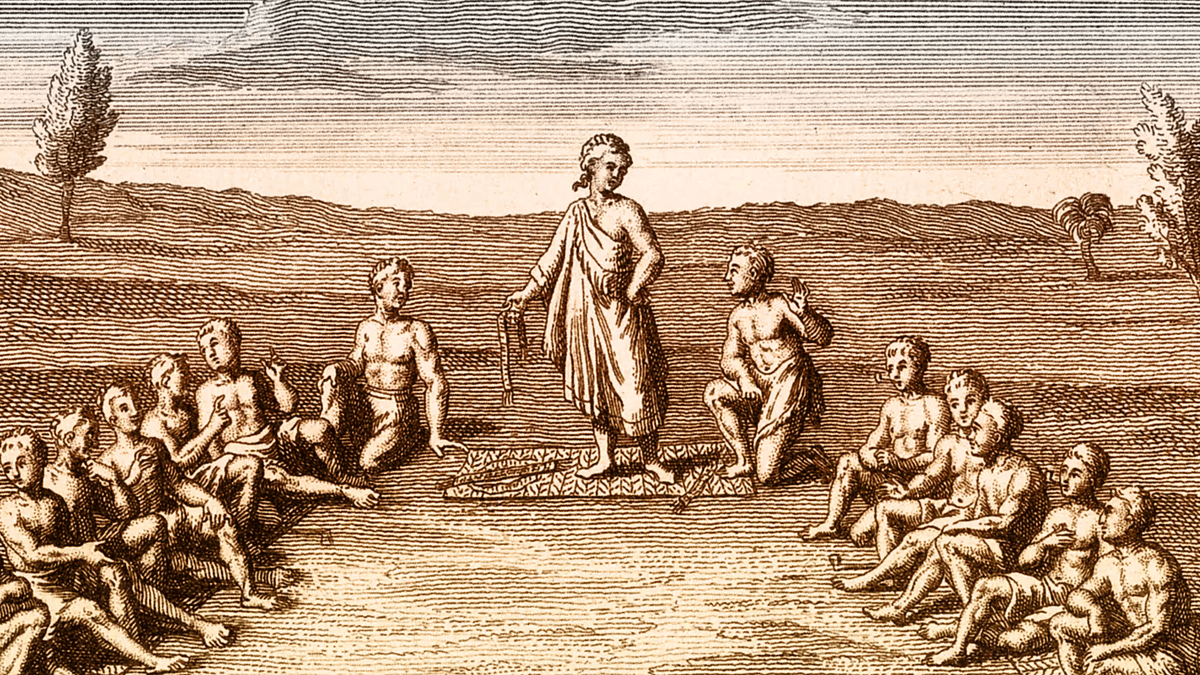
The Haudenosaunee Confederacy: Indigenous Roots of American Democracy
Long before the Founding Fathers gathered in Philadelphia, a league of Native Nations had already established one of the world’s oldest participatory democracies—an Indigenous blueprint for unity, peace, and governance.
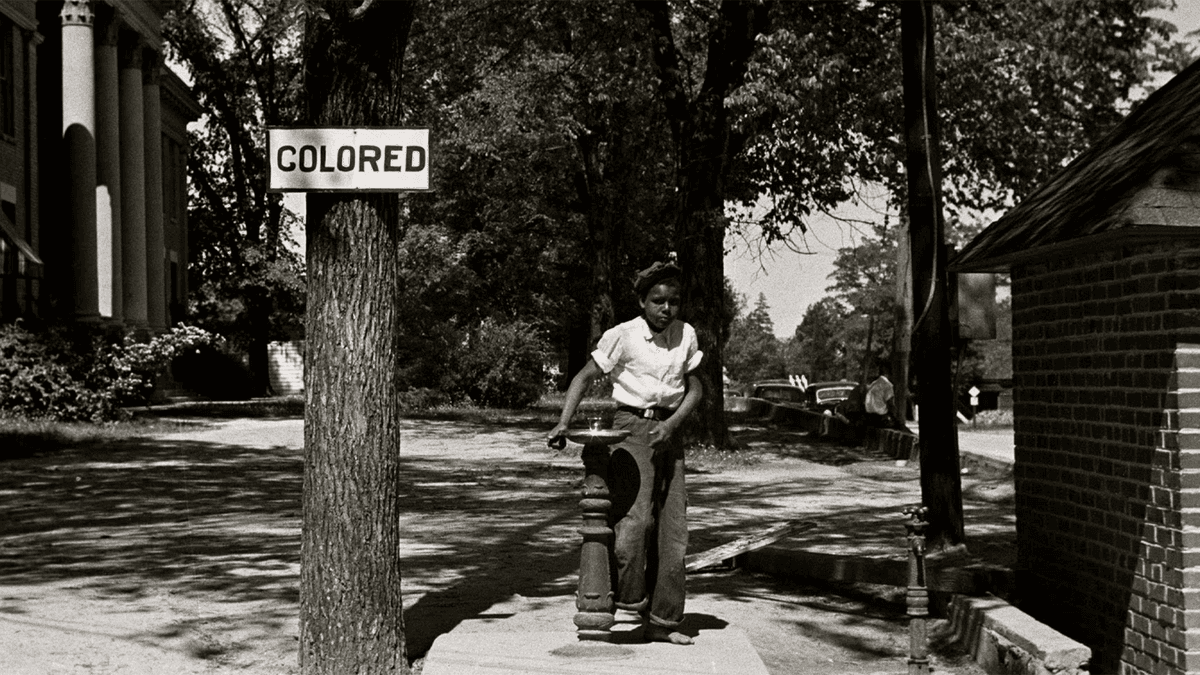
Jim Crow and Plessy v. Ferguson
After Reconstruction, the South built a legal system to enforce racial segregation and strip African Americans of political power. The Supreme Court’s Plessy v. Ferguson decision in 1896 made 'separate but equal' the law of the land—cementing injustice for decades.
Further Reading
Stay curious!