

Executive Order 9066: The Day America Turned on Its Own
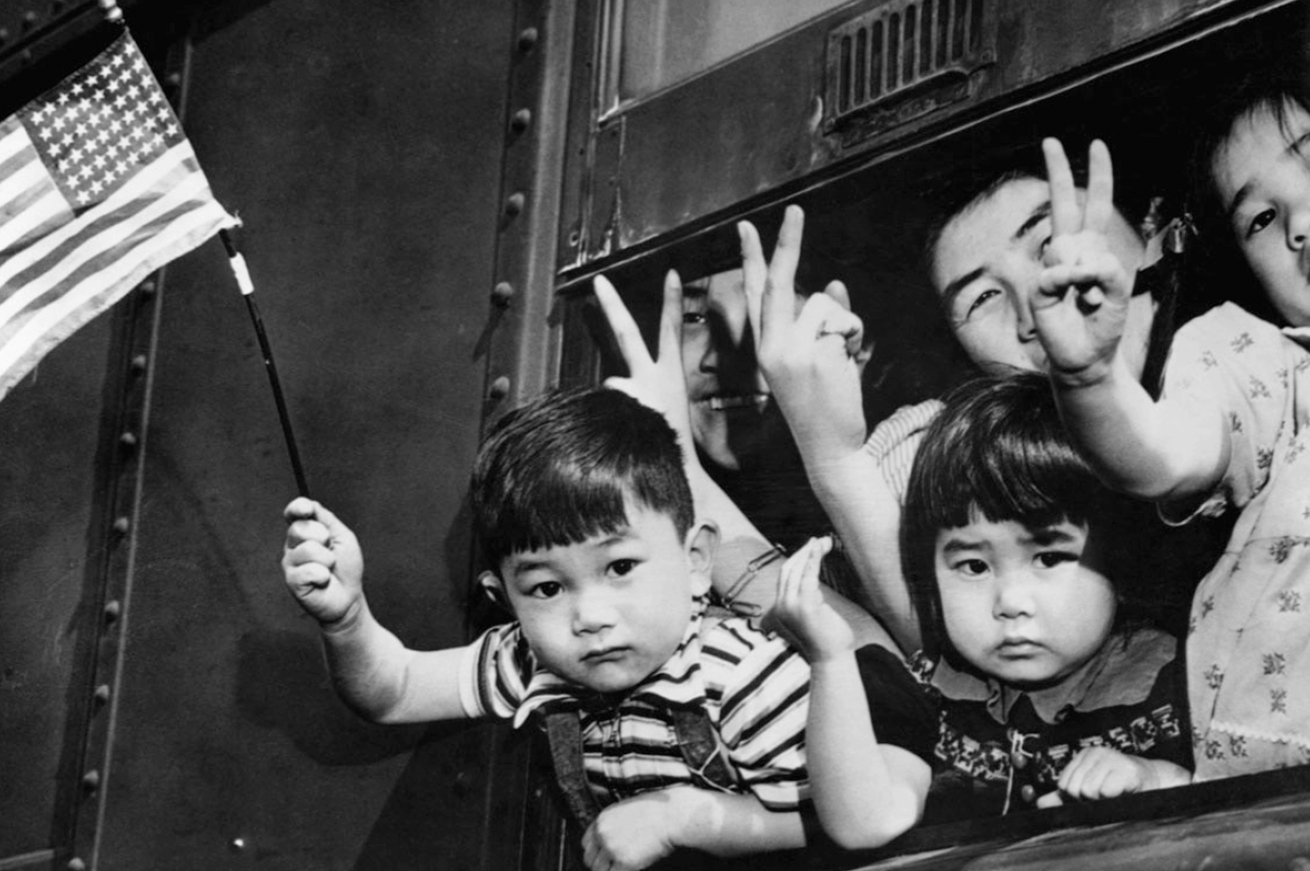
Fear, racism, and wartime paranoia converged to strip over 120,000 Japanese Americans of their homes, businesses, and basic civil rights.
What Happened?
After Japan’s attack on Pearl Harbor in December 1941, U.S. officials justified the mass removal of Japanese Americans from the West Coast as a 'necessary wartime precaution.' But let’s get real: this was a policy of racial scapegoating, not security. No credible evidence existed that Japanese Americans posed a threat, yet long-standing anti-Asian sentiment, economic jealousy, and war hysteria fueled public support for their forced removal.
Roosevelt signed Executive Order 9066 on February 19, 1942, giving the War Department unchecked power to remove anyone from designated military zones. Though Italian and German Americans were also technically included, in practice, Japanese Americans bore the brunt of the policy. Entire families—many of whom were second- and third-generation U.S. citizens—were given just days to pack what they could carry before being herded into internment camps.
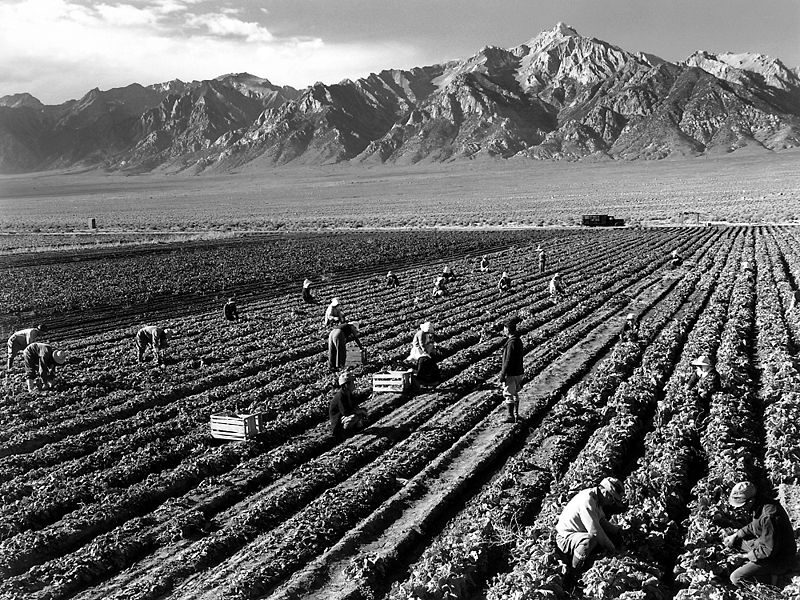
Relocation began in March 1942. Families were sent first to ‘Assembly Centers’, often converted fairgrounds and racetracks—where thousands were crammed into horse stalls, livestock pens, and makeshift barracks. From there, they were transported to ten 'Relocation Centers' scattered across desolate areas in California, Arizona, Utah, Colorado, Idaho, Wyoming, and Arkansas.
These camps were prison camps by another name. Families lived in cramped barracks, often shared with multiple households, surrounded by guard towers, barbed wire, and armed sentries. They suffered through food shortages, unsanitary conditions, extreme weather, and the psychological trauma of wrongful imprisonment. Some tried to make the best of their situation—establishing schools, farming, and even serving in the U.S. military—but nothing could erase the indignity of incarceration without cause.
Violence erupted in several camps. At Manzanar, a riot broke out after a Japanese American leader was accused of collaborating with camp authorities—military police fired into the crowd, killing two detainees. At Topaz, a 63-year-old man was shot for walking too close to the fence. The Tule Lake camp became a segregation center for those labeled 'disloyal,' leading to armed military crackdowns and tank deployments.
Meanwhile, back in Washington, Japanese Americans fought for justice. Fred Korematsu, Gordon Hirabayashi, and Minoru Yasui defied the internment orders, arguing that Executive Order 9066 was unconstitutional. Their cases reached the Supreme Court, which, in one of its darkest decisions, upheld the order in Korematsu v. United States (1944). It wasn’t until 1983 that a federal court overturned Korematsu’s conviction, acknowledging the internment was based on 'race prejudice, war hysteria, and a failure of political leadership.'
The internment policy didn’t officially end until 1945, when internees were released with little to no compensation. Many returned to find their homes, farms, and businesses stolen or destroyed. The economic and emotional devastation lasted generations.
It took more than 40 years for the U.S. government to formally apologize. In 1988, President Ronald Reagan signed the Civil Liberties Act, awarding $20,000 in reparations to surviving internees and acknowledging that Executive Order 9066 was a 'grave injustice.'
Why It Matters
History has a way of repeating itself, especially when fear overrides justice. The internment of Japanese Americans wasn’t just a 'wartime mistake'—it was a deliberate act of racial discrimination, legitimized by the highest levels of government. Today, we see echoes of this injustice in policies targeting immigrant communities, Muslim bans, and surveillance programs disguised as national security. Executive Order 9066 is a warning: when civil liberties are sacrificed in the name of fear, no one is truly safe.
?
Why do you think people were afraid of Japanese Americans after Pearl Harbor, even though they had done nothing wrong?
The government later admitted that the internment of Japanese Americans was wrong. Why do you think it took them so long to say sorry?
Do you think fear can make people act unfairly? Can you think of a time when fear made someone do something that hurt others?
What can we learn from this part of history to make sure something like it never happens again?
Why is it important to stand up for people, even when everyone else is going along with something unfair?
Dig Deeper
Dig into the historic injustice of Japanese American incarceration camps, also known as internment camps, during World War II.
Related
MLK the Disrupter and the Poor People’s Campaign
Dr. Martin Luther King Jr.’s final chapter was about more than civil rights—it was a bold demand for economic justice that challenged the nation’s values at their core.
Developments in East Asia, 1200–1450
From Confucian bureaucracies to booming cities, East Asia between 1200–1450 reshaped global politics, culture, and technology.
The Louisiana Purchase: A River, A Bargain, and a Bigger United States
In 1803 the United States bought the vast Louisiana Territory from France, doubling the nation’s size, securing the Mississippi River, and setting the stage for westward expansion and hard questions about slavery and Native sovereignty.
Further Reading
Stay curious!