

Anne Hutchinson Banished from Massachusetts Bay Colony
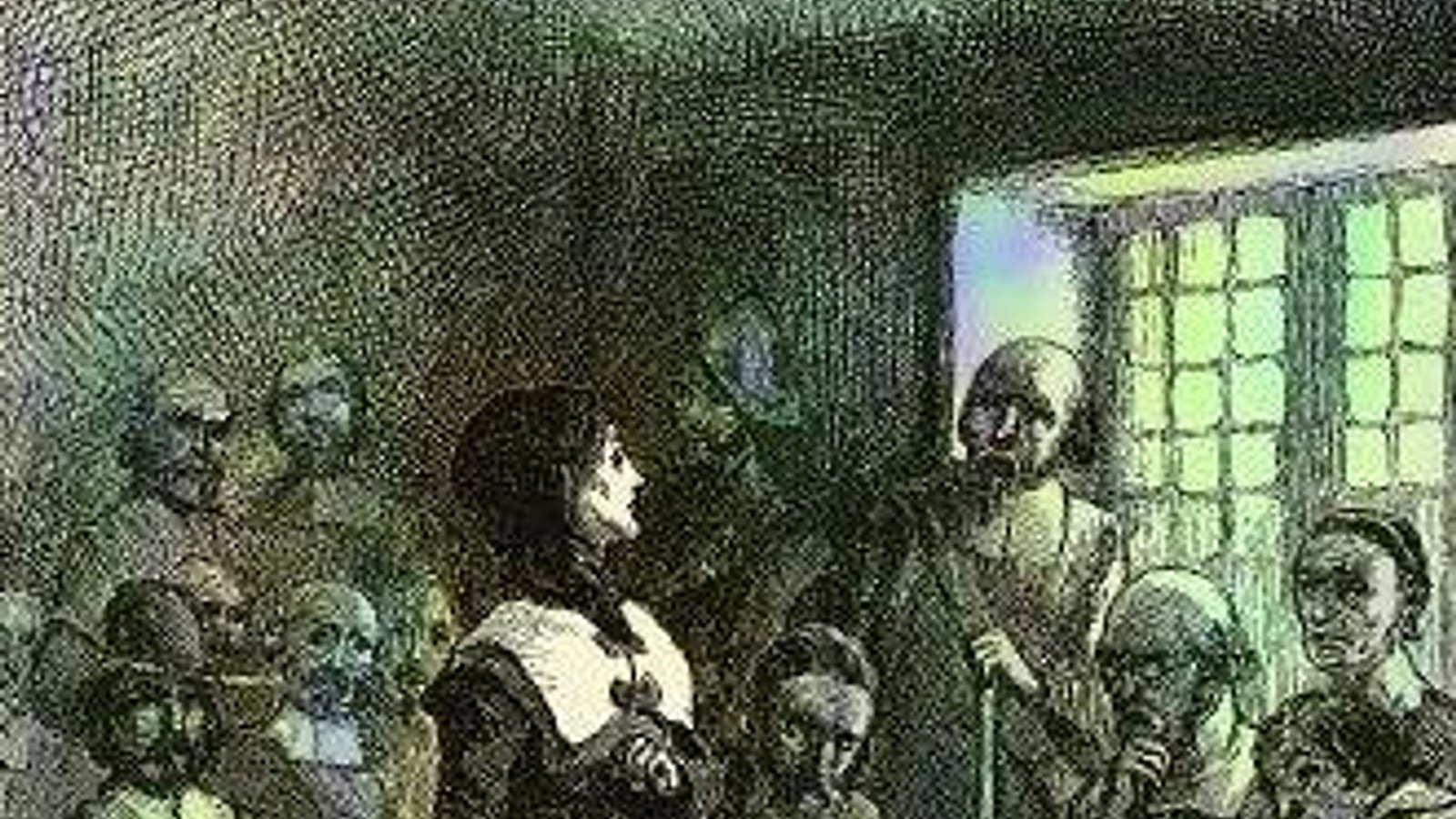
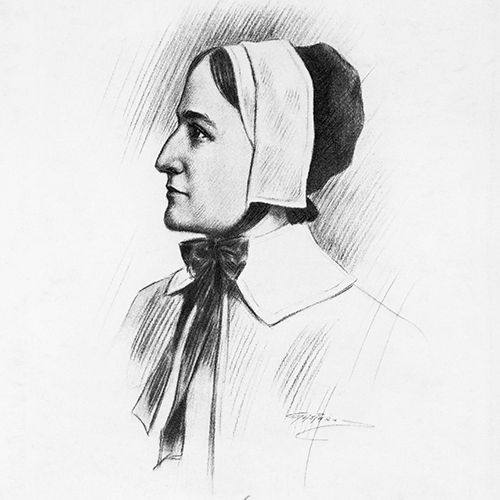
Anne Hutchinson standing defiantly at her trial in front of Massachusetts Bay Colony leaders.
What Happened?
Anne Hutchinson, a mother of fourteen and a devout student of scripture, began hosting weekly meetings in her Massachusetts Bay home in the 1630s. At first, her gatherings were small and aimed at women. But as more colonists came to hear her sharp theological mind, her audience grew to include men—including some prominent members of the community.
She questioned the colony’s Puritan ministers, arguing that their emphasis on 'visible sainthood' and good works resembled the very Catholic doctrine they had fled. Instead, Hutchinson championed a 'covenant of grace,' insisting that true salvation came from divine will—not outward piety.
To the colony’s male leaders, Hutchinson’s ideas were dangerous. Her theological critiques and public influence challenged not only religious orthodoxy but the very social order. When she claimed direct revelations from God, the court accused her of heresy and sedition.
In a trial presided over by Governor John Winthrop and a council of male magistrates, Hutchinson defended herself with wit and biblical knowledge. But her assertion that God had spoken to her personally sealed her fate. Winthrop declared her 'unfit for our society.' She was jailed, excommunicated, and banished.
In 1638, Hutchinson and dozens of her followers left the colony for Rhode Island, a haven for religious dissenters. After her husband’s death, she moved to New Netherland (now New York), where she and most of her children were tragically killed in a conflict with the Siwanoy people.
Anne Hutchinson remains a complex figure—equal parts devout believer, religious radical, and early feminist. Her defiance laid the groundwork for future debates about religious freedom, free speech, and women’s roles in public life. Whether seen as a heretic or a hero, her voice still echoes.
Why It Matters
Anne Hutchinson wasn’t just banished for her beliefs—she was punished for daring to speak them out loud, in a world that demanded female silence and spiritual submission. Her trial and exile reveal early cracks in the colonial vision of a unified, godly society. Hutchinson’s story forces us to ask: Who gets to interpret truth? Who decides what’s heresy and what’s faith? And what happens when speaking your conscience means standing alone against the powerful?
?
Why did Anne Hutchinson’s ideas about grace and salvation threaten the Puritan leadership so deeply?
Should religious freedom include the right to challenge dominant beliefs? Why or why not?
What role did gender play in how Hutchinson was treated by the court? Would a man have faced the same consequences?
Can you think of modern-day figures who challenge the status quo like Anne Hutchinson did? What risks do they face?
Why is it important to remember dissenters like Anne Hutchinson in American history?
Dig Deeper
Anne Hutchinson, an extreme Separatist, threatens to split the Puritan community in Massachusetts by preaching that some people are pre-ordained. She is eventually driven out of Massachusetts to Rhode Island.
Related
McCarthyism: Fear, Power, and the Red Scare
In the 1950s, fear of communism gripped America. Senator Joseph McCarthy fueled this fear by accusing hundreds of people of being communist traitors—often without proof. The result was a national panic that tested the meaning of truth, justice, and freedom.
Reed Gold Mine: The First American Gold Rush
The first gold rush in U.S. history began not in California, but in North Carolina—thanks to a doorstop, a 12-year-old boy, and a lucky find in a creek.
The Regulator Movement: Backcountry Rebellion Before the Revolution
Long before the American Revolution, farmers in North Carolina were already fighting corruption and demanding justice.
Further Reading
Stay curious!