

Benjamin Franklin Sees the Future—Literally
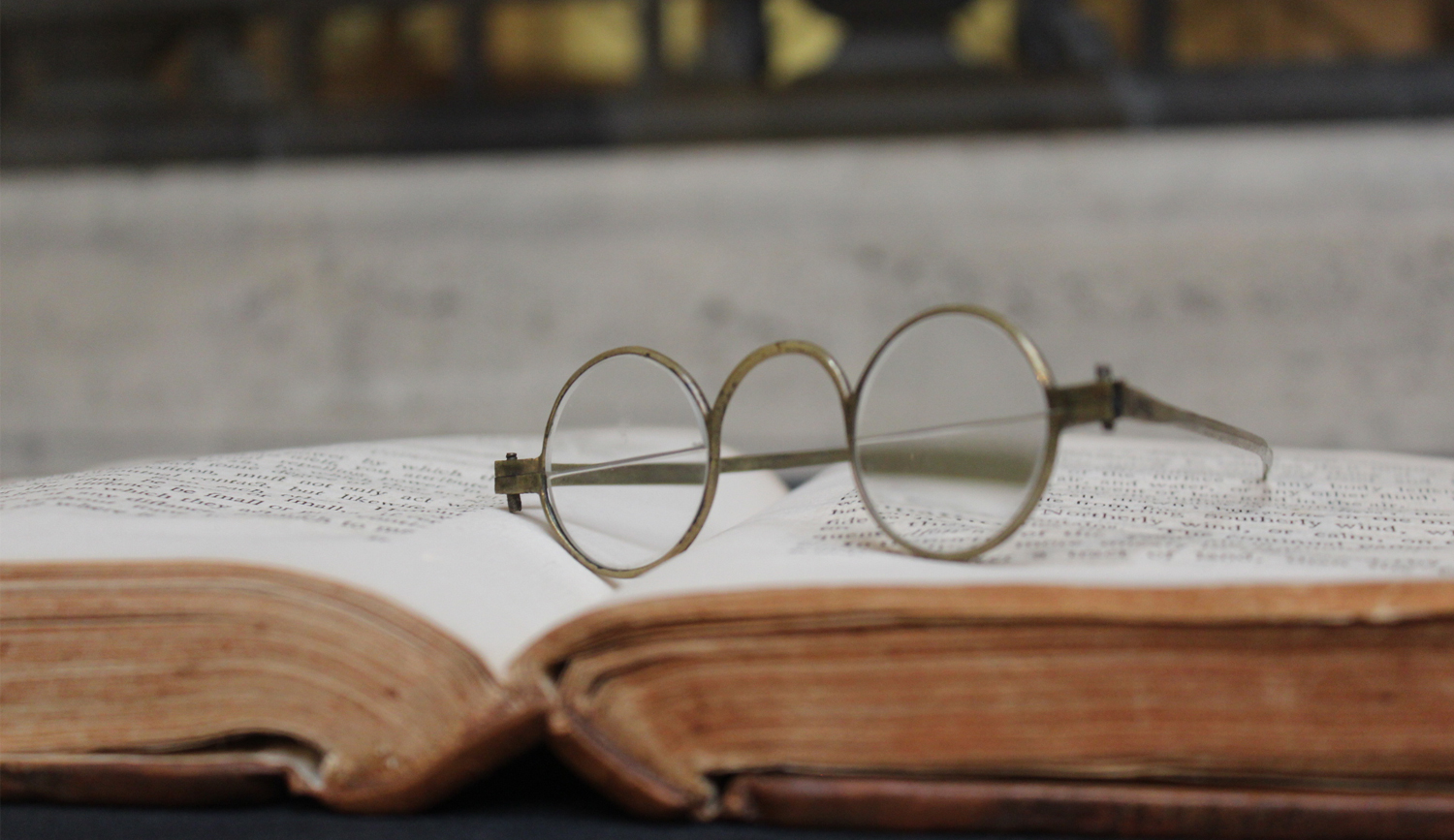
Sketch of bifocal lenses drawn by Benjamin Franklin in a letter to George Whatley, 1785.
What Happened?
By 1785, Benjamin Franklin had done a lot. He'd tamed lightning, drafted constitutions, and flirted across continents. But one of his most lasting—and frankly underrated—inventions came not from the lab or the court, but from the dinner table in Paris. As he explained to his friend George Whatley, he wanted to see his bouillabaisse and his dinner companion’s eyebrows at the same time. The solution? Double spectacles.
Franklin described how he took two sets of lenses—one for reading up close, the other for seeing at a distance—and had his optician literally slice them in half and fuse them together. Reading lens on the bottom. Distance lens on top. Just move your eyes, not your glasses. It was a revolution in vision, made not for profit, but for practicality.
He didn’t patent the invention. He didn’t trademark a name. He just saw a problem, solved it, and shared it freely—like he did with the lightning rod, swim fins, and even an early catheter design (yes, really).
Franklin had been interested in optics for decades, serving as a bridge between American and European scientists. His bifocal design wasn’t just a quick fix for a dinner party—it came from years of optical correspondence, telescope tweaking, and practical curiosity.
While modern historians debate whether Franklin was the first to invent bifocals, there’s no question he was the one who made them famous. By merging near and far into one frame, he gave the world a way to see clearly—without switching glasses or squinting like a 1700s mole.
Why It Matters
Bifocals weren’t flashy, but they were classic Franklin: practical, people-first, and ahead of their time. They remind us that great innovation doesn’t always come from a lab—it can come from listening, observing, and asking the right question. Like: Why not both?
?
How do bifocal glasses work and why did Franklin find them so helpful?
What other inventions did Benjamin Franklin give to the world without patenting?
How did Franklin's time in France influence his thinking and inventions?
What are the modern alternatives to bifocals today?
Why is Franklin still considered one of the greatest American innovators?
Dig Deeper
Was Franklin truly the first to invent bifocals? This video dives into the history, mystery, and myth behind one of the most practical innovations in eyewear.
Related
Early Industry and Economic Expansion (1800–1850)
From gold mines in North Carolina to textile mills and telegraphs, discover how the Market Revolution transformed the way Americans lived, worked, and connected in the early 19th century.
Reconstruction: Rebuilding a Nation and Redefining Freedom
After the Civil War, the United States faced the enormous task of reintegrating the South, securing rights for freedpeople, and redefining citizenship and equality. Reconstruction (1865–1877) was a bold experiment in democracy—filled with groundbreaking laws, historic firsts, and fierce backlash.
The Great Depression: America in Crisis
The Great Depression was more than a stock market crash — it was a decade-long test of American resilience that reshaped the nation's economy, politics, and daily life.
Further Reading
Stay curious!