

America Closes the Golden Door: The Immigration Act of 1924
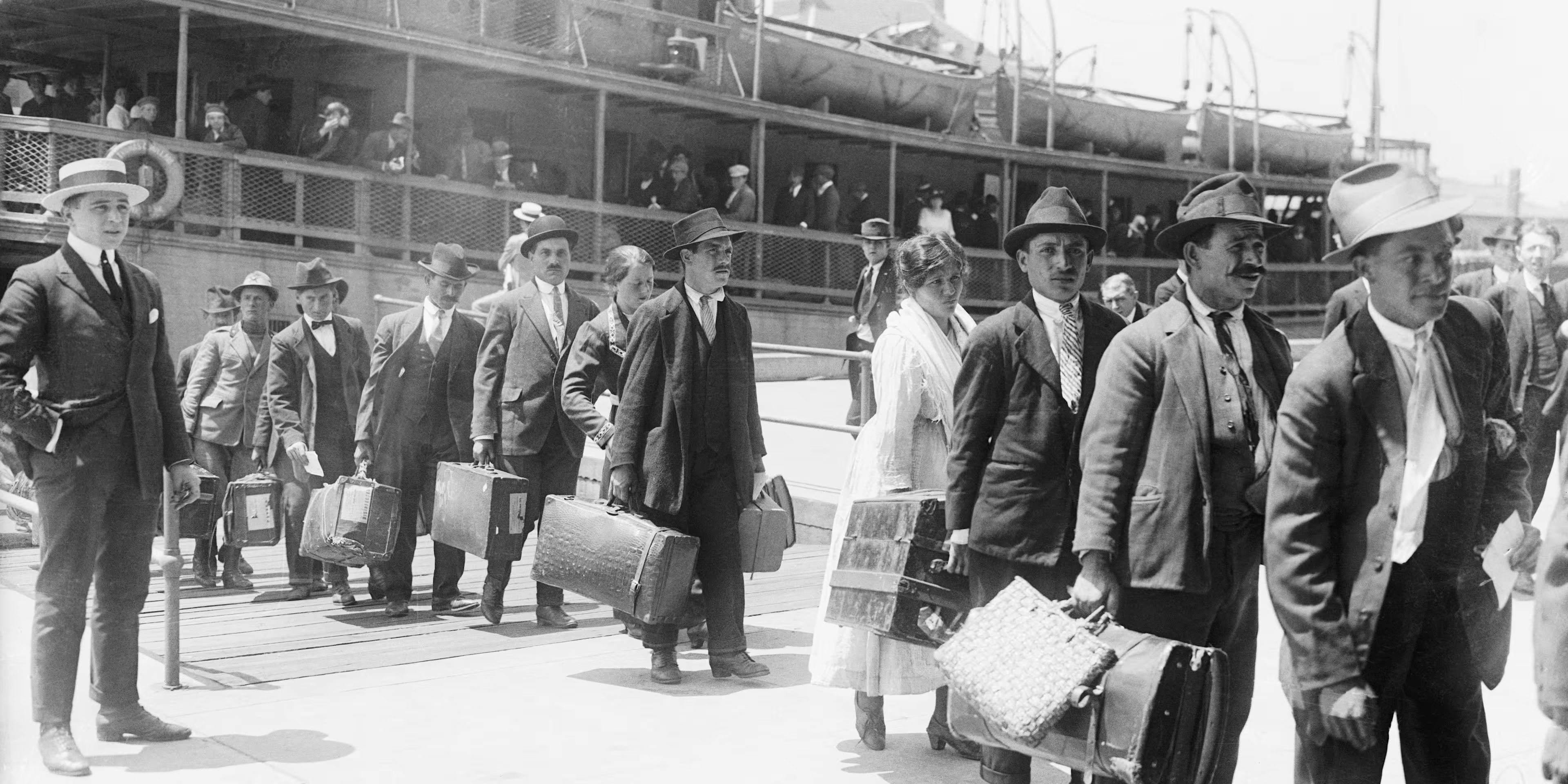
Photograph of Ellis Island in the 1920s showing hopeful immigrants awaiting inspection.
What Happened?
On the surface, the Immigration Act of 1924 was about 'national security' and 'social stability.' Underneath? A carefully calibrated tool of racial engineering. Signed into law by President Calvin Coolidge, the act placed strict quotas on immigration based on national origins—using the 1890 census to disproportionately favor immigrants from Britain, Ireland, and Scandinavia, while virtually shutting out Southern and Eastern Europeans, and banning Asian immigration entirely.
The logic was chillingly simple: maintain America’s racial 'purity.' The law capped annual immigration at 150,000 and allowed only 2% of each nationality’s population as counted in the U.S. in 1890. That meant more Swedes and Scots. Fewer Poles, Italians, Jews, Greeks, Slavs. Zero Japanese. And though Latin America was excluded from the quotas, the act laid groundwork for future crackdowns.
This was not new. The Chinese Exclusion Act had already declared who wasn’t welcome. But 1924 raised the gates sky-high. Japan, a supposed ally, was so insulted by the explicit racial exclusions that it declared May 26 a national day of mourning. One Japanese man even died by suicide outside the U.S. embassy in protest. The fallout fueled anti-American sentiment across the Pacific.
Congress didn’t hide its motives. The law reflected growing fears of communism after World War I, anxiety over labor strikes, and the rise of the eugenics movement, which falsely claimed that immigration from 'lesser' nations would pollute the American gene pool. In reality, many immigrants being shut out were refugees, workers, or families fleeing persecution and poverty.
This quota system remained the foundation of U.S. immigration law for over 40 years—its impact hauntingly real. It’s the policy that denied entry to Jewish refugees fleeing Nazi Germany. That slowed the flow of innovation, labor, and cultural growth. That signaled, in law, who America wanted—and who it didn’t.
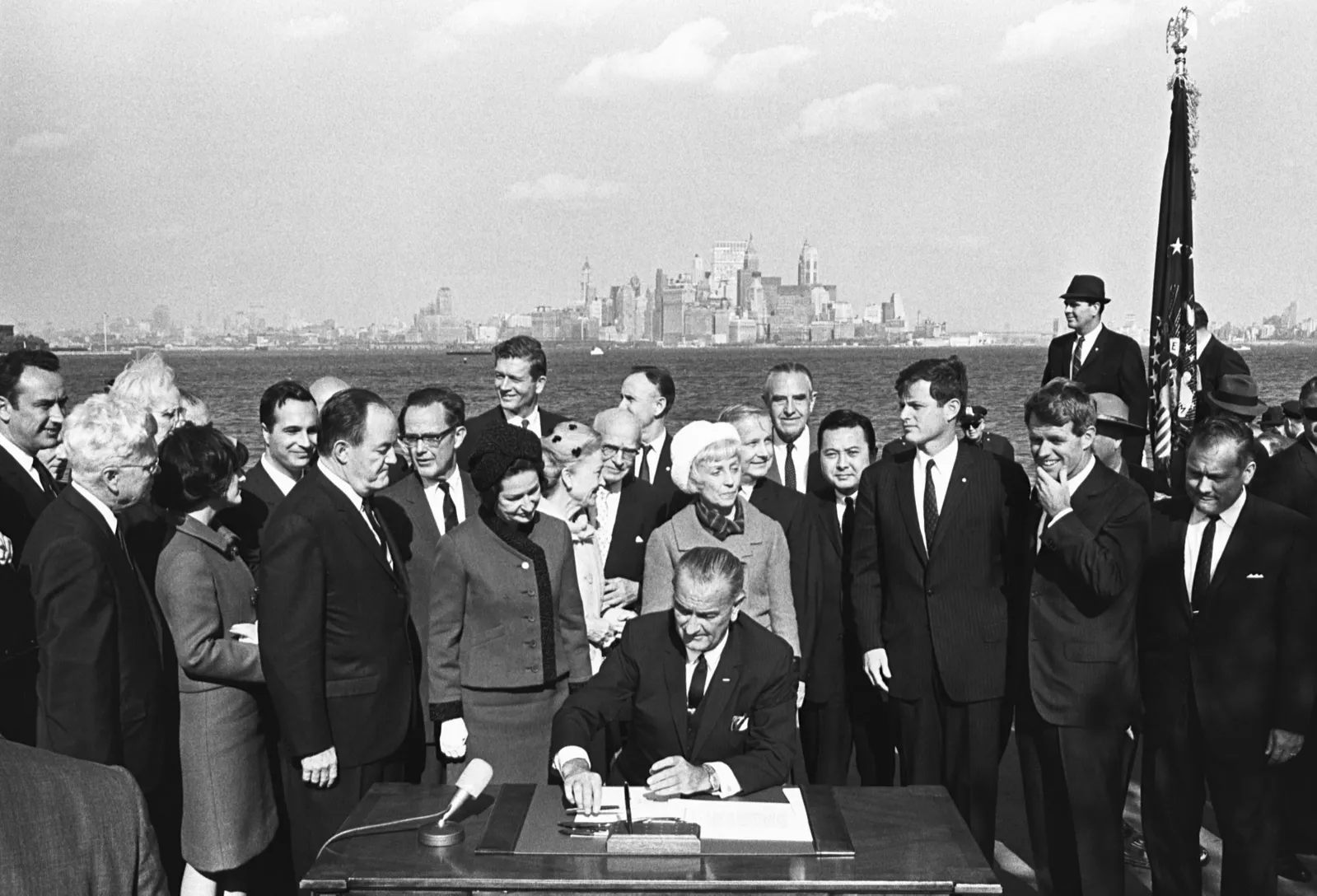
It wouldn’t be until 1965, under President Lyndon B. Johnson, that the overt racial and ethnic preferences were dismantled through the Immigration and Nationality Act, which replaced the national origins quota system with a preference for family reunification and skilled labor. Until then, the ghost of 1924 dictated who could dream of becoming American.
Why It Matters
The Immigration Act of 1924 wasn’t just paperwork—it was policy as gatekeeping, nation-building by subtraction. It told the world, in no uncertain terms, that America’s melting pot had limits—especially if your bloodline didn’t trace back to Northern Europe. It shaped the face of America for generations—and reminds us that the laws we pass reveal the people we think we are.
?
How did the 1924 Immigration Act influence immigration patterns during WWII, especially for refugees?
What role did eugenics and pseudoscience play in shaping American immigration laws?
Why did the Act exclude Asian immigrants, and what impact did that have on U.S.-Japan relations?
How did the 1965 Immigration and Nationality Act reverse the impact of the 1924 law?
How have historical immigration quotas shaped debates about immigration today?
Dig Deeper
A breakdown of the fear, racial politics, and fallout that led to America’s most exclusionary immigration law—and how it changed who got to belong.
Related
Prelude to War – Sectional Tensions and Failed Compromises
The uneasy balance between free and slave states collapsed in the 1850s, as 'compromises' like the Compromise of 1850 and Kansas-Nebraska Act inflamed tensions instead of easing them.
The Bill of Rights: What Is It and What Does It Actually Do?
The Bill of Rights wasn’t added to the Constitution because everything was going great, it was added because the people didn’t trust the government. And they had every reason not to.
The Cape Fear & Waccamaw Siouan: Indigenous History of Southeast North Carolina
Long before the first European ships arrived at the Carolina coast, the Cape Fear River and Lake Waccamaw were home to thriving Indigenous communities.
Further Reading
Stay curious!