

The Tulsa Race Massacre Begins
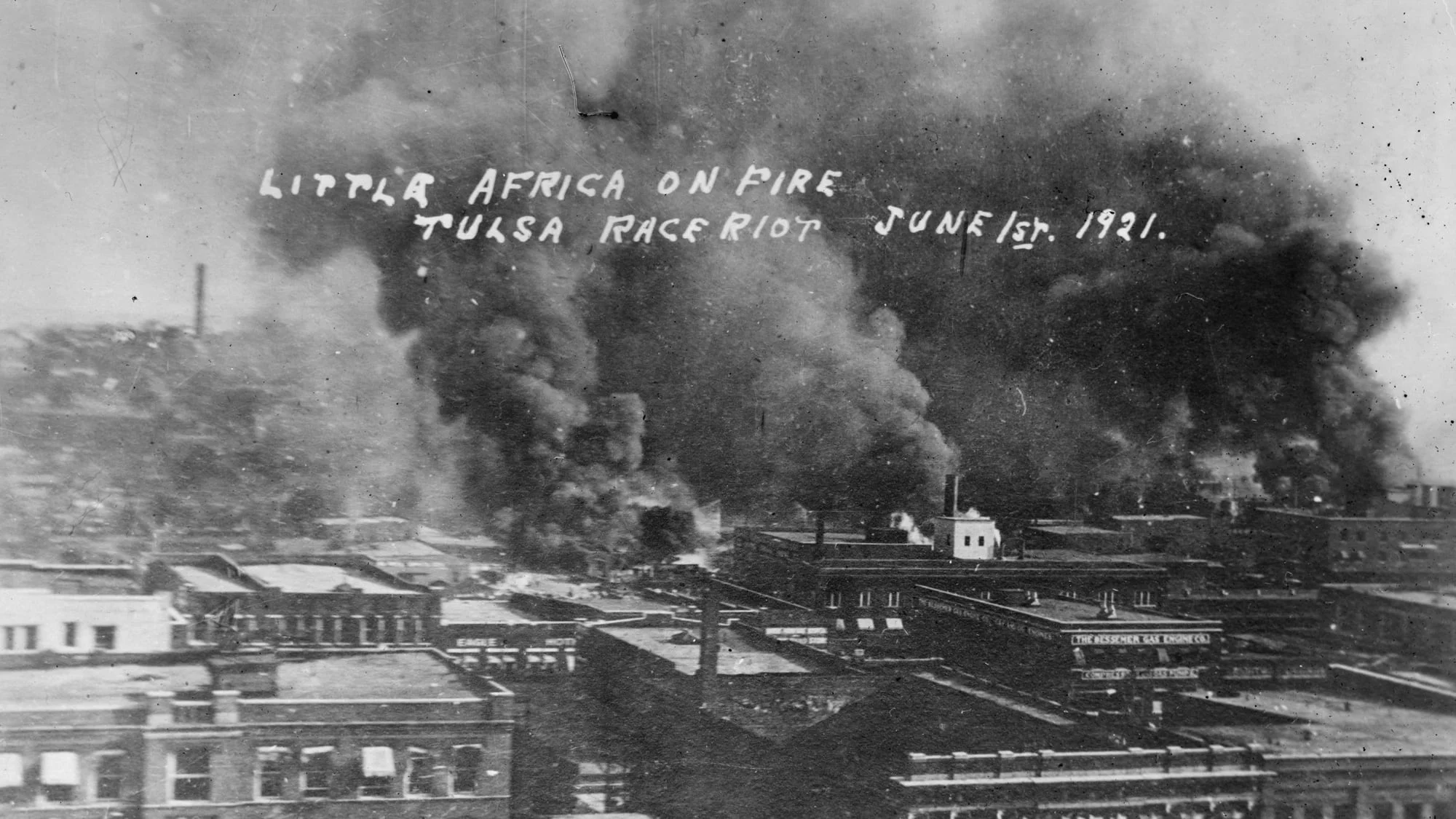
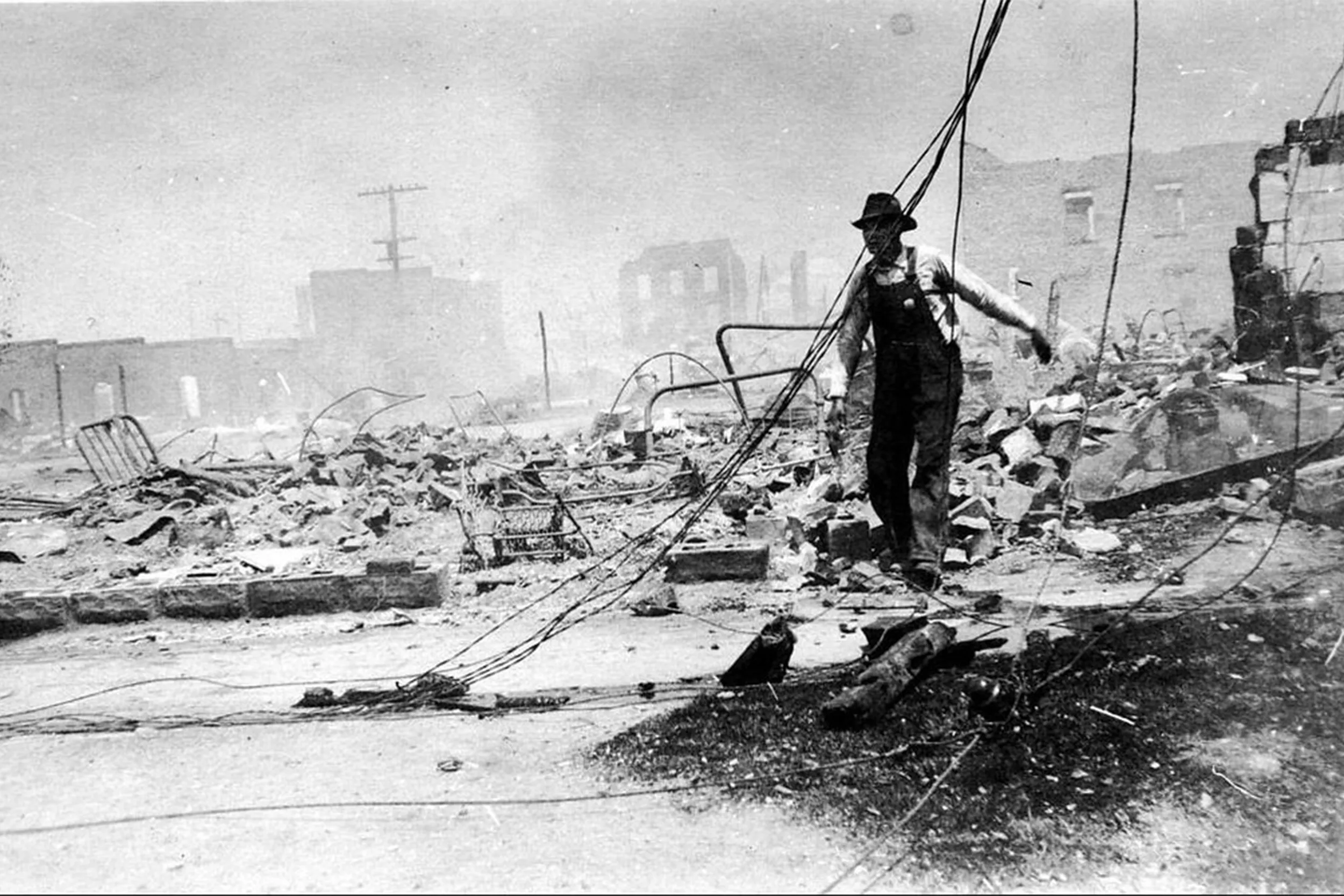
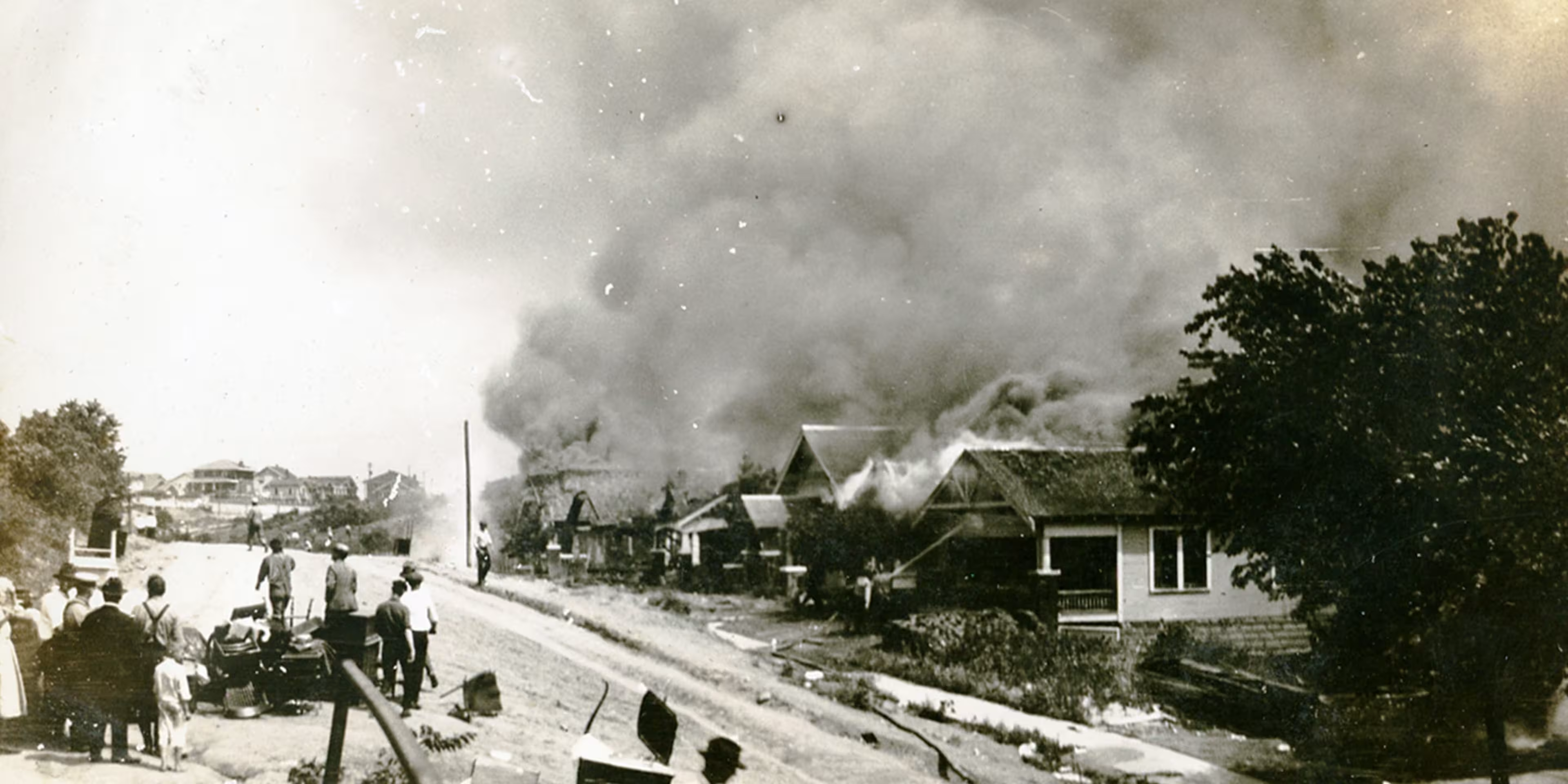
A black-and-white image showing smoke rising from destroyed buildings in Greenwood during the 1921 Tulsa Race Massacre.
What Happened?
In 1921, Tulsa, Oklahoma was a booming city—but one with sharp racial lines. Black residents lived in Greenwood, a self-sufficient community filled with over 300 Black-owned businesses. Known as 'Black Wall Street,' it was proof that Black excellence could thrive even under Jim Crow laws.
On May 30, a young Black man named Dick Rowland entered an elevator operated by a white teenager named Sarah Page. What happened next is unclear. But when Page screamed, Rowland ran—and the next day, he was arrested. Rumors flew. A local newspaper fanned the flames by suggesting a sexual assault had occurred.
By nightfall on May 31, a white mob gathered outside the courthouse demanding Rowland be handed over. Fearing a lynching, about 75 Black men, including WWI veterans, showed up to protect him. A confrontation broke out. A shot was fired. Chaos erupted.
What followed was not a 'riot'—it was a massacre. Over the next 18 hours, white mobs, some deputized and armed by local officials, invaded Greenwood. They shot people in the streets. They looted. They burned 35 blocks to the ground, including homes, schools, churches, and hospitals. Historians estimate as many as 300 people were killed, though official records listed far fewer.
By June 1, Greenwood was reduced to ash. The National Guard was called in—too late to stop the destruction, but in time to imprison over 4,000 Black survivors in internment camps. Dick Rowland, whose arrest sparked the violence, was released without charges. He left Tulsa and never returned.
For decades, the massacre was erased from textbooks, newspapers, and public memory. White residents denied what happened. Black residents carried the trauma in silence. But Greenwood’s story didn’t vanish—it was buried. Survivors rebuilt what they could, even without insurance or reparations. Their strength became a quiet form of resistance.
In the late 1990s and early 2000s, scholars, journalists, and community members began to uncover the truth. The name was changed from the 'Tulsa Race Riot' to the 'Tulsa Race Massacre'—because words matter. And in 2020, after renewed investigation, mass graves were finally discovered. The truth is still being unearthed.
Why It Matters
This wasn’t just about one neighborhood. It was about power, racism, and the fear of Black success. The Tulsa Race Massacre shows how history can be weaponized—first with violence, then with silence. But remembering is a form of justice. And justice starts with the truth.
?
Why was the term 'riot' used instead of 'massacre' for so long?
What made Greenwood such a powerful symbol—and threat—in 1921?
How does erasing painful history affect future generations?
What does justice look like for communities like Greenwood today?
Why do you think it took nearly 100 years for many Americans to learn about Tulsa?
Dig Deeper
This short documentary explores how false accusations, racism, and fear sparked one of the deadliest racial attacks in U.S. history—and how the survivors rebuilt from the ashes.
Related
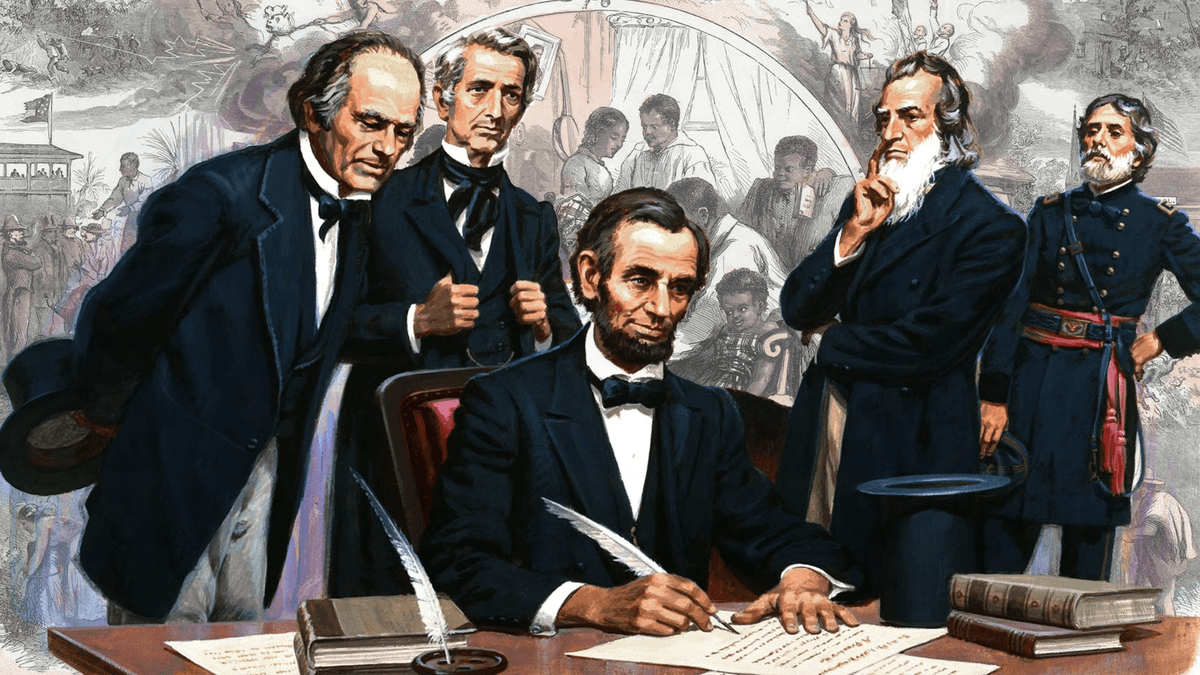
The Emancipation Proclamation & The 13th Amendment
Freedom on paper is one thing; freedom in practice is another. The Emancipation Proclamation and the 13th Amendment were giant leaps toward liberty—yet the road ahead for formerly enslaved people was long and uneven.
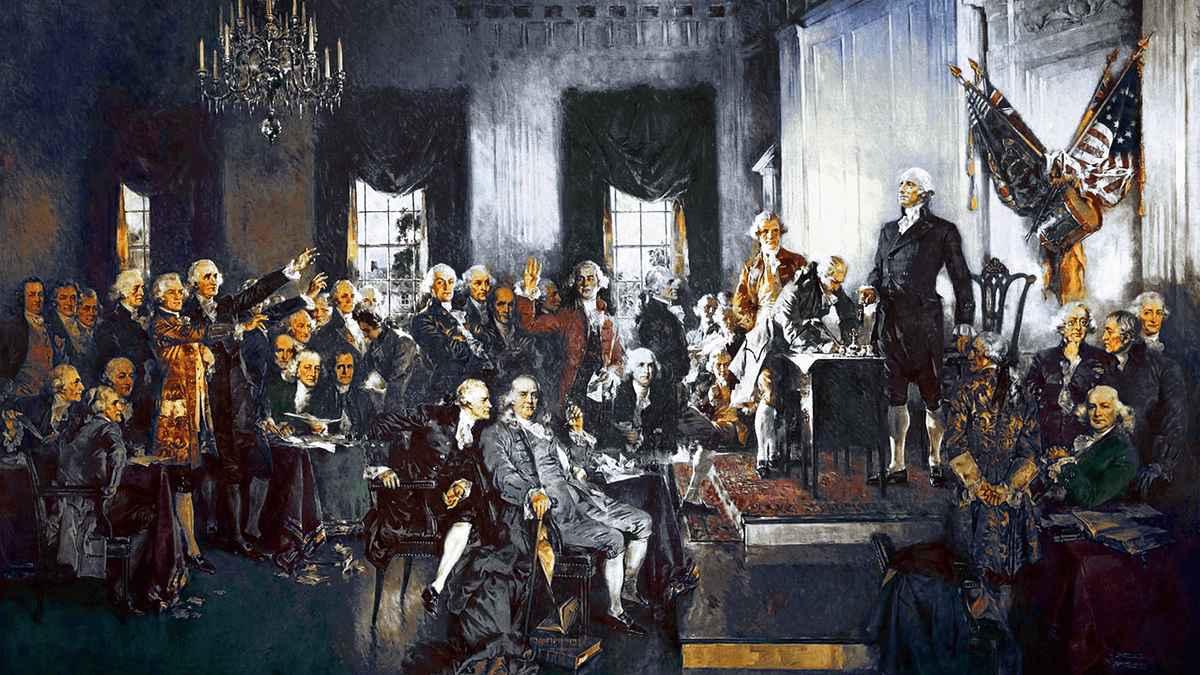
Federalists vs. Anti-Federalists: The Battle That Built the Constitution
One side feared chaos. The other feared tyranny. Together, they gave us the Constitution—and the Bill of Rights.
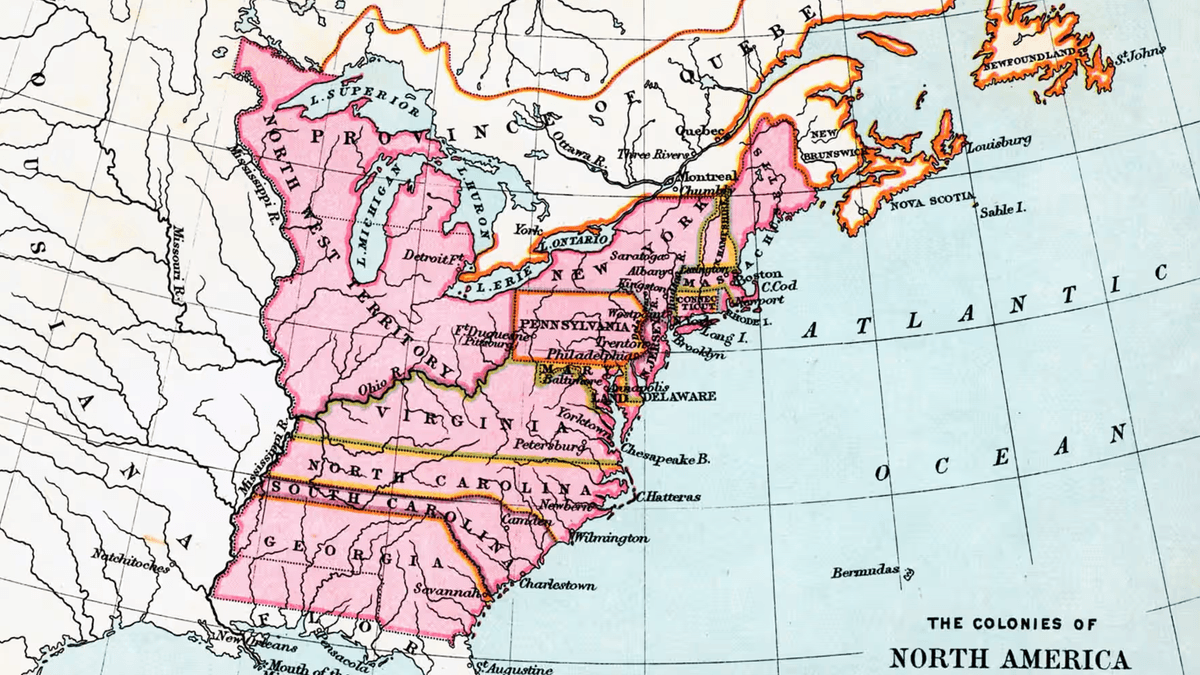
The 13 Colonies: Seeds of a New Nation
How did thirteen scattered colonies along the Atlantic coast grow into the foundation of a new nation?
Further Reading
Stay curious!