

The Day the Death Penalty Died (Temporarily)
Protesters holding signs opposing the death penalty outside the U.S. Supreme Court.
What Happened?
By the early 1970s, America’s death penalty system was a mess. It was inconsistent, racially biased, and lacked any clear standards. Who lived and who died often came down to the color of your skin, your zip code, or the mood of the jury that day.
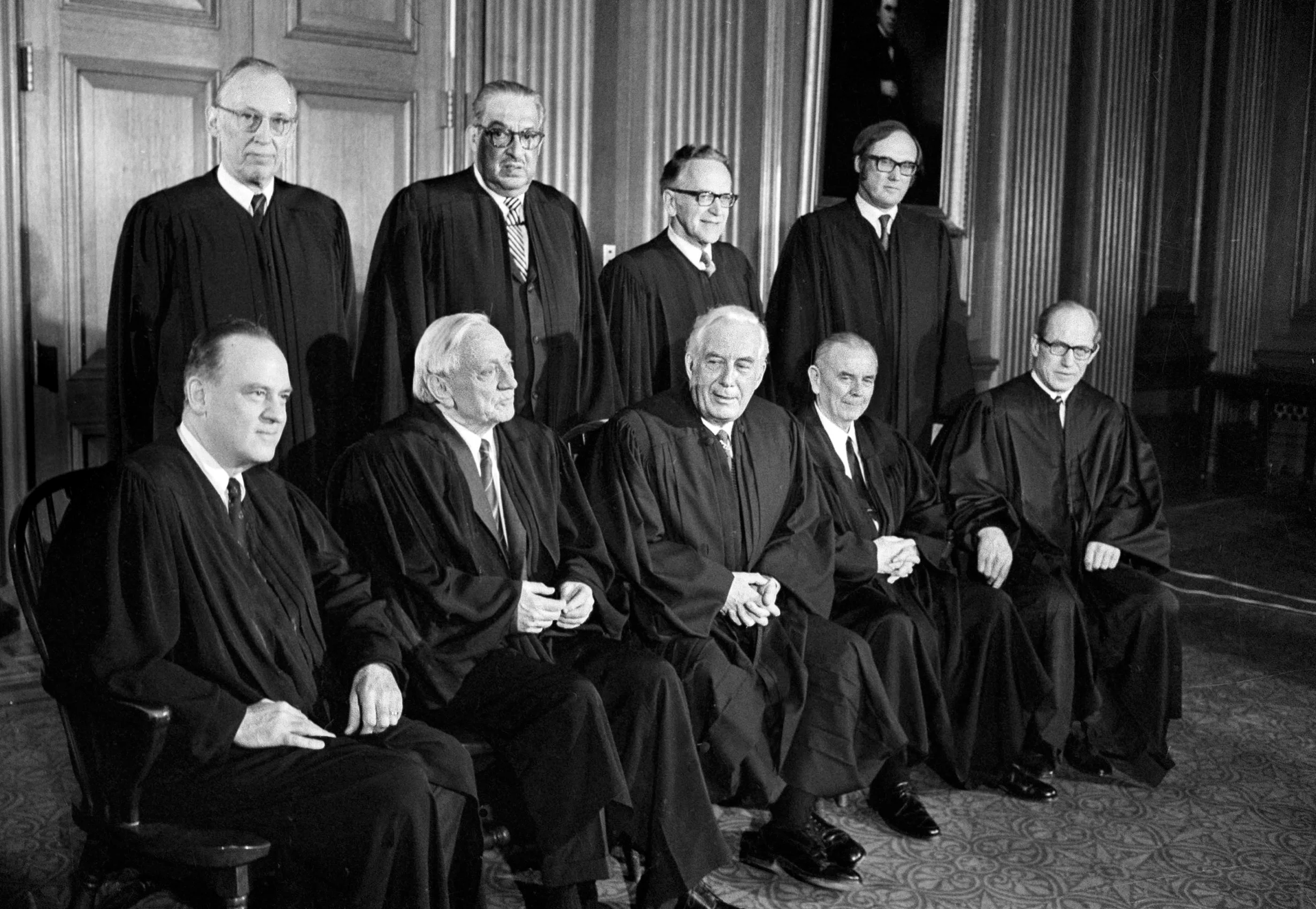
In Furman v. Georgia, the Supreme Court consolidated three death row cases and took a long, hard look at how states were handing out death sentences. The result? A 5–4 ruling that declared the current system unconstitutional under the Eighth Amendment’s ban on 'cruel and unusual punishment.'
Justice Potter Stewart wrote that death sentences were being imposed 'so wantonly and so freakishly' that they resembled being 'struck by lightning.'
The decision didn’t outlaw the death penalty itself—it just forced every state to hit pause and rethink the whole system. As a result, over 600 people had their death sentences commuted overnight. Executions stopped nationwide.
But the ruling sparked backlash. States rushed to rewrite their capital punishment laws to make them appear more 'fair' and less arbitrary—standardizing procedures, creating bifurcated trials, and introducing aggravating factors.
By 1976, the Court reversed course in Gregg v. Georgia, allowing executions to resume under the new frameworks. The machinery of death creaked back to life—but Furman left a permanent scar on the system’s reputation.
Since then, more than 190 people sentenced to death have been exonerated. The legacy of Furman lives on in every argument against capital punishment, every statistic that shows its racial bias, and every wrongful conviction overturned too late.
Why It Matters
The Furman decision cracked the illusion of justice wide open. It revealed a system so broken that even the highest court in the land had to call it out. It didn’t end the death penalty, but it exposed the truth behind it: a punishment that says more about the people with power than the people it targets.
?
What made the application of the death penalty unconstitutional in 1972?
How did states respond to the Furman ruling?
Why has the death penalty been disproportionately used against Black Americans?
What changes were made in Gregg v. Georgia to reinstate the death penalty?
What does the number of death row exonerations say about the criminal justice system?
Dig Deeper
How the U.S. Supreme Court's ruling in Furman v. Georgia exposed the racial bias and randomness of capital punishment.
Related
Halifax Resolves and the Road to Revolution
How North Carolina went from protest to the first official call for full independence from Britain.
The 13 Colonies: Seeds of a New Nation
How did thirteen scattered colonies along the Atlantic coast grow into the foundation of a new nation?
Indian Removal and the Trail of Tears
In the 1830s, the U.S. government forced thousands of Native Americans—including the Cherokee—off their ancestral lands, leading to a deadly westward march known as the Trail of Tears.
Further Reading
Stay curious!