

Silencing Dissent: The Sedition Act of 1798
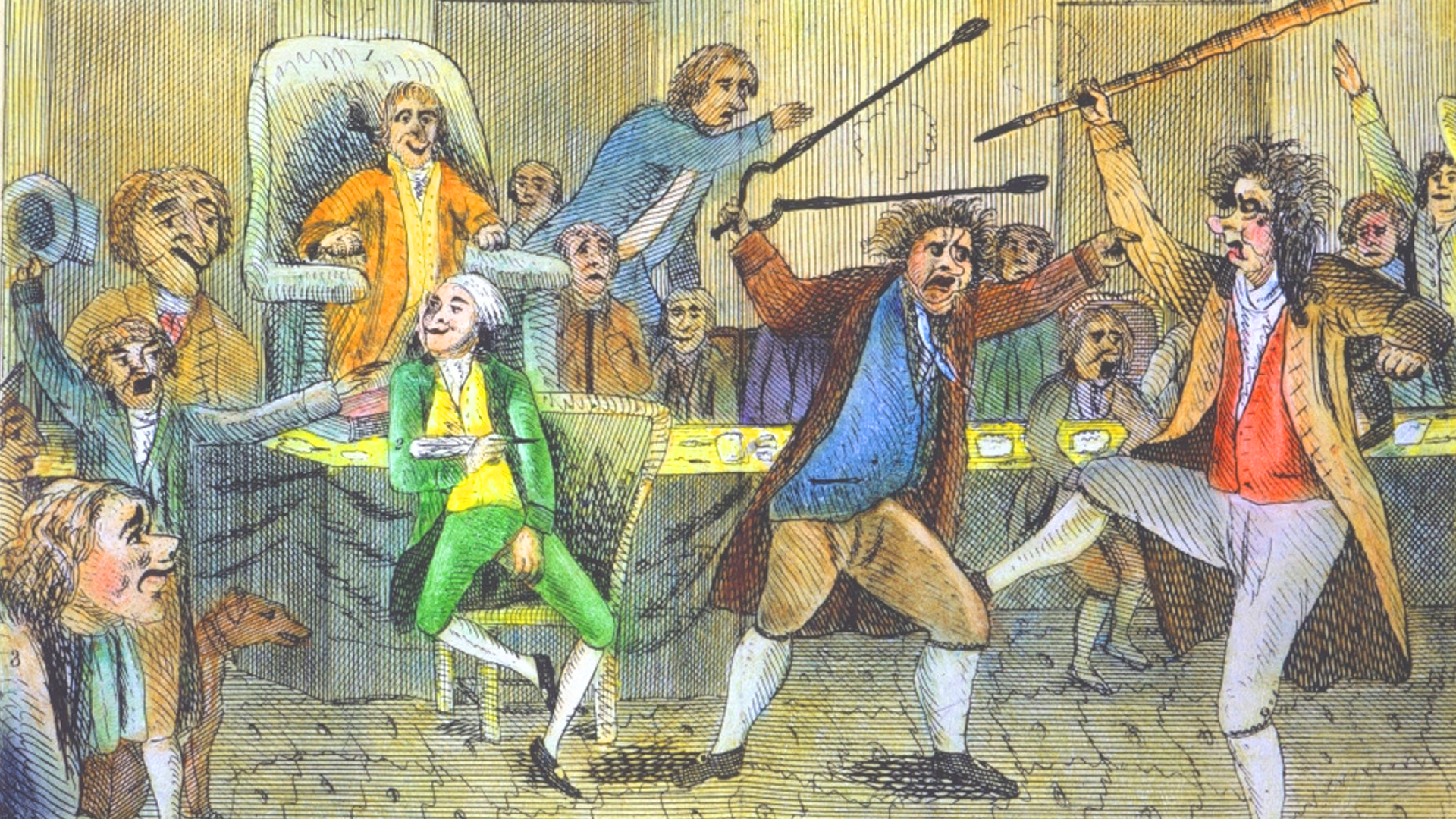
A political cartoon from the 1790s showing press freedom being crushed by Federalist politicians with the Constitution beneath their feet.
What Happened?
The 1790s were a political powder keg. France and Britain were at war, and America—fresh out of its own revolution—was caught in the crossfire. When President John Adams signed the Sedition Act on July 14, 1798, it was presented as a wartime necessity. But the real target? American citizens who dared to criticize the Federalist-controlled government.
The Sedition Act was part of a package of laws known as the Alien and Sedition Acts, passed by a paranoid and partisan Congress. Immigrants were made to wait 14 years for citizenship. The president was given sweeping powers to deport foreigners. And then came the final blow: Americans could be fined or jailed for speaking out against their government.
Opposition was swift and fierce. Thomas Jefferson and James Madison declared the laws unconstitutional in the Kentucky and Virginia Resolutions, arguing that no free republic could exist without the right to criticize its leaders. Republican journalists were thrown in jail for calling out injustice—some even won elections while behind bars.
Adams, caught between his own conscience and party pressure, watched the Federalists use the crisis to silence their enemies. But the backlash was monumental. In 1800, the American people voted the Federalists out. Jefferson became president and pardoned those convicted under the act. The Sedition Act expired in 1801, but its damage lingered.
Historians now view the Sedition Act as a constitutional betrayal—proof that even in the land of liberty, freedom of speech must be defended, not assumed. And that when governments seek to criminalize criticism, it’s not just an attack on the press. It’s an attack on democracy itself.
Why It Matters
The Sedition Act of 1798 remains one of the clearest examples of how fear and political power can be weaponized against freedom. It reminds us that the First Amendment is not just a legal doctrine—it’s a moral compass. And when we stop protecting dissent, we risk losing democracy itself.
?
How did the Federalists justify the passage of the Sedition Act, and what were their fears?
Why were Republican newspaper editors specifically targeted under the Sedition Act?
What arguments did Jefferson and Madison make against the Act in the Kentucky and Virginia Resolutions?
How did the Sedition Act influence the outcome of the 1800 presidential election?
In what ways does the Sedition Act continue to inform modern debates about free speech and national security?
Dig Deeper
Explore how fear of foreign invasion, partisan politics, and power struggles gave rise to the Alien and Sedition Acts—and how they nearly silenced the First Amendment.
Related
The Gilded Age: Glitter, Growth, and the Cost of Progress
A glittering era of innovation and industry, the Gilded Age promised progress but delivered inequality. In the South, leaders dreamed of a 'New South,' yet industrialization offered opportunity for some while reinforcing systems of poverty and discrimination for others.
The Regulator Movement: Backcountry Rebellion Before the Revolution
Long before the American Revolution, farmers in North Carolina were already fighting corruption and demanding justice.

The Gulf of Tonkin Incident: A Turning Point in the Vietnam War
A disputed naval encounter that led to full-scale U.S. involvement in Vietnam—and raised lasting questions about power, truth, and war.
Further Reading
Stay curious!