

The Patriot Act Expands U.S. Surveillance Powers
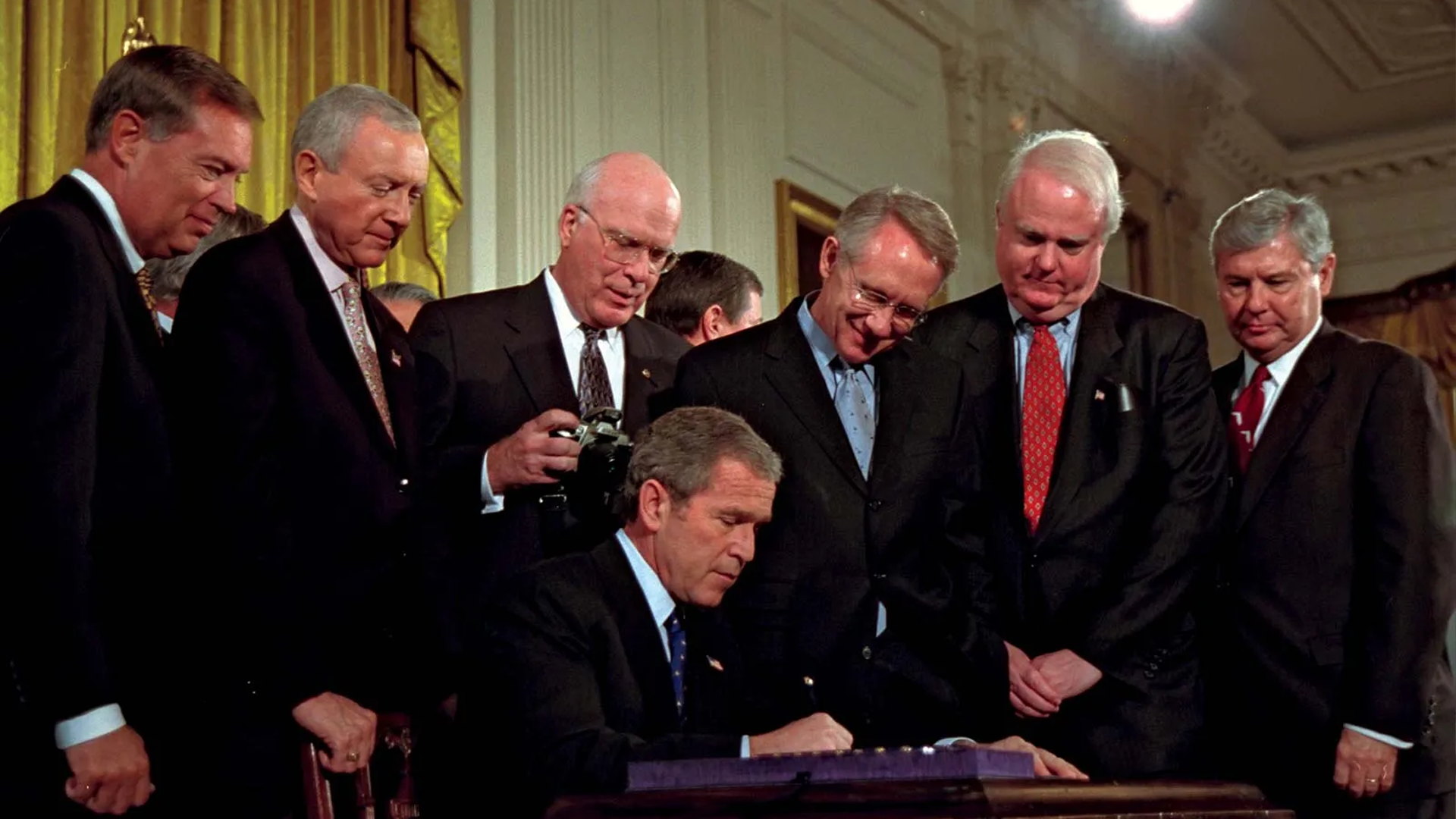
President George W. Bush signs the USA Patriot Act into law, surrounded by members of Congress in 2001.
What Happened?
The Patriot Act was signed into law on October 26, 2001, just 45 days after the terrorist attacks on September 11. The nation was still in shock, and fear of another attack was widespread. In that tense atmosphere, Congress acted quickly, giving the president and federal agencies broad new powers to monitor communications, track money flows, and share intelligence across departments.
The law allowed for what’s known as 'roving wiretaps,' which meant agents no longer had to get a new warrant for every device a suspect used. It also permitted 'sneak and peek' warrants, allowing investigators to search homes or offices without immediately notifying the target. The goal was to stop terrorist plots before they happened, but it also gave law enforcement unprecedented access to private information.
One of the biggest changes was how easily agencies could access personal records. Under Section 215 of the Act, the FBI could demand medical files, library checkouts, or financial data if it claimed the information was relevant to a terrorism investigation. These expanded powers blurred the lines between national security and personal privacy, raising serious questions about constitutional rights under the Fourth Amendment.
Supporters argued that the Patriot Act helped prevent future attacks by modernizing law enforcement tools. FBI Director Robert Mueller praised it as critical to counterterrorism efforts, saying it allowed agents to 'connect the dots' between potential threats. Others pointed to successful cases where the act supposedly helped uncover terror cells or financing networks.
But civil liberties advocates, including the American Civil Liberties Union (ACLU), warned that the Act went too far. They feared the government could use its new powers to monitor innocent Americans, spy on journalists, or target political and religious groups, echoing the abuses of the Cold War era, when activists like Dr. Martin Luther King Jr. were secretly surveilled by the FBI.
As technology advanced, the scope of government surveillance grew even wider. By the 2010s, revelations about mass data collection programs showed that agencies were gathering phone and internet records from millions of Americans with little oversight. In 2015, a federal court ruled that this bulk data collection was illegal, leading Congress to pass the USA Freedom Act, which ended some of the Patriot Act’s most controversial provisions but still allowed targeted surveillance under new limits.
The Patriot Act highlights one of democracy’s oldest dilemmas: how to balance liberty with security. It reflected a national desire for safety after 9/11, but also a deep tension between protecting citizens and protecting their rights. For many Americans, it forced a new question: How much privacy are we willing to give up to feel safe?
Why It Matters
The Patriot Act continues to shape conversations about government power, technology, and accountability. It reminds us that laws created in crisis can have long-lasting effects and that freedom requires constant vigilance, even in the name of security. While it gave law enforcement the tools to track terrorists across borders and digital networks, it also expanded government surveillance into the private lives of ordinary citizens. Its legacy raises profound questions about privacy, oversight, and the limits of executive power. The debate it sparked still echoes today, influencing everything from data privacy laws to discussions about the role of technology in democracy. The Patriot Act is a living lesson in how fear can reshape policy, and how we must balance safety with liberty to preserve the ideals on which the nation was founded.
?
Why did Congress pass the Patriot Act so quickly after 9/11?
What new surveillance powers did the Patriot Act give to law enforcement?
Why do some people believe the Patriot Act violates the Constitution?
What changes did the USA Freedom Act make to limit government surveillance?
How does the Patriot Act continue to influence debates about privacy and national security today?
Dig Deeper
Explore why some believe the Patriot Act made America safer—while others see it as a threat to civil liberties.
Two decades after 9/11, Americans still debate whether the Patriot Act protected national security or weakened democracy.
Related

The War on Terror: A New Era of U.S. Power
After the September 11th attacks, the United States didn't just declare war on terrorism—it redefined national security, global alliances, and the limits of civil liberties.
The First Amendment: America’s Blueprint for Freedom
The First Amendment protects freedoms of speech, religion, press, assembly, and petition. It’s the foundation of American democracy—but also a source of constant debate and interpretation.
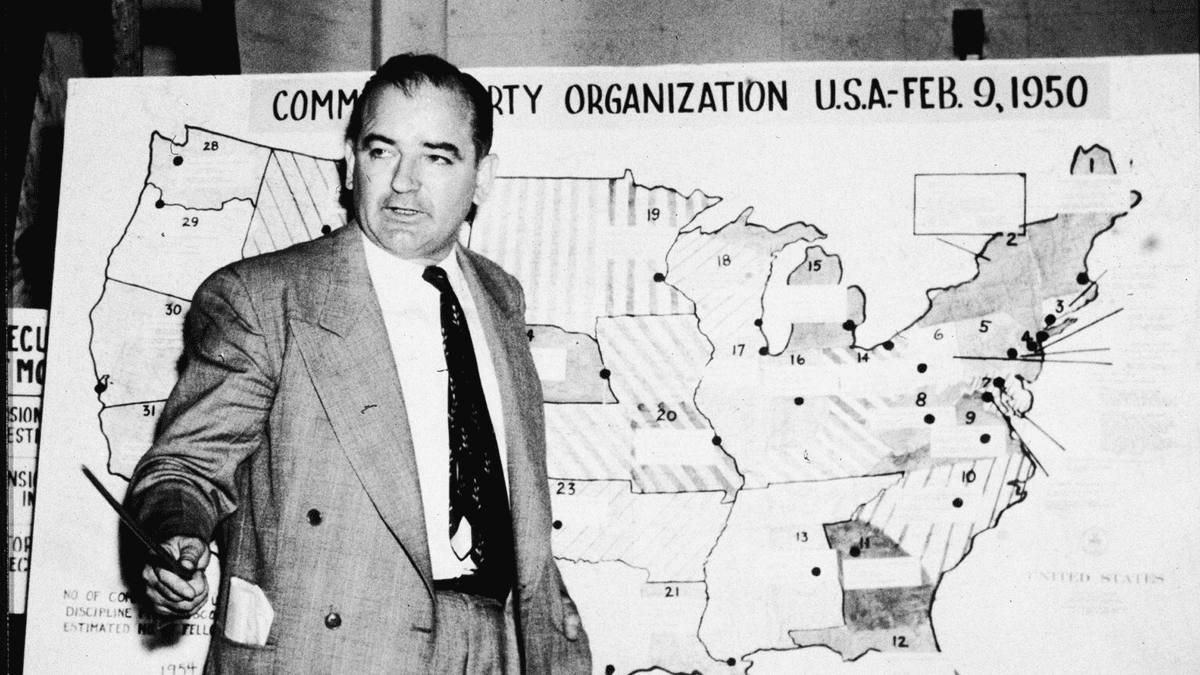
McCarthyism: Fear, Power, and the Red Scare
In the 1950s, fear of communism gripped America. Senator Joseph McCarthy fueled this fear by accusing hundreds of people of being communist traitors—often without proof. The result was a national panic that tested the meaning of truth, justice, and freedom.
Further Reading
Stay curious!