

Black Tuesday: The Stock Market Crashes
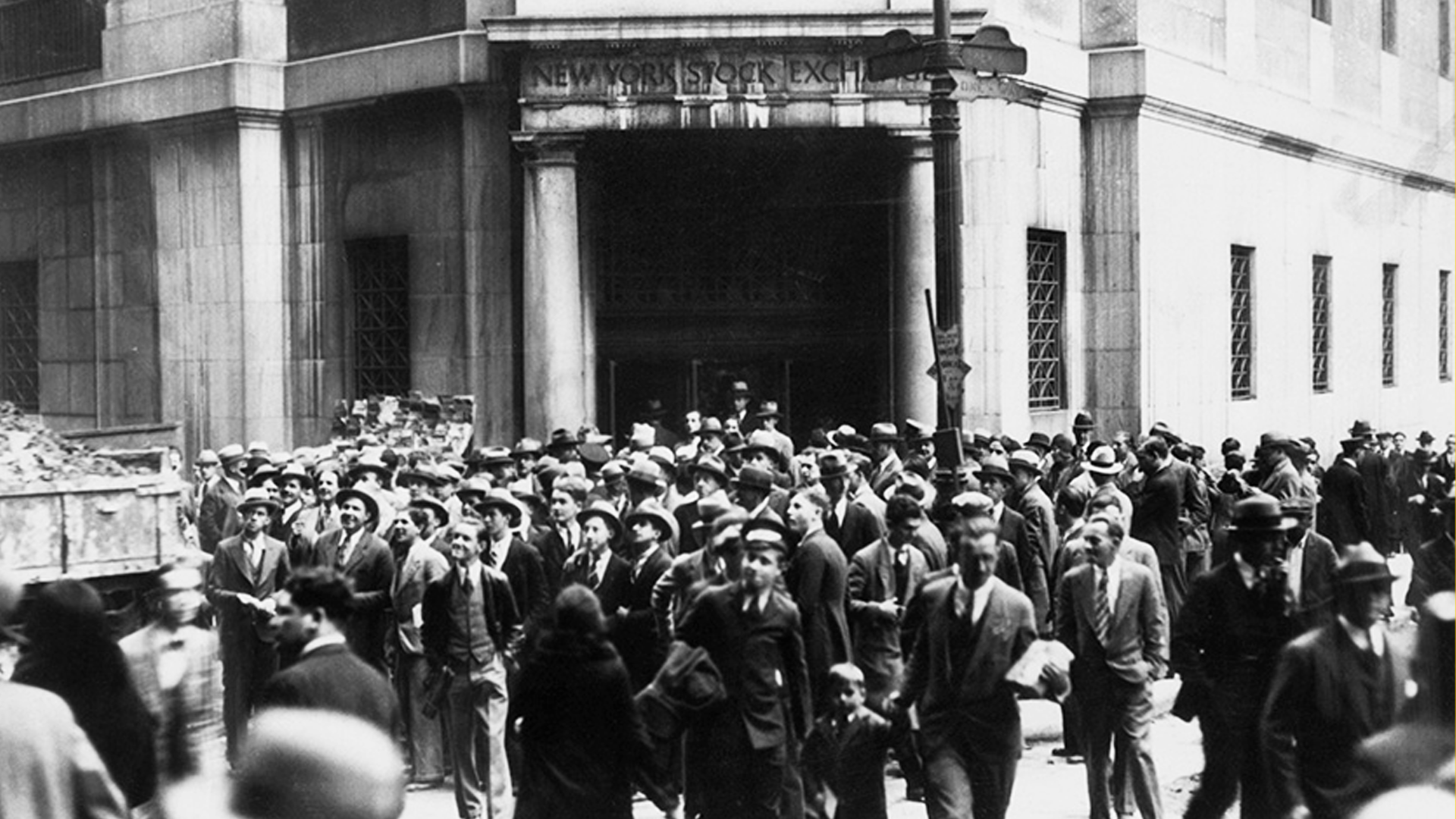
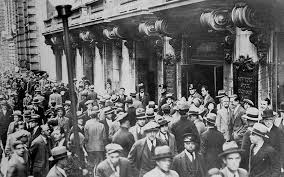
Panicked traders crowd the floor of the New York Stock Exchange during the crash of 1929.
What Happened?
The morning of October 29, 1929, began with chaos on Wall Street. Investors lined up outside brokerage houses as phones rang nonstop and ticker tapes fell hours behind. Within hours, panic had taken over. More than 16 million shares changed hands that day, an all-time record, and billions of dollars in wealth vanished almost instantly.
The crash didn’t come out of nowhere. During the Roaring Twenties, the U.S. economy boomed. New inventions like automobiles, radios, and household appliances fueled optimism. Ordinary Americans like teachers, farmers, and factory workers poured their savings into the stock market, often borrowing money to buy more shares. It felt like easy money. But beneath the excitement, warning signs were flashing: wages were stagnant, debt was high, and production was slowing.
Buying stocks on margin meant investors could borrow up to 90% of the price of a stock, gambling that prices would keep rising. When prices dipped in the fall of 1929, those debts came due, and millions scrambled to sell before losing everything. The rush to sell caused stock prices to plummet even further, creating a downward spiral that no one could stop.
Black Tuesday followed several chaotic days: Black Thursday on October 24 and Black Monday on October 28. Banks and investors had tried to calm the market by buying shares, but it wasn’t enough. By the end of October 29, the Dow Jones Industrial Average had lost nearly 25% of its value in just two days. In the months that followed, stock prices continued to fall, eventually losing nearly 90% of their value by 1932.
The crash shattered more than the financial system, it crushed public trust. Millions of Americans lost their life savings. Banks failed, businesses closed, and unemployment soared. By 1933, nearly one in three workers was jobless. Farms went bankrupt, homes were foreclosed, and breadlines stretched for blocks in cities across the nation.
Although the stock market crash didn't single-handedly cause the Great Depression, it revealed deep weaknesses in the economy—too much speculation, too little regulation, and too much inequality. The collapse spread globally, as trade slowed and credit dried up, leading to a decade of hardship around the world.
The crisis changed how the U.S. government handled the economy. New laws like the Securities Act of 1933 and the creation of the Securities and Exchange Commission (SEC) were designed to keep markets fair and transparent. President Franklin D. Roosevelt’s New Deal programs helped rebuild jobs, confidence, and financial safeguards that reshaped American life.
Black Tuesday remains a lesson about balance: the importance of regulation, the danger of greed, and the need for systems that protect people as much as profits. It’s also a reminder that economic freedom carries responsibility—that stability depends on fairness, not just fortune.
In the years that followed, America slowly recovered. But the memory of 1929 lingered as a warning that markets, like nations, must be built on trust, not speculation. The crash of 1929 became one of history’s greatest economic teachers—and a symbol of how quickly optimism can turn to crisis when the foundation of prosperity is built on risk.
Why It Matters
The crash of 1929 marked a turning point in world history, showing how unregulated markets and unchecked speculation can destabilize entire societies. It’s a lesson in cause and effect, how economic choices ripple through communities and across nations. The Great Depression that followed forced Americans to rethink the role of government, banking, and fairness in the economy. Understanding Black Tuesday reminds us that true prosperity isn’t measured only by profit, but by stability, equity, and shared opportunity.
?
What caused so many Americans to invest heavily in the stock market during the 1920s?
What does it mean to buy stocks 'on margin,' and why was it risky?
How did the stock market crash contribute to the Great Depression?
What changes were made to the economy after the crash to prevent it from happening again?
Why is it important to balance economic freedom with financial regulation?
Dig Deeper
Author Andrew Ross Sorkin explores how the crash of 1929 shattered America’s economy and what lessons it still holds today.
Related
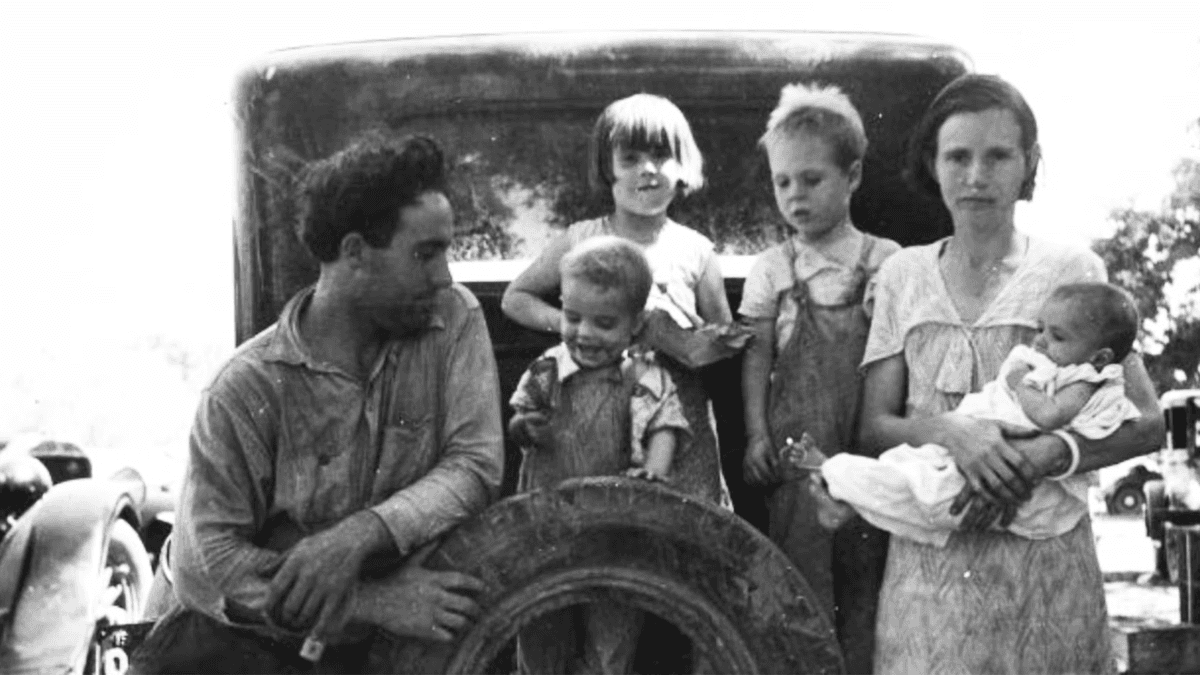
The Great Depression: America in Crisis
The Great Depression was more than a stock market crash — it was a decade-long test of American resilience that reshaped the nation's economy, politics, and daily life.
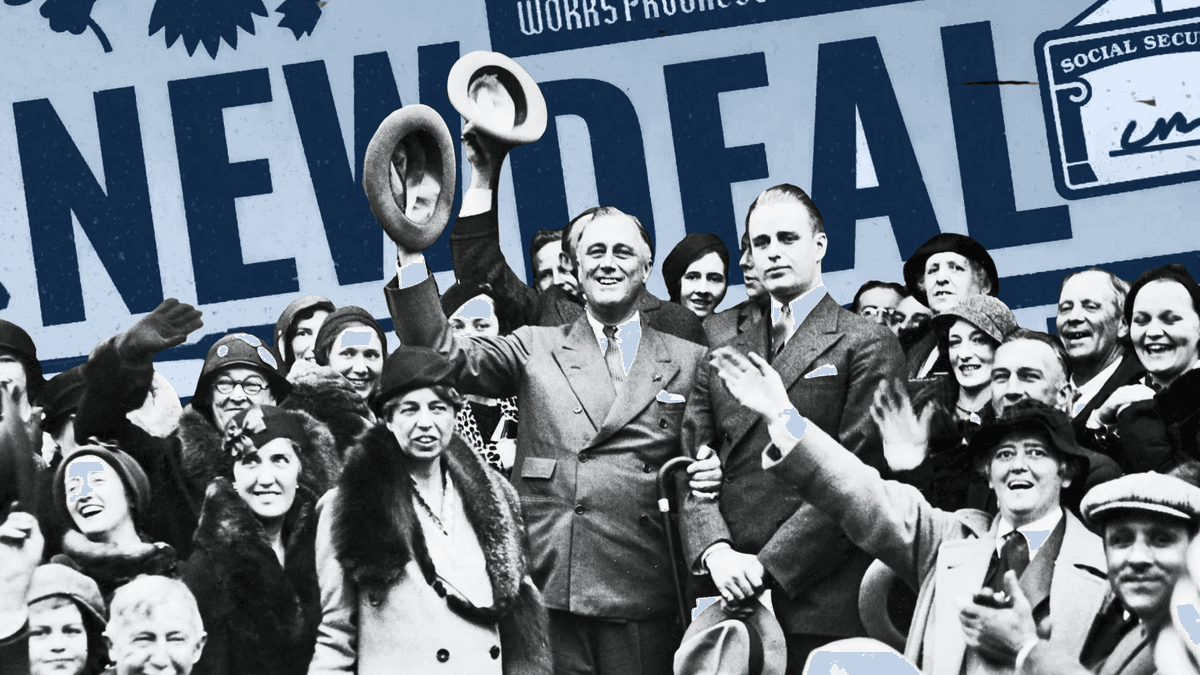
The New Deal: Fighting Depression with Bold Ideas
Faced with economic collapse, President Franklin D. Roosevelt launched a revolutionary plan to rebuild America from the ground up. The New Deal wasn’t just policy—it was a bold experiment in hope, action, and government responsibility.
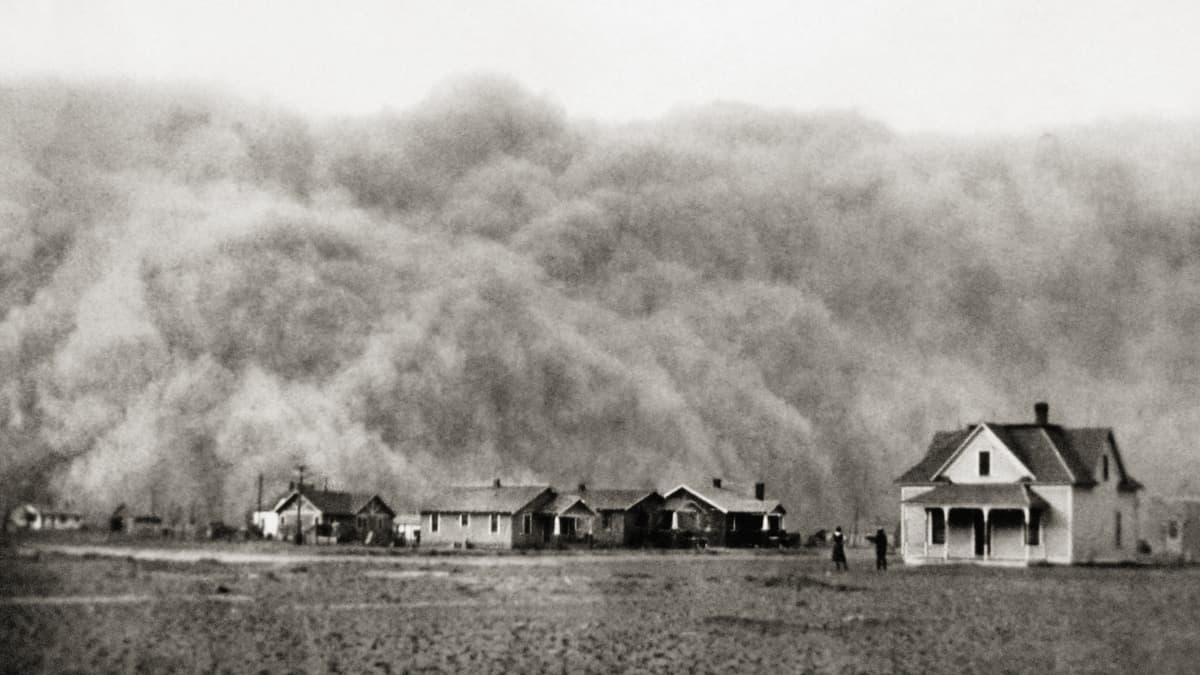
The Dust Bowl and the Price of Plowed Dreams
On May 11, 1934, a dust storm two miles high turned daylight into darkness and carried America’s soil into the Atlantic Ocean. But this wasn’t just a weather event—it was the collapse of a dangerous illusion.
Further Reading
Stay curious!