

Rebellion and Revolution: The Fall of the Central Powers
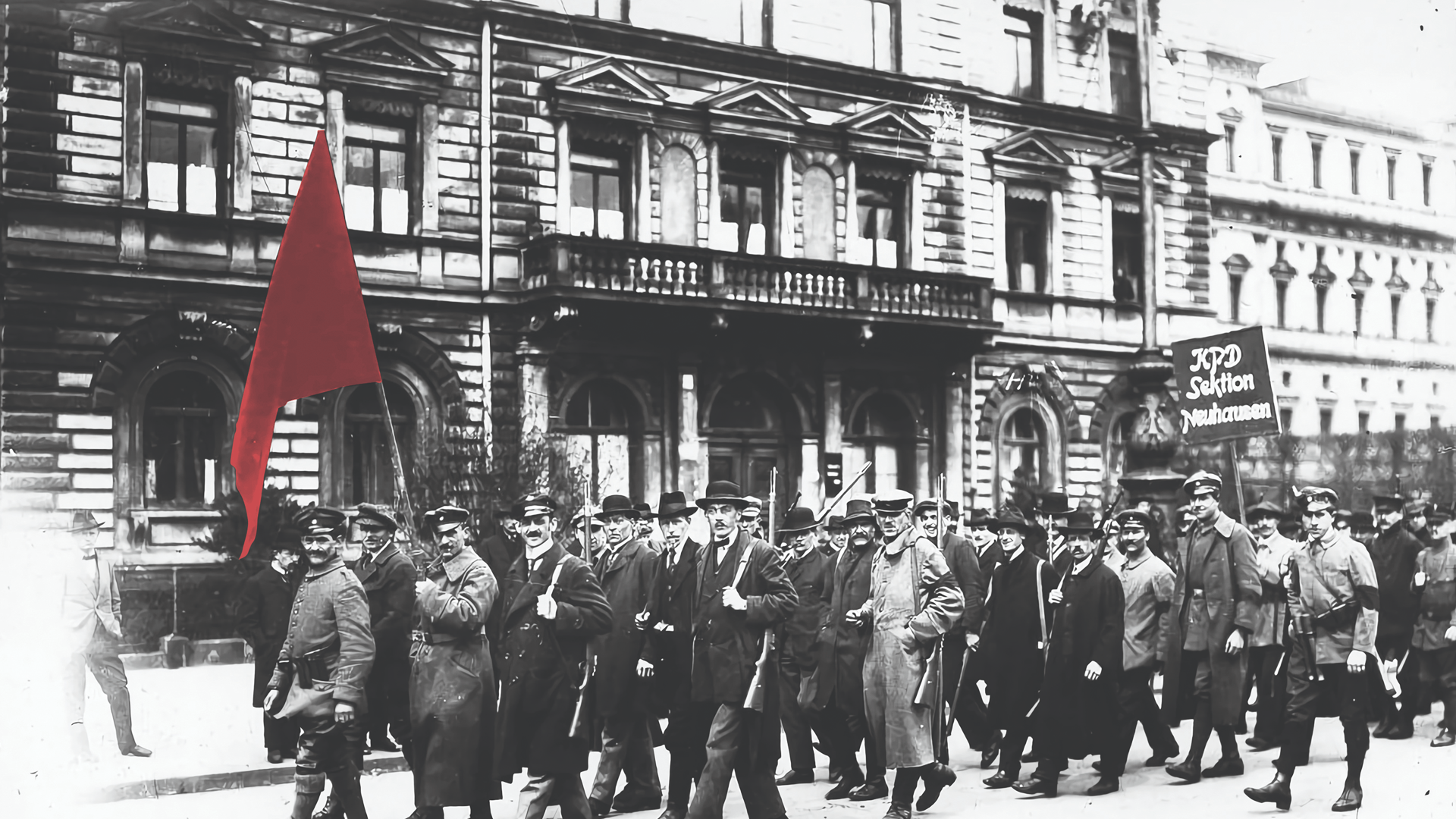
As World War I collapsed under its own weight, rebellion erupted across the Central Powers.
What Happened?
By the autumn of 1918, the Central Powers of Germany, Austria-Hungary, the Ottoman Empire, and Bulgaria were crumbling. Years of war had drained their economies, broken their armies, and left millions hungry and disillusioned. When sailors in the German port city of Kiel refused to carry out one last, hopeless attack against the British fleet, their act of defiance on November 3 sparked a wave of revolution that swept across Europe.
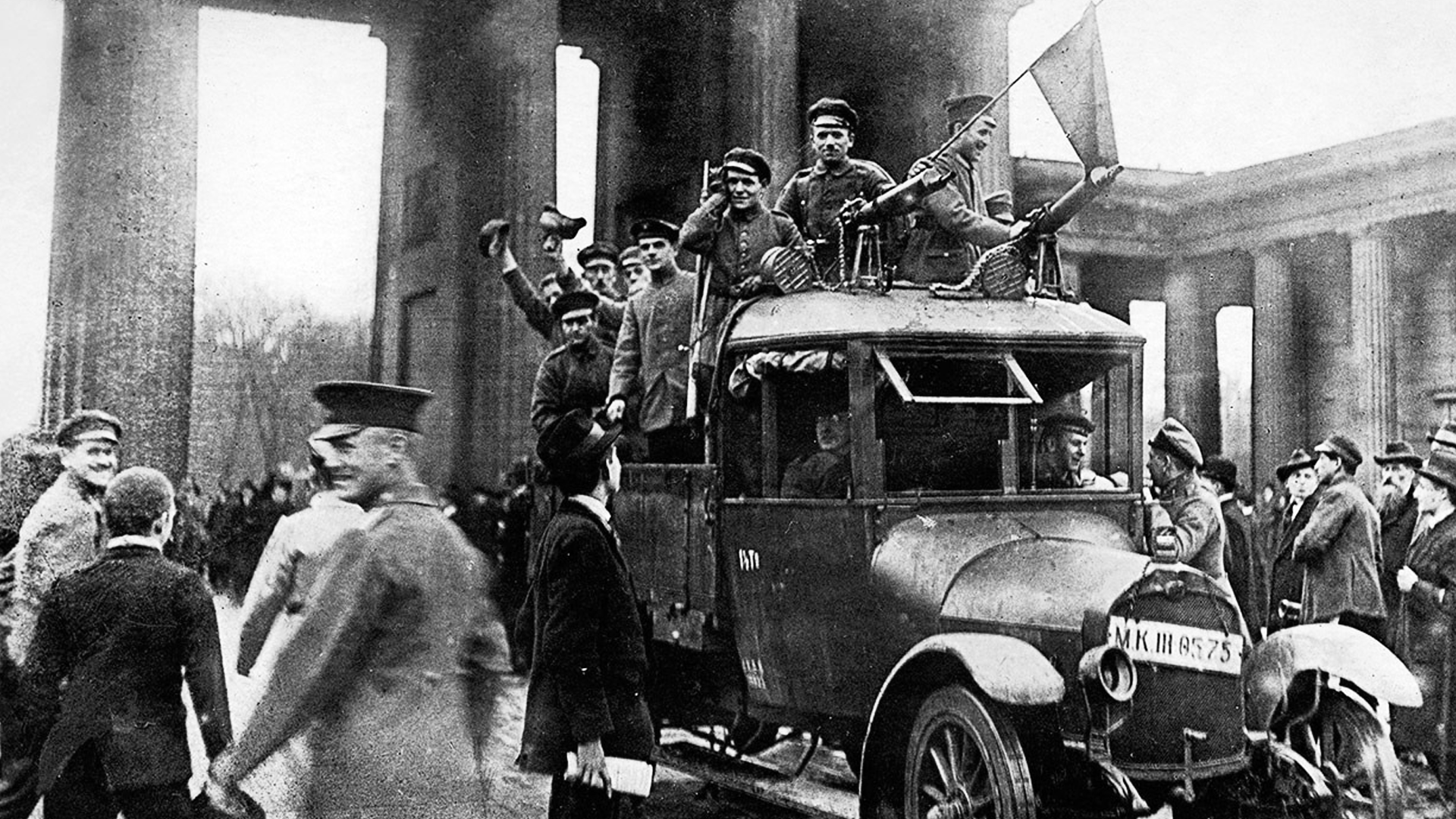
In Kiel, thousands of sailors and workers took to the streets, waving red flags (the symbol of socialism) and demanding peace and justice. Within days, their uprising spread to other cities across Germany. Factories stopped working, soldiers deserted, and citizens filled the streets shouting for an end to war and the abdication of Emperor Wilhelm II. What began as a mutiny became a revolution.
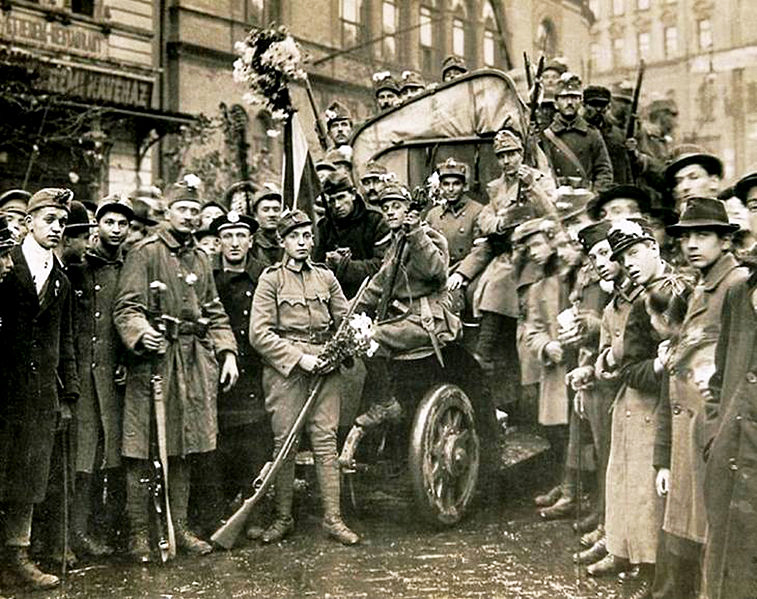
Similar unrest was erupting in Austria-Hungary. The empire was falling apart as ethnic groups demanded independence and peace. In Hungary, workers and soldiers joined together in what became known as the Aster Revolution, named after the flowers revolutionaries wore on their uniforms. On November 3, Austria-Hungary signed an armistice with the Allies, effectively ending its role in the war and paving the way for the creation of new nations such as Czechoslovakia and Hungary.
In Germany, the revolution grew stronger. On November 9, Emperor Wilhelm II abdicated and fled into exile. That same day, two competing visions for Germany’s future were declared. One as a parliamentary republic, the other as a socialist one. This division between moderate democrats and radical socialists would shape the country’s politics for years to come.
The uprisings were not just political, they were deeply social. After four years of unimaginable hardship, ordinary people wanted food, fairness, and a voice in how their countries were run. Soldiers and factory workers, who had carried the burden of war, now carried banners calling for equality and democracy. Women, too, took to the streets, demanding both peace and the right to vote.
Though the revolutions succeeded in toppling monarchies, they also unleashed chaos. Germany soon descended into violent clashes between rival factions. In early 1919, the Spartacist uprising led by Karl Liebknecht and Rosa Luxemburg was brutally crushed by right-wing militias known as the Freikorps. The young Weimar Republic was born from both hope and bloodshed, struggling to unite a divided nation.
In Hungary, Count Mihály Károlyi’s new democratic government introduced reforms such as free speech and women’s suffrage, but it was short-lived. By 1919, economic collapse and political conflict gave way to a communist regime and foreign invasions, showing how fragile peace could be after war.
November 3, 1918, stands as a turning point, the day ordinary people across the Central Powers rose up and demanded a new kind of world. Their revolts ended centuries of empires and birthed fragile democracies that would struggle, and often fail, to keep peace in the decades that followed.
Why It Matters
The revolts of November 1918 remind us that history is often written not just by leaders, but by citizens who refuse to stay silent. The uprisings in Germany and Austria-Hungary ended monarchies, introduced democracy to millions, and reshaped Europe after World War I. Yet they also revealed how fragile peace and freedom can be when nations are divided by fear, hunger, and inequality. Learning about these revolutions helps us see how the desire for justice and self-determination can unite people, and how the failure to build stability afterward can lead to future conflict.
?
What caused soldiers and workers in Germany and Austria-Hungary to revolt in 1918?
How did the Kiel mutiny lead to the end of the German Empire?
What was the Aster Revolution in Hungary, and how did it change the country?
How did the revolutions of 1918 shape the creation of new European nations?
Why do revolutions sometimes lead to both progress and instability?
Dig Deeper
A look at the revolutions that followed World War I, including Germany’s November Revolution and the birth of new European nations.
The story of the short-lived Hungarian Republic that emerged from the ashes of World War I.
Related
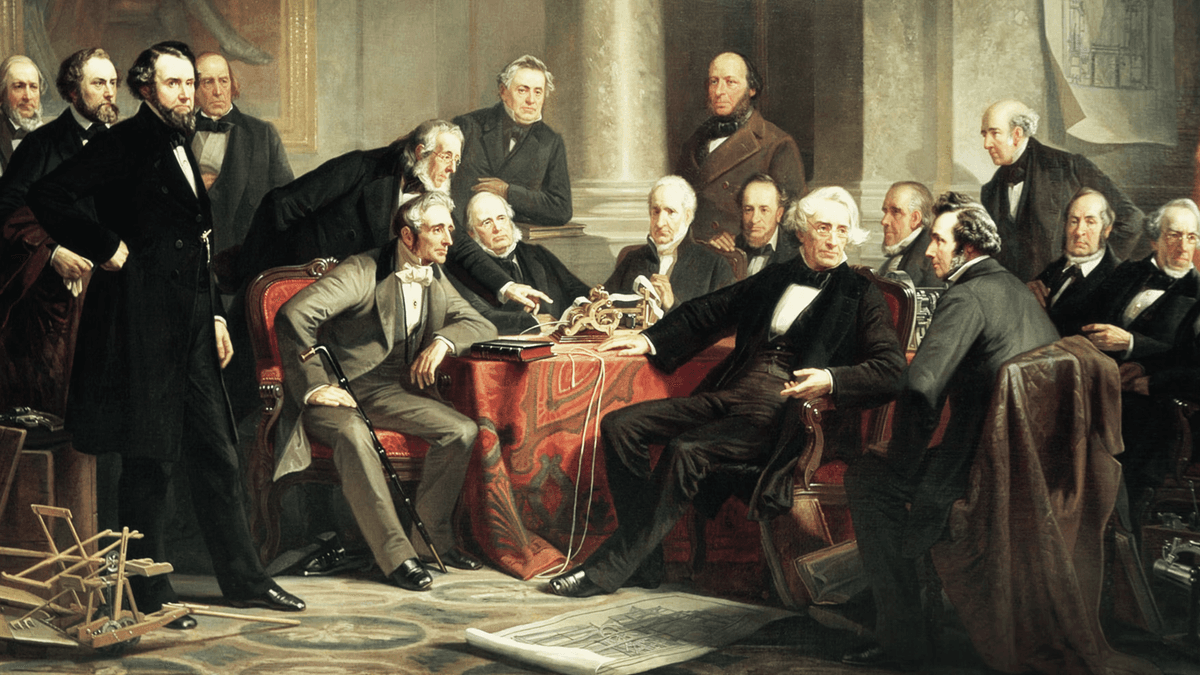
The Enlightenment: Revolution of the Mind
The Enlightenment wasn’t just an era of smart people in powdered wigs—it was a radical shift in how humans understood power, truth, and their place in the world. Its ideas fueled revolutions, rewrote constitutions, and laid the intellectual bricks of modern democracy.
How a Bill Becomes a Law
From idea to law, every bill takes a long journey through Congress—full of debate, revision, and compromise—before landing on the president’s desk.

Civics vs. Ethics
Civics explains the rules of society. Ethics asks whether those rules are right.
Further Reading
Stay curious!