

The Ottoman Empire Declares a Holy War
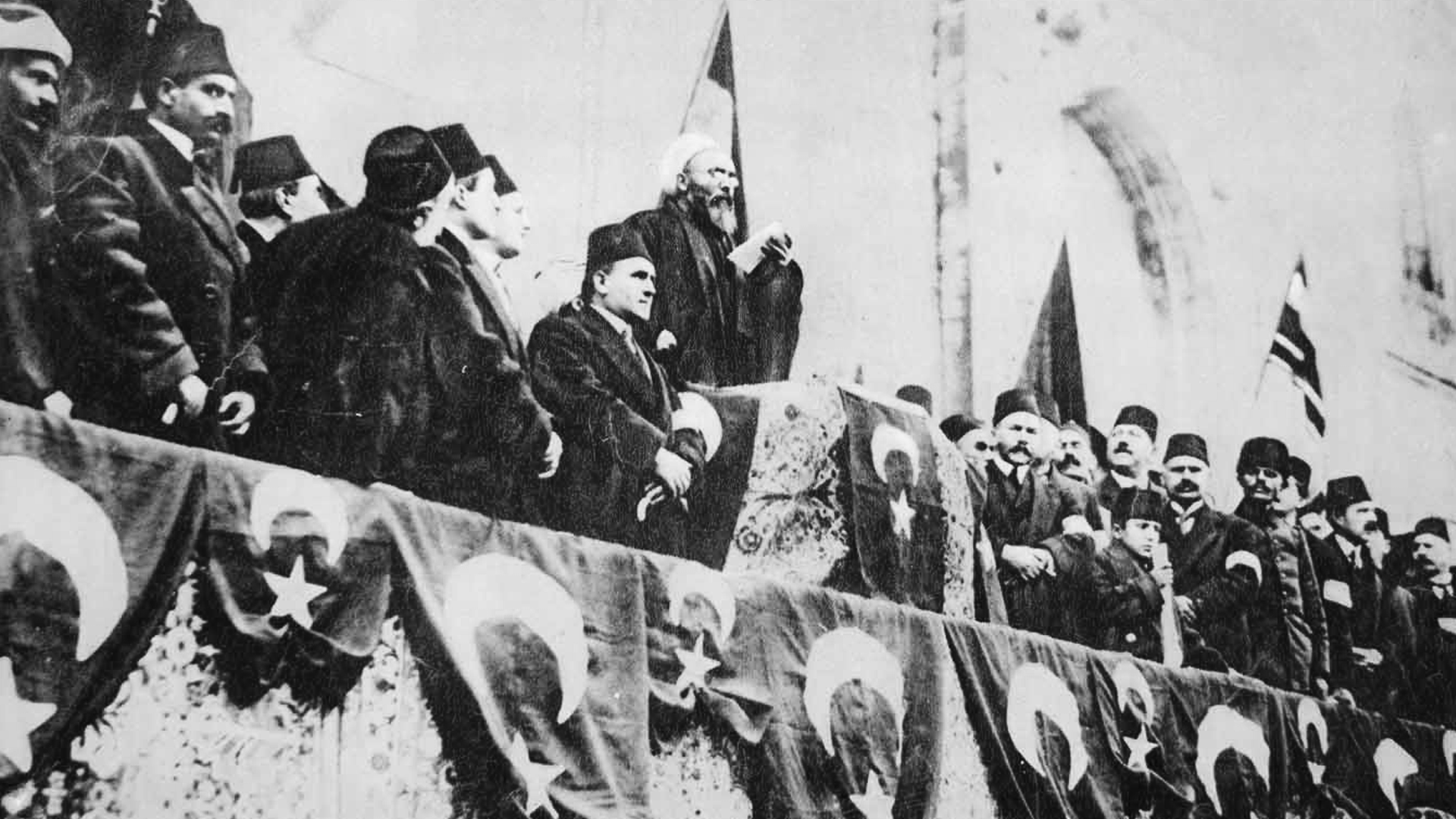
The Ottoman Empire entered World War I in late 1914 and used religion and politics together to rally people.
What Happened?
By 1914 the Ottoman Empire was a shadow of its former strength. Once a vast and commanding power, it had recently suffered major territorial losses in the Balkans and feared that more defeats were on the horizon. Leaders of the Committee of Union and Progress, often called the Young Turks, believed the empire could not survive a modern industrial war alone. On August 2, 1914, they signed a secret alliance with Germany. They hoped that tying their future to a powerful European military partner would protect the empire from further decline.
The alliance became a public reality on October 29, 1914, when Ottoman warships, including the German-built Goeben and Breslau sailing under Ottoman flags, attacked Russian ports along the Black Sea. This bombardment formally brought the empire into World War I on the side of the Central Powers. It also paved the way for a dramatic announcement in Istanbul two weeks later that attempted to reshape the way the war was understood both inside and beyond the empire.
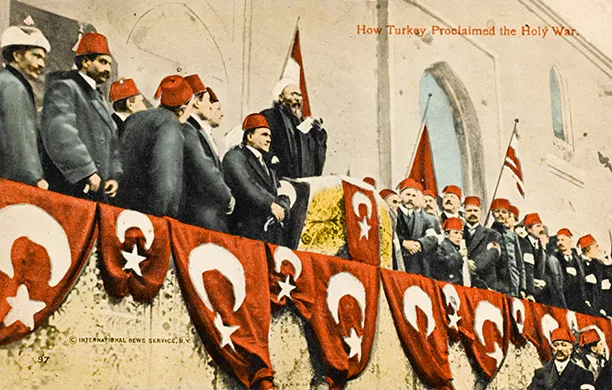
On November 14, 1914, the Şeyhülislam, the highest religious authority in the empire, issued a formal fatwa declaring a jihad, or holy war, against the Allied powers. The decree was read aloud during a public ceremony in the capital and carefully framed the conflict as both a sacred duty and a matter of political survival. At a time when the empire faced military and economic uncertainty, the fatwa attempted to merge the defense of the state with the defense of the Muslim community.
The decree promised honor in this life and spiritual reward in the next for those who fought to protect the empire. It also instructed Muslims not to fight against the empire’s allies, especially Germany and Austria-Hungary. This showed clearly that the declaration wasn't only a religious proclamation but also a tool crafted to fit the needs of wartime diplomacy and alliance politics. Religious language and state strategy were woven together to mobilize as many people as possible.
German officials saw the fatwa as an opportunity to weaken their enemies. They hoped it would inspire Muslim subjects living under British, French, and Russian rule to rebel. To encourage this, German offices in Berlin and Istanbul produced pamphlets, newspapers, and organized outreach programs for Muslim prisoners of war. These campaigns were energetic and widespread, yet they led to only a few small and isolated uprisings. The idea was powerful, but the reality fell short of German expectations.
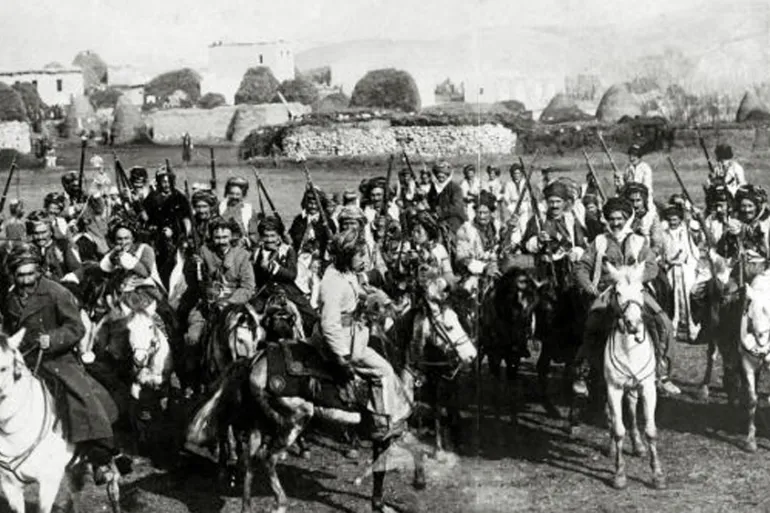
Within the Ottoman Empire, however, the proclamation had a stronger impact. Many Ottoman Muslims viewed the war as a struggle to protect both their homeland and their faith. This sense of combined religious and national duty helped military recruitment and boosted morale in some regions. Still, the empire’s war effort faced enormous challenges. Shortages of food and weapons, flawed leadership, and brutal winter conditions led to devastating losses, especially during the disastrous Sarikamish campaign against Russia in the winter of 1914 and 1915.
The term jihad carries a range of meanings in Islamic tradition. It can refer to a personal effort to live a righteous life and it has also been used by states to describe military struggle. Ottoman leaders in 1914 used the term to mobilize soldiers and civilians for total war. Their interpretation blended spiritual devotion with patriotism and the demands of a modern global conflict. It reflected a long historical pattern in which rulers drew upon religious authority to strengthen political goals.
The call to jihad wasn't universally accepted. The sultan served as the Sunni caliph, but his authority didn't extend to Shi‘i communities within or beyond the empire. Many Muslims in faraway colonies remained loyal to their local governments or chose neutrality, since their daily realities were shaped more by local politics and identity than by an imperial decree from Istanbul. This divide shows that shared faith can be influential, yet it rarely outweighs the pressures and loyalties of one’s immediate surroundings.
The declaration also carried serious risks. Connecting the war effort to religious identity could strengthen unity among some groups while deepening suspicion and fear among non-Muslim communities inside the empire. Leaders had to navigate food shortages, public unrest, and the strain of a war that blended state policy with spiritual expectations. When belief becomes closely tied to government action, the line between unity and division becomes even more fragile.
By the end of the war the Ottoman Empire dissolved. New states, mandates, and borders emerged across the Middle East, reshaping the region for generations to come. The 1914 fatwa remains a striking example of how governments attempt to use belief, identity, and political messaging to shape public behavior during moments of crisis. Its mixed results show that while religious language can inspire, the outcomes always depend on material conditions, local realities, and the limits of state power.
Why It Matters
This event teaches how powerful ideas can be used in modern politics. The Ottoman fatwa tried to turn shared faith into wartime unity and world influence, but results depended on local realities more than slogans. Studying it helps us see how words like jihad can have many meanings, how propaganda seeks to move people, and why critical thinking is essential when leaders mix religion, nationalism, and war.
?
Why did the Ottoman government think a religious decree would help its war effort?
What is the difference between a personal spiritual struggle and a state using religion for wartime goals?
Why did Germany want Muslims in Allied colonies to rebel, and why did that plan mostly fail?
How can propaganda shape people’s choices during a war?
What new countries emerged after the Ottoman Empire fell, and how might this history connect to them?
Dig Deeper
A concise overview of how a small principality grew into a major empire.
Explores the long decline and World War I defeat of the Ottomans.
Animated timeline that helps younger learners visualize key turns in Ottoman history.
Related
Fascism: Power, Propaganda, and the Fall of Democracy
Fascism emerged from the ruins of World War I and found its foothold in fear, nationalism, and economic despair. It promised unity, but delivered control, conformity, and catastrophe.
World War II: Causes, Conflict, and Consequences
A global war shaped by unresolved tensions, devastating conflict, and consequences that still define our world today.
Why the United States Entered World War I
In 1917, after years of neutrality, the United States entered World War I—reshaping global politics and transforming life at home.
Further Reading
Stay curious!