

Pizarro Traps the Incan Emperor Atahualpa
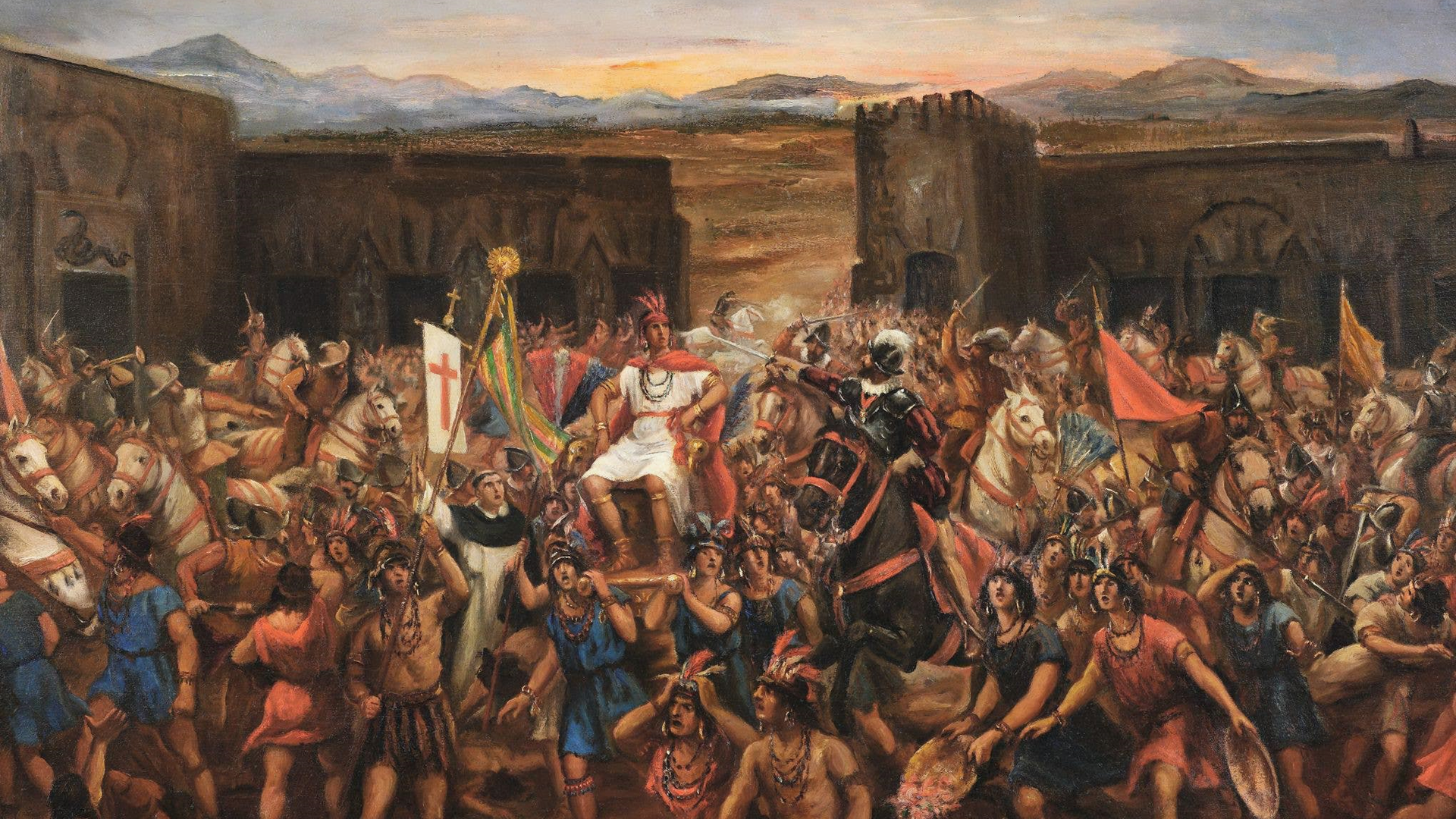
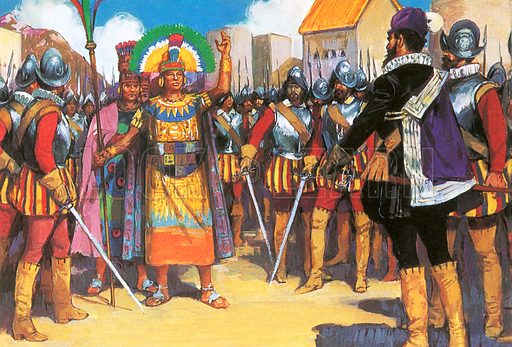
Francisco Pizarro capturing the Incan emperor Atahualpa at Cajamarca in 1532.
What Happened?
In the early 1500s, Spain sent explorers across the Atlantic seeking gold, glory, and new lands. Francisco Pizarro was one of these conquistadors, a battle-hardened soldier who believed that somewhere in South America there was a wealthy empire waiting to be taken. His instincts proved right when he reached the borders of the powerful Inca Empire, which stretched thousands of miles through the Andes Mountains.
At that time, the Inca Empire was weakened by civil war. Two brothers, Atahualpa and Huascar, had fought for control after their father, Emperor Huayna Capac, died of disease. Atahualpa had recently defeated Huascar and was celebrating his victory when Pizarro and his men arrived with just 160 soldiers, a few horses, and small cannons. Despite being vastly outnumbered, the Spanish had one key advantage: surprise and superior weapons.
Pizarro sent a friendly message to Atahualpa, inviting him to a feast in his honor in the town of Cajamarca. Confident in his power, Atahualpa agreed and arrived with around 5,000 unarmed attendants. The Spanish had hidden their soldiers around the square, ready to attack at the signal. When a Spanish priest, Vicente de Valverde, asked Atahualpa to accept Christianity and submit to the Spanish king, Atahualpa refused and threw down the Bible offered to him.
That single act became Pizarro’s excuse to unleash his ambush. Cannons thundered, muskets fired, and horsemen charged into the crowded square. The Incas, unfamiliar with guns and horses, were trapped in panic. Thousands were killed in just an hour, and the once-mighty emperor was taken captive. The Spanish suffered only one injury—Pizarro himself received a small cut while shielding Atahualpa from death.
Atahualpa realized his only chance to survive was to appeal to the Spanish thirst for gold. He promised them a ransom unlike any ever seen: enough treasure to fill one room with gold and two more with silver. Over the following months, the Incas brought vast amounts of precious metal from across their empire, much of it priceless art melted into bars. Yet once the ransom was paid, Pizarro broke his promise.
Accusing Atahualpa of plotting rebellion, the Spanish put him on trial and sentenced him to death. The emperor agreed to convert to Christianity in hopes of mercy, and instead of being burned alive, he was strangled on August 29, 1533. With his death, the heart of the Inca Empire was broken. Spanish forces quickly marched on the Incan capital, Cusco, and installed a puppet ruler to secure control.
The capture of Atahualpa became a turning point in world history. It showed how small European forces could conquer large empires through strategy, technology, and deception. It also revealed the devastating effects of disease, internal conflict, and greed in weakening Indigenous societies before conquest.
Beyond the immediate victory, Pizarro’s actions marked the beginning of Spanish colonial rule in South America. Gold from the Andes flowed to Spain, fueling its rise as a global empire but bringing misery to millions of Indigenous people who were enslaved or killed. The conquest of the Incas, like that of the Aztecs before them, reshaped the Americas forever.
Today, the story of Atahualpa and Pizarro stands as both a warning and a lesson. It reminds us how greed and misunderstanding between cultures can destroy entire civilizations, and how history often turns on the meeting of power and vulnerability. The fall of the Inca Empire wasn't just the end of a kingdom—it was the beginning of a new, often tragic chapter in the history of the world.
Why It Matters
The capture of Atahualpa changed the course of world history. It marked the fall of one of the most advanced civilizations in the Americas and the rise of Spanish colonial power in the New World. The story reveals how technology, ambition, and betrayal shaped global empires—and how cultural arrogance can justify cruelty. Learning this history helps us understand the lasting impacts of conquest, from the loss of Indigenous knowledge to the shaping of modern Latin America.
?
Why did Atahualpa agree to meet Pizarro even though he had such a large army?
How did the Spanish manage to defeat the Inca forces with so few soldiers?
What role did greed and gold play in Pizarro’s conquest?
What were the long-term effects of the Spanish conquest on Indigenous peoples of South America?
How might history have been different if Atahualpa had refused to meet the Spanish at Cajamarca?
Dig Deeper
A short animated overview of how Pizarro lured and captured Atahualpa, leading to the fall of the Inca Empire.
A deeper look at how the Inca Empire rose to power and how its encounter with Spain brought it to an end.
Learn how Spain’s conquest of the Americas transformed global trade, wealth, and politics.
Related
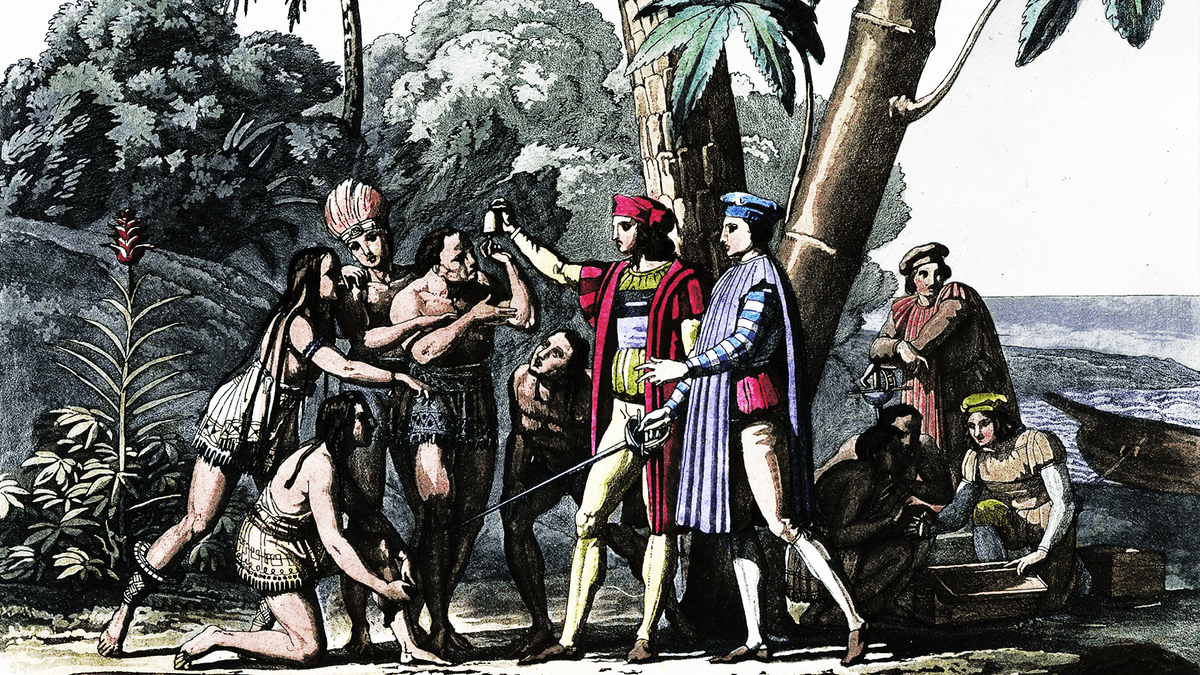
The Columbian Exchange: When Worlds Collided
When two previously isolated worlds collided in 1492, the resulting biological, cultural, and economic transformation reshaped every corner of the globe. The Columbian Exchange was not just a swap—it was a world-changing, world-breaking chain reaction.
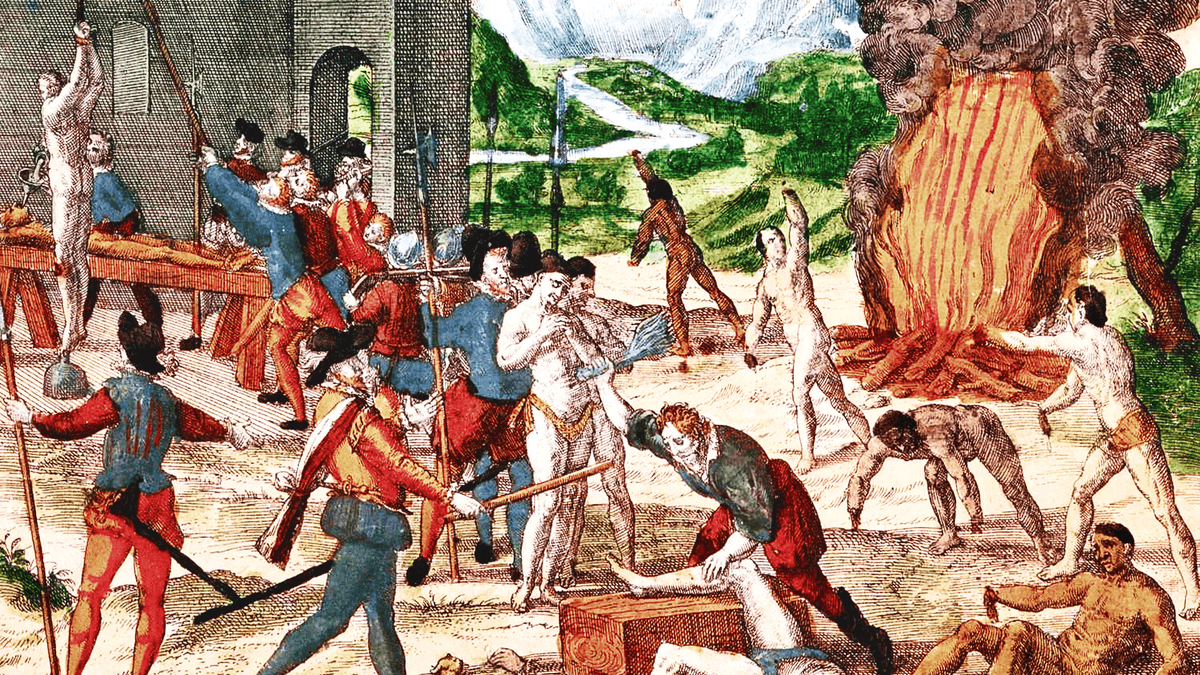
The Encomienda System: Empire, Labor, and the Roots of Colonial Slavery
The encomienda system promised 'protection' and Christianization. What it delivered was forced labor, cultural erasure, and the blueprint for slavery in the Americas.
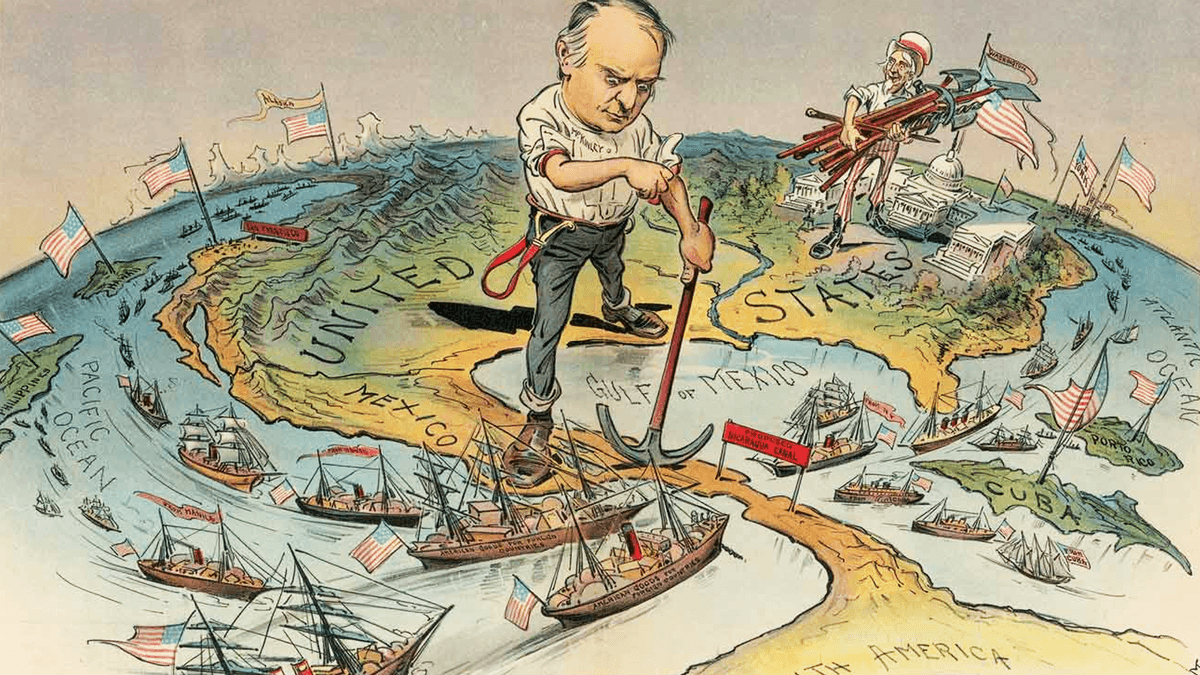
U.S. Imperialism: The Spanish-American War and Its Aftermath
In 1898, the United States fought Spain in a short war that reshaped its identity—from a republic born in anti-colonial revolution to a global imperial power with overseas territories.
Further Reading
Stay curious!