

The First Seminole War Begins
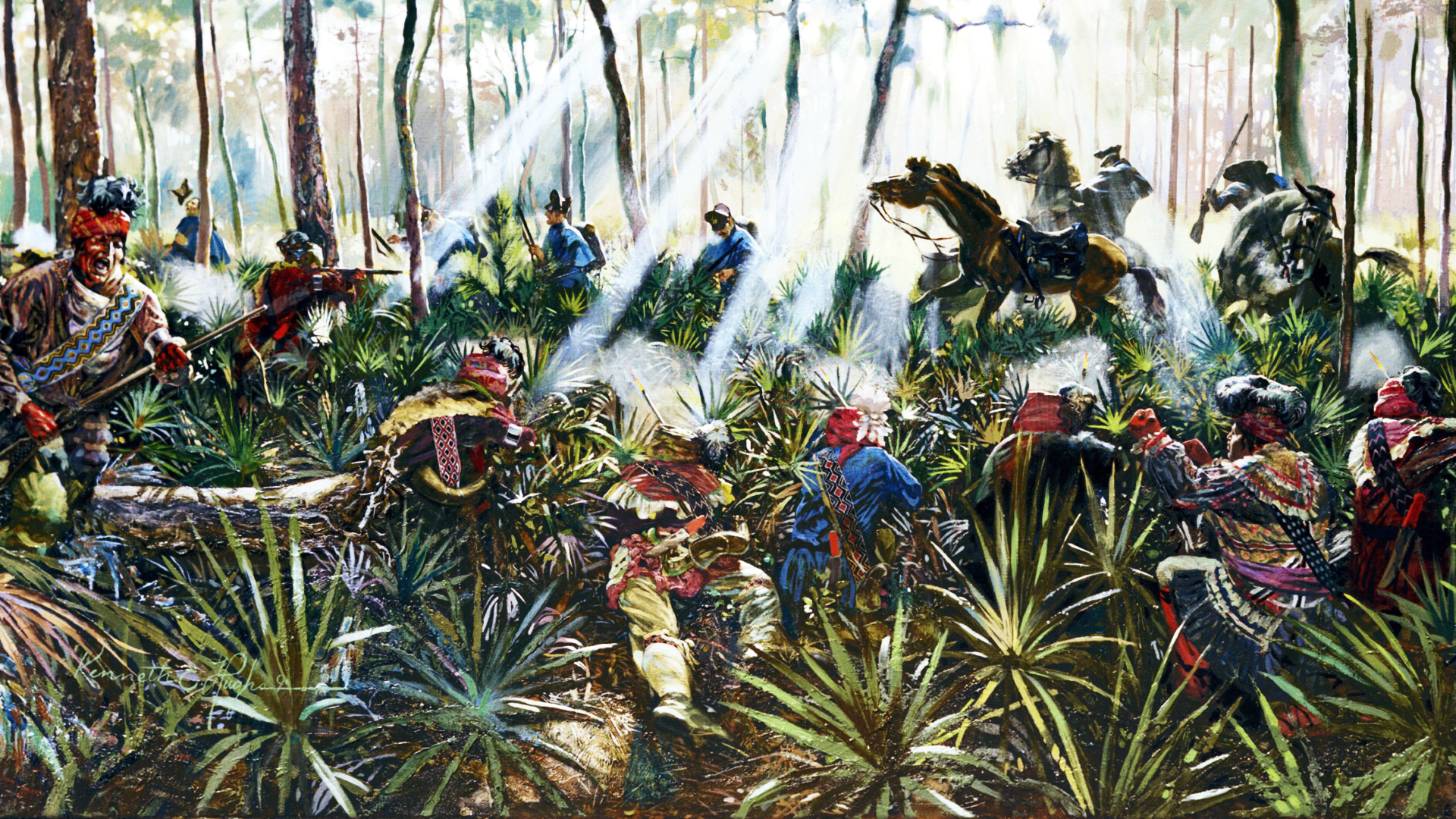
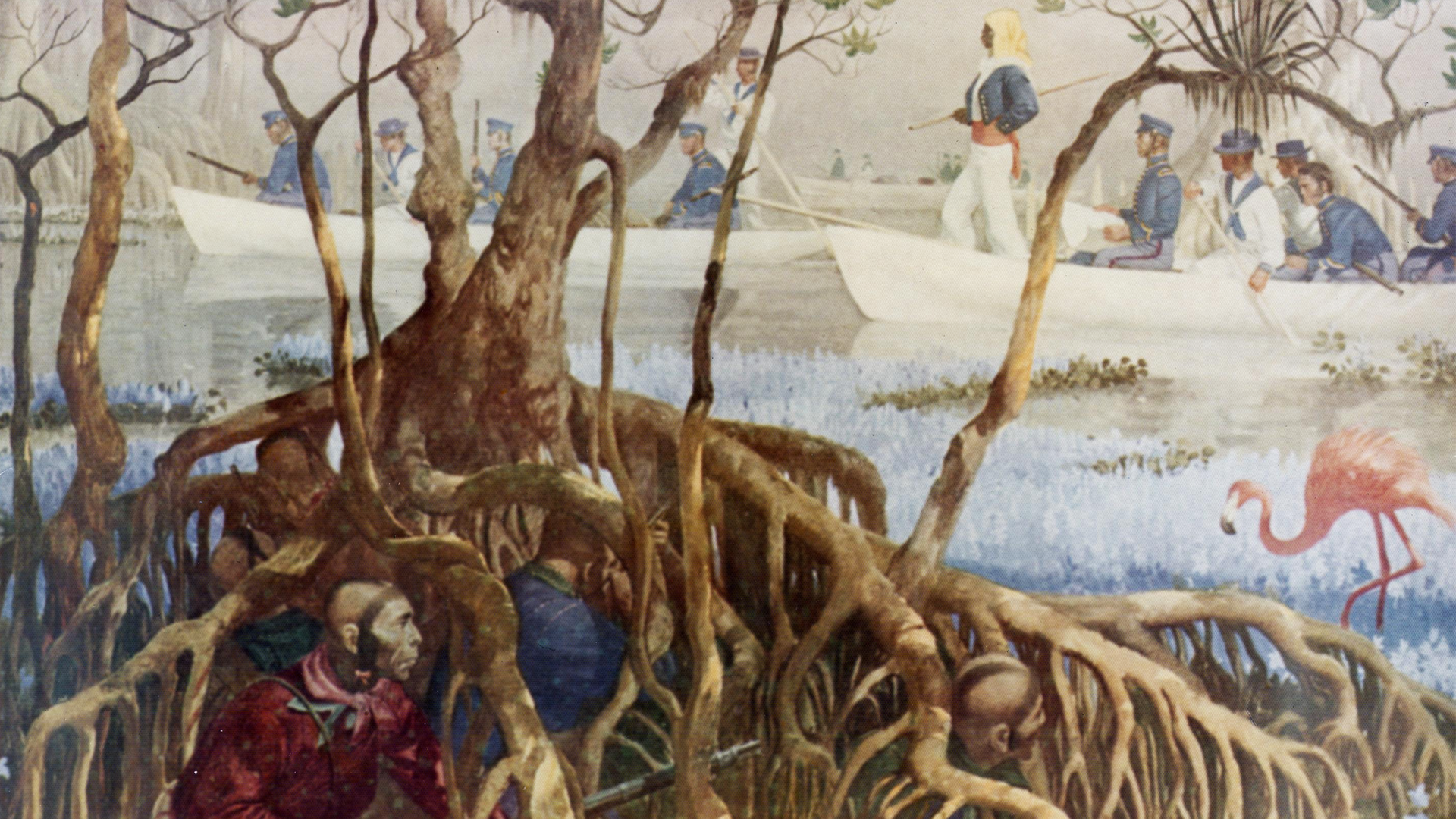
Seminole warriors and U.S. soldiers in conflict during the First Seminole War.
What Happened?
In the early 1800s, Florida was controlled by Spain, but its borders were full of tension. American settlers wanted more land, enslaved people escaping Southern plantations sought refuge with the Seminoles, and the Seminole people defended their communities against outsiders. The U.S. government claimed these mixed communities were a threat to national security, even though many Seminoles and Black Seminoles were simply trying to survive on their own land.
On November 21, 1817, U.S. troops from Fort Scott attacked the Seminole village of Fowltown in southern Georgia. American officials blamed the Seminole chief Neamathla for earlier violence, but they offered little evidence. When he refused to surrender, soldiers raided the village, killed around 20 people, and burned the settlement. This unprovoked attack is widely recognized as the event that officially began the First Seminole War.
The Seminoles retaliated quickly. A group of Seminole fighters attacked a U.S. supply boat traveling to Fort Scott, killing dozens of soldiers and civilians. This deadly chain of events pushed both sides into ongoing battles across the Georgia–Florida border as the U.S. continued to blame the Seminoles for protecting formerly enslaved people seeking freedom.
General Andrew Jackson soon took command. Known for his aggressive tactics, he invaded deep into Spanish-controlled Florida without official permission from the U.S. government. Jackson’s troops destroyed Seminole villages, chased families into the swamps, captured Spanish forts, and even occupied the city of Pensacola. His actions shocked Spain but impressed American leaders who wanted control of the region.
The conflict wasn’t just about battles. It was about land, power, and people’s right to be free. Seminoles had built communities that included many Black Seminoles (people who had escaped slavery and found safety among the tribe). Their presence angered Southern slaveholders, who pressured the U.S. military to recapture these freedom-seekers. This made the Seminoles a target not because of warlike behavior but because they protected people fleeing oppression.
Spain protested Jackson’s invasion but ultimately realized it could not defend Florida against U.S. pressure. In 1819, Spain agreed to cede Florida to the United States through the Adams–Onís Treaty. By 1821, the U.S. officially took control of the entire territory. The First Seminole War became a stepping stone for American expansion—at the expense of both Spanish control and Native sovereignty.
Although the war ended quickly, it didn't crush Seminole resistance. The Seminoles continued fighting to protect their land and communities, leading to the much larger and more destructive Second Seminole War (1835–1842) and Third Seminole War (1855–1858). Their long struggle stands as one of the strongest examples of Native resistance in American history.
The First Seminole War teaches us how conflicts over land, freedom, and political power shaped the early United States. It also reminds us that Native peoples and Black Seminoles faced enormous pressure from expanding American borders, yet continued to fight for their homes, their families, and their right to live freely.
Why It Matters
The First Seminole War shows how early American expansion created deep conflicts that reshaped entire regions. It reveals how Native nations and Black Seminoles resisted attempts to take their land and freedom, even against powerful military forces. Understanding this war helps us see the long history of Native resistance, the complexity of U.S. territorial growth, and the importance of recognizing voices that fought to protect their communities.
?
Why did the United States consider the Seminoles a threat in the early 1800s?
How did protecting escaped enslaved people affect the Seminoles’ relationship with the United States?
Why did Andrew Jackson invade Spanish Florida without permission?
How did the First Seminole War lead to the United States gaining control of Florida?
What does the war teach us about Native resistance to U.S. expansion?
Dig Deeper
An overview of the Seminole Wars and how conflict in Florida shaped the region’s history.
Related
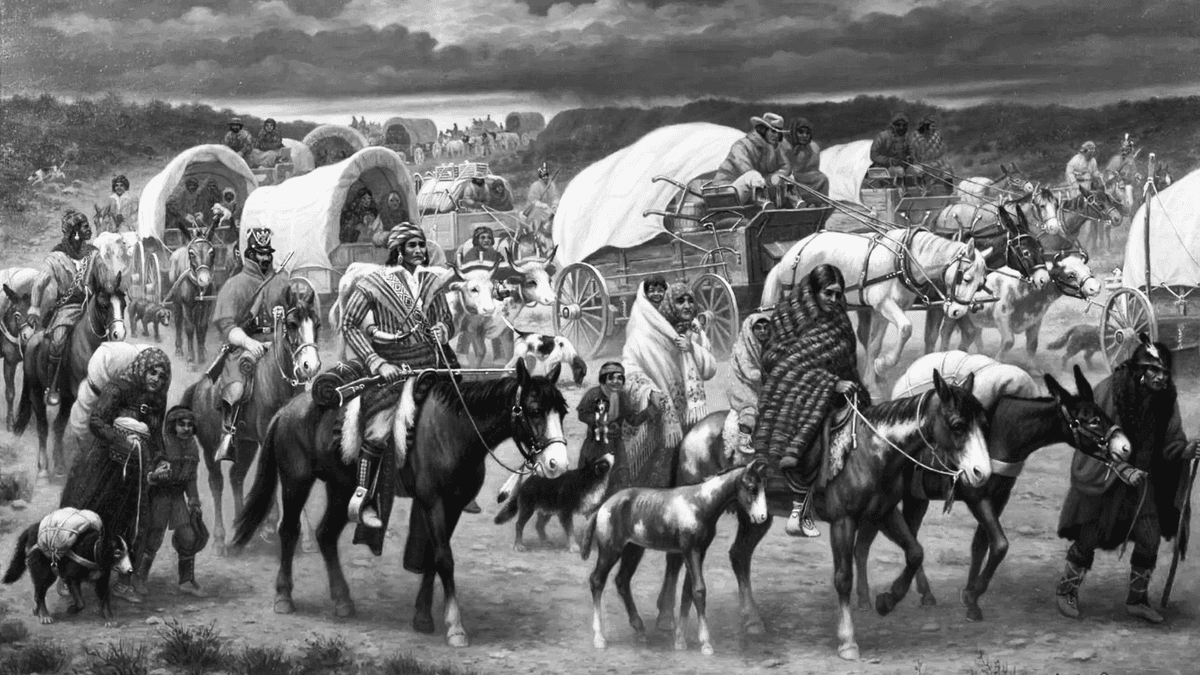
Indian Removal and the Trail of Tears
In the 1830s, the U.S. government forced thousands of Native Americans—including the Cherokee—off their ancestral lands, leading to a deadly westward march known as the Trail of Tears.
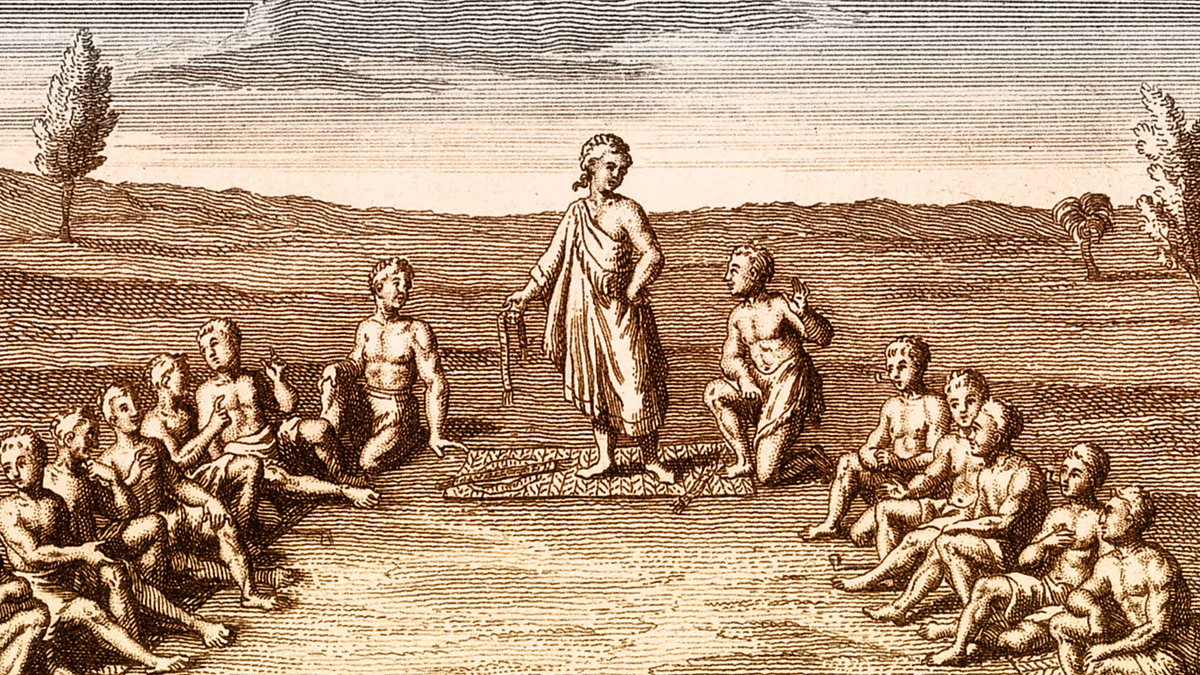
The Haudenosaunee Confederacy: Indigenous Roots of American Democracy
Long before the Founding Fathers gathered in Philadelphia, a league of Native Nations had already established one of the world’s oldest participatory democracies—an Indigenous blueprint for unity, peace, and governance.
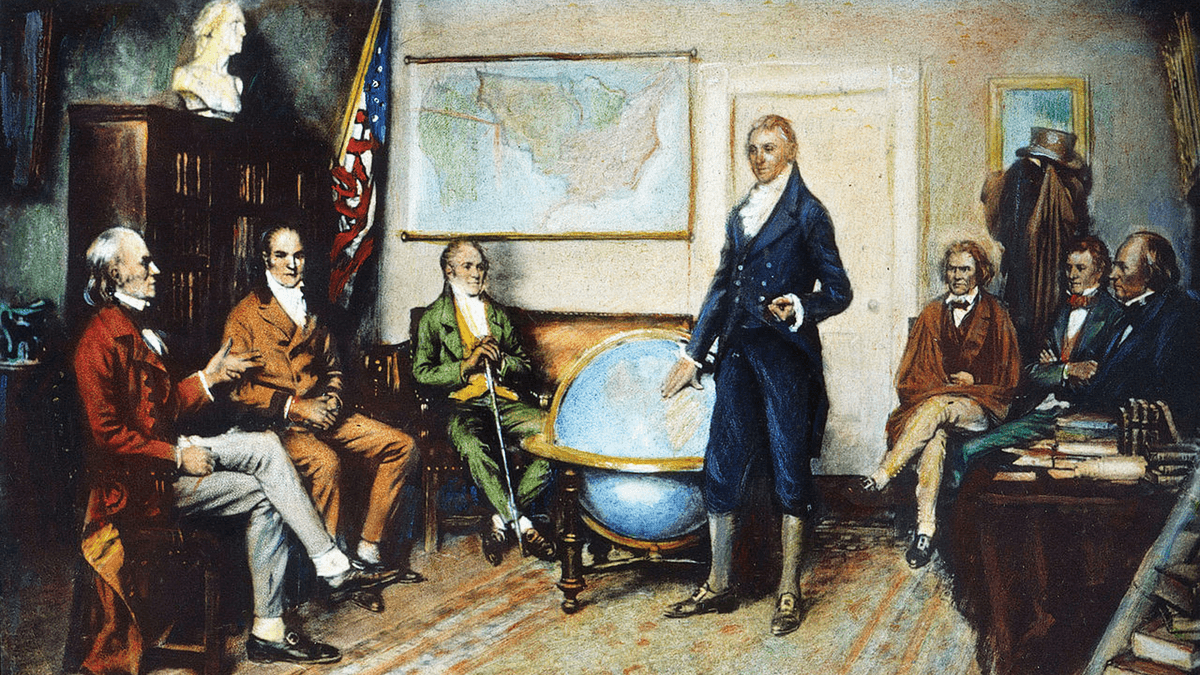
The Monroe Doctrine
How a young United States told the world to stay out of the Western Hemisphere—and what that meant for the Americas.
Further Reading
Stay curious!