

Pope Urban II Calls for the First Crusade
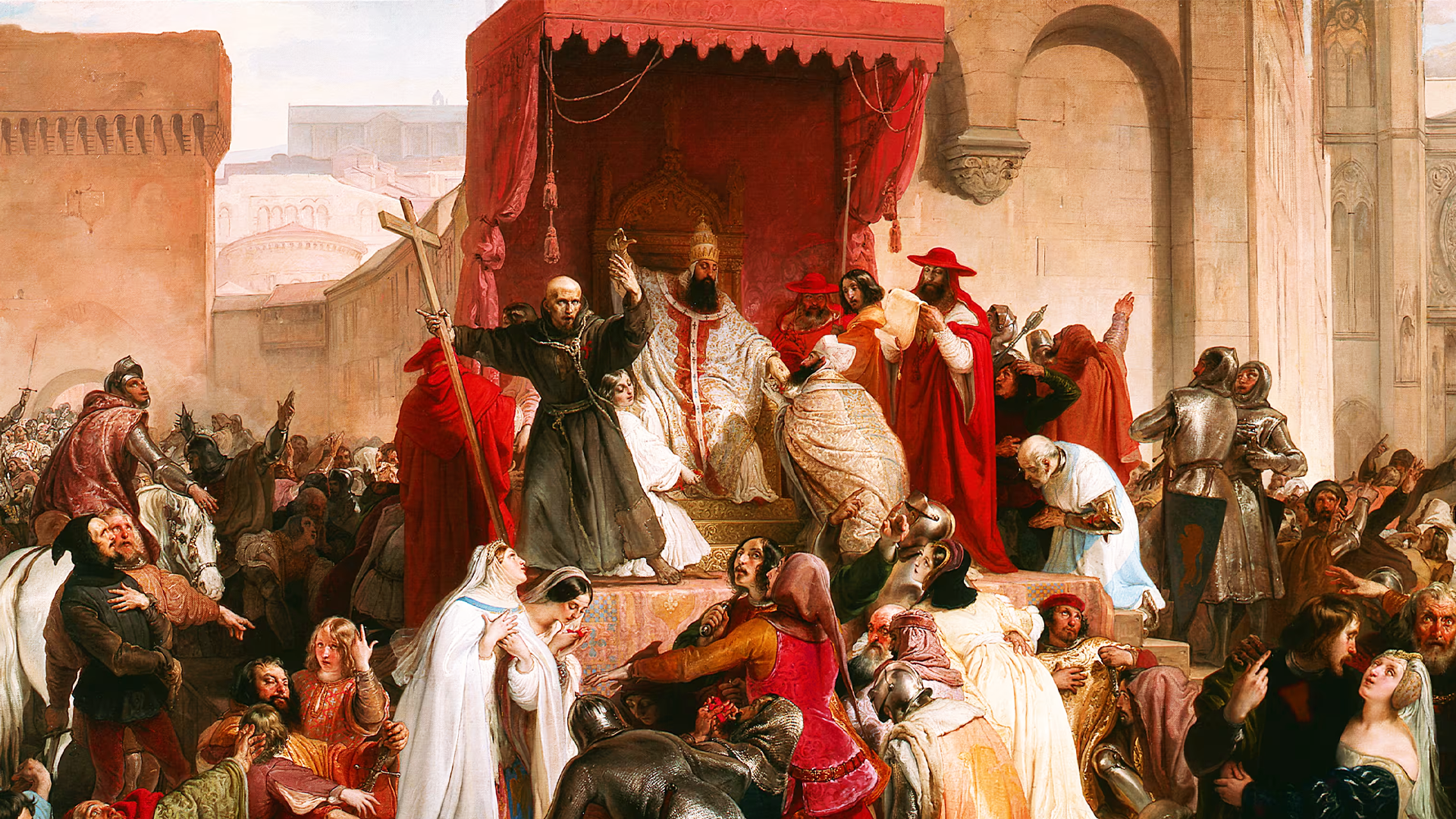
Pope Urban II called for Christians across Europe to launch the First Crusade to capture Jerusalem, a moment that reshaped relations between Christians, Muslims, and Jews for centuries.
What Happened?
In the late 1000s, the Christian Byzantine Empire in the East was in deep trouble. After a crushing defeat by the Seljuk Turks at the Battle of Manzikert in 1071, it lost much of its land in Asia Minor and feared that even the capital city of Constantinople could be taken. At the same time, control of Jerusalem and other holy places in the region had shifted, making pilgrimages harder and more dangerous for European Christians who wanted to visit the places where they believed Jesus had lived, died, and risen.
Facing military pressure and religious tension, the Byzantine emperor Alexius I Comnenus sent a plea for help to the pope in the West. This was a big deal, because the Christian church had been split for years between Roman Catholics in the West and Orthodox Christians in the East. Pope Urban II saw Alexius’s request not only as a chance to defend fellow Christians, but also as an opportunity to increase the power and unity of the Roman Church and to present himself as a leader who could rally all of Christian Europe to a common cause.
On November 27, 1095, at the Council of Clermont in central France, Pope Urban II gave a famous sermon to a crowd of clergy, nobles, and ordinary people. He described frightening stories of Christians in the East suffering under what he called an “accursed race”, his harsh language about Muslims was meant to stir fear and anger. Urban told his listeners to stop fighting each other in Europe and instead take up arms to reclaim the Holy Land. When he promised that those who fought and died on this campaign would receive forgiveness of their sins, the crowd reportedly shouted, “Deus vult! Deus vult!”—“God wills it!”
Urban’s message spread quickly as church leaders and traveling preachers carried it across Europe. People responded for many different reasons. Some truly believed they were helping fellow Christians and serving God. Others were drawn by adventure, the chance to travel to distant lands, or the hope of gaining land and wealth. Knights were told they could turn their skills in warfare toward a “holy” goal, while some poor peasants believed this might be their one chance to change their lives and their standing in society.
Not everyone who answered the call was trained or disciplined. Before the main armies of nobles and knights were even ready, large crowds of peasants and minor warriors joined what became known as the People’s Crusade. These groups marched east in disorganized bands, often attacking Jewish communities in Europe along the way. Many crusaders treated local Jewish families as enemies, stealing from them or killing them in violent pogroms. This early wave of hatred showed that the crusading idea could easily turn into an excuse for attacking anyone labeled as “other.”
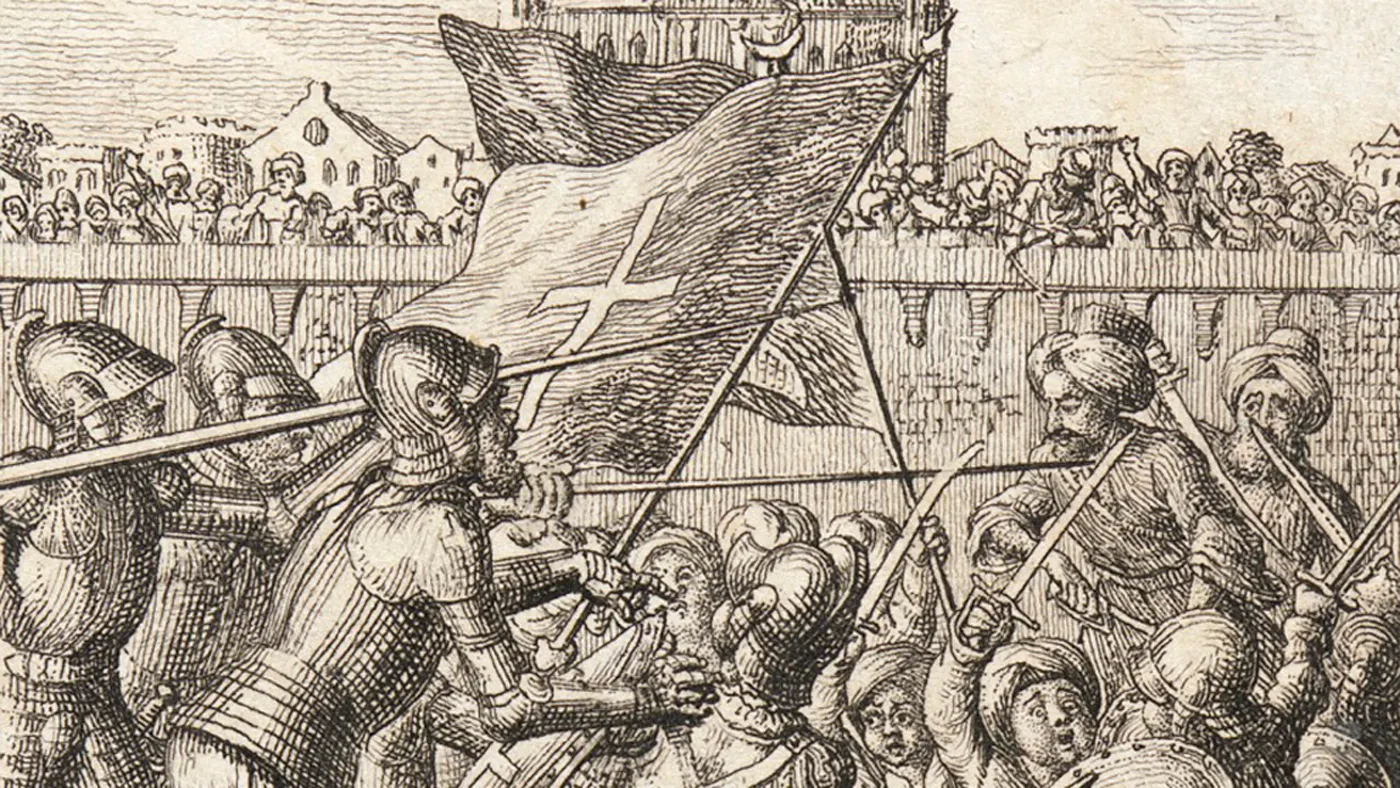
When the better-organized armies of the First Crusade finally reached the eastern Mediterranean, they fought their way through important cities like Nicaea and Antioch. In 1099, they captured Jerusalem after a brutal siege and massacred many of the city’s Muslim and Jewish inhabitants. For the crusaders, this felt like a victory blessed by God. For the people who lived there, and for many Muslims and Jews across the region, it was a shocking tragedy that strengthened feelings of anger, grief, and mistrust toward Western Christians.
The First Crusade led to the creation of several crusader states in the eastern Mediterranean, including the Kingdom of Jerusalem. European knights built castles, churches, and new governments, trying to hold onto land far from their original homes. At the same time, they relied heavily on local resources and often clashed with surrounding Muslim powers. The success of the First Crusade encouraged later popes to call for more campaigns, resulting in a long series of crusades that stretched over the next two centuries.
Even though some crusaders were genuinely motivated by faith and a desire to protect people they saw as their religious family, the crusades caused enormous suffering. They damaged relationships between Western and Eastern Christians, deepened hostility between Christians and Muslims, and led to repeated violence against Jewish communities. Today, historians see Pope Urban II’s call at Clermont as a turning point—a moment when religious passion, political power, and human ambition combined to create a powerful movement with consequences that would echo through history.
Why It Matters
Pope Urban II’s call for the First Crusade reminds us that big historical changes often begin with powerful words. One speech in 1095 helped launch wars that reshaped borders, deepened religious divides, and left a legacy of conflict that can still influence how groups see each other today. By studying the First Crusade, we learn to recognize how faith, fear, and promises of reward can be used to rally people, and why it is so important to question calls to “holy war,” listen to the voices of those who are harmed, and work toward justice and peace instead of violence in the name of religion.
?
Why did Pope Urban II see the Byzantine emperor’s request for help as an opportunity, not just a problem?
What different reasons might knights, nobles, and peasants have had for joining the First Crusade?
How did the crusaders’ actions affect Jewish, Muslim, and Christian communities along their route and in the Holy Land?
What can the First Crusade teach us about how religious language and symbols can be used to inspire people—or to justify harm?
Why do you think the cry “Deus vult!” was so powerful for people in the Middle Ages, and how should we think about that phrase today?
How might history have been different if Pope Urban II had chosen diplomacy and cooperation instead of calling for a holy war?
Dig Deeper
An overview of how Pope Urban II’s call for a holy war led to the First Crusade, exploring motives, battles, and consequences.
A fast-paced introduction to the Crusades that explains how religion, politics, and power all mixed together in these medieval wars.
Related
Montgomery Bus Boycott, Greensboro Sit-In, and the Rise of MLK
From Montgomery’s buses to Greensboro’s lunch counters, ordinary citizens ignited extraordinary change — and a new national leader emerged.
U.S. Imperialism: The Spanish-American War and Its Aftermath
In 1898, the United States fought Spain in a short war that reshaped its identity—from a republic born in anti-colonial revolution to a global imperial power with overseas territories.
Indigenous Nations Before European Contact
Long before Columbus, Indigenous nations flourished across North America. From hunters following mammoths to farmers building vast trade networks, Native peoples shaped the land—and the land shaped them.
Further Reading
Stay curious!