

U.N. Votes to Partition Palestine
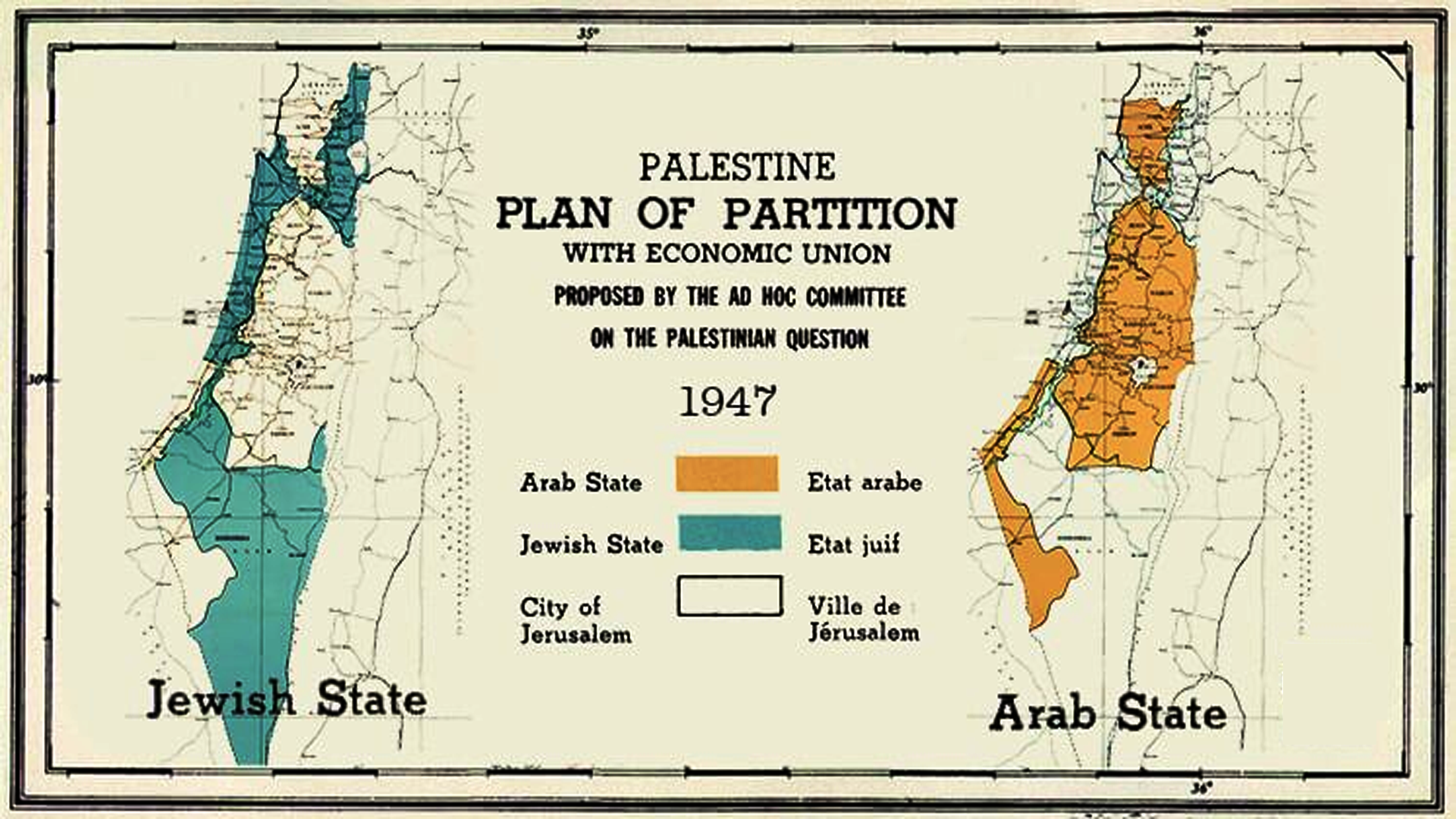
The U.N. partition vote of 1947 tried to solve a growing conflict in British-ruled Palestine by dividing the land between Jewish and Arab communities.
What Happened?
The U.N. partition of Palestine is a challenging topic that involves overlapping histories, deep trauma, and competing stories of justice. For centuries, Palestine had been part of the Ottoman Empire. After World War I it came under British control. In the early 1900s, more and more Jewish immigrants, many escaping persecution in Europe, moved there, inspired by Zionism, a movement that called for a Jewish homeland in the land their ancestors had lived in long ago. At the same time, the majority of people already living there were Palestinian Arabs, who saw Palestine as their home and wanted independence for themselves.
During the British Mandate (British rule) from the 1920s to the 1940s, tension kept growing. Jewish and Arab communities clashed over land, immigration, and political power. Both groups felt they had strong historical and emotional claims: Jewish people pointed to ancient ties to the land and the trauma of antisemitism and the Holocaust, while Palestinian Arabs pointed to generations of continuous living, farming, and building communities there. Britain tried different plans but could not find a peace that both sides would accept, and by 1947, violence and mistrust were spiraling.
Exhausted and unable to manage the crisis, Britain handed the problem to the newly formed United Nations. A special U.N. committee traveled to Palestine to study the situation. After months of investigation, the committee recommended ending British rule and dividing the territory into two states, one with a Jewish majority and one with an Arab majority. Jerusalem, a city holy to Jews, Christians, and Muslims, would not belong to either state; instead, it would be run by the international community to try to keep it open to all.
The partition plan, written into U.N. General Assembly Resolution 181, gave roughly 55% of the land to the proposed Jewish state and about 42% to the proposed Arab state, even though Jewish people were about one-third of the population at the time and owned only a small share of the land. Supporters argued that a Jewish state was urgently needed after the horrors of the Holocaust and that partition was the best compromise available. Critics, especially Palestinian leaders, argued that it was unfair to give a larger share of the land to a group that was still a minority and that most Palestinians had never agreed to this division.
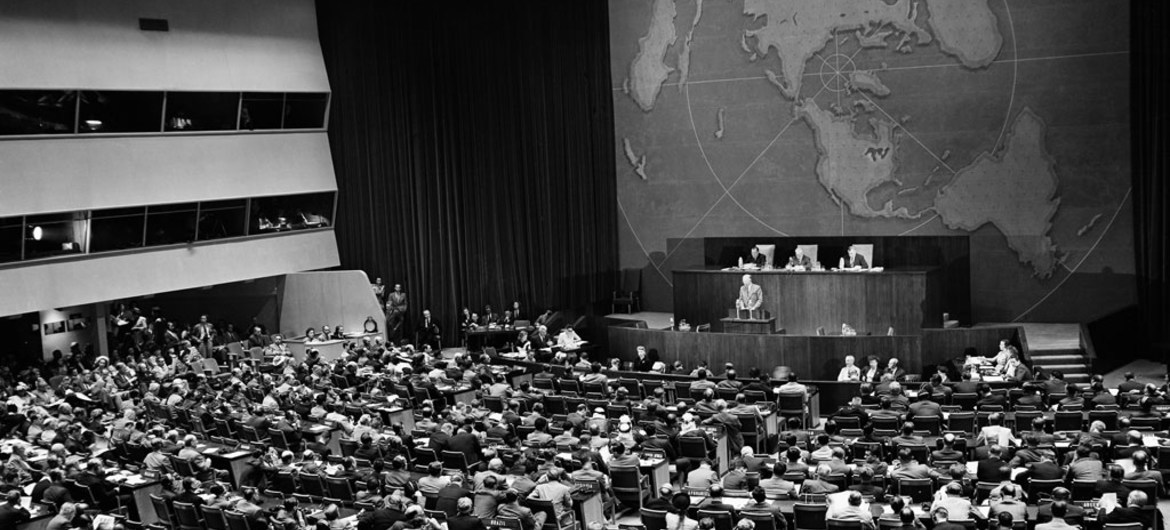
On November 29, 1947, U.N. member states gathered to vote. The plan received enough support to pass, with some countries backing it out of sympathy for Jewish survivors of World War II, others out of Cold War politics, and some in the hope of ending bloodshed. Jewish leaders accepted the plan, seeing it as a historic step toward statehood—even if it didn't match all their hopes. Most Arab leaders and the Palestinian Arab population rejected it, arguing that it violated their right to self-determination in their own homeland.
Violence, which had already been simmering, intensified almost immediately after the vote. Fighting broke out between Jewish and Arab communities in towns, villages, and along roads. Armed Zionist militias and Arab fighters carried out attacks, and ordinary civilians were often caught in the middle. Some Palestinians fled because of fear, some were forced out in direct expulsions, and whole communities were uprooted. By the spring of 1948, hundreds of thousands of Palestinians had already become refugees even before neighboring Arab armies entered the war.
In May 1948, when Britain ended its Mandate and withdrew, Jewish leaders declared the establishment of the State of Israel. Armies from Egypt, Jordan, Syria, Lebanon, and Iraq entered the former Mandate territory, and a full-scale war followed. By the time armistice lines were drawn in 1949, Israel controlled about 78% of historic Palestine—more than the U.N. plan had originally allocated. The remaining territories, the West Bank (including East Jerusalem) and Gaza, fell under Jordanian and Egyptian control, and around 750,000 Palestinians were living as refugees in neighboring countries or other parts of the region.
The U.N. passed additional resolutions calling for refugees to have the right to return or be compensated and for borders and security to be worked out through negotiation. But decades later, many of those questions remain unresolved. Palestinians still seek an independent state, and Israelis still seek security and recognition, while settlement building, military occupation, and repeated wars have deepened the pain on all sides. The date of the original partition vote, November 29, is now also observed by the U.N. as the International Day of Solidarity with the Palestinian People, a reminder that the decisions made in 1947 continue to echo into the present.
Why It Matters
The U.N. partition of Palestine shows how decisions made by global institutions can change the lives of millions of people and often times in ways that leaders can't fully predict or control. It reminds us that ideas like self-determination, majority rule, and historical rights are complicated when more than one community feels entitled to the same land. By studying this moment, we learn to look critically at maps, borders, and political promises, and we see how ignoring the voices and rights of any group can plant the seeds of long-term conflict. Understanding the history of Palestine and Israel is part of understanding how power, justice, and empathy must all be part of any effort to build a more peaceful and fair world.
?
What does it mean to “partition” a land, and why did the U.N. think partition was a solution in 1947?
How might the partition plan have looked different from the point of view of a Jewish family and a Palestinian family living in the same region?
Why did some countries support the partition plan while others opposed it or abstained from the vote?
How did the 1947 partition decision contribute to the creation of both the State of Israel and a large Palestinian refugee population?
What is the difference between a U.N. resolution and a permanent peace agreement, and why does that difference matter in this story?
How can learning about the partition of Palestine help us think more carefully about fairness, borders, and human rights in other parts of the world?
Dig Deeper
A short animated overview from the United Nations that explains the history of the question of Palestine, including the 1947 partition plan and its long-term consequences.
A historical UN documentary exploring the experiences of Palestinians and the role of the United Nations in addressing their rights and status.
Related

What Is Buoyancy?
Why do ships float, submarines dive, and balloons rise? It all comes down to buoyancy—the force that pushes up.
McCarthyism: Fear, Power, and the Red Scare
In the 1950s, fear of communism gripped America. Senator Joseph McCarthy fueled this fear by accusing hundreds of people of being communist traitors—often without proof. The result was a national panic that tested the meaning of truth, justice, and freedom.
The Declaration of Independence: Ideas, Action, and Aftermath
When the colonies declared independence, they didn’t just start a war—they launched an idea that would echo across centuries. But did America live up to it?
Further Reading
Stay curious!