

The Birth of Quantum Theory
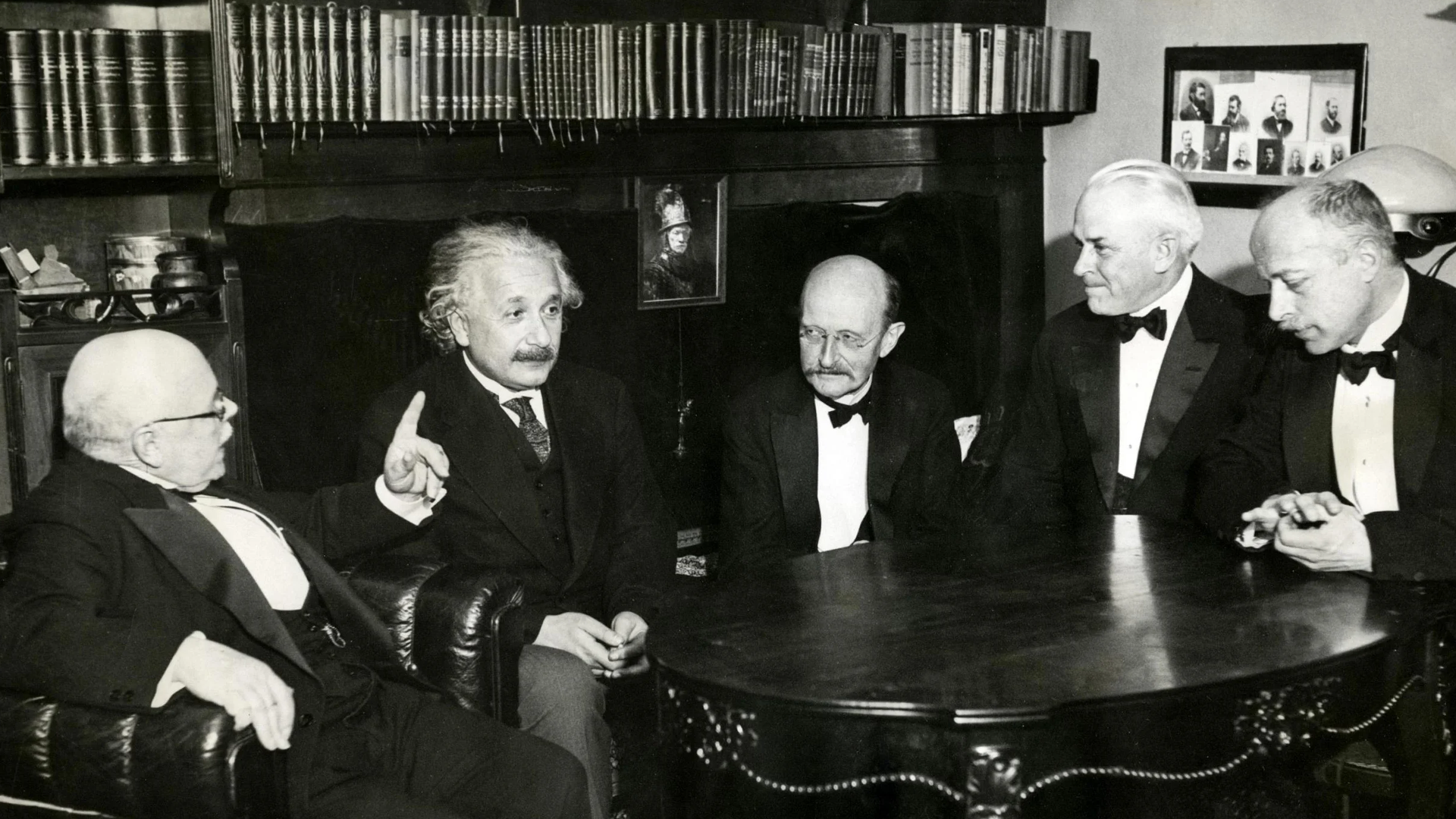
Max Planck’s discovery changed physics by showing that energy comes in small packets called quanta.
What Happened?
At the end of the 19th century, scientists believed they mostly understood how the universe worked. Classical physics, based on the ideas of Isaac Newton, described nature as smooth, predictable, and continuous. But when physicists studied how hot objects glow and release energy, the math stopped making sense, and experiments refused to match existing theories.
Max Planck, a German physicist, was studying how heated objects emit radiation, a problem known as blackbody radiation. Experiments showed that energy did not flow out smoothly, as classical physics predicted. Instead, something strange was happening at very small scales that scientists could not explain.
In December 1900, Planck proposed a radical solution. He suggested that energy is released in tiny packets rather than in a continuous stream. He called these packets quanta, from a word meaning small amounts. This idea broke with centuries of scientific thinking and challenged the belief that nature always changes smoothly.
Planck did not initially believe that his idea described how the universe truly worked. He saw it as a mathematical trick that made the equations fit the data. But his theory successfully explained the behavior of heat and light in ways no earlier theory could, and other scientists soon began to explore its deeper meaning.
Physicists like Albert Einstein, Niels Bohr, and Erwin Schrödinger expanded Planck’s idea and developed quantum mechanics. This new branch of physics showed that energy can behave like both a particle and a wave, and that the universe at very small scales follows rules based on probability rather than certainty.
Quantum theory transformed science by explaining how atoms work and how light interacts with matter. It eventually made possible technologies such as lasers, computers, medical imaging, and modern electronics. What began as a puzzling problem about heat became one of the most important scientific revolutions in history.
Planck received the Nobel Prize in Physics in 1918 for his discovery. Although quantum theory felt strange even to its creators, it reshaped our understanding of reality and revealed that the universe is far more complex and surprising than anyone had imagined.
Why It Matters
The birth of quantum theory changed how humans understand the universe at its smallest levels. It showed that nature isn't always predictable and smooth, and it opened the door to scientific discoveries and technologies that shape everyday life today.
?
Why was Planck’s idea about energy so surprising to scientists at the time?
How is quantum physics different from the physics we experience in everyday life?
Why do you think Planck struggled to accept his own discovery at first?
What modern technologies depend on ideas from quantum theory?
Why is it important for science to change when evidence no longer fits old ideas?
Dig Deeper
An accessible explanation of how Max Planck’s discovery led to the development of quantum mechanics and changed modern physics.
Related

Scientific Observation: Where All Good Questions Begin
Before the hypothesis, before the experiment, there’s one essential step: observing the world around you. Scientific observation is where wonder becomes investigation.

Harnessing the Power of Offshore Wind
Offshore wind energy is one of the fastest-growing renewable energy sources, capable of delivering massive amounts of clean electricity right where people live: along coastlines.
Why NASA Matters: From the Moon to Your Morning Commute
NASA does more than explore space—it builds technology that helps farmers grow food, doctors save lives, and scientists protect the planet.
Further Reading
Stay curious!