

Galileo Discovers the Moons of Jupiter
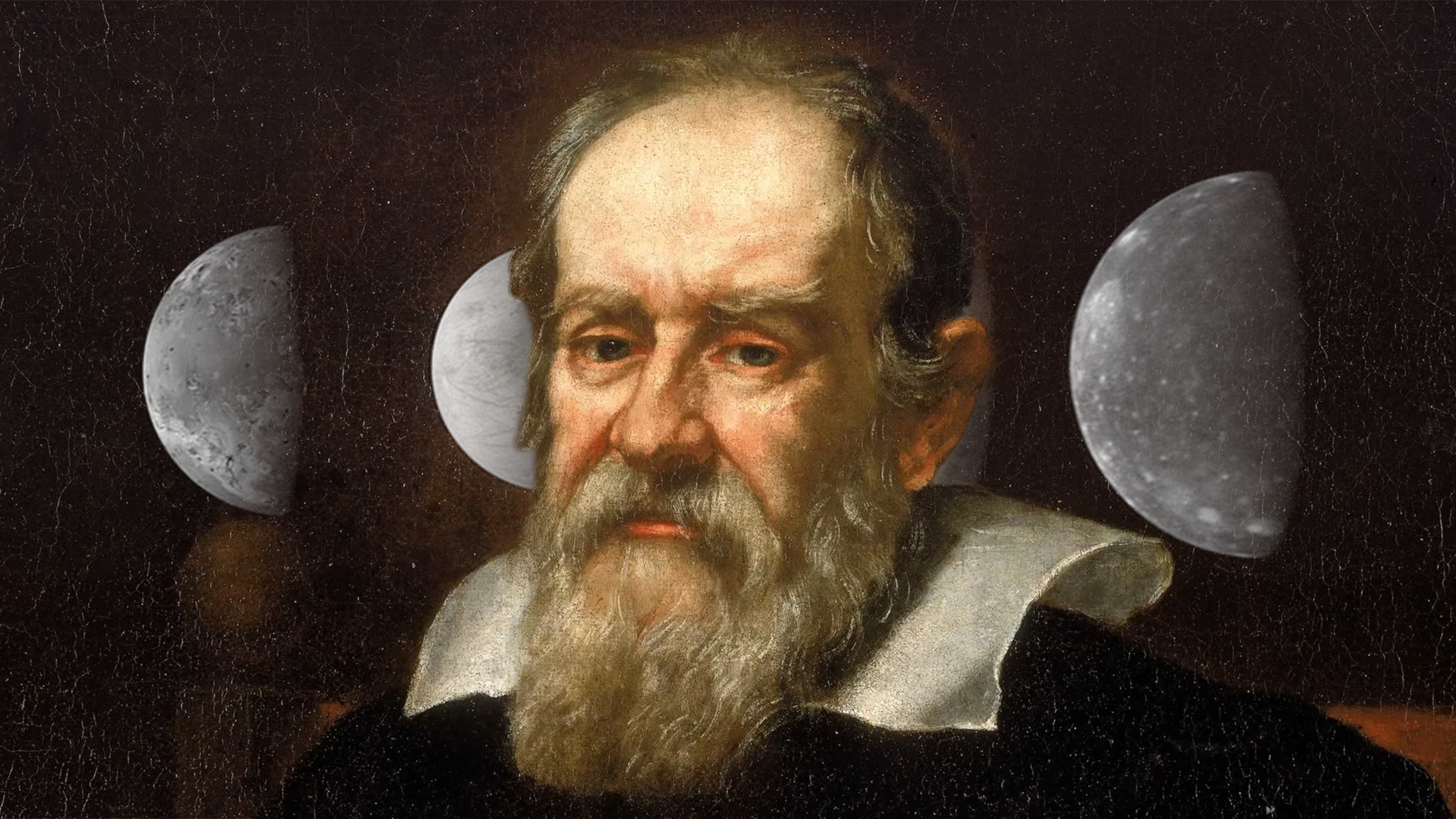
Galileo’s discovery of Jupiter’s moons provided powerful evidence that Earth was not the center of the universe and helped launch modern astronomy.
What Happened?
On the night of January 7, 1610, Italian astronomer Galileo Galilei aimed his homemade telescope at the planet Jupiter. What he saw surprised him: three tiny points of light close to the planet that looked like stars but did not behave like any stars he had seen before.
Over the next several nights, Galileo carefully watched these points of light. He noticed that they stayed near Jupiter and changed position in a regular pattern. A few days later, a fourth point of light appeared, moving in the same strange way.
By January 15, Galileo realized he was not seeing stars at all. He had discovered four moons orbiting Jupiter. This was shocking because it showed that not everything in the heavens revolved around Earth, as many people had believed for centuries.
This discovery strongly supported the Copernican idea that Earth was just one planet among many orbiting the Sun. If moons could orbit Jupiter, then Earth did not have to be the center of the universe.
Galileo published his findings in 1610 in a book called *Sidereus Nuncius* (The Starry Messenger). The moons later became known as the Galilean moons and were named Io, Europa, Ganymede, and Callisto.
Centuries later, scientists learned even more about these moons. Space missions revealed volcanoes on Io, oceans beneath the icy crust of Europa, and clues that some of Jupiter’s moons might even hold the ingredients for life.
Why It Matters
Galileo’s discovery changed how humans understand the universe. It showed that careful observation and evidence matter more than tradition or authority, helping launch modern science and reminding us that new knowledge can completely reshape how we see our place in the cosmos.
?
Why did Galileo first think Jupiter’s moons were stars?
How did the motion of the moons prove they were orbiting Jupiter?
Why was this discovery a problem for Earth-centered views of the universe?
How did Galileo’s telescope help change scientific thinking?
Why are scientists still interested in Jupiter’s moons today?
Dig Deeper
An engaging overview of Jupiter’s largest moons and why they are so important to science.
A short biography explaining Galileo’s life and his impact on science.
Related

Building a New Nation: Foundations of State and National Government
From the shaky Articles of Confederation to the Constitution and Bill of Rights, discover how America’s founders navigated the turbulent waters of self-government—and why North Carolina took its time joining the party.
The French and Indian War: The Battle for North America
Before the American Revolution, another great war reshaped North America—the French and Indian War. It began as a fight over land and power, but ended up changing the map of the world and planting the seeds of independence.
The Regulator Movement: Backcountry Rebellion Before the Revolution
Long before the American Revolution, farmers in North Carolina were already fighting corruption and demanding justice.
Further Reading
Stay curious!