

Lines in the Sand: Congress Declares War on Mexico
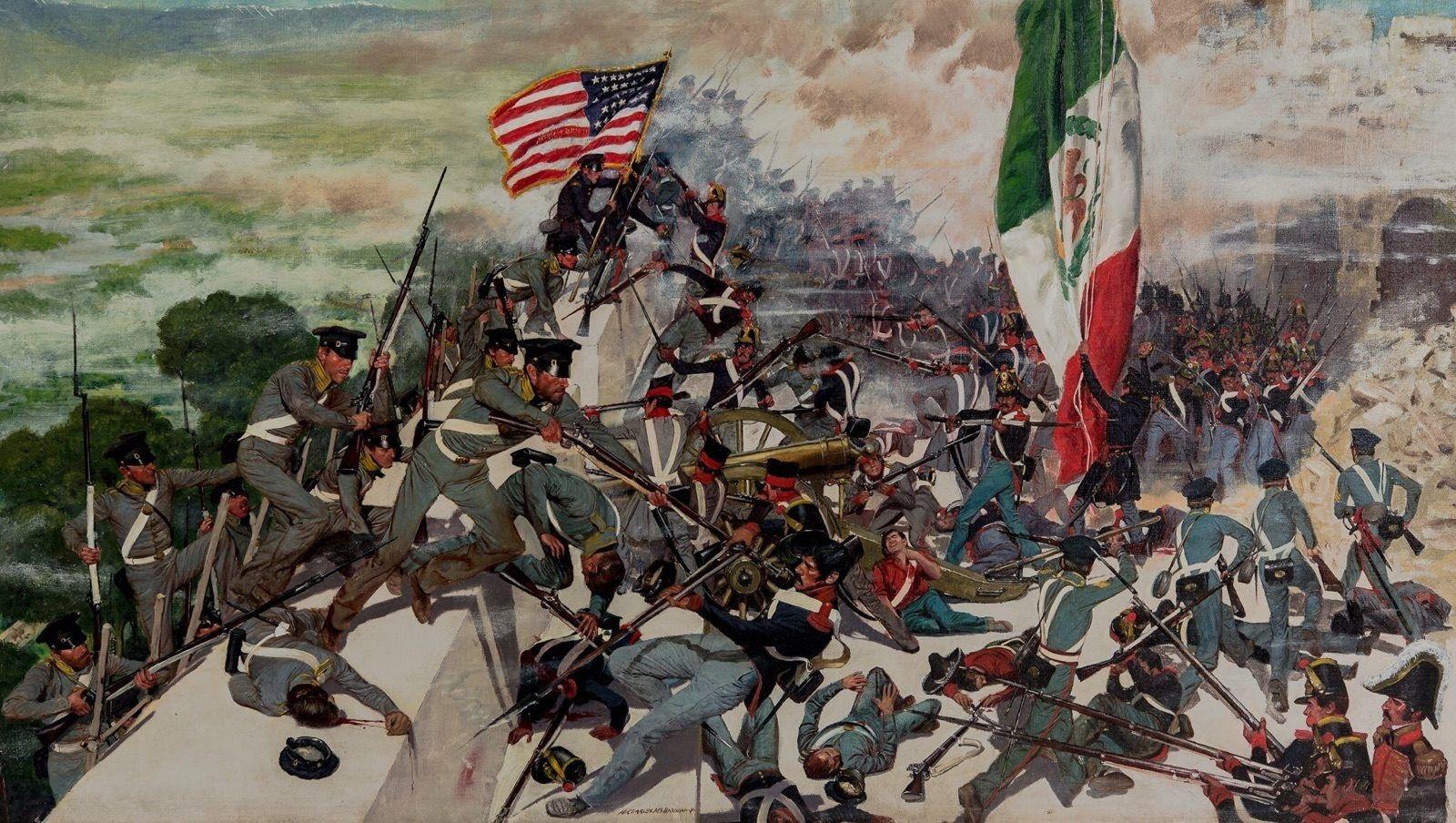
19th-century painting of Congress during the vote to declare war on Mexico, with James K. Polk at center
What Happened?
By the 1840s, the United States was rapidly expanding westward. Many Americans believed in the idea of 'Manifest Destiny'—the belief that the nation was meant to stretch across the North American continent from the Atlantic Ocean to the Pacific. But expansion came with conflict, especially after the United States annexed Texas in 1845. Mexico still considered Texas part of its territory and rejected the new border claims made by the United States.
President James K. Polk strongly supported expansion and wanted to acquire additional territory, including California and New Mexico. Tensions escalated when Polk ordered American troops into disputed land between the Nueces River and the Rio Grande. Mexico viewed the movement of U.S. soldiers into the region as an invasion, while the United States claimed the land belonged to Texas.
After fighting broke out between Mexican and American troops in the disputed territory, Polk asked Congress to declare war, famously stating that 'American blood has been shed on American soil.' On May 13, 1846, Congress overwhelmingly approved the declaration. While many Americans supported the war, others strongly opposed it. Critics argued that the conflict had been deliberately provoked in order to seize land from Mexico.
The war lasted two years and was fought across a vast region that included modern-day Texas, California, New Mexico, and central Mexico itself. American forces eventually captured Mexico City in 1847. The conflict became one of the first major U.S. wars fought largely on foreign soil and revealed the growing military and economic power of the United States.
In 1848, the war officially ended with the Treaty of Guadalupe Hidalgo. Mexico was forced to give up nearly half of its territory, including land that would later become California, Nevada, Utah, Arizona, New Mexico, and parts of Colorado and Wyoming. In exchange, the United States paid Mexico $15 million and agreed to assume certain debts owed to American citizens.
The Mexican-American War dramatically reshaped the map of North America, but it also intensified conflicts within the United States. Many Americans immediately began arguing over whether slavery would expand into the newly acquired territories. These debates deepened tensions between North and South and pushed the nation closer to the Civil War.
Why It Matters
The U.S.–Mexico War set the stage for the modern border—and the long, tangled legacy of how it came to be. The war didn’t just build the American West; it laid the foundations for racial conflict, imperial expansion, and internal division. It taught us that land can be won with force—but justice, not so easily.
?
What were the major territorial gains for the U.S. from the Mexican-American War?
How did the war influence the debate over slavery in America?
Who were some of the key figures who opposed the war and why?
How does the Treaty of Guadalupe Hidalgo still affect U.S.–Mexico relations today?
What role did Manifest Destiny play in justifying the war?
Dig Deeper
America was ready to expand westward, even if it meant going to war. Learn how and why the Mexican-American War happened.
The Mexican-American War - Explained in 16 minutes
Related
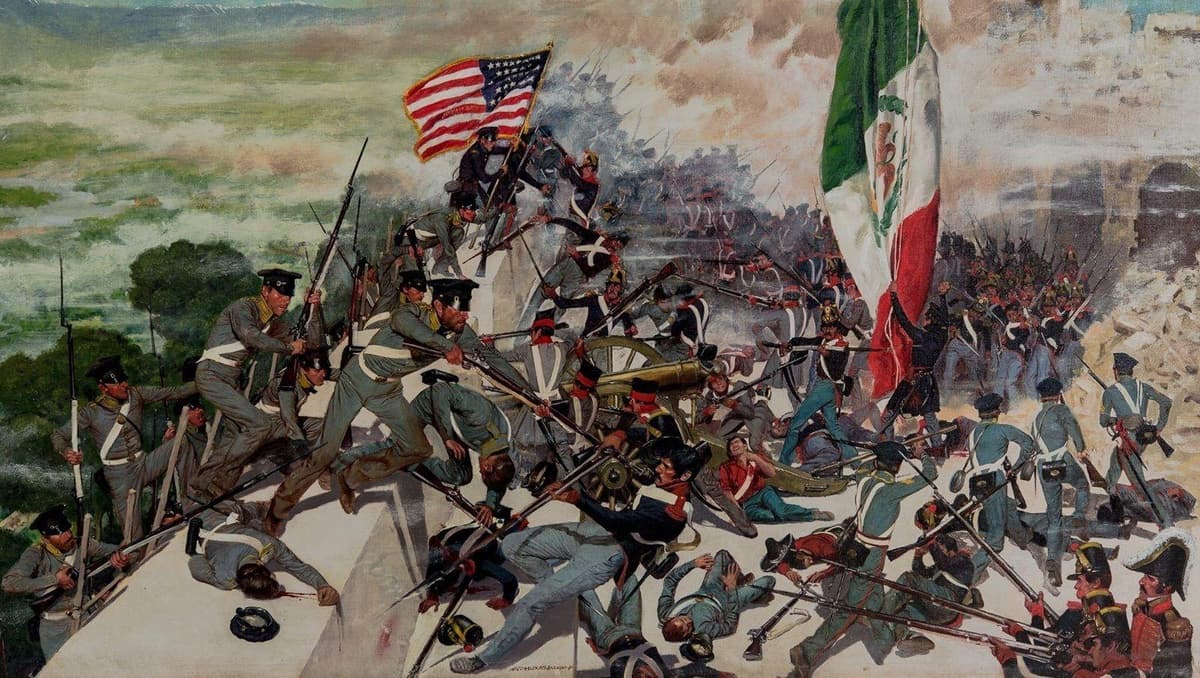
The U.S.-Mexico War
On May 13, 1846, the U.S. Congress declared war on Mexico. Behind the scenes? Land lust, slave politics, and a president with a map in one hand and a match in the other.
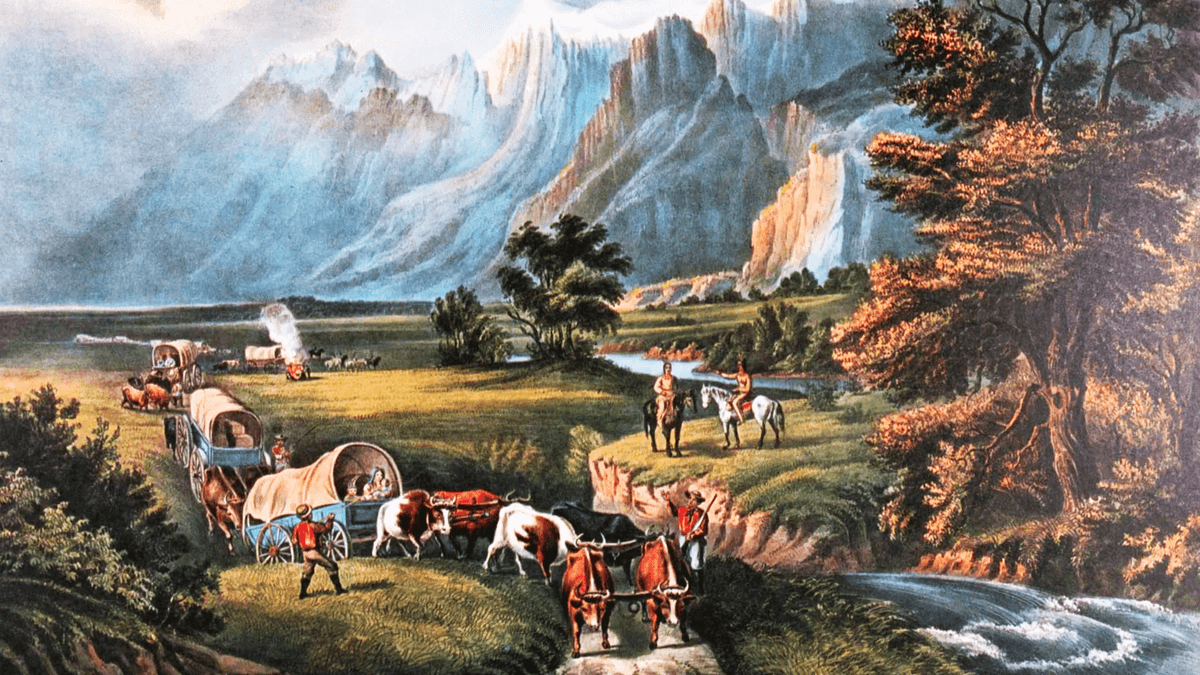
Westward Expansion, Sectionalism, and the Road to Civil War
Manifest Destiny fueled territorial growth, but it also deepened sectional divides—turning political disagreements over slavery and states’ rights into irreconcilable conflicts that led to civil war.
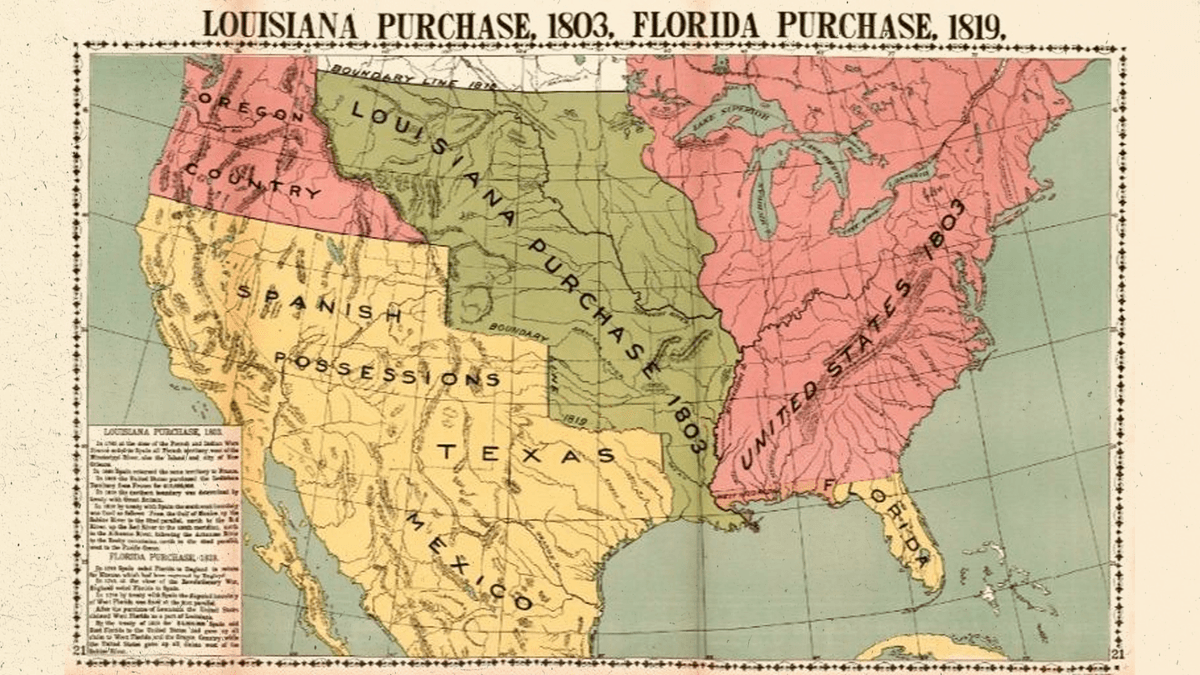
The Louisiana Purchase: A River, A Bargain, and a Bigger United States
In 1803 the United States bought the vast Louisiana Territory from France, doubling the nation’s size, securing the Mississippi River, and setting the stage for westward expansion and hard questions about slavery and Native sovereignty.
Further Reading

Stay curious!