

President Wilson Learns of the Zimmermann Telegram
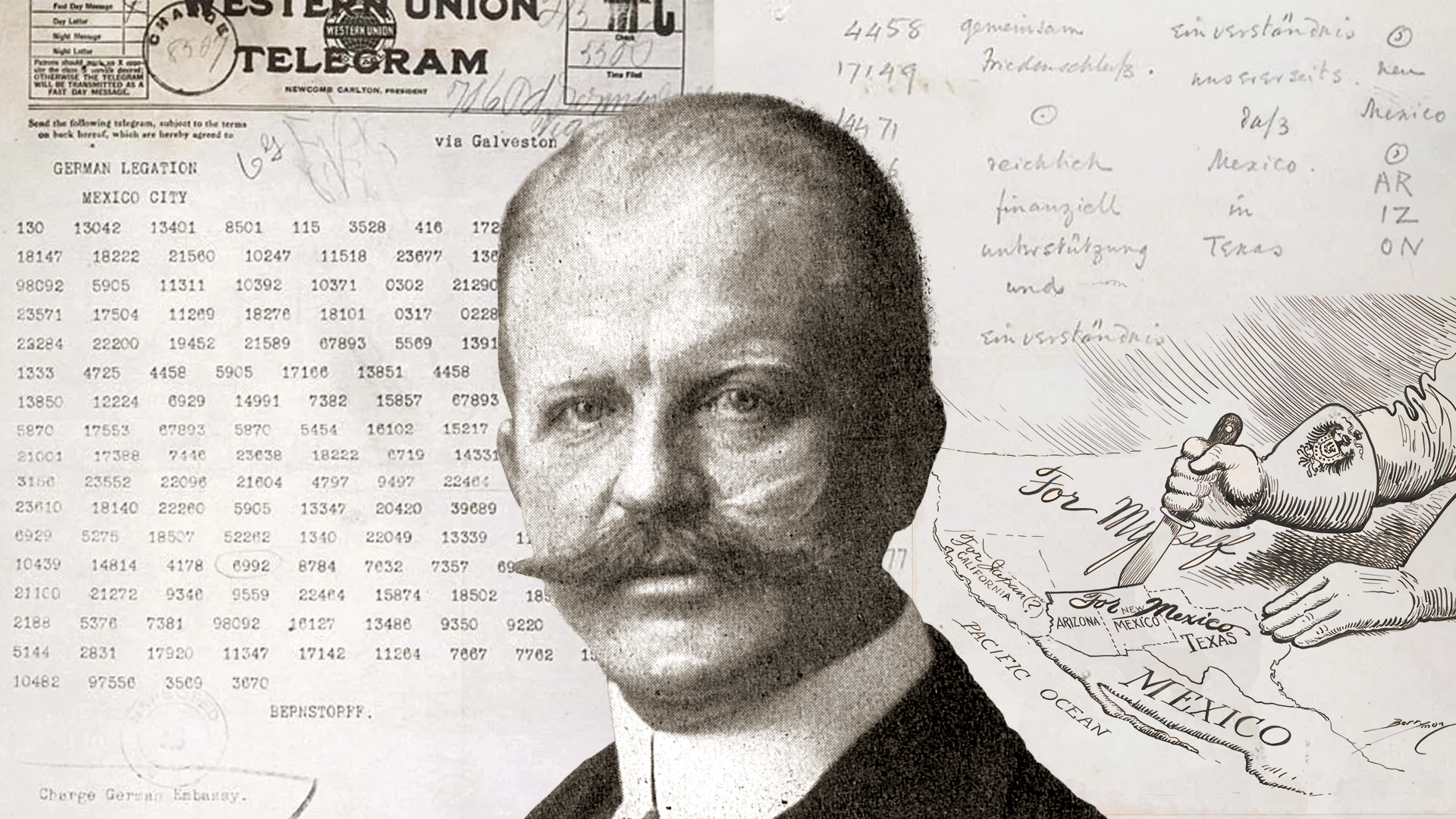
A coded copy of the Zimmermann Telegram sent by Germany in 1917.
What Happened?
For nearly three years, the United States had tried to remain neutral during World War I. President Woodrow Wilson had even won reelection in 1916 with the the slogan 'He Kept Us Out of War.' But by early 1917, tensions were rising. German submarines were attacking ships in the Atlantic Ocean, including vessels connected to the United States, and patience was wearing thin. Behind the scenes, events were unfolding that would soon pull America into the global conflict.
In January 1917, German Foreign Secretary Arthur Zimmermann sent a secret coded telegram to the German ambassador in Mexico. The message proposed that if the United States entered the war against Germany, Mexico should form an alliance with Germany. In exchange, Germany promised money and support for Mexico to regain Texas, New Mexico, and Arizona—territories it had lost to the United States in the 1840s.
The message was transmitted through diplomatic channels, including cables that the neutral United States allowed Germany to use. However, British intelligence had been secretly intercepting and decoding German communications. British codebreakers working in a unit called 'Room 40' were able to read the message and quickly understood how serious it was. On February 24, 1917, after carefully deciding how to reveal the information without exposing their codebreaking methods, British officials shared the decoded telegram with the American ambassador in London, who quickly sent it to Washington.
When President Wilson learned about the telegram, he was reportedly stunned. Soon after, the message was published in American newspapers on March 1. Many Americans were outraged. Some at first believed it might be a fake, but Arthur Zimmermann himself publicly confirmed that the telegram was real, removing any doubt.
Although Mexico ultimately rejected Germany’s proposal, the damage had already been done. The idea that a foreign nation was encouraging conflict along America’s southern border alarmed the public. Combined with Germany’s renewed policy of unrestricted submarine warfare, which allowed German submarines to attack ships without warning, the telegram shifted public opinion sharply against Germany.
On April 2, 1917, President Wilson asked Congress to declare war on Germany, arguing that the nation’s actions threatened American security and global peace. Four days later, Congress agreed. While several factors led to America’s entry into World War I, the Zimmermann Telegram became one of the most powerful turning points, showing how secret diplomacy and intelligence can change the course of history.
Why It Matters
The Zimmermann Telegram shows how information can shift public opinion and influence national decisions. A single secret message helped move the United States from neutrality to active participation in World War I. It also reminds us that international conflicts often involve hidden negotiations and strategic planning behind the scenes. Understanding this event helps us see how governments balance security, diplomacy, and public trust—and how quickly global events can change a nation’s path.
Dig Deeper
An explanation of how a secret German message to Mexico helped push the United States into World War I.
Related
Why the United States Entered World War I
In 1917, after years of neutrality, the United States entered World War I—reshaping global politics and transforming life at home.

World War I: Causes, Combat, and Consequences
World War I began as a regional crisis in Europe but became a global conflict that reshaped nations, warfare, and the modern world.
Conservative Resurgence and Economic Shifts (1970s–1980s)
The 1970s and 1980s marked a major political shift in the United States as conservatism gained new power, Ronald Reagan reshaped government policy, and debates over economics, religion, and the role of government transformed American life.
Further Reading


Stay curious!