

Ukraine Declares Independence
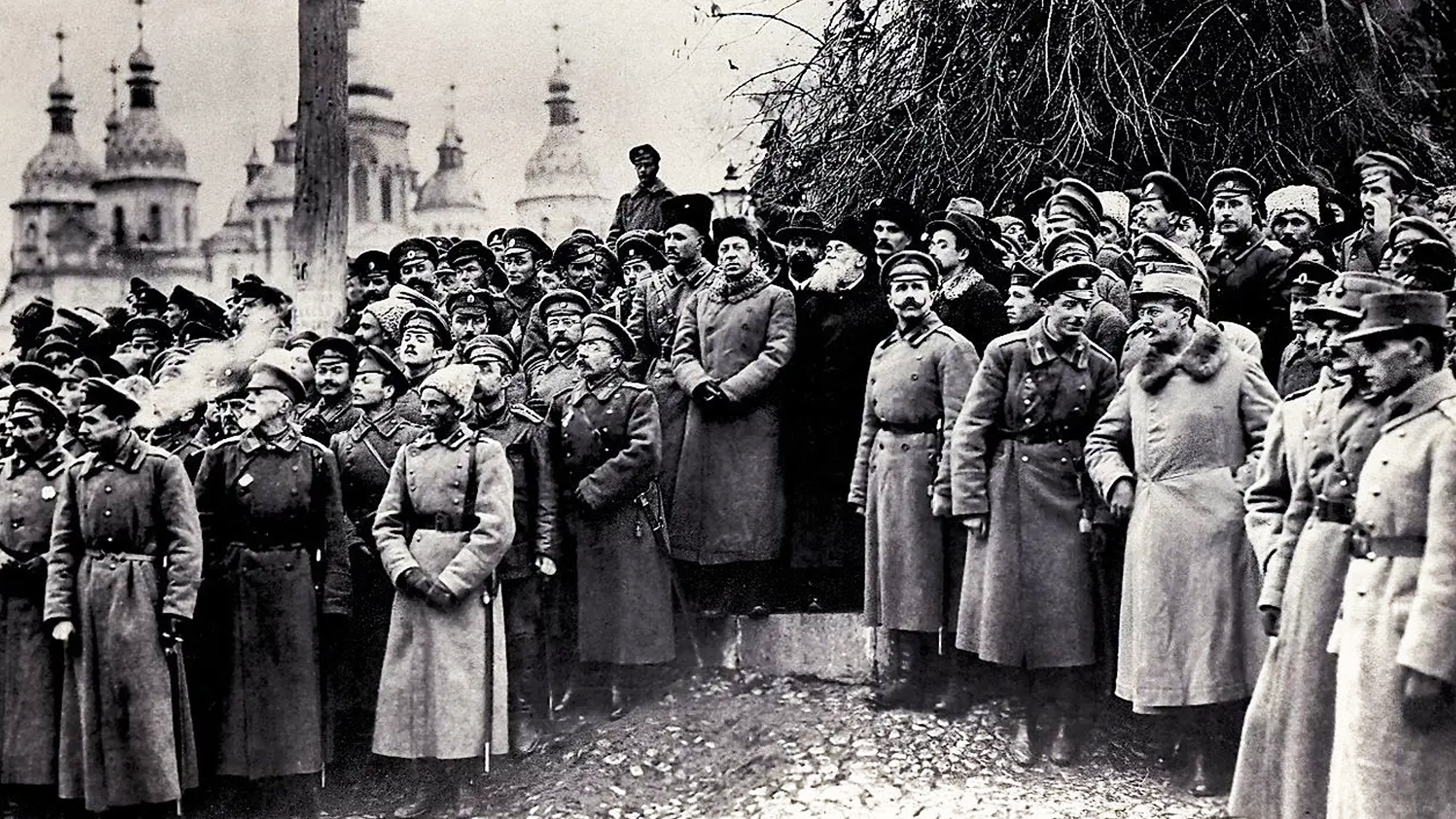
Ukraine’s declaration of independence in 1918 was a bold attempt to build a self-governing nation during the chaos following the Russian Revolution and World War I.
What Happened?
On January 22, 1918, leaders in Ukraine made a powerful declaration: Ukraine would be an independent country. This decision came during a time of enormous upheaval, as the Russian Empire had collapsed and the Bolsheviks had seized power in Russia. Many nations on Russia’s borders saw a rare opportunity to decide their own futures.
Ukraine was not a new land or culture. For centuries, it had been a crossroads of empires, languages, and traditions. Its fertile farmland made it one of Europe’s major food suppliers, and its people had long maintained a strong sense of identity despite being ruled by larger powers like Russia and Austria-Hungary.
After the Russian tsar was overthrown in early 1917, Ukrainian leaders formed a governing council called the Central Rada. At first, they hoped for autonomy within a democratic Russia, but when the Bolsheviks took control, Ukraine chose full independence to protect its people and institutions.
Independence, however, was fragile. Ukraine faced pressure from all sides—Bolshevik forces, foreign armies, and internal divisions. Germany and Austria-Hungary temporarily occupied the region during World War I, claiming to support Ukrainian independence while actually controlling its resources.
When World War I ended, Ukraine briefly united eastern and western regions into one state. But continued wars with Russia and Poland made stability impossible. By 1922, Ukraine was absorbed into the Soviet Union, losing its independence once again.
Even under Soviet rule, the idea of Ukrainian independence did not disappear. Decades of hardship—including famine, repression, and war—strengthened the desire for self-rule rather than erased it.
Ukraine finally regained independence in 1991 after the collapse of the Soviet Union. The declaration made in 1918 remains a symbol of resilience, reminding the world that freedom is often claimed more than once—and must be continually defended.
Why It Matters
Ukraine’s 1918 declaration of independence shows how deeply people value self-government and cultural identity. It helps explain why modern Ukrainians see sovereignty as non-negotiable and why conflicts over borders, power, and freedom still matter today. History shows that independence is not just declared—it must be protected.
Dig Deeper
A clear overview of how Ukraine’s modern nationhood developed after the fall of the Soviet Union.
An explanation of the 2022 Russian invasion and why Ukraine’s independence remains under threat.
Related

Civics vs. Ethics
Civics explains the rules of society. Ethics asks whether those rules are right.

Deinstitutionalization
Deinstitutionalization was a movement that closed psychiatric hospitals in favor of community care. But without enough resources, it led to homelessness, incarceration, and untreated illness.
The Civil Rights Movement: Struggle, Solidarity, and Social Change
From classrooms to courthouses, buses to bridges, the Civil Rights Movement reshaped America’s laws — and its conscience.
Further Reading
Stay curious!