

1940: Woody Guthrie Writes “This Land Is Your Land”
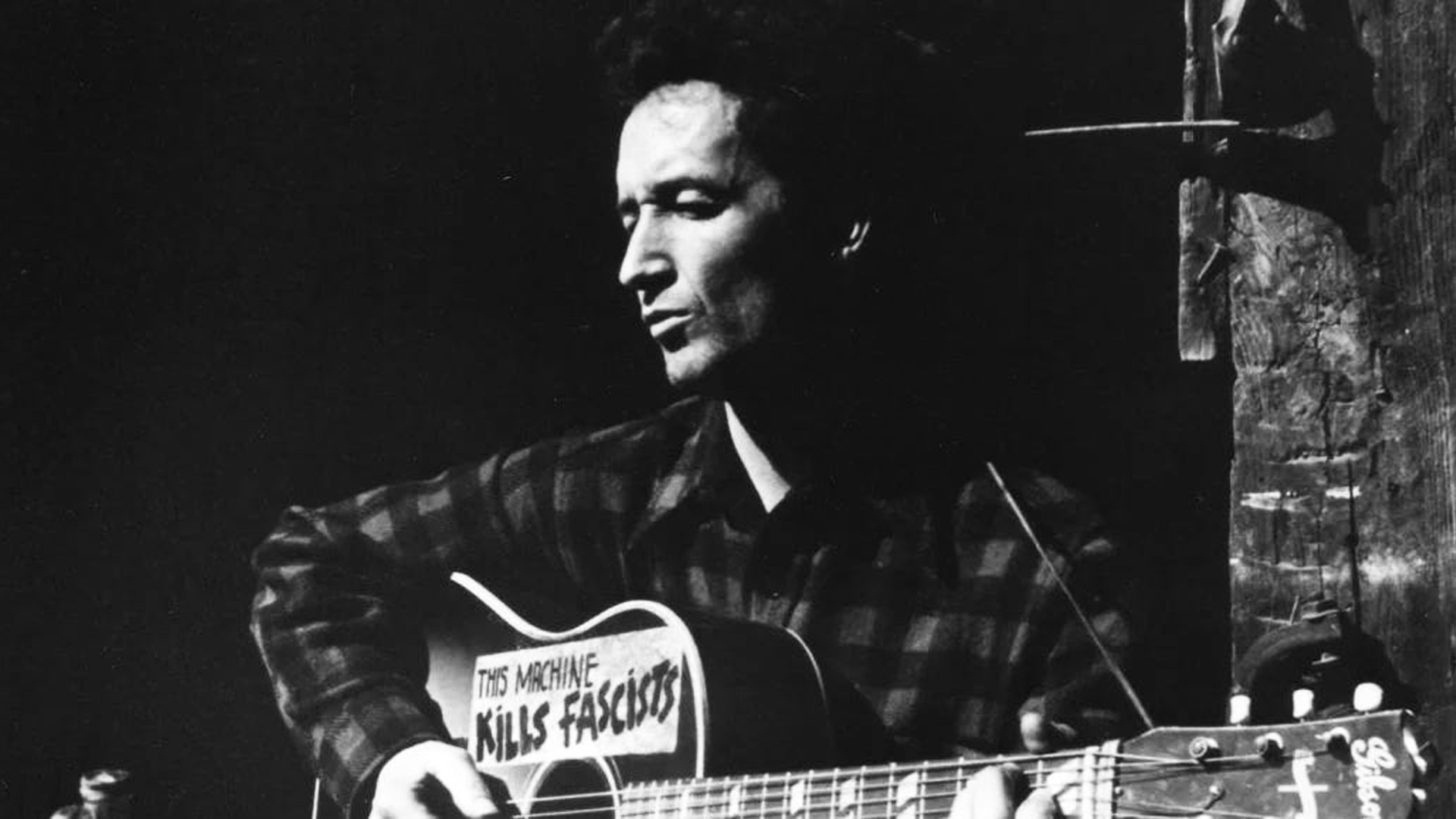
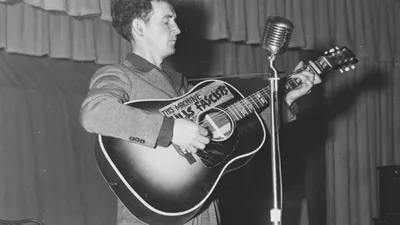
Woody Guthrie holding a guitar, known for writing 'This Land Is Your Land.'
What Happened?
In the late 1930s, America was still struggling through the Great Depression. Millions of people were out of work, farms had failed, and families traveled across the country searching for jobs. Woody Guthrie, born in Oklahoma in 1912, had seen this hardship firsthand. As a teenager, he rode freight trains, worked alongside migrant laborers, and sang songs that told the stories of everyday people trying to survive.
In 1940, Guthrie grew frustrated with hearing Irving Berlin’s popular song “God Bless America” on the radio. To him, it sounded overly cheerful and disconnected from the struggles he saw around him. Guthrie believed that America’s beauty and promise belonged to everyone—not just the wealthy or powerful—and he wanted to write a song that reflected that deeper truth.
On February 23, 1940, while living in New York City, Guthrie wrote a new song he first titled “God Blessed America for Me.” He later changed the chorus to the now-famous line, “This land was made for you and me.” The song painted vivid pictures of the country—from California’s redwood forests to the Gulf Stream waters—celebrating the natural beauty of the nation.
But the song also carried a bold message. In some of its original verses, Guthrie described seeing signs that read “No Trespassing” and witnessing hungry people waiting in relief lines. He asked an important question: Is this land truly made for everyone? These verses reminded listeners that patriotism should include fairness, opportunity, and compassion.
Although some of the more controversial verses were often left out when the song was performed, its message endured. Guthrie believed music could be a tool for change. He once said he wanted to sing songs that made people proud of themselves and their work, no matter their background or income.
Over time, “This Land Is Your Land” became one of America’s most recognizable folk songs. It was recorded by many artists and sung during the civil rights movement as a call for equality and unity. Even today, children learn it in schools, often without realizing that it was originally written to challenge injustice.
Woody Guthrie’s life was later cut short by Huntington’s disease, but his influence lived on. Musicians like Bob Dylan and Bruce Springsteen were inspired by his commitment to telling honest stories about America. His song reminds us that loving a country means caring for all the people who live in it—and working to make its promises real.
Why It Matters
“This Land Is Your Land” challenges us to think about what patriotism truly means. Woody Guthrie loved America’s landscapes and its people, but he also believed the nation should live up to its promise of fairness and opportunity for all. His song reminds us that democracy works best when everyone feels included. By celebrating both the beauty of the country and the need for justice, Guthrie showed that love of country and calls for change can exist side by side.
?
Why did Woody Guthrie feel the need to write a new patriotic song in 1940?
How do the original verses about hunger and 'No Trespassing' signs change the meaning of the song?
What does it mean to say that patriotism can include both pride and criticism?
How can music influence social movements and inspire change?
Dig Deeper
A classic performance of Woody Guthrie’s iconic folk song.
A look at Woody Guthrie’s life and how his music shaped American culture.
Related
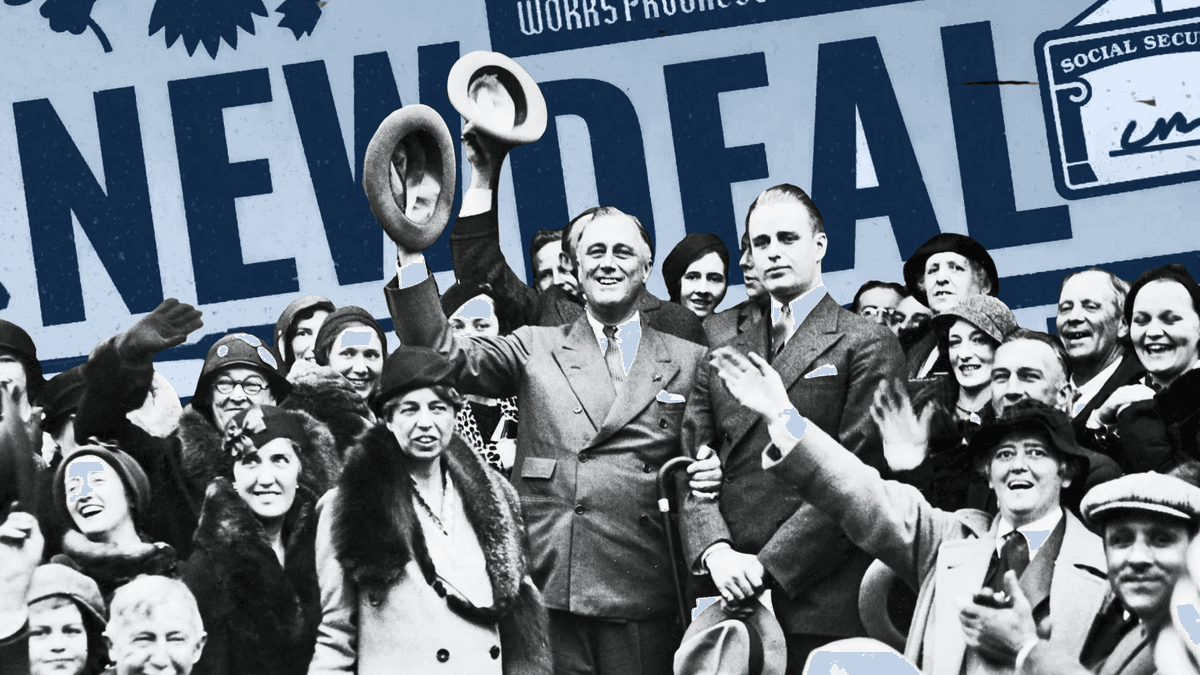
The New Deal: Fighting Depression with Bold Ideas
Faced with economic collapse, President Franklin D. Roosevelt launched a revolutionary plan to rebuild America from the ground up. The New Deal wasn’t just policy—it was a bold experiment in hope, action, and government responsibility.
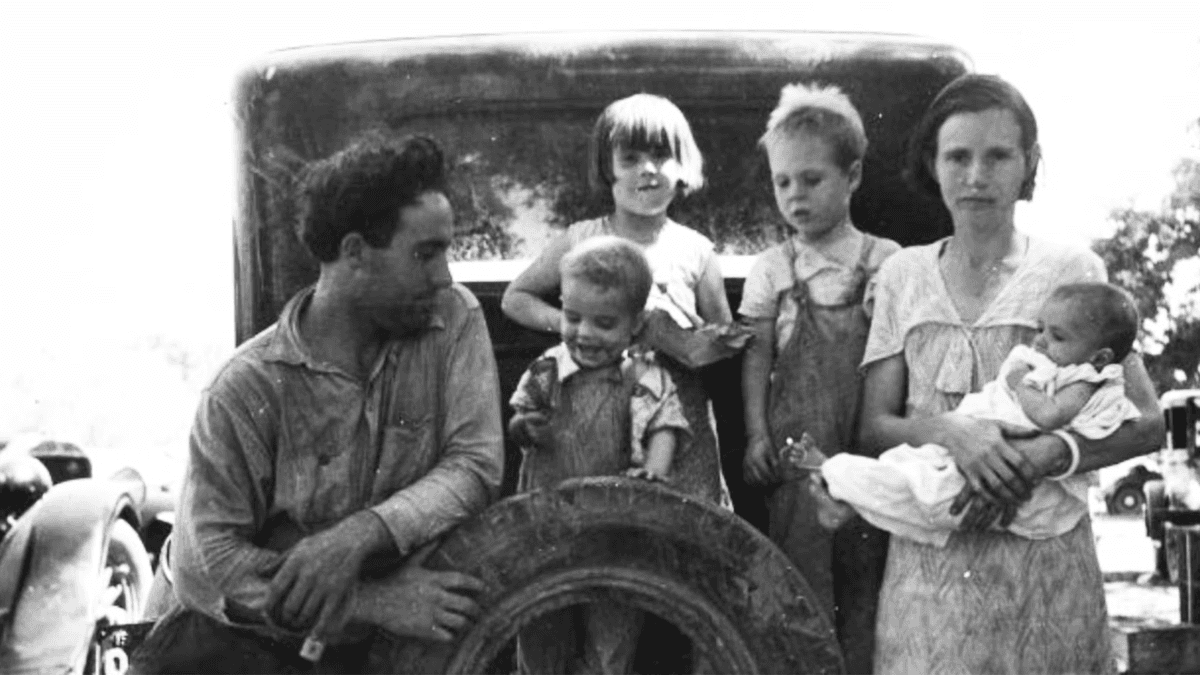
The Great Depression: America in Crisis
The Great Depression was more than a stock market crash — it was a decade-long test of American resilience that reshaped the nation's economy, politics, and daily life.
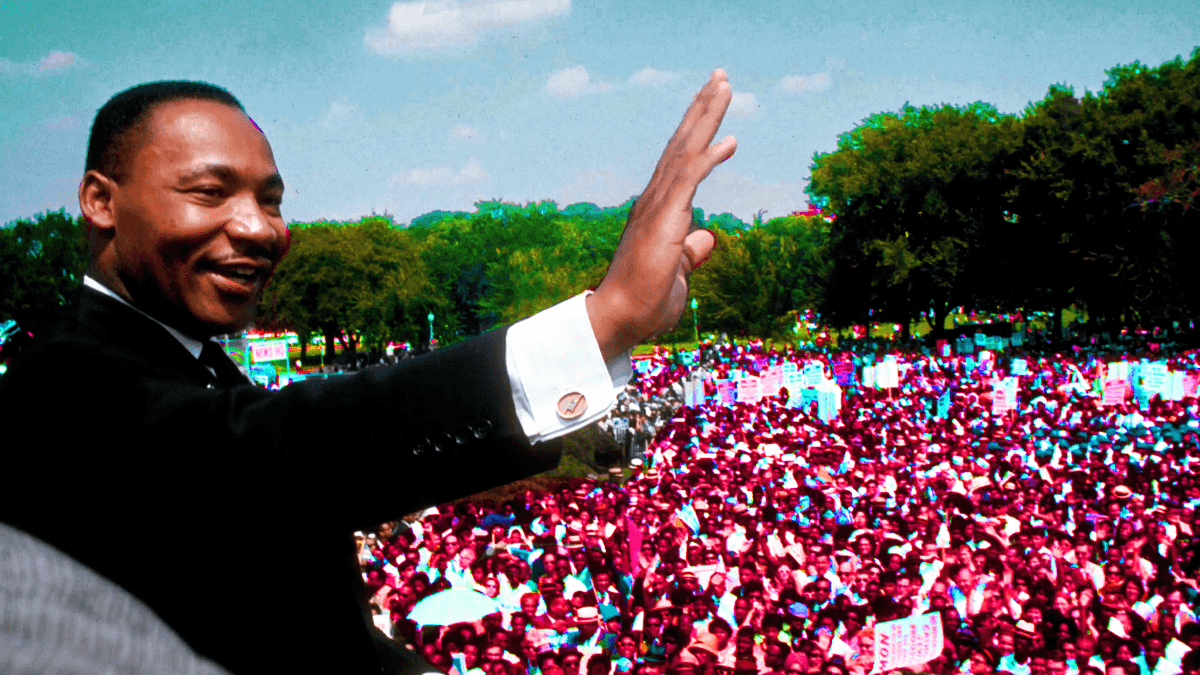
MLK the Disrupter and the Poor People’s Campaign
Dr. Martin Luther King Jr.’s final chapter was about more than civil rights—it was a bold demand for economic justice that challenged the nation’s values at their core.
Further Reading
Stay curious!