

1945: Liberation of Auschwitz
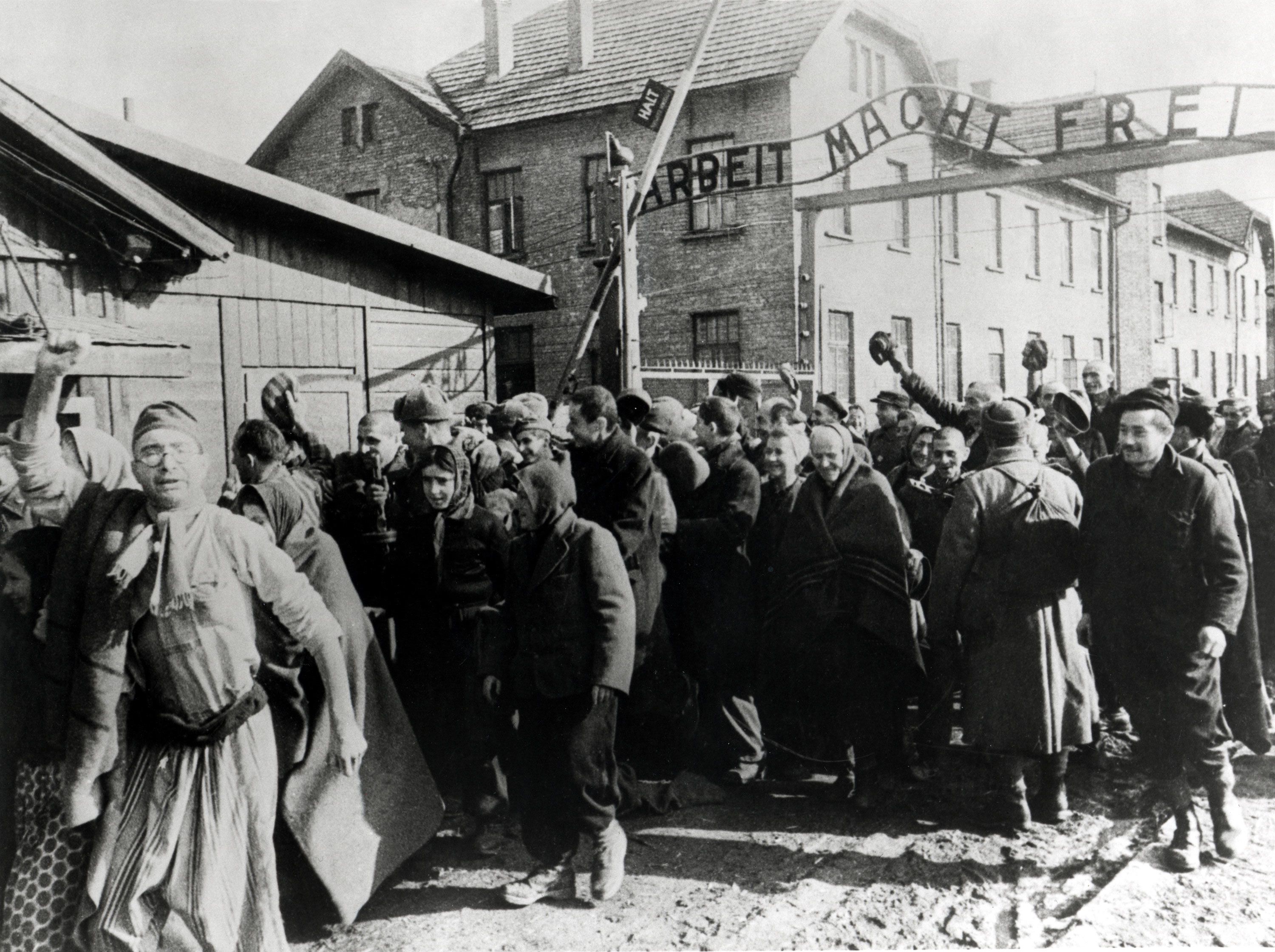
A photograph of emaciated Auschwitz survivors behind barbed wire, taken after liberation.
What Happened?
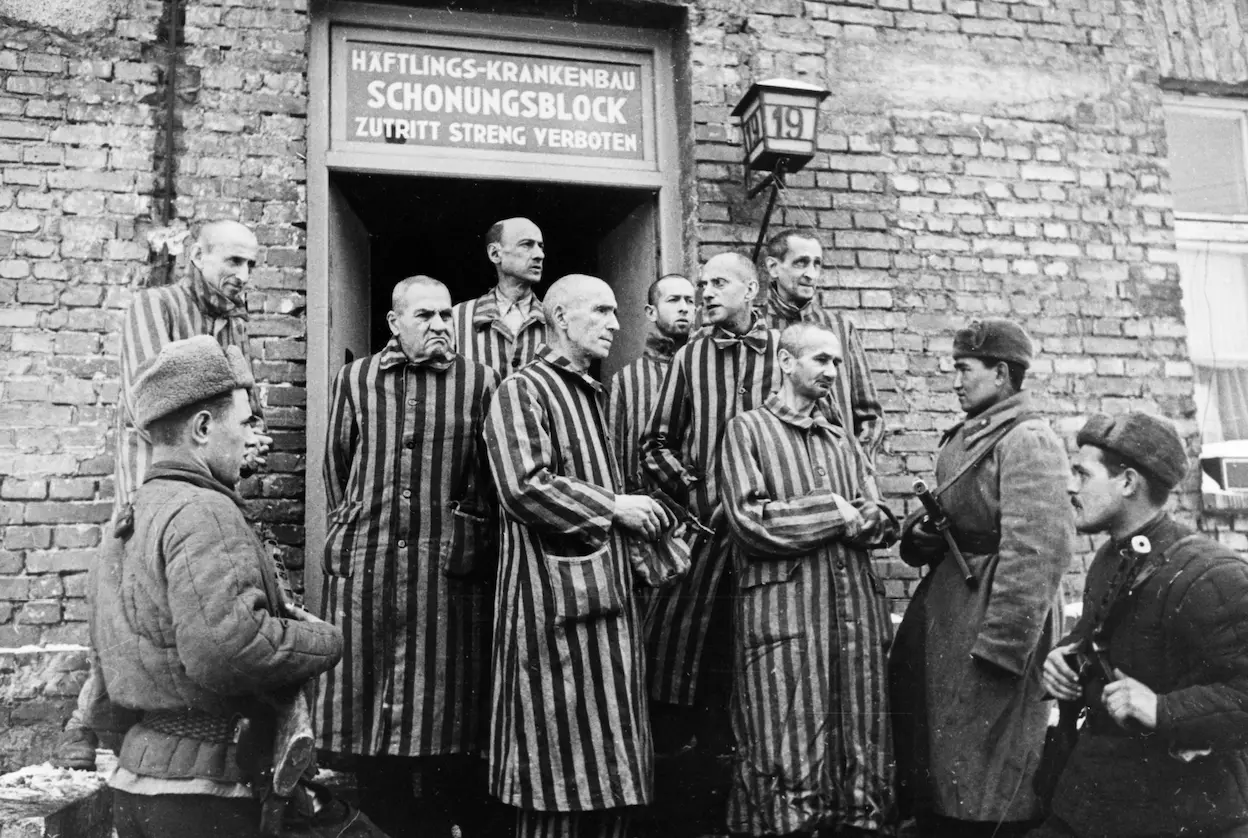
On January 27, 1945, Soviet soldiers entered Auschwitz in German-occupied Poland and discovered one of the greatest crimes in human history. What they found shocked the world: thousands of starving survivors, piles of bodies, and evidence of a massive system designed to imprison, exploit, and murder human beings.
Auschwitz was not a single camp but a complex of camps, including Auschwitz I, Auschwitz II–Birkenau, and Auschwitz III–Monowitz, along with dozens of smaller subcamps. At Birkenau, the Nazis built gas chambers and crematoria where millions of people—mostly Jews—were systematically murdered as part of Adolf Hitler’s plan known as the “Final Solution.”
People sent to Auschwitz were transported by train from across Europe. Upon arrival, Nazi doctors decided who would be forced into slave labor and who would be sent directly to the gas chambers. Children, the elderly, and the sick were often killed immediately, while others endured brutal conditions of hunger, disease, and constant fear.
As Allied forces closed in during early 1945, Nazi officials attempted to hide their crimes. They destroyed records, blew up crematoria, and forced tens of thousands of prisoners on marches to other camps, known as death marches. Many died from exhaustion, cold, or execution during these marches.
When Soviet troops finally liberated Auschwitz, they found about 7,000 survivors who were too weak to escape. They also discovered warehouses filled with stolen clothing, shoes, and even human hair—proof of the industrial scale of the killings and the dehumanization of the victims.
The liberation of Auschwitz revealed the true horror of the Holocaust to the world and made denial impossible. It became a powerful symbol of where unchecked hatred, racism, and authoritarian power can lead when people are treated as less than human.
Today, Auschwitz stands as a memorial and museum, reminding us of the victims and survivors. Its liberation challenges each generation to remember the past, reject hatred and bigotry, and defend human dignity so that such atrocities never happen again.
Why It Matters
The liberation of Auschwitz on January 27, 1945, exposed the full scale of Nazi atrocities and served as a turning point in humanity’s understanding of the Holocaust. Auschwitz is a stark reminder of how unchecked hatred can lead to unimaginable suffering and systemic oppression. This moment challenges us to not only remember the past but to actively work against bigotry, anti-Semitism, and prejudice in all forms. By honoring the stories of survivors and the memory of those who were murdered, we ensure that the lessons of Auschwitz endure, guiding us toward a more compassionate and just world.
?
How have the stories of Auschwitz survivors helped the world understand the Holocaust and its impact on humanity?
Why do you think Auschwitz has become such an important symbol of the Holocaust, and what does it teach us about history?
What can the liberation of Auschwitz teach us about the importance of standing up against hatred and intolerance in our own communities today?
Dig Deeper
Holocaust survivor Eva Geiringer reflects on life in Auschwitz. In 1944, Americans first learned details of the camp when three escapees meticulously documented what they’d seen. When the War Refugee Board received the report from Switzerland, they made the firsthand testimony public, and it became headline news. But Americans still couldn't grasp the scale and scope of the crime.
An overview of how Auschwitz was liberated and what the Soviet soldiers discovered when they entered the camp.
Related
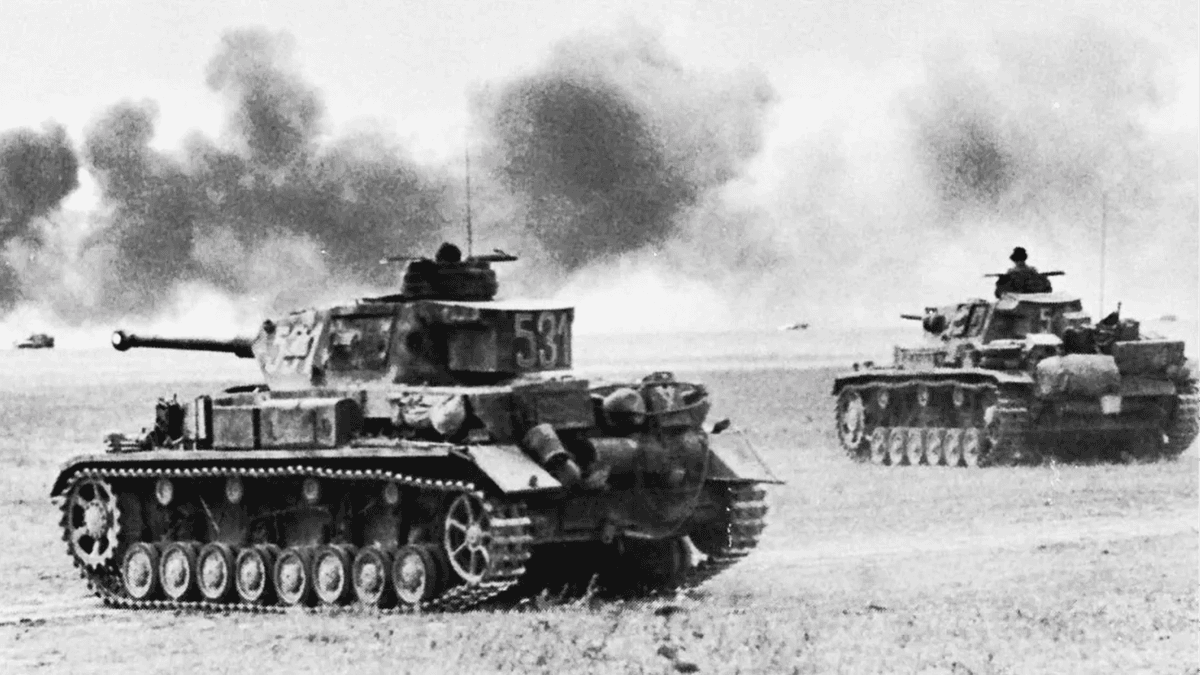
World War II: Causes, Conflict, and Consequences
A global war shaped by unresolved tensions, devastating conflict, and consequences that still define our world today.
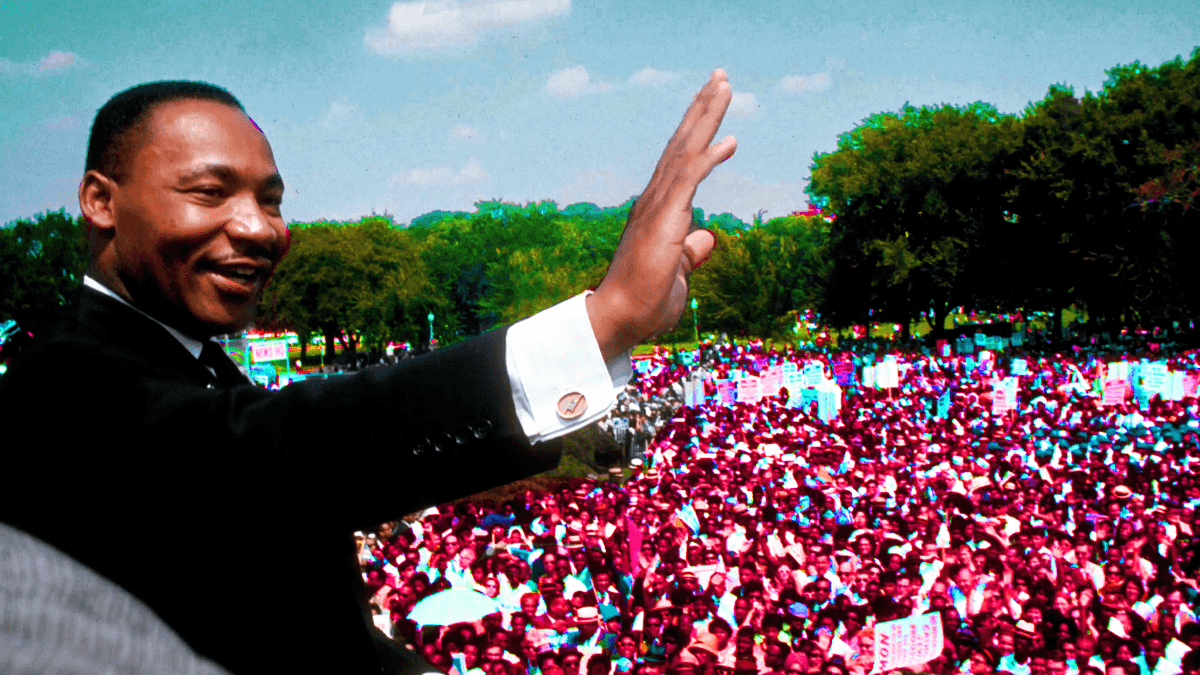
MLK the Disrupter and the Poor People’s Campaign
Dr. Martin Luther King Jr.’s final chapter was about more than civil rights—it was a bold demand for economic justice that challenged the nation’s values at their core.
Human Rights
Human rights are the basic freedoms and protections that belong to every person on Earth. They help keep people safe, ensure dignity, and make freedom, justice, and peace possible. But these rights aren’t just given—they must be understood, protected, and defended by all of us.
Further Reading
Stay curious!