

Freedom Riders Depart: Testing the Promise of Equality
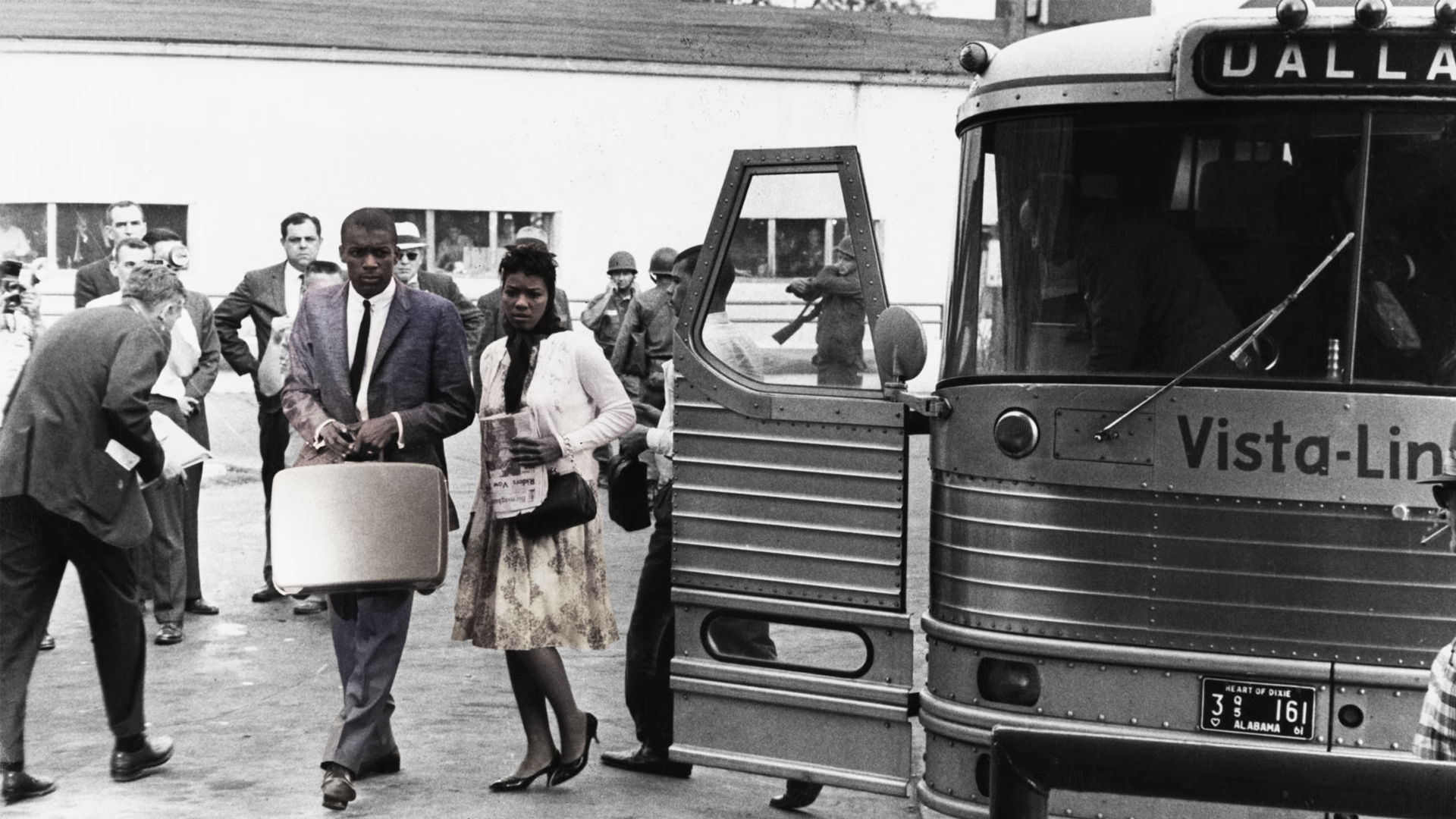
Interracial group of Freedom Riders boarding a bus during the Civil Rights Movement
What Happened?
On May 4, 1961, a small group of young Americans stepped onto buses in Washington, D.C.—and into history. They were Black and white, students and activists, ordinary people with extraordinary courage. They were an a mission to test whether the United States would actually follow its own laws. The Supreme Court had already ruled that segregation on interstate buses was illegal, yet in much of the South, those laws were ignored.
The Freedom Riders were organized by the Congress of Racial Equality (CORE), with support from groups like the Student Nonviolent Coordinating Committee. They were inspired by earlier efforts, including the 1947 Journey of Reconciliation, which had also challenged segregation on buses. But this time, the stakes were higher—and the South more dangerous. The riders relied on recent Supreme Court decisions like Morgan v. Virginia and Boynton v. Virginia, which clearly banned segregation in interstate travel. On paper, the law was on their side. In reality, it would take courage—and suffering—to enforce it.
The group included thirteen riders, most of them young, some still teenagers. Among them was John Lewis, who would later become a key leader in the Civil Rights Movement and serve in Congress for decades. The riders were trained in nonviolence. They knew they might be insulted, arrested, or attacked—and they prepared themselves not to fight back. On the buses, they sat in mixed-race pairs, quietly challenging the system just by being there together.
At first, the journey was tense but manageable. That quickly changed when they reached the Deep South. In Rock Hill, South Carolina, John Lewis was beaten. In Anniston, Alabama, one of the buses was firebombed by a mob. Passengers escaping the flames were attacked again outside. In Birmingham, more violence followed, while local authorities, including officials under police commissioner Bull Connor, failed to protect them.
The original group of riders was eventually forced to stop their journey and leave from Jackson, Mississippi. Their courage, however, had already sparked a movement that brought a new wave of Freedom Riders. Over the summer of 1961, more than 400 people joined the movement, continuing the rides despite arrests and brutal treatment. Their actions drew national attention, exposing the reality of segregation to the entire country—and the world.
Even leaders like Martin Luther King Jr. supported the riders, though he did not personally join them. The movement also revealed tensions within the Civil Rights Movement itself, especially between younger activists who were ready to take direct risks and more established leaders who were cautious about strategy. Still, the impact was undeniable. The violence forced the federal government to act. Under pressure, the Interstate Commerce Commission (ICC) finally enforced a ban on segregation in interstate travel facilities.
The first Freedom Ride began with thirteen people boarding a bus. It ended with a nation being forced to confront its own contradictions. The riders didn’t just test the law—they tested the country’s willingness to live up to its ideals. Their bravery showed that change doesn’t always come from power or position. Sometimes, it comes from people who refuse to accept injustice.
Why It Matters
The Freedom Rides showed that rights on paper mean little without action. They proved that change often requires people to challenge injustice directly—even when the law is already on their side. The riders’ courage helped turn court decisions into real-world change and demonstrated the power of nonviolent protest to expose injustice and demand accountability. By risking their safety, these young activists forced the country to confront its contradictions and take a step closer to justice.
?
Why did the Freedom Riders choose to test laws that were already supposed to protect them?
How did nonviolent protest make the violence against the riders more visible to the public?
What risks did the Freedom Riders take, and why were they willing to take them?
How did media coverage influence the outcome of the Freedom Rides?
What does this event teach us about the difference between laws and real-life justice?
Dig Deeper
A clear explanation of the Freedom Rides and the court cases that inspired them.
A deeper look at the diverse group of activists who challenged segregation through the Freedom Rides.
An overview of how the Freedom Rides exposed injustice and forced federal action.
Related
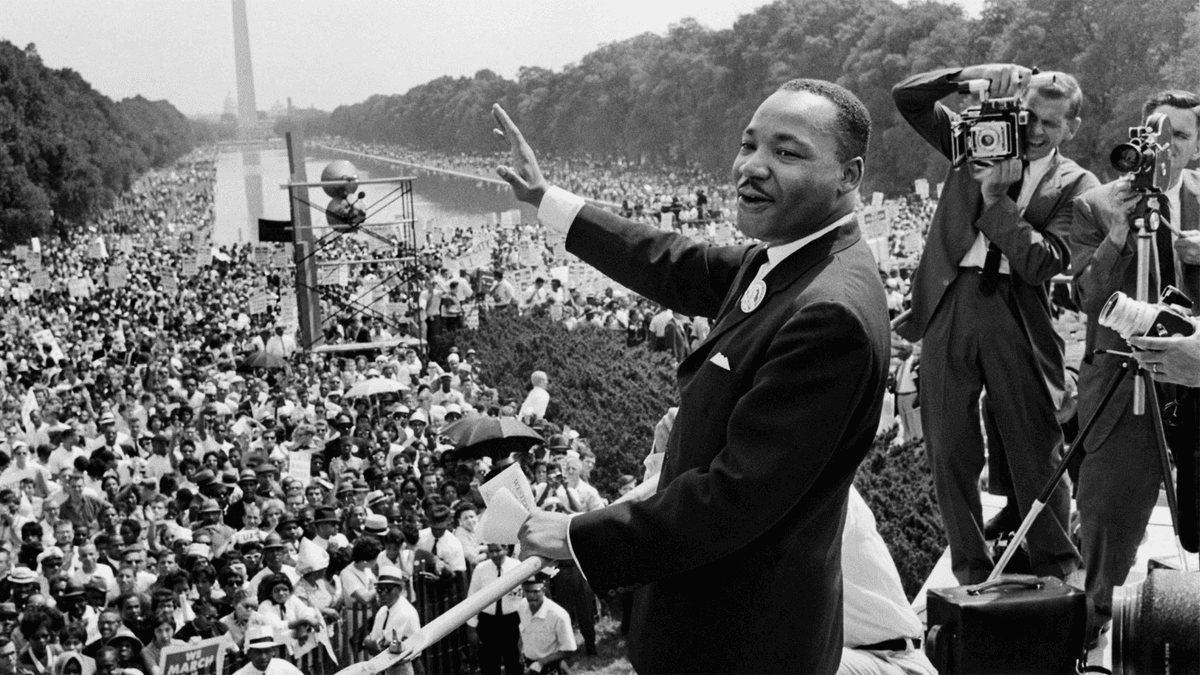
The Civil Rights Movement: Struggle, Solidarity, and Social Change
From classrooms to courthouses, buses to bridges, the Civil Rights Movement reshaped America’s laws — and its conscience.
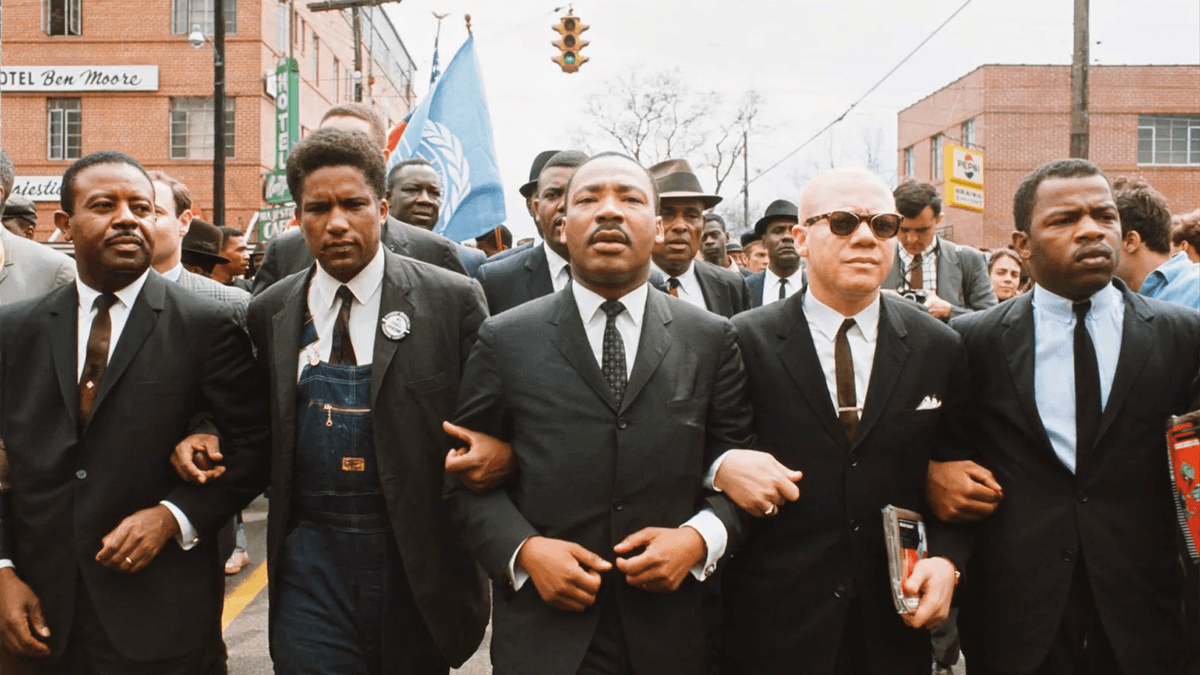
Montgomery Bus Boycott, Greensboro Sit-In, and the Rise of MLK
From Montgomery’s buses to Greensboro’s lunch counters, ordinary citizens ignited extraordinary change — and a new national leader emerged.
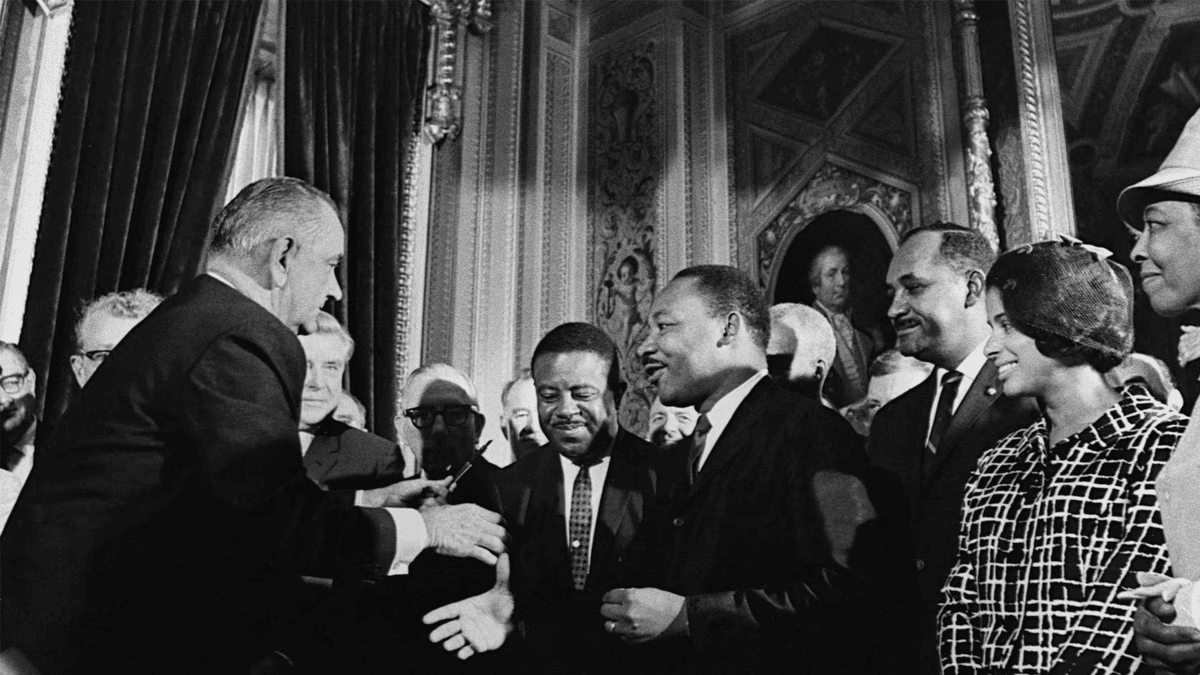
The Voting Rights Act of 1965: Enforcing the 15th Amendment
How a landmark law transformed voting access in the South and gave real force to the promises of the 15th Amendment.
Further Reading
Stay curious!